
How Fast Can a Bee Fly: A Complete Guide with Species Speeds and Key Factors
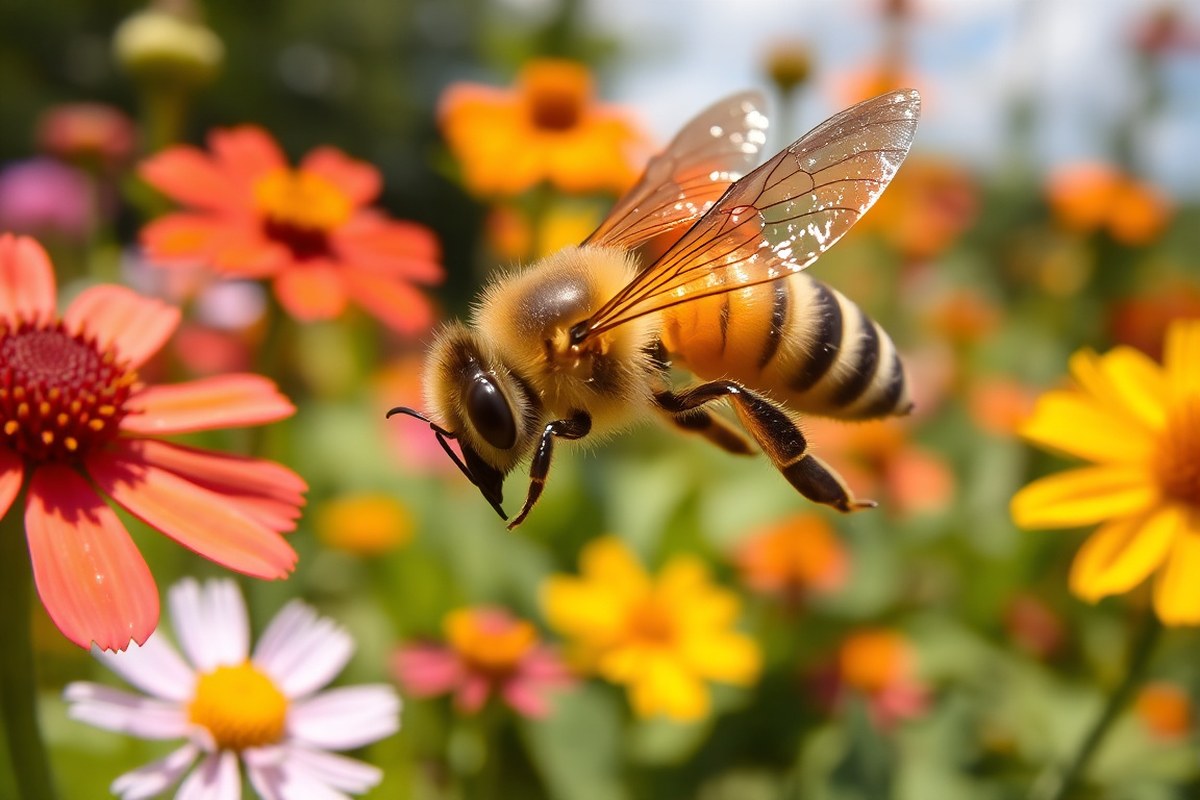
How fast can a bee fly? Most bees cruise around 15 to 20 miles per hour.
This speed lets them move quickly between flowers and back to the hive. It helps them gather food efficiently while avoiding predators.
Different bees fly at different speeds. Honey bees average about 15 mph. Some species, like blue-banded bees, can hit 30 mph, making them some of the fastest flyers in the insect world.
Bee speed depends on many things, including species, weather, and what the bee’s carrying. You’ll notice bees slow down when loading nectar or pollen. Temperature and wind also affect how fast they travel.
Watching for these speed changes helps predict how busy they might be around you. Faster flight usually means the bee is on a quick trip. Slower flight might show heavy loads or tricky weather conditions.
Key Takeaways
- Honey bees usually fly between 15 and 20 miles per hour.
- Blue-banded bees can reach speeds up to 30 miles per hour.
- Bumblebees typically fly slower at about 10 miles per hour.
- Bees slow down when carrying nectar, pollen, or water.
- Temperatures below 55°F (13°C) keep bees grounded and slow.
- A single foraging flight can cover 10 to 12 miles round trip.
How Fast Can Different Bee Species Fly?
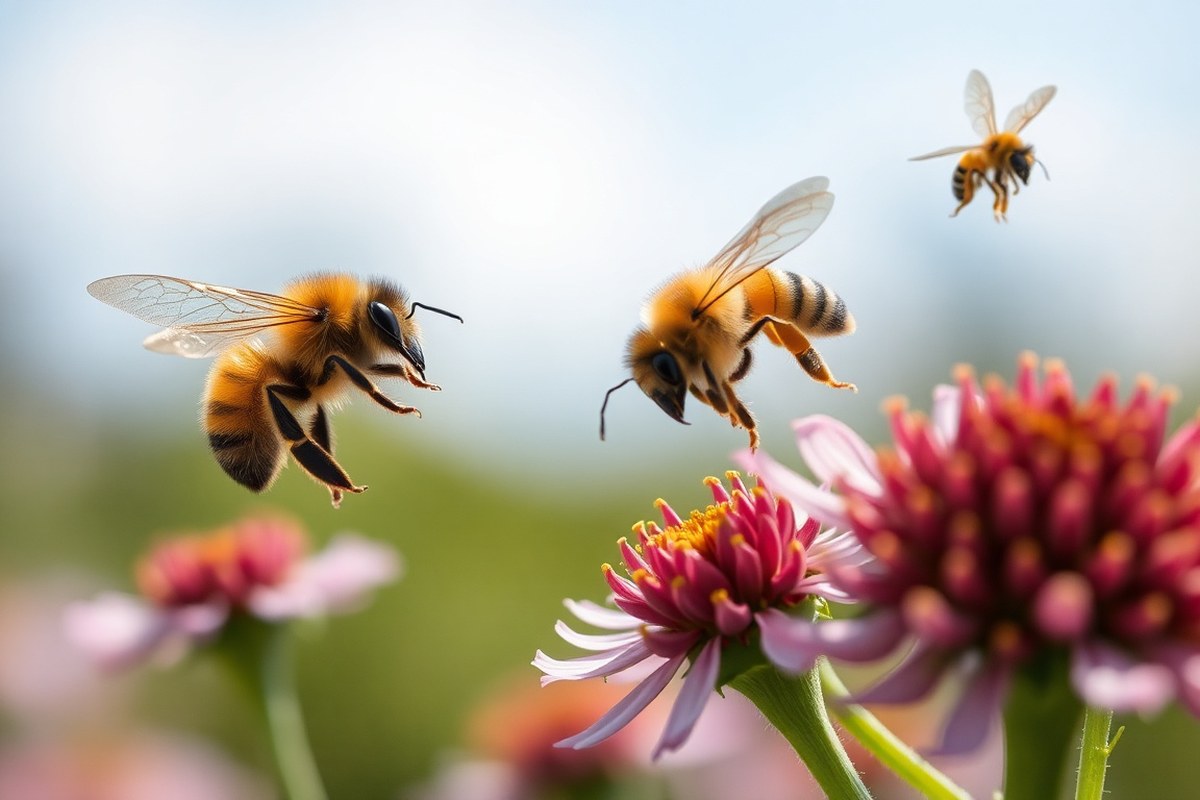
Honey bees usually fly faster than bumblebees. Honey bees cruise at about 15 mph and can reach near 20 mph at top speed. Bumblebees typically fly slower, around 6 to 7 mph, with top speeds near 10 mph.
Some solitary bees like carpenter and mason bees can fly at speeds comparable to honey bees. Carpenter bees often reach speeds between 8 and 15 mph. Solitary bees, such as leafcutter and mason species, generally fly from 8 to 15 mph.
Queen bees and drones have flight speeds similar to worker honey bees. Though queens mostly remain in the hive, they still can reach comparable speeds when they fly. Drones also maintain speeds similar to worker bees, which helps during mating flights.
| Bee Species | Average Speed (mph) | Top Speed (mph) |
|---|---|---|
| Western Honey Bee | 15 | 20 |
| Bumblebee | 6, 7 | 10 |
| Carpenter Bee | 8, 12 | 15 |
| Mason Bee | 8, 10 | 12 |
| Honey Bee Worker (Loaded Flight) | 12 | , |
Speed differences come from wing size, body weight, and purpose of the flight. For example, honey bees speed up when not carrying nectar or pollen. Bumblebees’ larger bodies and different wing shapes make them slower flyers.
Environmental factors also influence speeds, but species traits set the main limits. Flying faster uses more energy, so bees balance speed with efficiency. You’ll notice worker honey bees are faster on clear trips and slower while loaded.
How Bee Wing Mechanics Enable Flight and Speed
Wingbeat Frequency Explained
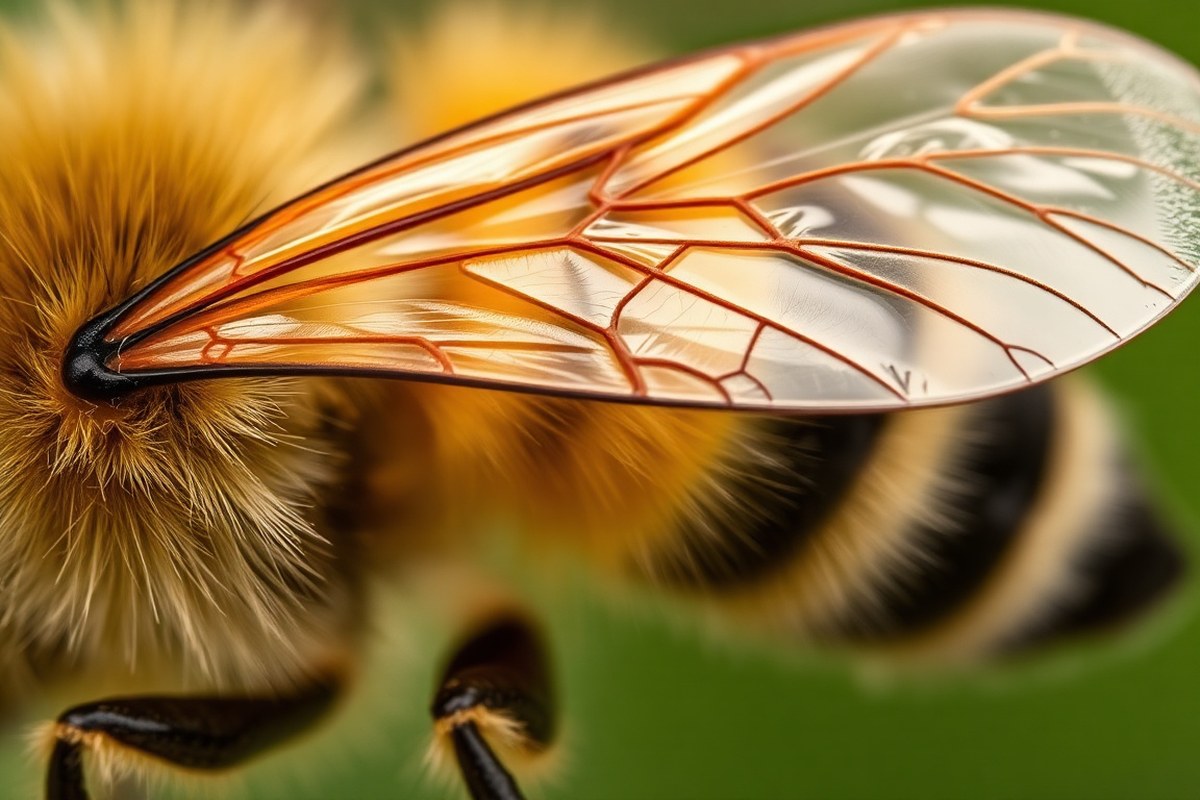
Bee wings flap incredibly fast, around 230 beats per second. This fast wingbeat helps bees generate enough lift to fly despite their small wing size. A rapid wing movement allows bees to stay airborne and move quickly through the air.
The wingbeat frequency isn’t just about speed. Higher frequencies mean more lift and thrust with each stroke. This rapid flapping helps bees hover in one spot.
It lets them change direction quickly. They use this skill to gather nectar or avoid threats.
Muscle Structure and Energy Use
Bees have powerful flight muscles, which make up about 75% of their total muscle mass. These muscles contract rapidly to keep the wings beating at high frequencies needed for flight. They convert stored energy into powerful wing strokes.
The muscles work nonstop during flight, consuming a lot of energy. To maintain this, bees fuel up on nectar, which gives them the quick energy needed. Muscle strength and endurance directly affect how fast and how long a bee can fly.
Aerodynamics Behind Bee Flight
Even though bee wings are small, bees use unique wing-flapping motions that generate enough lift. Instead of just up and down strokes, wings twist and tilt, creating extra airflow. This technique overcomes the limits simple flapping would have.
This scooping and rotating motion improves lift and allows bees to support heavier bodies. The angled wing strokes also help with quick takeoffs and agile flying. These aerodynamic tricks are why bees can fly despite what basic physics suggests.
Be cautious around bees in wet weather. Water on wings slows wingbeats and can ground them.
Body Size vs Wing Size Dynamics
Bee wings are small compared to their bodies, which challenges how they fly. Larger wings relative to body size generally allow faster flight and better lift. But bees compensate by flapping faster and using strong muscles.
Different bee species show a wide variation in wing and body size, which affects flight speeds. Honey bees fly near 15 mph. Smaller bees like sweat bees can fly up to 20 mph.
Their wing shape and muscles help them reach this speed. This makes them fast for their size. Body and wing size must balance for effective flight.
What Factors Affect a Bee’s Flight Speed?
A bee’s speed changes depending on its load and the weather. The time of day also affects how fast it flies. These factors can make the speed vary a lot.
When a bee carries nectar, pollen, or water, it flies slower because the load adds weight. Unloaded bees speed between 15 and 20 mph.
But loaded ones drop to about 12 mph. Interestingly, bees tend to fly faster on the way back to the hive when fully loaded.
Temperature affects flight speed too. Bees fly best between 60°F and 100°F. Below or above this range, their muscles don’t work as well, and flight slows. Wind direction and strength also play roles.
A strong headwind will slow bees, while a tailwind can speed them up. Side winds can make flying tricky, forcing the bee to adjust its path and speed.
Flight speed varies during the day and depends on why the bee is flying. Early morning or late afternoon flights can be slower as bees warm up or cool down. A motivated bee might fly faster than one heading home.
Scouts searching for flowers often speed up. Their goal makes them move more quickly.
Also, the bee’s physical condition matters. Older or less healthy bees might move slower.
- Carry less load when possible to keep flight speed around 15 mph
- Fly during warmer parts of the day, between 60°F and 100°F
- Avoid strong headwinds to conserve energy and maintain speed
- Expect slower speed early morning and late afternoon
- Watch for physical signs of tiredness in bees, which reduce speed
Watching these factors helps you understand why bees might slow down or speed up. For example, during cool mornings, a bee might fly at 12 mph even without a load. When the wind blows from the front, the bee slows down.
It has to work harder against the wind. That cuts its speed quite a bit. On a warm day with a tailwind, a loaded bee flies about 15 mph.
The wind helps it keep up the pace. Warm weather also gives it energy to fly fast. The mix of load, weather, and motivation makes bee flight speed quite dynamic.
How Far and How Long Do Bees Typically Fly?
Honey bees usually fly between 1 and 3 miles from their hive when foraging. This means a single trip covers about 2 to 6 miles round trip.
The maximum distance can reach around 6 miles one way. But most trips stay shorter due to energy limits.
A typical foraging flight lasts about 30 to 60 minutes. The time depends on the distance traveled and how many flowers the bee visits. Worker bees visit between 50 and 100 flowers to gather food.
They do this to collect nectar and pollen. This happens during their foraging trips.
Bees balance flight speed and energy use carefully. Flying too far means they spend more energy than they gain from flowers. That’s why they usually keep their trips within a few miles of the hive.
If a bee flies 3 miles out and back, it covers 6 miles. Flying at 15 miles per hour takes about 24 minutes. The bee also pauses to rest and gather nectar.
Bees can fly continuously for about 20 to 30 minutes before needing to rest or unload. Flights longer than 6 miles one way are not common. These long trips use too much of the bee’s energy.
Bees avoid flying that far nonstop. Bees usually fly many shorter trips each day instead of long ones.
They make about 10 to 12 trips daily. Over their lifetime, bees fly nearly 500 miles.
Bees typically fly at around 15 miles per hour when active. This consistent pace allows them to collect food efficiently each day. Still, their full trip speed lowers because they pause to visit flowers.
How Does Weather and Temperature Influence Bee Speed?
Bees stop flying below about 50°F (10°C) because their muscles get cold. Cold muscles don’t work well, so they slow down or stay inside. They need warmth for flight muscles to function properly.
Humidity and rain hurt a bee’s wings and flight ability. High humidity makes wings heavy with moisture, cutting down flutter speed.
Rain can damage wing scales, reducing lift. That’s why bees avoid flying in wet conditions.
Bees fly fastest on clear, warm days with little wind. They can reach speeds of 15 to 20 mph. Windy or cloudy conditions slow them down.
They need air temperatures around 70°F (21°C) or higher, plus little to no rain. Moderate wind up to 12 mph helps bees adjust and maintain speed. But stronger winds make flying dangerous.
Bees heat their bodies before and during flight by flexing flight muscles without wing movement. This process, called thermoregulation, warms their muscles to about 95°F (35°C). Muscle warmth gives bees enough power for steady wing beats at over 400 swings per second.
Flying in the wind, bees change speed to keep a steady pace over the ground. When wind exceeds 12 to 15 mph, bees usually stay put. Flying then uses more energy and risks getting blown off course.
Don’t bother bees on cool or rainy days. They fly slower then. This makes it harder for them to escape if disturbed.
How Does Carrying Nectar or Pollen Change Flight Speed?
| Flight Condition | Typical Speed (mph) | Wingbeat Adjustment | Effect on Endurance |
|---|---|---|---|
| Flying empty | Up to 40 (65 km/h) | Standard wingbeat rate | Longer flights possible |
| Carrying nectar/pollen | 12 to 15 (19 to 24 km/h) | Increased wingbeat frequency | Higher energy use, shorter trips |
Carrying nectar or pollen slows a bee down significantly. Speed drops from up to 40 miles per hour when bees fly empty. When carrying a load, they slow down to about 12 to 15 miles per hour.
The load makes flying faster much harder. The additional weight adds drag and makes flying much harder.
Bees compensate by beating their wings faster to generate more lift. This faster wingbeat helps them keep steady flight despite the load. Still, carrying heavy cargo tires them out sooner and limits how far they can go.
Flying empty lets bees move quicker and cover longer distances. That’s why guard bees often fly faster when defending the hive without pollen or nectar. They save energy and stay more agile without the extra weight.
Flowers closer to the hive help bees save energy. This boosts flying speed and endurance. Bees can bring more nectar and pollen to the colony this way.
Less distance means less energy spent on heavy loads. When you’re watching bees, notice how they slow down when their legs are full of pollen.
Keep in mind that carrying pollen even improves stability but reduces quick turns. Bees balance speed and control depending on their task. Knowing this lets beekeepers better understand hive activity and bee health during foraging seasons.
How Is Bee Flight Speed Measured Scientifically?
Scientists measure bee flight speed using several tools and methods. Marked courses, high-speed video, and lab-based wind tunnels show different ways to get accurate speed readings. Each method suits certain conditions and research goals.
High-Speed Video Recording Techniques
High-speed cameras capture detailed frames of bees flying. Filming at hundreds or thousands of frames per second helps track wing beats. It also shows movement over short distances clearly.
This method captures details we can’t see with the naked eye. This method shows how fast bees flap and move their bodies in tight spaces.
Researchers set up cameras focused on a marked course or flight chamber. They then record the bee’s flight and analyze the video frame by frame to calculate speed. This approach costs a few thousand dollars for good equipment but yields detailed, precise data.
Field Measurement with Marked Courses
Marked courses in open spaces help measure flight speed in natural bee behavior. Scientists use tape or light markers spaced a known distance apart, usually several meters long. They use a stopwatch or phone camera to time the bee.
The timer records how long the bee takes to cross the course. This method is simple but effective for short distances.
This method simulates real conditions but can be affected by wind or distractions. Adding an anemometer measures wind speed to adjust the readings. Marked courses are simple and cheap but less exact than lab methods.
Laboratory Wind Tunnel Experiments
Wind tunnels create controlled airflow where bees fly against a stable wind speed. Researchers can set exact speeds, often starting around 2.5 meters per second (9 kilometers per hour), to see how bees respond. This method isolates effects like turbulence or wing load.
The lab setting offers precise control and repeatability, making it easier to gather consistent data. Wind tunnels cost tens of thousands of dollars.
So they mostly appear in university or institutional labs. This technique helps test how factors like wing damage affect speed.
Data Accuracy and Limitations
GPS trackers and radar measure speed during longer flights. These tools do not show detailed wing movements. They focus on tracking where the bee goes over distance.
Lab tests yield precise measurements but may not reflect natural flying habits. Field tests balance realism and ease but lose some exactness.
Wind and load conditions cause wide speed variations. So reported speeds often cover a range. Course lengths from 1 to 10 meters work well for timing.
These distances fit average bee speeds near 15 mph (24 km/h). This range gives a good balance of precision and ease. Combining methods improves overall accuracy.
How Fast Can Humans Run Compared to Bees?
A honey bee can fly up to 20 miles per hour during short bursts. Most bees cruise around 15 miles per hour on average. In comparison, a typical human jogging speed is about 4 to 6 miles per hour.
Top human sprinters reach speeds near 27 miles per hour, faster than any bee. However, bees can quickly change direction and zoom in tight spaces. That agility makes them harder to outrun in close fights.
They aren’t as fast as the fastest runners. Still, they can dodge quickly and stay near you.
Bumblebees fly around 15 miles per hour, similar to honey bees when moving normally. Drones can fly a bit faster than worker bees sometimes. Their flight muscles are stronger, which helps them.
Their larger eyes also play a role. Bees become more aggressive and may speed up to 20 miles per hour defending their hive.
| Creature | Speed (mph) |
|---|---|
| Honey Bee (normal flight) | 15 |
| Honey Bee (defense mode) | 20 |
| Bumblebee (normal flight) | 15 |
| Human average jog | 4-6 |
| Elite human sprinter | 27 |
You can usually walk or jog away from bees without trouble. Don’t try to sprint or chase them, you’ll just waste energy. Bees react mostly when you move suddenly near them.
They also get more defensive if you approach their hive close. Slow movements keep them calm.
A calm, slow retreat often discourages a bee more than running fast or flailing hands.
Practical Tips for Interacting Safely Around Fast Bees
When a bee flies fast near you, stay calm and avoid sudden moves. Fast flight can mean the bee feels threatened and may be defensive.
When bees chase you, cover your face and walk straight ahead. Don’t swat at them because it can make them more aggressive.
Recognizing Aggressive Flight Patterns
Aggressive bees fly with more intensity and often in direct lines toward you. They may buzz loudly and persistently follow longer distances. Non-defensive bees usually hover briefly and move away quickly.
Fast flight alone doesn’t always mean aggression. Watch for these signals:
- Sustained chasing of a person over 10 feet or more
- Rapid, zigzagging approach toward your face or hands
- Loud, high-pitched buzzing close to your skin
- Bees clustering near a hive or nest site
- Multiple bees flying aggressively at once
These behaviors suggest the bees are defending their colony. Stay alert and cautious if you observe them.
Do’s and Don’ts When Bees Fly Close
Stay calm if a bee buzzes near you or lands on you. Sudden motions can provoke the bee to sting. Keep these tips in mind:
- Stay still or move slowly and deliberately
- Don’t swat, wave your arms, or run
- When a bee lands on you, stay very still until it flies away.
- Walk away slowly if multiple bees surround you
- Cover your face with your hands if chased
Swatting can release alarm pheromones. These signals bring more defenders to attack. Calm actions reduce risk.
How to Reduce Risks in Gardens
Most defensive bees guard hives or food sources in flowers and gardens. Keep a safe distance from beehives and dense blossoms. Bees usually stay low, within 30 feet of the ground while foraging.
Use this checklist when working outdoors:
- Wear light-colored clothing without floral patterns
- Avoid strong perfumes or scented lotions
- Keep food and sugary drinks covered
- Inspect the area for nests before gardening
- Move smoothly and slowly, avoid sudden moves
These habits help prevent accidental provocation. Watch for aggressive bee activity, especially in warm weather between 60°F and 95°F.
When to Contact Beekeepers or Experts
Call a local beekeeper or pest control if bees defend a hive near people. This usually happens near homes or busy paths. They can handle the problem safely.
Large swarms or repeated chasing are signs to get professional help. Do not try to remove hives yourself.
Bee experts can safely relocate nests and reduce threats. Fast, persistent flight around your property means expert advice is best. Beekeepers and pest control offer long-term fixes that cost $100 to $300.
The price depends on your location. They use safe methods to remove bees.
Quick-Start Action Plan to Understand Bee Flight Speed
Get started by observing bees and noting their flight behavior. Use this plan to learn about bee speed and factors that affect it.
- Day 1: Watch honeybees near flowers for 15 minutes. Notice how fast they move between blossoms.
- Day 3: Check weather conditions on a warm, sunny day. See if bees fly faster than on a cool day.
- Week 1: Compare flight speed of different bee species if possible. Look for bumblebees or carpenter bees nearby.
- Week 2: Observe bees carrying pollen or nectar. Watch if their flight seems slower or more labored.
- Week 3: Record your observations in a notebook. Note species, weather, and bee load to find patterns.
- Week 4: Use a stopwatch to time a bee’s flight. Measure how long the bee takes to fly between two points 10 feet apart. Calculate the speed.
- After 1 Month: Review data to understand what affects flight speed most. Compare sunny days to cooler ones.
Frequently Asked Questions
How Fast Can a Killer Bee Fly?
Killer bees can fly about 15 to 20 miles per hour. They have similar speeds to regular honey bees but show more aggressive behavior during flight.
How Fast Can a Queen Bee Fly?
Queen bees fly slower, around 10 to 15 miles per hour. You rarely see them flying since they stay in the hive. They mate only a few times during their life.
How Long Does a Bee Take to Reach Its Top Speed?
Bees reach their top speed quickly, usually within a few seconds of flight. This helps them escape threats or quickly move between flowers.
Can Bee Flight Speed Affect Pollination Efficiency?
Yes, faster bees can cover more flowers in less time. This means they can pollinate more plants during a foraging trip.
Do Bees Fly Faster Uphill or Downhill?
Bees tend to fly slower uphill as it requires more energy. Downhill or level flights generally let them maintain higher speeds.
Key Points to Remember
Bees can fly quite fast depending on their species and conditions. Watching them closely helps you notice these changes yourself. Try timing a bee’s flight soon for a real look at their speed.




2 Comments