
How Fast in MPH Is the Speed of Light: Exact Facts and Real Comparisons
Wondering how fast in mph is the speed of light? Light travels at about 670,616,629 miles per hour. That equals roughly 186,282 miles every second, moving unimaginably fast through space.
This speed stays the same in a vacuum, no matter the source or direction. Nothing with mass can reach or exceed that speed. It sets the ultimate speed limit for anything in the universe.
Light speed explains why we see stars as they were years ago, not as they are now. It takes light years to travel from distant galaxies to Earth. This delay gives us a look back in time.
Understanding light speed matters for technology like GPS and telecommunications. Signals travel close to this speed to connect devices quickly. It also guides research on space travel and physics today.
Key Takeaways
- Light travels roughly 670.6 million miles in one hour. This number shows how incredibly fast light moves. It’s a huge measure of speed.
- Light travels roughly 186,282 miles every single second.
- It moves fastest in a vacuum, slowing down in materials like water.
- Objects with mass cannot move as fast as light. This speed limit holds true across all space. No matter what, mass slows things down below light speed.
- Light’s constant speed underpins much of modern physics and technology.
- The speed shows why stars’ light often takes years to reach Earth.
How Fast Is the Speed of Light in Miles per Hour?
The speed of light in a vacuum is about 670,616,629 miles per hour. This number comes from measuring 299,792,458 meters per second.
It is then converted into miles per hour. To convert, divide meters by 1,609.344 to get miles and then multiply by 3,600 seconds per hour.
Light travels about 186,282 miles every second, which is roughly 670.6 million miles per hour. Commercial airplanes fly about 550 mph.
Sound travels near 767 mph in air at room temperature. Light is therefore about 1.2 million times faster than a jet and 875,000 times faster than sound.
If a plane flies nonstop at 550 mph, light would circle Earth over 27,000 times in an hour. That’s why light can travel from the moon to Earth in just over a second. This huge difference in speed shows why light speed matters in physics and space travel.
How Is the Speed of Light Defined and Measured?
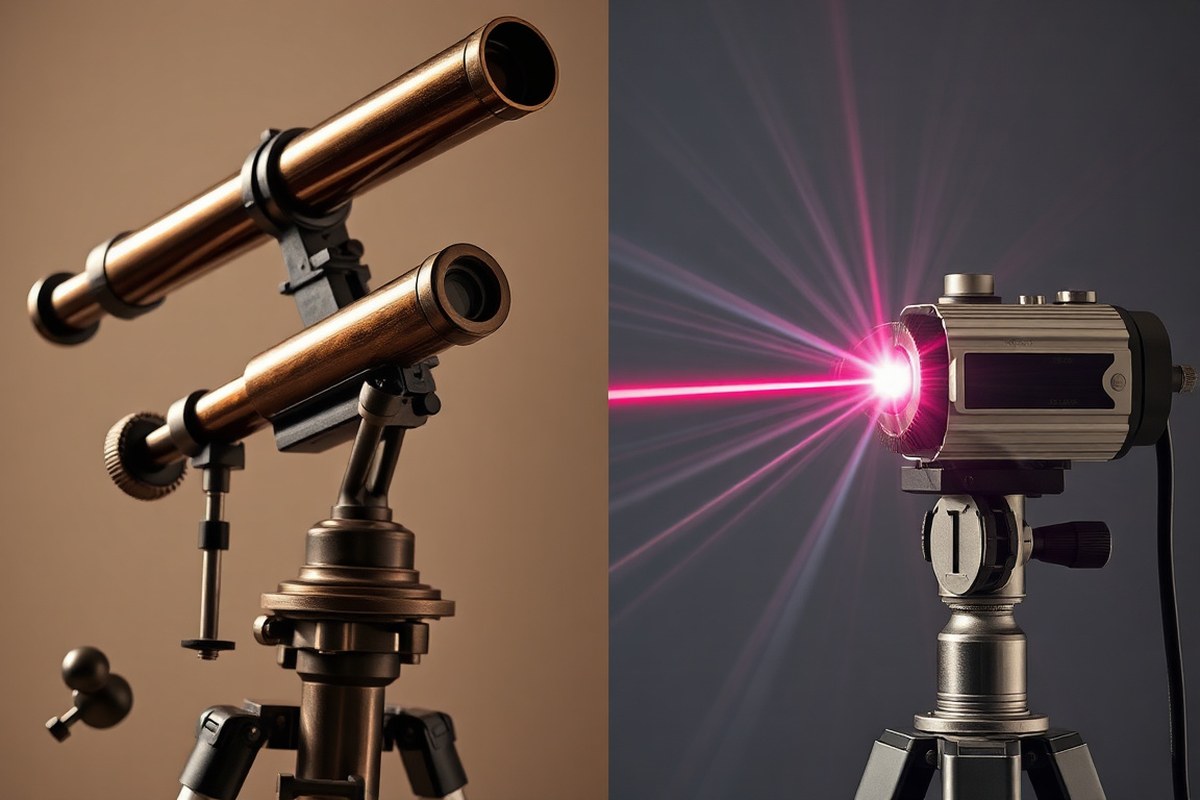
The speed of light is defined as exactly 299,792,458 meters per second in a vacuum. This definition fixes the speed of light and uses it to define the meter. Scientists measured it by observing natural events and later with precise lab tools.
Ole Rømer’s Astronomical Method (1676)
Ole Rømer made the first real attempt to measure light speed by studying Jupiter’s moon Io. He noticed changes in Io’s eclipse timing depending on Earth’s position. This revealed that light takes time to travel, proving it moves at a finite speed.
Rømer’s measurement didn’t use modern units but estimated light speed at about 214,000 km/s. That was about 28% slower than the currently accepted speed. His method relied on complex celestial timing and Earth’s orbit around the Sun.
Michelson’s Precision Laboratory Experiments
In the late 1800s, Albert Michelson improved measurement with rotating mirrors and long light paths. His 1879 and 1926 experiments brought the error down to less than 0.04% of the actual speed. Michelson’s work laid the foundation for the meter definition linked to light speed.
He used instruments with rotating mirrors to reflect light back and forth across measured distances. By timing the light’s travel, Michelson achieved remarkable precision for his time. The 1926 experiment used a 35 km path, reducing uncertainty to nearly one part in 100,000.
Modern Laser-Based Measurements
Today, lasers and interferometers measure light speed with nearly zero error. These techniques use exact wavelengths and resonance cavities for precision. The speed of light is now fixed by definition, making measurement more a calibration tool.
Laser methods match the speed of light to meter and second definitions precisely. This allows scientists to calibrate instruments and maintain standard units worldwide. The improved accuracy affects fields like GPS, telecommunications, and space exploration.
- Laser interferometers measure distance and time to split nanoseconds.
- Resonant cavities help lock the frequency of light waves for control.
- Modern lab setups run automated and cost tens of thousands of dollars.
- Advanced computers analyze data instantly to reduce measurement error.
- These methods require stable environmental conditions like temperature control.
- Measurements rely on atomic clocks for timing precision below nanoseconds.
Always control temperature and vibration to avoid shifts in laser measurements.
Why Is the Speed of Light Constant for All Observers?
Light’s speed stays constant no matter how fast you move. Einstein’s special relativity explains this surprising truth. Light always travels at 299,792,458 meters per second in a vacuum, about 186,282 miles per second.
Einstein proved light’s speed does not change with source speed. It also doesn’t depend on the observer’s speed. Before him, people thought speeds simply added up.
Imagine a car moving 60 mph and throwing a ball at 20 mph. You might expect the ball to move at 80 mph on the ground.
Light behaves differently. It keeps its speed no matter if you’re moving towards or away from it. This happens because space and time adjust to keep light’s speed steady.
These changes are small at slow speeds. They become important only near light speed.
These changes affect how you measure time and length. Moving clocks tick slower and rulers contract in the direction of travel. This isn’t just theory.
GPS satellites must correct their clocks by microseconds every day to match this effect. Without these corrections, GPS locations would be off by miles.
Light’s constant speed also changed how scientists view reality. It means no information can travel faster than light. This limit shapes modern physics, including how we understand particles and gravity.
Light’s fixed speed makes lasers and fiber optics work reliably. This constant speed ensures their precise operation.
Visualize this with a simple example. Suppose you shine a flashlight while walking forward fast. You might expect the light’s speed to add to your walking speed.
A still observer sees light travel at the usual speed. Your motion does not affect the light’s speed.
In short, light’s speed constancy results from how space and time behave at high speeds. It forces us to rethink common ideas about motion and measurement.
This idea influences many science and technology fields. It forms the basis for our universe’s understanding.
How Does Light Speed Change in Different Materials?
Light travels fastest in a vacuum, where it moves about 670 million miles per hour (mph). Light slows down when it goes through air, water, or glass. This happens because light hits atoms in the material.
The atoms change how fast the light moves. The atoms absorb light and then send it out again.
This process makes light take longer to pass through. So, light moves slower here than in empty space.
How fast light moves depends on the refractive index of the material. This index shows how much the material slows light down. Higher numbers mean slower light speed.
Air barely changes light’s speed, keeping it at about 99.97% of its vacuum speed. Water slows light to about 75%. Glass brings it down further to around 67% of its speed in a vacuum.
| Medium | Refractive Index | Speed (m/s) | Speed (mph) | % of Vacuum Speed |
|---|---|---|---|---|
| Vacuum | 1.000 | 299,792,458 | 670,616,629 | 100% |
| Air | 1.0003 | 299,702,547 | 670,398,477 | 99.97% |
| Water | 1.333 | 224,900,744 | 503,014,768 | 75.0% |
| Glass | 1.5 | 199,861,639 | 447,077,753 | 66.7% |
| Diamond | 2.42 | 123,881,180 | 277,115,207 | 41.3% |
The slowdown of light in these materials affects many everyday technologies. Lenses in glasses and cameras bend light by changing its speed. Light slows down when moving from air into glass.
This bending helps lenses focus images clearly. Also, fiber optic cables rely on light slowing and reflecting inside glass to carry information.
Temperature and material purity can cause slight speed differences. Cooler materials generally slow light a bit more. Always remember, the speed given here applies under normal conditions and can vary in specialized setups.
How Long Does Light Take to Travel to Common Celestial Destinations?
Light travels from the Sun to Earth in about 8 minutes and 20 seconds. This is because the Sun is roughly 93 million miles away. Light moves at about 670 million miles per hour.
Light moves so fast it takes just over eight minutes to travel here. This crossing covers a huge distance. It is a vast gap between us and the source.
The Moon is much closer, about 238,855 miles away. Light takes only 1.28 seconds to make the journey from Earth to Moon. This speed is so fast that in one second, light circles Earth about 7.5 times or travels roughly 670 million miles.
Proxima Centauri, the closest star beyond our solar system, lies about 4.24 light-years away. This means light from that star takes over four years to reach us. Stars are very far away, even for light’s speed in mph.
Travel time for light is measured in years. These distances are much longer than minutes or seconds.
- Light circles Earth 7.5 times in one second.
- Light speed is about 670 million miles per hour.
- The Moon is 1.28 light-seconds away from Earth.
- The Sun is 8 minutes 20 seconds away in light time.
- Proxima Centauri is 4.24 light-years from Earth.
The time light takes shows how far objects really are. Knowing this helps us understand their distance from Earth. We get a sense of space scale this way.
If you see the Sun, you’re seeing it from over eight minutes ago. Light takes that long to reach your eyes. So the image is not in real time.
Distance in miles combined with light’s mph speed shows delay. This delay affects how we see objects in space. It explains why we see things from the past.
Remember that these times assume light travels through the vacuum of space. It slows down in air or glass.
What Historical Milestones Shaped Our Understanding of Light Speed?
The journey to measure the speed of light spans centuries. It started with Ole Rømer’s astronomical observations in 1676 and advanced through improved Earth-based experiments. Later, key tests confirmed light speed’s constant value, shaping modern physics.
Ole Rømer’s Discovery In 1676
Ole Rømer was the first to prove that light travels at a finite speed. He noticed Jupiter’s moon Io’s eclipse times changed depending on Earth’s position in orbit. This led to his estimate that light takes time to cross space.
Rømer’s method involved careful timing of Io’s appearance and disappearance. His results were rough, lacking precise units, but conceptually groundbreaking. It showed light is not instantaneous, which was a major shift in thinking.
Fizeau and Foucault’s Terrestrial Experiments
Hippolyte Fizeau was the first to measure light speed using a lab setup. He sent light through gaps in a rotating toothed wheel towards a mirror 8 km away. By adjusting wheel speed, he found when light returning was blocked, calculating its speed.
Fizeau’s value was about 26% too low but confirmed light’s finite speed without astronomical cues. Léon Foucault refined this by replacing the wheel with a rotating mirror, increasing accuracy. Their work gave a value close to 315,000 km/s (about 192,625 mi/s).
These experiments showed how to do it on Earth using:
- A rotating toothed wheel or mirror
- A distant reflecting surface (several kilometers away)
- Careful timing of light’s round trip
- Precise measurement of mechanical rotation speed
- Interpreting when light pulses were blocked or returned
- Improvements by switching from wheel to mirror
- Repeated trials to reduce errors
Michelson-Morley and the Einstein Revolution
The Michelson-Morley experiment in 1887 tested if light speed changes with Earth’s motion. They found no difference, contradicting then-common ideas of an “aether” medium. This result paved the way for Einstein’s theory.
Einstein assumed light speed was constant for all observers in 1905. His work didn’t measure it but explained why speed couldn’t vary, changing physics forever. The measured value from earlier experiments became the universal constant in his equations.
How Does the Speed of Light Influence Modern Physics and Technology?
The speed of light, symbolized as “c,” sets a fundamental limit in physics. In Einstein’s theory of relativity, no object with mass can travel faster than light. That limit shapes how time, space, and energy interact.
The famous equation E=mc² shows this clearly. Energy equals mass times the speed of light squared.
This constant speed also guides how GPS satellites work. These satellites orbit Earth and send signals back and forth. Each signal travels at the speed of light.
So computers on the ground use that timing to calculate your exact location. Without perfect knowledge of light’s speed, GPS could be off by thousands of feet.
Fiber optic cables rely on light’s speed too, but with a catch. Light slows down a bit inside glass fibers, about 30% slower than in a vacuum.
Engineers must account for that delay to keep internet and communications fast and reliable. They can misjudge it, causing signals to get scrambled or delayed.
LIDAR technology offers another example. It measures distances by timing light pulses. The pulses bounce back from the object.
The time taken tells how far away it is. Since light moves so fast, LIDAR provides precise 3D maps for self-driving cars and drones. That accuracy depends entirely on knowing the speed of light.
Working with light speed involves precise timing tools, often measuring billionths of a second. Instruments require constant calibration since temperature and material changes can affect measurements. Investing in better clocks and sensors pays off in better navigation, communication, and scientific research.
Common Misconceptions About the Speed of Light Debunked
Many myths surround the speed of light. Some people think everything travels at light speed, but that is false. Only massless particles, like photons, move at the speed of light in a vacuum.
Another common myth is that anything can exceed the speed of light. According to special relativity, this can’t happen. Objects with mass require infinite energy to reach light speed, making it impossible.
People often confuse a light-year with a unit of time. This is incorrect. A light-year measures distance, the length light travels in one Julian year, about 5.88 trillion miles.
- Myth: All objects travel at the speed of light. False. Only massless particles do.
- Myth: Objects can move faster than light. False. Special relativity forbids it.
- Myth: A light-year is a time unit. False. It measures distance, about 5.88 trillion miles.
- Myth: Light speed changes with mass. False. It’s constant in a vacuum, regardless of mass.
- Myth: Faster-than-light travel is observed in all media. False. It happens only in materials where light slows down.
Light slows down in materials like water or glass. Particles can exceed this slower speed, creating effects like Cherenkov radiation.
Particles in nuclear reactors move faster than light in water. They do not exceed light speed in a vacuum.
Always remember that nothing with mass can reach or pass light speed in a vacuum.
These facts shape how scientists understand space, time, and energy limits. Knowing the truth helps avoid confusion and appreciate the real nature of light’s speed.
How Close Can Objects Get to Light Speed and What Happens Then?
Objects with mass can never reach the speed of light. Approaching this speed causes strange effects like time slowing down. These effects come from Einstein’s theory of relativity and set strict limits on speed.
Relativistic Mass Increase
As an object speeds up near light speed, its mass seems to grow. This is called relativistic mass increase. Because mass gets heavier, it needs more energy to keep speeding up.
A spaceship moving at 90% of light speed needs much more energy. This energy is much higher than for a ship at 50%. Getting near light speed costs a lot more fuel and power.
The closer it gets to light speed, the more energy it takes. This energy demand grows without limit, stopping the object from reaching light speed.
Time Dilation Effects
When something moves nearly as fast as light, time for it slows down. This is called time dilation. From your viewpoint, a fast-moving clock ticks much slower than a clock sitting still.
A traveler moving near light speed will age slower than on Earth. Time passes slower for them compared to those left behind.
This happens because of how speed affects time. This effect has been confirmed with precise measurements using fast-moving particles and atomic clocks on airplanes.
Speed Limitations from Physics
Nothing with mass can travel at or above light speed, according to relativity. The speed of light sets the ultimate speed limit in the universe. Breaking that limit would break cause and effect, making time’s forward flow impossible.
Even the fastest spacecraft, NASA’s Parker Solar Probe, reaches less than 0.1% of light speed. This big difference shows energy needs rise fast near light speed.
Physics limits objects from reaching light speed in real life. These limits keep speeds well below the speed of light.
How to Understand and Explore the Speed of Light Today
Use this simple plan to grasp the speed of light and why it matters to you.
- Start now: Memorize the speed of light as about 670 million miles per hour. This forms the basis for your understanding.
- Next day: Watch a video explaining how scientists measure light speed using lasers and mirrors. You’ll see the practical setup clearly.
- Within the week: Read about why the speed of light stays the same for all observers. Try visualizing being near a light beam.
- After one week: Look up the speed of light in water. Try finding examples like swimming pools or eyeglasses. Notice the slower speed’s effects.
- Two weeks in: Use the speed of light to find how long light takes. Do this for the Moon and Mars. Use simple math or online tools to confirm.
- Three weeks: Explore the impact of light speed on technologies like GPS or fiber optic internet. Recognize its real-world importance.
- One month: Review common myths about light speed to avoid confusion. Test your understanding by explaining these myths to someone else.
- After one month: Consider how objects approach light speed by reading about particle accelerators. Understand the limits imposed by physics.
Frequently Asked Questions
How Fast in Mph Is the Speed of Light?
The speed of light is about 670,616,629 miles per hour. That means light travels roughly 186,282 miles every second, setting a universal speed limit in physics.
How Is the Speed of Light Defined and Measured?
Scientists define the speed of light as exactly 299,792,458 meters per second in vacuum. It’s measured using highly precise lasers and atomic clocks for accuracy.
Why Is the Speed of Light Constant for All Observers?
The speed of light is always the same because of physics laws. Einstein’s theory of relativity explains why light speed never changes.
This constant speed is a key part of modern physics. It does not change even if you move closer or farther from the light source.
How Does Light Speed Change in Different Materials?
Light slows down in materials like water or glass compared to vacuum. For example, in water, light travels about 75% as fast as in a vacuum.
How Long Does Light Take to Travel to Common Celestial Destinations?
Sunlight travels the roughly 93 million miles to Earth in about 8 minutes and 20 seconds. For distant stars like Proxima Centauri, light takes more than 4 years to reach us. This shows how far space really stretches.
Before You Go
Light travels about 670 million miles per hour. It stays the same speed in a vacuum.
This speed shapes how we measure distance and time across the universe. Start by picturing how light travels to the nearest planets to see its real impact.



2 Comments