Does Gas Rise or Fall? What Actually Happens with Natural Gas, Propane, and More
Natural gas rises because it is lighter than air. Its density is about 60% of air, so it moves upward toward the ceiling. This causes natural gas leaks to accumulate near the top of rooms, which can be dangerous if not detected quickly.
Propane is heavier than air and settles low near floors and corners. Propane leaks collect closer to the ground.
So detectors should be placed low for safety. Proper placement helps catch leaks early before they become hazardous.
Carbon monoxide can rise or fall depending on airflow and temperature. It doesn’t stay in one place and moves with changes in heat and ventilation. For this reason, alarms should be installed in several spots throughout your home.
Knowing these gas behaviors helps protect your home better. Place detectors where the gas is most likely to gather. Follow all manufacturer instructions and local codes for safe installation.
Key Takeaways
- Natural gas rises indoors because its specific gravity is less than 1.
- Propane settles near the floor due to its higher density than air.
- Install natural gas detectors within 6 inches of the ceiling for best detection.
- Place propane detectors near floor level since propane sinks in air.
- Carbon monoxide alarm placement depends on airflow and room temperature.
- Gas mixtures and temperature affect whether gas rises or falls indoors.
Does Natural Gas Rise or Fall Indoors?
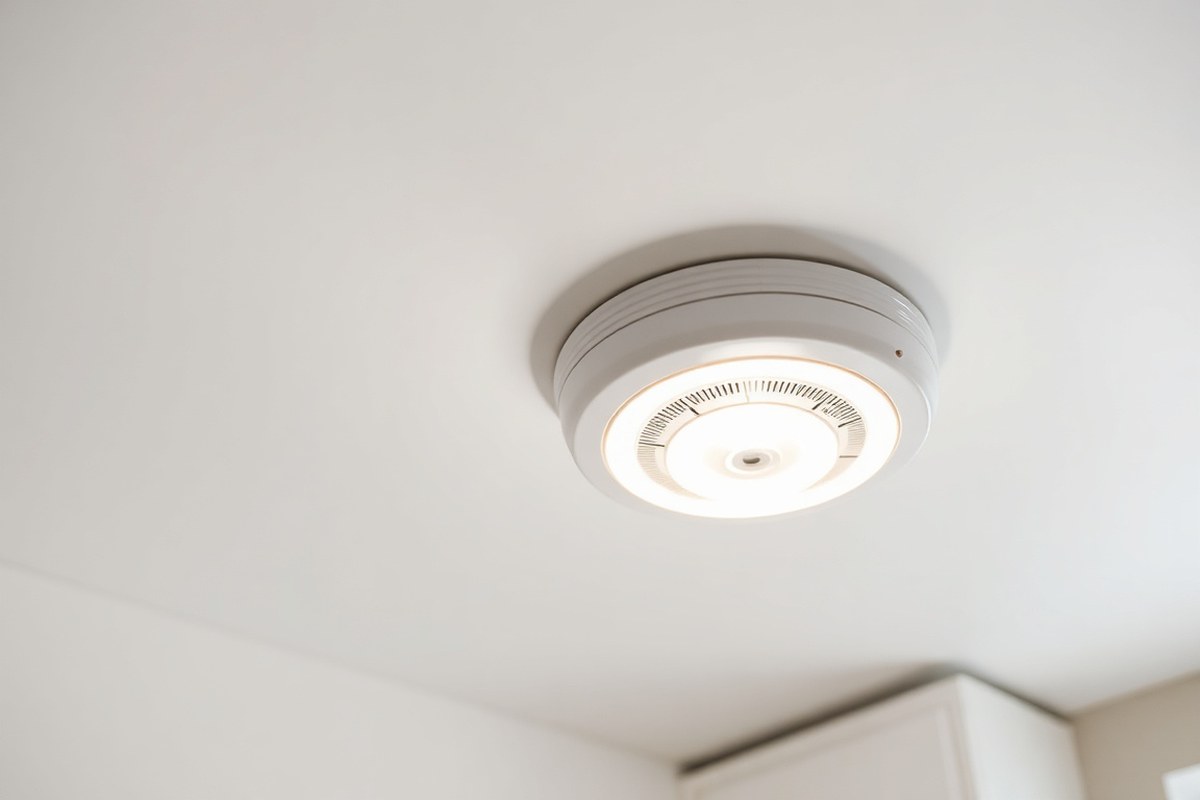
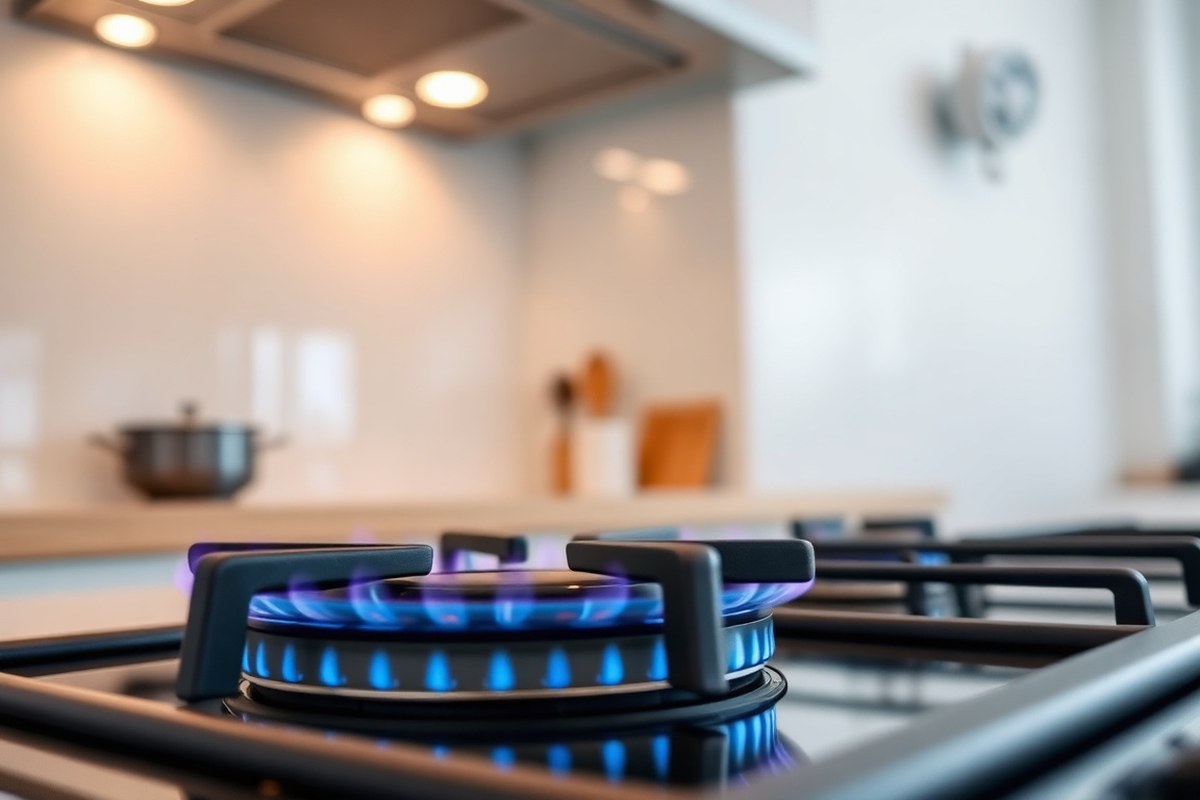
Natural gas inside your home rises because it weighs less than air. Its specific gravity is about 0.6, meaning it is 60% as heavy as air. Air’s specific gravity is 1.0, so natural gas moves upward when released indoors.
Specific gravity shows how heavy a gas is compared to air. Gases lighter than air have a specific gravity below 1 and rise.
Gases heavier than air have a specific gravity above 1 and sink. Natural gas is mostly methane at 70-90%, which makes it lighter than air.
Natural gas leaks tend to gather near the ceiling. It often collects in high corners of rooms. This happens because the gas is lighter than the air around it.
The gas won’t settle low, unlike heavier gases such as propane. Knowing this helps in placing gas detectors and spotting leaks early to keep your space safe.
Why Propane Gas Settles Lower Than Natural Gas
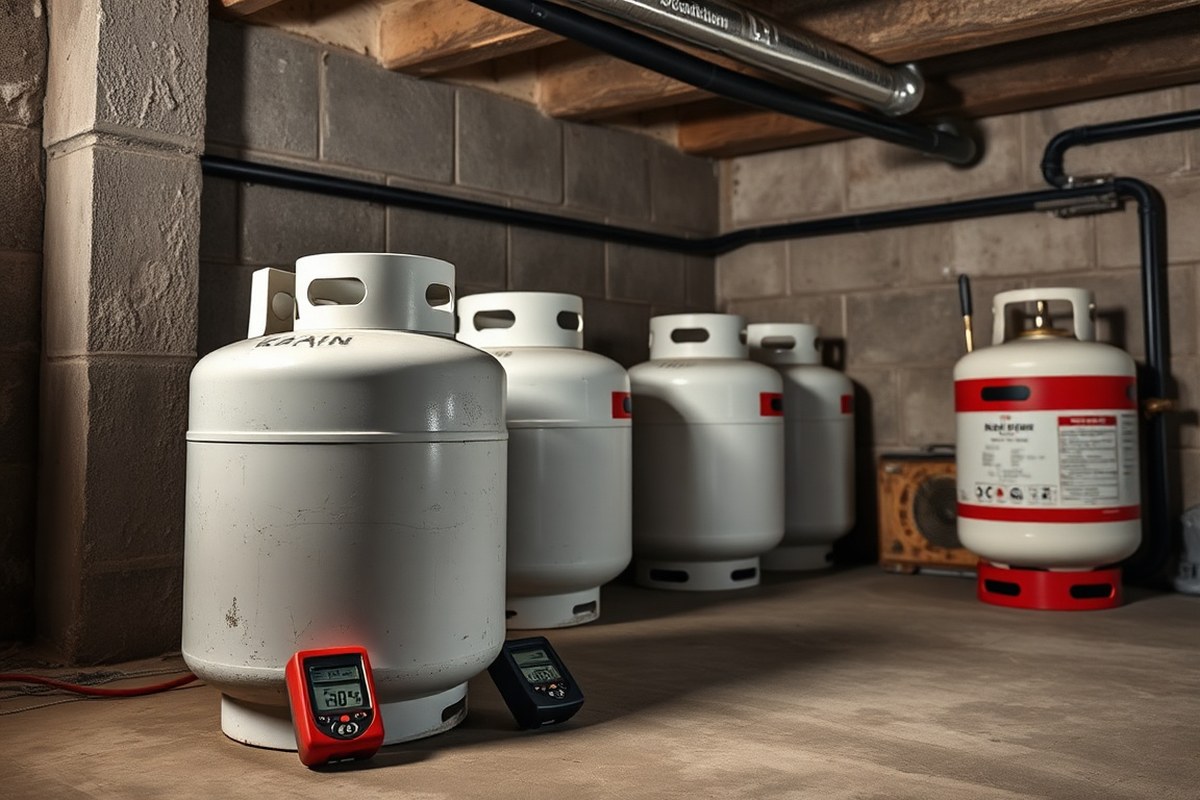
Propane gas is heavier than air. So it sinks and collects at low points indoors. This happens because propane’s molecular weight is much higher than the air’s average.
Knowing this helps you place gas detectors correctly. You can avoid dangerous gas buildup in basements or crawl spaces.
Propane’s Molecular Weight Compared to Air
The molecular weight of propane is around 44.1 grams per mole. Air weighs roughly 29 grams per mole on average.
Propane is heavier than air because of its higher weight. This makes it drop down in a room instead of rising.
Propane doesn’t mix evenly with air because of its weight. It tends to settle in areas with less air movement. For example, propane can pool in floor drains, basements, or behind furniture near the floor.
How Propane’s Density Affects Indoor Behavior
Propane’s density relative to air is about 1.5 to 1.55 times heavier. When propane leaks, it doesn’t disperse upwards like natural gas.
Instead, it flows downward and fills low spots first. This can create dangerous pockets of flammable gas.
Because it accumulates near floors or basements, propane presents a hazard in areas with poor ventilation. Proper airflow can help reduce buildup. But propane still tends to settle close to the ground for hours or longer.
Why Propane Sinks in Enclosed Spaces
Indoor air has layers and obstacles that slow propane’s movement. Areas like crawl spaces or basements trap propane because it naturally flows downward and pools. The gas stays there until strong air currents mix it or it escapes outdoors.
This settling effect means propane leaks can go unnoticed if detectors aren’t placed low enough. This explains why you should avoid open flames near floors. Electrical devices also shouldn’t be used in leak areas close to the ground.
Safety Concerns from Propane’s Low-Lying Nature
Since propane collects at the lowest levels, basements and trenches must be well-ventilated. Vents or openings can prevent dangerous buildup by letting propane escape before concentrations reach flashpoint levels. Checking for blocked vents is essential.
Install propane detectors low on walls or near floors. They should be 6 to 12 inches above the ground in homes. This placement detects leaks early, giving time to act before gas fills a room.
Always place propane detectors near the floor to catch leaks where propane collects.
How Carbon Monoxide Moves: Rise or Fall?
Carbon monoxide is slightly lighter than air. So it does not settle at the floor.
Instead, it mixes evenly throughout your home’s air. Because of this, carbon monoxide can move easily through walls, ceilings, and small openings.
Carbon monoxide mixes well in air. It does not rise like propane. Its levels stay more even throughout the room.
It spreads in all directions and can reach any part of your home quickly. That’s why detectors must be placed carefully to spot it wherever it travels.
Install carbon monoxide detectors near the ceiling on every level of your home. Focus on spaces close to bedrooms and living areas where you spend the most time. Placing detectors high allows early detection, since CO tends to stay airborne.
Don’t put carbon monoxide detectors near windows or vents where fresh air could dilute the gas. Keep them 5 feet away from stoves or furnaces. This stops false alarms.
Avoid placing detectors too close to fuel devices. Check batteries regularly and replace detectors every 5 to 7 years for reliable protection.
How Gas Density and Specific Gravity Define Rise and Fall
Specific gravity compares a gas’s density to air. Air has a specific gravity of 1 by definition. A gas with a specific gravity below 1 is lighter than air and tends to rise.
When its specific gravity is above 1, it is heavier. It tends to settle downward in the air.
Gas density is measured in units like pounds per cubic foot or kilograms per cubic meter. To find specific gravity, you divide the gas’s density by air’s density under the same conditions. For example, if a gas weighs 0.8 pounds per cubic foot and air weighs 1.2 pounds per cubic foot at the same temperature, the specific gravity is 0.8 ÷ 1.2 = 0.67.
Natural gas typically has a specific gravity of 0.96716. This number is just under 1. So natural gas is lighter and will rise indoors.
Propane, on the other hand, has a specific gravity around 1.52, making it much heavier than air. That’s why propane tends to fall and collect near the floor.
Here’s how to predict a gas’s movement using specific gravity. You want to check if the gas will rise or fall. First, find the gas’s density from a datasheet.
Or you can measure it with a gas analyzer. It weighs a set volume. Divide that density by the density of air at room temperature, about 1.2 kg/m³ or 0.075 pounds per cubic foot.
A gas weighs 0 when it has no mass or weight.9 kg/m³ at 20°C. Dividing 0.9 by 1.2 you get 0.75. Since 0.75 is less than 1, expect this gas to rise or stay mixed, not sink. On the flip side, if the calculation returned 1.5, you’d know the gas is heavier and will settle low unless disturbed.
These calculations help spot gas leak behavior indoors. Use a probe like the TopTes PT520A to trace the leak. Check the gas levels at different heights.
This shows where gas is concentrated. The gas’s specific gravity tells you where to check after a leak.
Look near floor vents if the gas is heavy. Look near ceiling vents if it’s light.
Many gases have varied mixtures that can shift their specific gravity. Temperature changes also affect density.
So always compare densities at the same temperature you’re testing. That keeps your predictions accurate and prevents misjudging whether the gas will rise or fall.
The Effects of Temperature and Gas Mixtures on Gas Movement
Hot gas generally rises faster than cold gas because heat makes gas molecules move faster. Faster movement lowers gas density, causing hot gas to become lighter than surrounding air. For example, combustion gases near a burner heat up and rise quickly as a warm plume.
Temperature can change how propane behaves indoors. Propane released cold from a container is briefly denser than air and may sink at first.
Once it warms to room temperature, it becomes less dense and can spread out differently. This warming usually happens within minutes after a leak starts.
Mixing gases affects how the whole gas cloud moves by changing its density. Propane mixed with air is heavier than air alone. This makes the combined gas settle low.
However, small temperature changes in the mix might not be enough to reverse this overall pattern. Gas leaks near the floor can build up in cold spots. These pockets trap the gases in the room.
Hot gases from burning natural gas or propane rise. This happens even though the fuel usually sinks. These gases reach high temperatures quickly and become buoyant, moving upwards.
Flames and heat rise above a stove. But unburned propane vapour stays close to the floor.
Never ignore temperature effects on gas movement. A cold propane leak may pool low before warming and dispersing.
Where Gas Leaks Collect Inside Homes: Typical Patterns
Natural gas is lighter than air, so it tends to rise inside your home. This means leaks will collect near the ceiling, attics, or upper corners of rooms. You might smell something faint.
You could see dead plants. This happens if gas leaks a long time.
Propane is different because it’s heavier than air and sinks toward the floor. Leaks often collect in basements or crawl spaces. They gather near floor vents and under furniture.
Propane doesn’t mix well with air. It can pool in low spots. This creates strong hazards.
The layout and ventilation of your home can change where leaked gas collects. Rooms that trap warm air let natural gas rise more easily.
Meanwhile, tight, enclosed spaces without airflow let propane settle longer and build up. Watch these conditions when checking for leaks or placing gas detectors.
- Natural gas often collects near ceiling vents or inside attics
- Propane pools in basements, crawl spaces, and under doors
- Gas can gather behind heavy furniture or inside closets
- Stairwells and open staircases can spread natural gas upward
- Closed or poorly ventilated rooms let propane build up lower
Place natural gas detectors 12 inches below the ceiling. This helps watch for leaks.
Propane detectors should be near the floor, around 6 inches above it. This ensures you catch the gas where it naturally collects.
Check these spots often. Do this especially if you smell gas or see dead plants. Early detection helps avoid dangerous buildups and reduces risks of explosion or poisoning.
Don’t try to fix a leak yourself. Call a professional right away.
Best Practices for Installing Gas Detectors at Home
Place natural gas detectors high on walls or ceilings to catch leaks early. Propane detectors need placement low to the floor since propane is heavier than air. Carbon monoxide detectors work best installed at breathing height or on the ceiling in central areas.
Ideal Placement for Natural Gas Detectors
Natural gas is lighter than air, so it gathers near the ceiling. Place detectors 6 to 12 inches below the ceiling on a wall. Avoid corners or spots near windows and fans because airflow may block the detection.
Check the instructions on your natural gas detector for exact recommendations. Typical units sell for $20 to $50, easy to install with screws or adhesive mounts. Test the sensors monthly to ensure they respond to gas properly.
Proper Height and Location for Propane Detectors
Propane sinks and collects near the floor because it is heavier than air. Install propane detectors 4 to 6 inches above the floor on walls.
You can also put them on the floor if the instructions say it’s okay. Place them near potential leak points like near the furnace or gas appliances.
Do not install propane detectors near air vents or windows that cause drafts. Keep these areas clear to avoid false alarms. Regularly check and replace batteries, usually every 6 to 12 months.
Carbon Monoxide Detector Placement Tips
Carbon monoxide spreads evenly but is slightly lighter than air. Install CO detectors on ceilings or walls between 5 and 6 feet high, where people breathe. Consider rooms where fuel-burning appliances or attached garages exist.
Multiple CO detectors are wise for large homes or multiple floors. Test detectors monthly and replace sensors every 5 to 7 years per manufacturer guidelines. Avoid putting CO detectors in kitchens or bathrooms, where humidity or steam can cause false alarms.
- Follow the device manual for specific mounting height and spots
- Avoid locations with strong airflow or drafts
- Position detectors near potential gas sources or sleeping areas
- Regularly test detectors to keep them working right
- Change batteries annually or when low-battery signals sound
Safe Responses When You Smell Gas Indoors
Smell gas inside your home? Leave the building immediately.
Do not use any electrical switches or phones while inside. Once outside, call 911 or your local gas company from a safe distance.
Immediate Steps on Detecting Gas Odor
Leave the building immediately when you detect a gas smell. Open doors and windows outside to ventilate the area, especially upper openings, since natural gas rises. Avoid staying inside to reduce the risk of inhaling gas or triggering a fire.
Do not try to find the source yourself or use open flames. Instead, gather everyone safely outside.
Check neighbors or nearby homes to warn them if needed. But keep a safe distance from your house.
What Not to Do Around a Gas Leak
Do not turn on or off any electrical devices, including light switches and appliances. Sparks from these can ignite the gas and cause an explosion. Avoid using phones or any equipment that might create a spark inside or near the building.
Do not try to fix the leak or use an open flame for any reason. The gas is propane or natural gas.
Small sparks may cause fire or explosion. Stay away from the leak area until a professional arrives.
- Don’t open windows or doors during the initial detection indoors if you are not evacuating immediately
- Don’t stay inside to investigate the gas leak
- Avoid using electrical switches, phones, or appliances
- Never light matches, cigarettes, or use open flames
- Don’t attempt to fix the leak yourself
- Don’t return inside until the area is declared safe by professionals
Never use light switches or phones indoors if you suspect a gas leak.
Who to Contact and When
Call 911 right away if you smell gas. Also call if you hear hissing from a gas line or appliance.
Emergency services can help prevent a disaster quickly. After calling, alert your gas provider so they can send a technician to check your home.
Use a phone outside the building to make these calls. Stay at least 100 feet away from the leak. Do not try to call from inside or near your home.
Smell gas but no hissing or leak signs? Still leave and call your gas company right away.
Comparing Natural Gas, Propane, and Carbon Monoxide Properties
Natural gas, propane, and carbon monoxide have very different physical properties that affect their movement indoors. Natural gas is primarily methane, which is lighter than air. Propane is heavier than air and tends to settle near the floor.
Carbon monoxide has almost the same density as air. It spreads evenly in the air. It doesn’t only rise or fall.
These differences determine where each gas collects inside a home and where to place detectors. Natural gas rising means you should install detectors near the ceiling.
Propane gas collectors near the floor need low-level alarms. Carbon monoxide’s nearly equal density means detectors can go on walls or ceilings for better coverage.
| Gas | Molecular Weight (g/mol) | Density Relative to Air | Movement Indoors | Detection Placement | Safety Note |
|---|---|---|---|---|---|
| Natural Gas (Methane) | 16 | ~0.55 (lighter) | Rises toward ceiling | High on walls or ceiling | Highly flammable, odor added for detection |
| Propane | 44 | ~1.5 (heavier) | Sinks to floor | Near floor or low spaces | Heavier, collects in low areas; flammable |
| Carbon Monoxide (CO) | 28 | ~1.0 (about air) | Mixes evenly, no clear rise or fall | Mid-level or ceiling | Colorless, odorless, very dangerous |
Natural gas’s low molecular weight makes it lighter than air. It floats upwards and pools near the ceiling or roof. Propane, being heavier than air, gathers at floor level, especially in enclosed spots.
Carbon monoxide’s behavior is tricky because it’s close to air’s density. It spreads evenly unless air currents move it differently.
Gas detectors are designed based on these distinct behaviors. Correctly placing alarms improves safety by catching leaks quickly. Improper placement risks missing a dangerous buildup.
For example, a propane leak might go undetected if the alarm sits high. Meanwhile, carbon monoxide’s widespread mixing means placing its detector away from vents is smart.
Step-by-Step Action Plan for Gas Safety in Your Home
Follow these steps to protect your home from gas hazards and ensure your detectors work right.
- Day 1: Locate all gas appliances in your home. Check for visible signs of leaks or damage to pipes. You’ll know you’re safe if there’s no smell or hissing sound.
- Week 1: Install gas detectors where natural gas rises and propane settles. Place natural gas detectors near the ceiling and propane detectors closer to the floor. Test each detector after installation to confirm it’s working.
- Week 2: Replace batteries in all gas detectors. This keeps them reliable. Test detectors regularly by pressing the test button to hear the alarm.
- Month 1: Practice your family’s gas leak response plan. Teach everyone where exits are and what to do if they smell gas. You’ll feel confident and ready if a leak happens.
- Quarterly: Have a licensed professional inspect your gas lines and appliances. They can spot leaks or damage you might miss. Passing the check means your home stays safer.
- Seasonally: Check and clear vents and flues to ensure proper air flow. This helps prevent carbon monoxide buildup. Your detectors staying quiet means your gas flows are safe.
- Immediately: Smell gas? Leave your house right away. Call your gas company or emergency services. Don’t use electronics or open flames inside.
Frequently Asked Questions
Does Gas Rise or Fall in a Closed Room?
It depends on the gas’s weight compared to air. Lighter gases like natural gas rise up in the air.
Heavier gases like propane settle low near the floor. This happens because propane is denser than natural gas.
How Does Humidity Affect the Rise or Fall of Gases Indoors?
Humidity can slightly change air density, influencing gas movement. Higher humidity usually makes air denser, which can affect how gases mix and spread.
Can Air Circulation or Ventilation Change Gas Behavior Inside a Home?
Yes, strong air currents and ventilation can move gases regardless of their weight. This can disperse or concentrate gases in different parts of a room.
Why Is It Important to Know If a Gas Rises or Falls for Safety?
Knowing gas movement helps place detectors properly and respond fast to leaks. Incorrect placement can delay gas detection, increasing risk for fire or poisoning.
Do Temperature Differences Inside a Room Affect Gas Rise or Fall?
Yes, warmer gases tend to rise because heat lowers their density. Cooler gases, if heavier, may fall or stay low. This matters when dealing with leaks.
Wrapping Up
Gas behaves differently based on type and temperature. Knowing this helps keep your detectors in the right spot. Start today by checking your current detector placements to match where each gas collects indoors.