What Is Considered Good Fuel Economy: How to Know and Improve Your MPG
What is considered good fuel economy depends on your vehicle type and driving habits. For most cars today, getting between 30 and 40 miles per gallon is considered good. This range beats the average American car fuel economy, which is around 24.4 MPG as of 2024.
Good fuel economy means spending less on gas while driving the same distance. City driving reduces fuel economy by 30 to 40 percent compared to highway driving. Knowing your car’s EPA city and highway MPG shows what to expect.
These numbers help you plan fuel costs. They vary depending on your driving habits.
Look at your combined MPG, which blends city and highway miles. This rating is 55% city and 45% highway drive.
Cars with higher combined MPG usually use less fuel yearly. Diesels and hybrids often have better mileage than gas cars.
Key Takeaways
- Average good fuel economy for 2026 cars ranges from 30 to 40 MPG. Most typical vehicles fall within this range. Vehicles outside this range may use more or less gas.
- Your car’s combined MPG rating reflects both city and highway driving conditions.
- City driving lowers your fuel economy by about 30-40 percent compared to highways.
- Diesel engines provide roughly 15-20 percent better fuel economy than petrol ones.
- Hybrid vehicles often achieve 45-55 MPG, higher than traditional petrol cars.
- Tracking your vehicle’s MPG regularly can spot declines indicating maintenance needs.
What MPG Counts as Good Fuel Economy Today
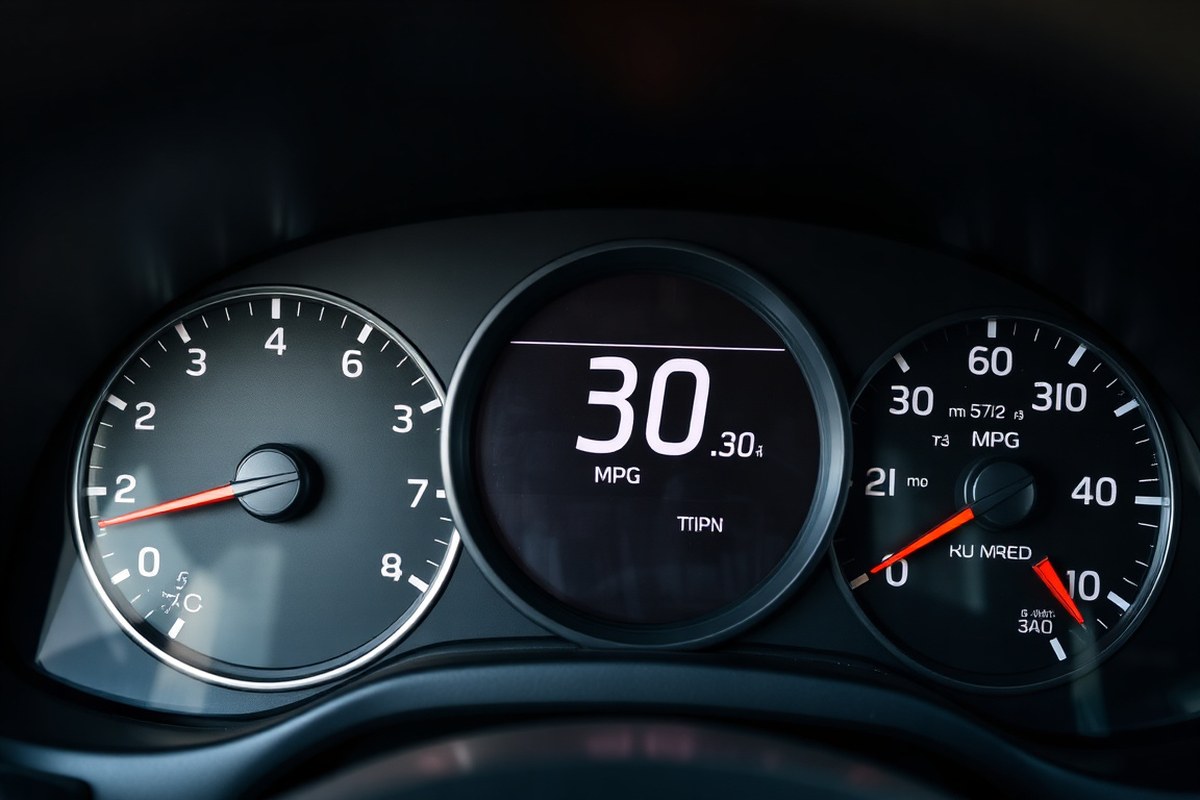
Good fuel economy means a car needs less gasoline to travel farther. The EPA assigns three ratings to new vehicles: city MPG, highway MPG, and combined MPG. The combined rating reflects usual driving by counting city miles at 55% and highway miles at 45%.
Combined MPG gives you a single fuel efficiency estimate useful for comparing vehicles. In 2026, average combined MPG for non-hybrids runs about 33 to 36. This shows how far most regular cars can drive per gallon.
Actual mileage depends on the model and your driving habits. Anything above that range is usually considered good fuel economy for most passenger vehicles.
How well a vehicle performs depends on its class. Compact sedans reaching 30 MPG combined generally show strong everyday efficiency. Midsize sedans hitting 28 MPG or more are efficient for family use.
Picking a compact SUV with at least 26 MPG combined means decent fuel economy for utility. Midsize SUVs around 24 MPG or higher are solid choices when you need extra space.
Pickups often have lower MPG because of their size and power needs. A pickup truck with 20 MPG combined is considered fuel-efficient for work. Many trucks focus on power, so this MPG is decent.
Less fuel means fewer stops and lower costs. For hybrid models, good fuel economy starts around 35 MPG combined, reflecting their better efficiency.
The EPA’s fuel economy ratings aim to reflect real-world driving but can vary. Parking lots and traffic lights can reduce MPG by 30 to 40 percent. City driving uses more fuel because of stops and starts.
Highway driving is smoother and usually saves gas. Your actual fuel economy will depend on how and where you drive. But EPA numbers provide a useful benchmark when shopping for a car.
To calculate MPG yourself, divide the miles driven by the gallons of gas used. For example, if your car travels 300 miles on 10 gallons, it has 30 MPG. The combined MPG rating helps compare vehicles before buying.
It shows how far any car can go on a gallon of gas. You see the mixed driving results in one number.
How Good MPG Varies by Vehicle Type and Usage
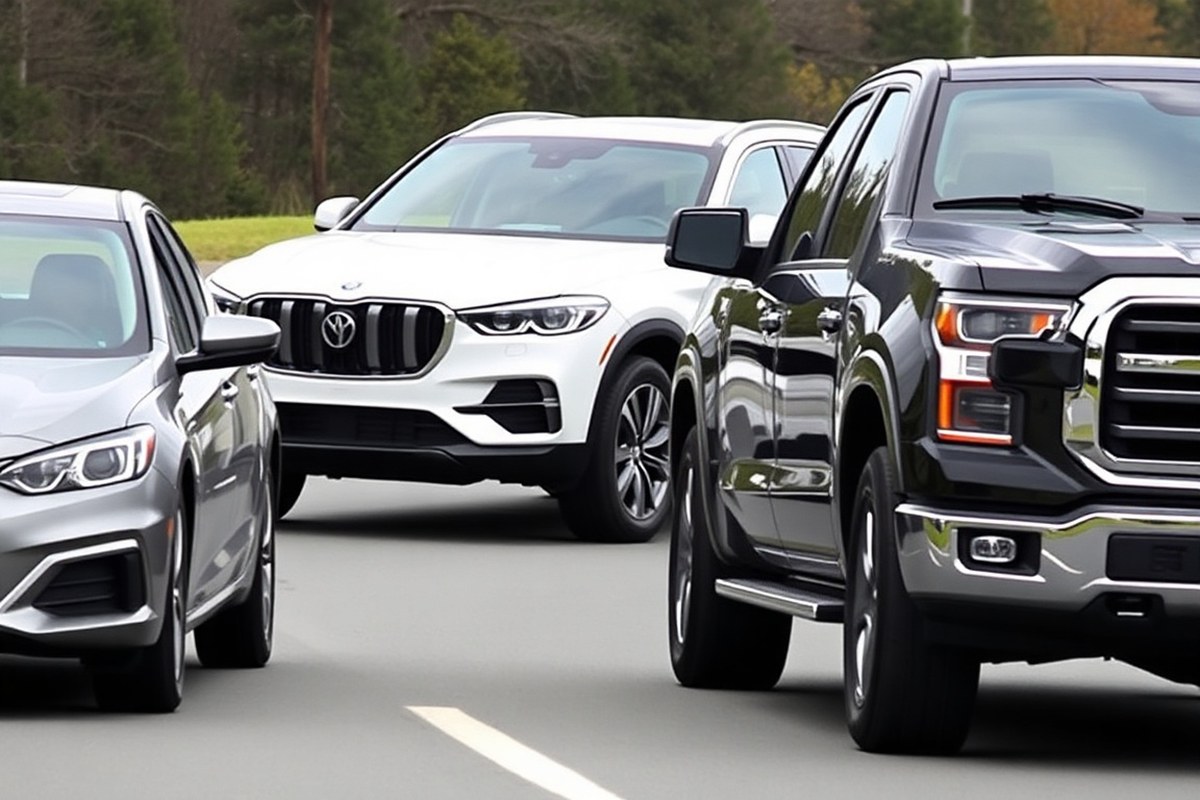
Fuel economy expectations change a lot depending on the type of vehicle. Compact cars usually aim for around 35 MPG or more to be seen as good. Trucks and big SUVs weigh more and have larger engines.
They usually get lower MPG numbers. Still, those numbers are good for their class.
Hybrid vehicles offer better fuel efficiency by combining a gasoline engine with electric power. Hybrids often get between 36 MPG and 70 MPG. This beats many traditional gas cars.
Plug-in hybrids do better on short trips if charged often. They use battery power first.
| Vehicle Class | Good MPG | Average MPG | Poor MPG |
|---|---|---|---|
| Compact Car | 35+ | 30 to 34 | Under 28 |
| Midsize Sedan | 32+ | 27 to 31 | Under 25 |
| Compact SUV | 28+ | 24 to 27 | Under 22 |
| Midsize SUV | 24+ | 20 to 23 | Under 18 |
| Full-Size SUV | 20+ | 16 to 19 | Under 15 |
| Pickup Truck | 20+ | 16 to 19 | Under 15 |
| Hybrid Sedan | 45+ | 37 to 44 | Under 35 |
| Hybrid SUV | 36+ | 30 to 35 | Under 28 |
A truck getting 25 MPG is seen as good. A sedan at 25 MPG usually isn’t. Trucks have much bigger engines and heavier bodies.
So 25 MPG means less fuel use than expected. Sedans and compact cars are lighter and more optimized for fuel savings. So their numbers are higher on average.
Choosing between hybrids, conventional cars, or trucks depends on your driving needs. A daily commuter benefits from compact sedans or hybrids with high combined MPG. Families needing space might pick midsize SUVs or hybrid SUVs balancing room and fuel efficiency.
Tip: A plug-in hybrid’s MPG falls if you don’t charge it. It uses gas more often then.
Understanding EPA City, Highway, and Combined MPG Ratings
City and Highway Ratings Defined
City MPG shows how far your car goes per gallon in stop-and-go traffic. It reflects low-speed driving, frequent stops, and idling, like in city streets or rush hour. Highway MPG measures fuel used at steady, higher speeds with fewer stops, like on freeways.
City driving is harder on fuel because restarting the engine uses more gas. Highway driving lets the engine run more efficiently, boosting miles per gallon. Because of this, city MPG usually runs 15-25% lower than highway MPG in the EPA tests.
How Combined MPG Is Calculated
The combined MPG rating averages city and highway numbers. It shows overall fuel use for mixed driving.
The EPA weights city driving at 55% and highway at 45% for this average. This ratio mirrors typical driving patterns, with more time spent in city conditions.
This weighted average gives a clearer, single number for comparing cars. A car gets 30 MPG city and 40 MPG highway.
The combined MPG is about 33 (30 x 0.55 + 40 x 0.45). This number helps you estimate daily fuel costs.
Why the EPA Uses Controlled Testing
EPA tests cars on dynamometers under lab conditions to keep results fair and comparable. These tests mimic driving cycles but don’t capture all real-world factors like weather or traffic. That’s why your actual MPG might be 15-25% below the ratings.
Test conditions include steady speeds, set acceleration, and no extra cargo or passengers. The control helps you compare models while keeping variables constant. However, EPA ratings remain a useful baseline for understanding fuel efficiency.
Interpreting City and Highway Differences
Stop-and-start driving in cities burns more fuel due to braking and acceleration. Highway driving maintains near-constant speed, easing engine load and improving MPG. This explains why highway MPG is always higher on EPA stickers.
Your driving habits can shift these numbers. More aggressive or slower driving could lower both city and highway MPG. Knowing this difference helps when picking a car based on your regular routes.
Using Combined MPG for Everyday Decisions
The combined rating on new car labels gives the most practical MPG estimate for most drivers. It balances city and highway use into one figure to make comparisons easier. This number helps you estimate how much gas you’ll use on average each week.
People who drive mostly in cities should watch the city number. It affects fuel costs more.
Highway-focused drivers should check the highway MPG. The combined rating still provides a reasonable middle ground.
Why Real-World Fuel Economy Often Differs from EPA Ratings
Real-world fuel economy usually falls short of EPA ratings by 15-25%. Everyday driving has traffic, weather changes, and vehicle issues. Official tests don’t include these conditions.
This leads to different fuel efficiency than tests show. Understanding these factors helps you expect more realistic MPG numbers.
Impact of City Driving on Mileage
Stop-and-go traffic and frequent idling can reduce city MPG by up to 40%. Accelerating from a full stop uses much more fuel than cruising at a steady speed. Traffic lights, busy intersections, and short trips heighten fuel consumption compared to smooth highway driving.
In cities, your engine often runs cold, which hurts fuel efficiency too. Constantly restarting wastes fuel and wears your brakes, adding extra resistance. These conditions make real-world city driving far less efficient than EPA city ratings suggest.
Weather and Road Conditions Affect Fuel Economy
Cold weather thickens engine oil and air, causing your engine to work harder. Running the heater or defroster also uses more fuel in winter. Hot weather makes your air conditioner run constantly, raising fuel use as well.
Wind, hills, and poor road surfaces can cut MPG by 5-10%. Driving uphill needs more power and fuel.
Rough roads increase rolling resistance. Strong headwinds force your car to burn more fuel to maintain speed.
How Driving Style Influences MPG
Aggressive acceleration, speeding, and sudden braking dramatically lower fuel economy. Smooth acceleration and gradual stopping help keep fuel use down. Driving gently can improve your real-world MPG by 10-20% compared to aggressive habits.
Maintaining a steady speed using cruise control on highways also saves fuel. Avoiding rapid lane changes and idle time prevents wasting fuel unnecessarily. Effective driving habits make a clear difference in saving gas.
Vehicle Condition and Maintenance Effects
Low tire pressure, dirty air filters, and poorly tuned engines decrease MPG. Tires underinflated by just 5 psi can lower fuel economy by about 3%. Worn spark plugs or clogged filters reduce engine efficiency too.
Regular maintenance like oil changes, filter replacements, and tire checks keeps your car running efficiently. Ignoring maintenance leads to more fuel waste and eventual costly repairs. Monitoring warning lights and engine codes helps catch issues early.
Tips to Improve Real-World Fuel Economy
Your MPG depends on how, where, and when you drive, plus your vehicle’s state. Try these practical steps to lower fuel use in different conditions:
- Drive smoothly with gentle acceleration and braking
- Keep tires inflated to the recommended pressure
- Limit idling time and use cruise control on highways
- Remove excess weight and avoid roof racks when possible
- Plan trips to avoid heavy traffic and avoid rush hour
- Use air conditioning sparingly in hot weather
- Schedule regular maintenance and fix warning signs promptly
Applying these tips takes no special tools and costs little beyond routine maintenance. The payoff is a noticeable improvement in your fuel economy and lower fuel bills over time.
Practical Ways to Improve Your Car’s Fuel Economy
Improving your car’s fuel economy comes down to a few key habits. Keep your car well-maintained to save fuel. Change some driving habits too.
Also, reduce extra weight and drag on the car. These steps can boost your miles per gallon.
They don’t cost much. They also don’t take too much time.
Start by focusing on maintenance. Keeping tires inflated correctly cuts rolling resistance, saving fuel.
Regular oil changes and air filter replacements keep the engine running efficiently. Small tweaks here can add up to noticeable MPG improvements over time.
- Check tire pressure monthly.Use a tire gauge to check tire pressure. Inflate each tire to the recommended psi. Find this info on your door jamb or manual. Underinflated tires lower your fuel economy by increasing drag.
- Change your oil on schedule. Follow your car manufacturer’s recommended intervals, usually every 5,000 to 7,500 miles. Clean oil allows the engine to run smoothly and use less fuel.
- Replace the air filter regularly. A clogged air filter restricts airflow and makes your engine work harder. It usually costs $15 to $30 and takes 10 minutes to change.
- Drive smoothly. Avoid rapid acceleration and hard braking. Gradual speed changes consume less fuel and reduce wear on your brakes and tires.
- Stick to speed limits, especially on highways. Fuel economy drops quickly above 60 mph. Keep steady speeds to reduce air drag and save gas.
- Remove unnecessary weight. Extra cargo increases fuel use. Remove heavy items you don’t need from the car. Avoid roof racks when possible. This helps reduce wind resistance.
- Combine trips and avoid idling. Cold engines use more fuel. Plan errands so the engine stays warm. Turn off the engine during waits over 30 seconds. This saves fuel.
Keeping tire pressure checked monthly saves fuel and prevents uneven tire wear. Don’t wait until you notice a flat or label warnings.
Benchmark MPG Ranges for Good, Average, and Poor Fuel Economy by Vehicle Class
Good fuel economy depends on the type of vehicle you drive. Compact cars, SUVs, trucks, and hybrids each have unique MPG ranges. These ranges help show if your mileage is good or needs work.
Check your vehicle’s MPG to know where it stands. Use the table below to check your vehicle’s MPG range.
It shows clear limits for poor, average, good, and excellent ratings. This lets you see how your car’s fuel use compares.
| Vehicle Class | Poor MPG | Average MPG | Good MPG | Excellent MPG |
|---|---|---|---|---|
| Small Petrol (e.g., Fiesta) | <35 | 35-45 | 45-55 | 55+ |
| Family Petrol (e.g., Golf) | <30 | 30-40 | 40-50 | 50+ |
| Small Diesel | <45 | 45-55 | 55-65 | 65+ |
| Family Diesel | <40 | 40-50 | 50-60 | 60+ |
| SUV/Crossover | <25 | 25-35 | 35-45 | 45+ |
| Hybrid | <45 | 45-55 | 55-70 | 70+ |
To check your MPG rating against these benchmarks, first find your vehicle’s class. Then compare your actual MPG with the ranges in the table. For example, a compact petrol car with 42 MPG falls in the “good” range.
An SUV getting less than 25 MPG is using too much fuel. Improving your driving habits can boost its fuel economy. Better maintenance could also help raise the MPG.
These MPG ranges can estimate your fuel costs, too. At $4.07 per gallon and 15,000 miles, better MPG saves you hundreds yearly. MPG shows how well your vehicle uses fuel for your trips.
How to Tell If Your Vehicle’s Fuel Economy Is Declining
Sudden drops in miles per gallon (MPG) usually show in more frequent stops at the pump. You might notice your vehicle hesitating or feeling less powerful. These signs usually mean your fuel economy is getting worse, which raises your operating costs quickly.
Some decline in fuel economy is normal as your vehicle ages. Changes in your driving habits can also reduce efficiency. These factors often cause your mpg to drop over time.
Hard acceleration, short trips, or heavy loads all lower MPG. A drop over 10% lasting more than a few tanks needs attention. Check your vehicle for possible problems soon.
- Check tire pressure; low pressure wastes fuel and hurts mileage.
- Replace a dirty air filter; clogged filters reduce engine efficiency.
- Look for engine misfires or rough idling signs, which use extra gas.
- Inspect spark plugs and ignition systems for wear or fouling.
- Ensure the fuel injectors are clean and spraying correctly.
- Check if the oxygen sensor is working; a bad sensor affects fuel use.
- Review your driving habits and routes for heavy traffic or idling.
Begin by setting your tires to the pressure shown on the door or manual. Proper pressure helps improve fuel economy. Check this regularly to keep your mpg up.
This costs nothing and takes about 10 minutes. Next, swap out air filters if they look dirty. Filters cost around $15 to $30 and improve air flow instantly.
Power loss or stalling means you should get a diagnostic check soon. Use a scanner or visit a repair shop for this test.
Spark plugs can cost $10 to $20 each but fixing them restores smooth running. Oxygen sensors and fuel injectors may need a professional service, costing between $100 and $300.
Test fuel economy at home by filling your tank completely. Reset your trip meter and drive normally for 3 to 5 tanks. Record the miles and gallons each time.
Divide miles driven by gallons used. A consistent drop in mpg of 10% or more means you likely need maintenance. Repairs can restore your vehicle’s fuel efficiency.
Comparing Fuel Economy Across Petrol, Diesel, Hybrid, and Plug-In Vehicles
Fuel economy varies widely among petrol, diesel, hybrid, and plug-in vehicles. Diesel usually beats petrol in miles per gallon, especially on highways. Hybrids do best in city driving.
Plug-ins can run partly on electric power. This saves fuel in stop-and-go traffic.
Fuel Economy of Traditional Petrol Cars
Petrol cars usually get around 20 to 30 MPG combined, depending on size and driving. They do better in stop-and-go city traffic than large trucks but lose efficiency on highways. Short trips and heavy traffic lower petrol MPG significantly.
Petrol vehicles suit urban drivers who want lower upfront costs and less noise. They burn fuel steadily but don’t recover energy like hybrids do.
Efficiency Benefits of Diesel Vehicles
Diesel engines deliver about 25 to 35 MPG combined, often beating petrol by 20% or more. Diesel cars work well on long drives. They use fuel better at highway speeds.
That is because diesel fuel holds more energy. Diesel engines also produce more torque, which helps towing and hauling without extra fuel use.
Diesel cars often cost more upfront but save on fuel for high-mileage drivers. Cold starts and stop-start city use can reduce diesel economy slightly.
How Hybrids and Plug-Ins Use Fuel Differently
Hybrid vehicles blend gasoline engines with electric motors to boost MPG to 40-50 combined. They shine in city driving by switching to electric power during idling and low speeds. Plug-in hybrids include bigger batteries.
These let you drive 15 to 40 miles electrically. After that, the gas engine kicks in.
Real-world hybrid efficiency depends heavily on driving style and battery charge. Charging a plug-in regularly cuts gas use significantly but adds the cost of electricity.
| Vehicle Type | Typical Combined MPG | Best Driving Condition | Fuel Cost Notes |
|---|---|---|---|
| Petrol | 20-30 MPG | City and short trips | Lower upfront price, moderate fuel cost |
| Diesel | 25-35 MPG | Highway and long trips | Higher upfront cost, fuel-efficient for high miles |
| Hybrid | 40-50 MPG | City and stop-and-go | Higher cost, saves fuel in traffic |
| Plug-in Hybrid | Varies, up to 50 MPG + electric range | Short trips on electric, longer with gas | Needs charging, electricity lowers fuel use |
Check combined MPG figures as they give a balanced picture for driving every day. Consider your typical trips to pick the type that saves the most fuel. Highway driving favors diesel, while city driving benefits from hybrids and plug-ins.
Regularly charging a plug-in hybrid maximizes fuel savings and reduces gas use.
Calculating Annual Fuel Costs Based on Your MPG and Driving Habits
To figure out your annual fuel cost, start with a simple formula. Divide the miles you drive by your car’s MPG. Then multiply by fuel price per gallon.
This gives your fuel cost. Say you drive 15,000 miles a year.
Your car gets 30 MPG. Gas costs $4 per gallon.07 per gallon, your annual cost is (15,000 ÷ 30) × 4.07, which equals about $2,035.
Changing your MPG slightly can affect your yearly fuel bill a lot. Your car goes from 20 MPG to 25 MPG. Your cost drops from about $3,053 to $2,442.
This is at the same miles and gas price. That saves you over $600 a year.
Gas prices rise. That makes fuel savings even more important for your budget.
Fuel prices vary by location and time. So keep an eye on local costs to budget right.
Driving habits matter too; more stop-and-go traffic usually lowers real MPG below the rating. Use your real MPG in the formula for a more accurate estimate of costs.
To compare two cars, calculate fuel costs for each using the same miles and price. For example, for 15,000 miles and $4.07 per gallon, a car with 40 MPG costs roughly $1,526 a year.
One with 50 MPG costs about $1,221. Over five years, that difference adds up to nearly $2,000 in fuel savings.
Improving your fuel economy by a few MPG points could save hundreds yearly. That could mean better driving habits or considering a more efficient vehicle.
Running the numbers shows your real cost. This matters if gas prices jump or you drive more.
Step-by-Step Action Plan to Improve and Monitor Fuel Economy
Follow these steps to see real improvement in your car’s fuel use. Track results to spot what changes work best.
- Before you start: Fill the gas tank completely. Then track miles driven before refilling to check your current MPG. Calculate your baseline fuel economy.
- Week 1: Adjust driving habits, like easing off the accelerator and reducing idle time. You should notice smoother acceleration and fewer abrupt stops.
- Week 2: Inflate tires to the recommended pressure. Use a pressure gauge to confirm accuracy for better rolling resistance.
- Week 3: Remove unnecessary weight and roof racks from your vehicle. A lighter car requires less fuel on every trip.
- Week 4: Plan trips to combine errands and avoid heavy traffic when possible. You’ll save on stop-and-go driving fuel waste.
- Month 2: Schedule a basic engine tune-up and replace the air filter if dirty. A well-tuned engine runs more efficiently.
- Month 3: Recalculate your MPG using your new gas fill and mileage log. Compare with your baseline to confirm improvement.
- Ongoing: Keep tracking your fuel use every few months and repeat maintenance. Adjust as you see fit to keep fuel economy high.
Frequently Asked Questions
What Defines Good Fuel Economy for Daily Driving?
Good fuel economy generally means your car gets more than the average of about 24.4 miles per gallon. Most drivers consider 30 to 40 MPG combined city and highway as good fuel economy today. It means you’re using gas efficiently for most trips.
How Can I Compare Fuel Economy Between Different Car Types?
Good MPG depends on your vehicle type. Compare your car’s numbers. See if they match its class.
A compact sedan with over 30 MPG is good. A midsize SUV should get 24+ MPG to be solid. This helps you set realistic fuel goals.
Why Does Real-World Fuel Economy Differ from EPA Ratings?
Real driving conditions often cut fuel economy by 30-40% in stop-and-go city traffic. EPA tests use standard cycles that don’t always match your daily route or style. Knowing this helps you adjust expectations and improve habits.
How Can I Tell If My Car’s Fuel Economy Is Getting Worse?
You track your MPG over time and look for steady drops in fuel efficiency. A decline may signal maintenance issues like clogged filters or tire problems. Catching it early saves gas and repair costs later.
What MPG Ranges Are Benchmarks for Good and Poor Fuel Economy?
MPG values change by vehicle size and type. Below 30 MPG is low. Between 35 and 45 MPG is reasonable.
Over 50 MPG is very good, usually for hybrids or efficient diesels. Knowing these benchmarks guides smart car choices.
Key Points to Remember
Good fuel economy means saving money and lessening environmental impact. Small changes in how you drive and maintain your car add up fast. Start by measuring your MPG today and watch your savings grow from there.