Is Fog a Gas? What Fog Really Is Explained with Clear Facts
Fog isn’t a gas. It contains tiny liquid water droplets floating in the air. These droplets make fog look like clouds and block your view more than gases do.
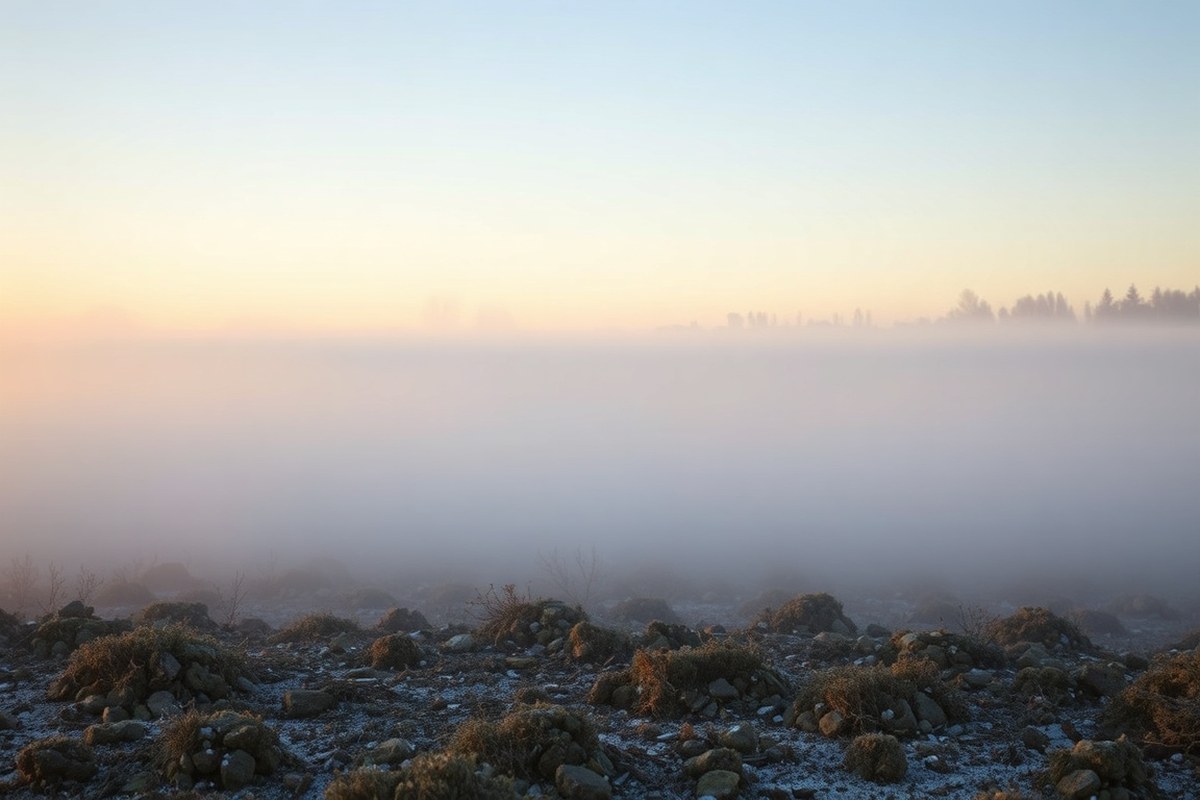
Fog looks like a low cloud resting near the ground. It forms when air becomes saturated with water vapor and tiny liquid droplets condense. Recognizing fog as a liquid suspension can help you understand its effects on weather and safety.
Think of fog as a lot of tiny water drops in the air. They float around, not like gas you can’t see. Fog affects how well you can see when driving or walking.
The wetness also makes surfaces damp or slick. Always watch how dense the fog is before moving around.
Key Takeaways
- Tiny liquid water droplets stay suspended in the air to form fog.
- Water vapor in the air condenses to form fog droplets.
- Fog reduces visibility because liquid droplets scatter light.
- Fog is like a cloud touching the ground, not a gas cloud.
- In clear air, water vapor is invisible unlike fog’s visible droplets.
- Seeing fog means the local air is saturated with moisture.
Is Fog a Gas or a Different State of Matter?

Fog is not a gas; it is made of tiny liquid water droplets. These droplets form when water vapor, a gas, cools and condenses into liquid at ground level. This tiny droplet mix is what makes fog look like a cloud close to the earth.
You can’t see water vapor because it’s a gas with particles spread far apart. That’s why steam from boiling water looks invisible before it cools down. Fog’s visibility comes from tiny liquid droplets in the air.
These droplets scatter light, unlike gas that remains clear. That’s why you can see fog but not clear air.
The water droplets in fog are very small, often less than 20 micrometers wide. They float suspended in the air, making fog appear thick and fuzzy. When droplets get dense, visibility drops below 1,000 meters.
At that point, we officially call it fog, not mist. This change warns drivers to slow down.
Fog acts like a cloud resting on the ground and shares the same liquid state. It’s not solid or gas, but liquid water suspended in air. Liquids reflect and spread light in a unique way.
That’s why fog looks thick and easier to see. Gases do not affect light like this.
How Does Fog Form in the Atmosphere?
Cooling Air to the Dew Point
Fog forms when the air cools to the dew point. The dew point is the temperature where air reaches saturation. At this point, air can’t hold all its water vapor as a gas.
When air temperature drops to the dew point, excess water vapor turns into tiny liquid droplets. These droplets gather close to the ground, producing fog. This process is a simple change from gas to liquid called condensation.
Role of Water Vapor and Condensation Nuclei
Water vapor needs something to cling to for condensation to happen efficiently. Microscopic particles called condensation nuclei act like surfaces where water vapor can turn into liquid droplets. They are tiny dust or pollution particles floating in the air.
The water vapor collects around these nuclei, forming many tiny droplets. These droplets are too small to fall.
So they hang in the air near the surface, making fog visible. Without these particles, fog formation would be much harder.
Typical Conditions and Times for Fog Formation
Fog often forms during the early morning hours when the air cools overnight. At night, the ground loses heat, cooling the air above it. This cooling brings the air temperature closer to the dew point, causing fog.
Forks near lakes or moist areas experience fog because water vapor cools by the lake’s temperature. The cooling condenses water vapor into droplets that cling together as fog. You usually see this in calm, moist environments with light winds.
Types of Cooling That Lead to Fog
Radiation cooling happens when the land chills after sunset, lowering air temperature near the ground. This is common in rural or clear-sky settings. The cold air holds less water vapor, triggering condensation and fog.
Another way fog forms is when warm, humid air moves over colder surfaces. The air’s temperature cools quickly, reaching the dew point. This process creates advection fog, which you often find along coastlines.
Factors Affecting Fog Thickness and Duration
Dew point temperature and humidity levels determine how thick and how long fog lasts. Higher humidity and air temperatures close to the dew point mean denser fog. Wind speed also matters; calm air helps fog stick around longer by preventing dispersion.
In very cold conditions, water vapor can freeze and form ice fog. This type appears as tiny ice crystals near the ground in freezing temperatures. It’s less common but shows how temperature affects fog’s physical form.
Keep in mind that dew point helps predict fog forming. It shows when fog will clear during the day. Understanding this helps you know the weather better.
What States of Water Are Present in Fog?
Fog mainly consists of tiny liquid water droplets floating in the air. These droplets form when water vapor cools and changes from gas to liquid.
The water vapor itself is invisible. The droplets make fog visible as a white or gray haze.
Fog droplets usually measure between 10 and 100 micrometers (0.01 to 0.1 millimeters). Their small size allows them to float in the air for a while. Air currents help prevent these droplets from falling to the ground quickly.
Water vapor is a gas found in the air around us. It is water in a gaseous state and invisible to the eye. Air cools or becomes very full of water vapor.
Then, the vapor changes into tiny liquid droplets. These droplets group together and form fog.
| State of Water | Description | Typical Size | Visibility |
|---|---|---|---|
| Water vapor (gas) | Invisible gaseous water held in the air | Individual molecules, nanometer scale | Invisible |
| Liquid droplets in fog | Tiny water droplets formed by condensation | 10 to 100 micrometers (0.01 to 0.1 mm) | Visible white or gray haze |
Fog is a type of liquid aerosol, meaning liquid droplets are mixed throughout the gaseous air. This mixture is a colloid, where liquid particles stay suspended in gas. Fog looks cloudy even though it holds only a tiny bit of water.
This happens because the droplets scatter light in many directions. That makes the fog appear thick and misty.
What Are the Main Types of Fog and How Do They Differ?
Fog comes in different types depending on how it forms and where. Major categories include radiation fog, advection fog, and cold weather fogs like freezing fog. Each type forms under unique conditions and affects visibility differently.
Radiation Fog: Formation and Conditions
Radiation fog forms when the ground cools quickly at night. This cooling chills the air near the surface, causing moisture to condense into tiny droplets. It usually happens during calm nights with clear skies.
The sun rising and warming the air often clears it. It mostly lasts just until morning.
This fog often appears in low-lying areas like fields or valleys. It can last for a few hours before fading as temperatures climb. You mostly see it in fall and spring.
Nights cool quickly then days warm up fast. These temperature changes cause the fog.
Advection Fog and Its Coastal Origin
Advection fog forms when warm, humid air flows over cold land or sea. The air cools, and moisture turns into fog. Coastal places get this fog from sea breezes over chilly water.
Another form of advection fog, called frontal fog, happens when warm raindrops fall into colder air. This type often appears ahead of weather fronts and can spread over land for many miles. It usually lasts longer than radiation fog and can be thicker.
Cold Weather Fogs: Freezing and Ice Fog Defined
Freezing fog develops in cold weather when supercooled water droplets stick to surfaces. These droplets freeze on contact, creating frost or ice buildup. This makes roads and surfaces slippery and hazardous for travel.
Ice fog occurs in even colder conditions, often below -22°F (-30°C). It happens when water vapor turns directly into tiny ice crystals near the ground. Ice fog is common in Arctic regions and can reduce visibility badly, similar to snow.
Other Fog Types: Valley, Upslope, and Frontal Fog
Valley fog collects in low mountain valleys where cool air settles. It can linger all morning until sunlight heats the air enough to evaporate it. This fog often forms after radiation cooling overnight but stays longer in sheltered spots.
Upslope fog appears when moist, warm air is pushed uphill by mountains or hills. As the air rises, it cools and condenses to form fog up the slope. This fog can cover large areas and often signals moist air moving into mountainous regions.
Frontal fog appears near weather fronts where warm air quickly cools. It also forms when rain falls into cold areas. This rapid cooling makes the fog form fast.
It can combine with advection fog and often causes thicker, longer-lasting fog layers. Driving conditions become especially risky in frontal fog.
How Is Fog Different from Clouds, Steam, and Mist?
Fog, clouds, mist, and steam all involve tiny water droplets or vapor in the air. They differ mainly by where they form, how dense they are, and their temperature. Understanding these differences clears up common confusion about their nature.
Fog vs. Clouds: Location and Composition
Fog is just a cloud that forms near the ground. Both fog and clouds are made of tiny water droplets or ice crystals suspended in air.
The difference lies in altitude: clouds hang high in the sky. Fog stays low and touches the earth’s surface.
Fog can make streets wet and reduce visibility to less than a quarter-mile. Clouds rarely interfere with what you see on the ground.
Both contain liquid or frozen water. But fog’s droplets are generally smaller and closer together, creating thicker haze near you.
Differences Between Fog, Mist, and Steam
Fog and mist both consist of water droplets in the air. But mist is less dense. Mist causes slight haziness and visibility over a mile.
Fog makes visibility below about 0.6 miles. This difference is clear when you step outside on a damp morning.
Steam looks like fog but is hotter water vapor rising from boiling or warm water. Water molecules heat up and escape into the air. This is steam.
You often see it as a white cloud above a hot surface. Once steam cools, it becomes invisible water vapor.
Temperature separates steam from fog. Steam’s droplets are warmer and quickly rise.
Fog forms near the ground at cooler temperatures, resting on surfaces. This is why steam disperses fast and fog lingers.
Water Vapor’s Invisible Role
Water vapor is the gaseous state of water and is invisible. Air cools and moisture condenses into tiny liquid droplets. This creates fog, mist, or clouds.
These are forms of condensation. Without this condensation, you wouldn’t see any fog or cloud at all.
Humidity levels affect condensation. When air is nearly saturated near the ground, fog or mist can form. Air needs to be saturated for water vapor to become visible.
High humidity alone doesn’t make vapor show. This explains why you sometimes feel damp air but see no fog.
| Feature | Fog | Clouds | Mist | Steam |
|---|---|---|---|---|
| Location | Near ground | High in sky | Near ground | Rises from hot water |
| Visibility | < 0.6 miles | Usually clear on ground | 1+ mile | Clear quickly |
| Temperature | Cool | Varies | Cool | Hot |
| Composition | Liquid droplets | Liquid or ice crystals | Liquid droplets | Hot vapor and droplets |
Don’t confuse steam with fog on chilly mornings, they come from different heat and moisture conditions.
Why Does Fog Reduce Visibility so Much?
Fog looks thick and opaque because it holds countless tiny water droplets. Each droplet scatters sunlight, bouncing the light in many directions. This scattering blocks a clear view through the fog.
Water vapor alone is invisible since it’s a gas without particles to scatter light. When vapor condenses into droplets about 10 to 15 microns wide, they become visible. These droplets reflect and refract light, which makes the fog appear white and dense.
Droplet size matters for how far you can see. Smaller droplets scatter light more evenly and can create a thicker-looking fog. Larger droplets might cause the fog to appear patchy or thin with a bit more visibility.
The droplets get denser as more vapor turns into liquid. This reduces how far your eyes can see clearly. Visibility drops when the air fills with tiny water droplets.
Legal definitions of fog often focus on visibility. In many places, fog exists when visibility falls below 1,000 feet (about 300 meters).
Below this distance, driving and flying become risky, causing delays and accidents. Pilots and drivers rely on these legal limits to decide when extra caution is needed.
Thick fog can reduce visibility to just a few hundred feet. Light can’t pass straight through.
So you see only the scattered light around the droplets. This effect makes fog look like a solid cloud sitting at ground level.
The combination of droplet size and density sets how fog blocks your sight. Heavy fog with tiny droplets cuts visibility much more than light, patchy fog.
That’s why some fog feels like a wall. Other fog lets you see shadows ahead.
How Environment and Weather Affect the Formation and Duration of Fog
Fog forms when air cools to its dew point, raising humidity near 100 percent. This usually happens in stable conditions where the air does not mix much.
Temperatures rising quickly above the dew point make fog evaporate fast. Tiny water droplets turn back into vapor when the air heats up.
Wind also plays a big role. Light winds help fog stick around by keeping air layers still. Strong winds mix the air and reduce humidity, making fog disappear.
Coastal fog forms more often with gentle sea breezes. These breezes bring moist air from the ocean inland. This moist air helps fog form more.
Geography affects fog frequency and duration a lot. Valleys often trap cool, moist air, so fog lasts longer there. Mountains can block or funnel air, creating local fog or clearing it sooner.
Fog forms near large water bodies when warm air meets cool surfaces. Lakes and oceans stay cooler, causing fog to develop. This change helps water droplets settle.
Season changes influence fog too. Cold, clear nights in fall and winter cause thick fog. The ground cools strongly during these nights.
This cooling helps fog last a long time. In summer, fog appears briefly in early mornings. The sun’s heat burns off fog as the day warms.
This makes summer fog short-lived. Quick temperature rises during the day break up the fog.
To predict fog’s duration, check if air temperature nears dew point. Make sure humidity is above 90 percent and winds are under 5 mph. Also, look for stable air with no big storms nearby.
Geography like valleys or coastal zones boosts fog chances. Also, a calm, clear night before sunup signals longer fog because the ground cools more.
Fog disappears faster when temperatures climb just a few degrees above the dew point. Rain passing through fog can slightly warm the air or mix layers.
But it usually doesn’t clear fog instantly. Heavy rain or strong wind, however, speeds fog dissipation significantly.
Knowing these fog factors helps you predict if it will stay or go. You learn when fog is likely to linger or fade fast. This helps you plan better during foggy weather.
Watching temperature, humidity, wind, and local land features gives clues. This can help planning outdoor activities or travel in fog-prone spots more safely and effectively.
Common Myths and Mistakes About Fog Explained
Fog is not just a gas or steam. It forms when water vapor condenses into tiny liquid droplets suspended in the air. These droplets are so small that they float, giving fog its thick, cloudy look.
People often confuse fog with steam because both appear misty and involve water vapor. Steam comes from boiling water and is hot vapor that quickly rises and disappears. Fog forms when warm air meets cooler air near the ground.
This cools the water vapor. Droplets then form, creating fog.
Fog can form indoors in some cases. It needs moisture and cold temperatures. These conditions are quite specific.
Picture a cold room with warm, damp air inside. The air hits a cold surface.
Water then condenses and causes foggy patches. This is rare compared to outdoor fog.
Many mistake fog for mist or smoke because they look similar at a glance. Mist has larger droplets than fog and usually causes less visibility reduction.
Smoke contains tiny solid particles, making its smell and color different. Knowing this helps you identify which one you’re dealing with during poor visibility.
Fog appears thick because of those tiny water droplets, which scatter light in all directions. This is why visibility drops drastically during foggy conditions.
Droplets are typically less than 20 microns wide. So they stay airborne and block clear vision.
Steam fog happens over oceans where cold air flows over warmer water. Warm, moist air meets the cooler air above, making water vapor condense into fog. This type of fog sometimes drifts over land near coasts and lakes.
Keep your headlights on low beam in fog. High beams can reflect off droplets and reduce visibility further.
Safety Tips for Dealing with Foggy Conditions
Fog can reduce visibility to just a few feet. This makes driving or walking risky. Be very careful in foggy conditions.
When you drive, slow down and use low-beam headlights to avoid glare. High beams reflect off the fog and reduce your ability to see far ahead.
Try to keep plenty of space between your car and the vehicle ahead. Use your windshield wipers and defroster to keep glass clear. Visibility under 100 feet calls for immediate action.
Pull over safely. Turn on your hazard lights.
- Drive at speeds below the posted limit and avoid quick lane changes
- Use fog lights if your vehicle has them, but never use high beams
- Follow road markings to stay in your lane if visibility is poor
- Stop by pulling off the road safely. Use your hazard lights to warn others. This keeps you and others safe.
- Stay alert for stopped or slow vehicles, pedestrians, and animals
- Keep your windshield and mirrors clean to reduce glare and improve vision
Getting caught in thick fog outside? Stay where you are. Moving around can be dangerous.
Walk slowly if you must move and avoid busy roads. Wear bright clothes or carry a flashlight to help others see you better. Staying calm and moving carefully reduces injury risk.
Some tools can help with fog navigation. Fog lights on cars shine lower and wider to cut through the haze. Portable GPS units help follow your route in fog.
Smartphone apps also work well. They guide you when roads disappear. Checking real-time weather apps before travel lets you know if fog is likely.
Driving with fog takes patience and focus. Keep your eyes moving between the road and mirrors. Avoid distractions like phone use or adjusting the radio.
It might take extra travel time. But safety is worth it every time you face dense fog outdoors or on the road.
Step-by-Step Action Plan for Understanding and Handling Fog
Get familiar with fog by learning what it is and how to stay safe around it. Follow these steps to build your knowledge and confidence.
- Day 1: Recognize fog as tiny water droplets, not a gas. Notice how it forms when humid air cools down.
- Day 2: Identify common fog types like radiation and advection fog. See which type appears in your area.
- Day 3: Learn differences between fog, clouds, and mist. Look outside and compare their visibility effects.
- Day 4: Practice driving in fog using low beams. Check your visibility range to stay safe on the road.
- Week 1: Watch how weather and environment affect fog. Track temperature, humidity, and wind changes nearby.
- Week 2: Start correcting common fog myths when you hear them. Share correct facts with friends or family.
- Ongoing: Use weather forecasts to plan activities around fog conditions. Avoid travel during dense fog times whenever possible.
Frequently Asked Questions
Is Fog Made of Gas or Liquid Droplets?
Fog is made of tiny liquid water droplets, not gas. These droplets hang in the air, creating the cloudy look you see on foggy mornings.
Why Does Fog Look Like a Gas If It Is Liquid?
Fog looks like gas because its droplets are very small and spread out. The tiny size and spread make it look like mist or smoke, which are often gases.
Can Fog Turn into a Gas?
Fog evaporates into water vapor, which is a gas. When the sun heats the fog, those liquid droplets turn to invisible gas again.
Does Fog Contain Water Vapor?
Yes, fog contains water vapor along with liquid droplets. The air is saturated, so water vapor changes into tiny liquid droplets you see.
Is Fog a Type of Cloud or Something Different?
Fog is a type of cloud that forms near the ground. It’s basically a low cloud made of tiny liquid droplets suspended in the air.
Before You Go
Fog is not a gas but a cloud of water droplets near the ground. You can spot, understand, and handle it safely by knowing these facts. Next time you see fog, remember it holds tiny water droplets.
These droplets hang in the air. It is not just mist or steam.