What Is the Speed of Light in MPH? Exact Value, Conversions & Facts
What is the speed of light in mph? The speed of light in a vacuum is about 670,616,629 miles per hour.
This means light travels over 670 million miles every hour without slowing down. It’s one of the fundamental limits in physics, meaning nothing can go faster.
Light’s speed sounds huge, and that’s because it is. This number comes from tracking light’s travel distance every second. Then it is converted into miles per hour.
You should know it changes when light moves through things like water or glass. But in empty space, this value stays constant.
Knowing the speed of light helps understand a lot about space and physics. It also sets a baseline to compare with speeds of spacecraft or fast particles. Sticking to the exact number in mph keeps calculations accurate and clear.
Key Takeaways
- Light travels roughly 670.6 million miles each hour in empty space.
- Light speed is constant in empty space but slows in materials like water or glass.
- No object with mass can exceed the speed of light in vacuum.
- At 99% light speed, spacecraft still measure light’s speed as the same constant.
- Light travels about 186,282 miles per second, a commonly used scientific figure.
- The fastest man-made object moves at only about 0.059% of light speed.
What Is the Speed of Light in Miles per Hour?
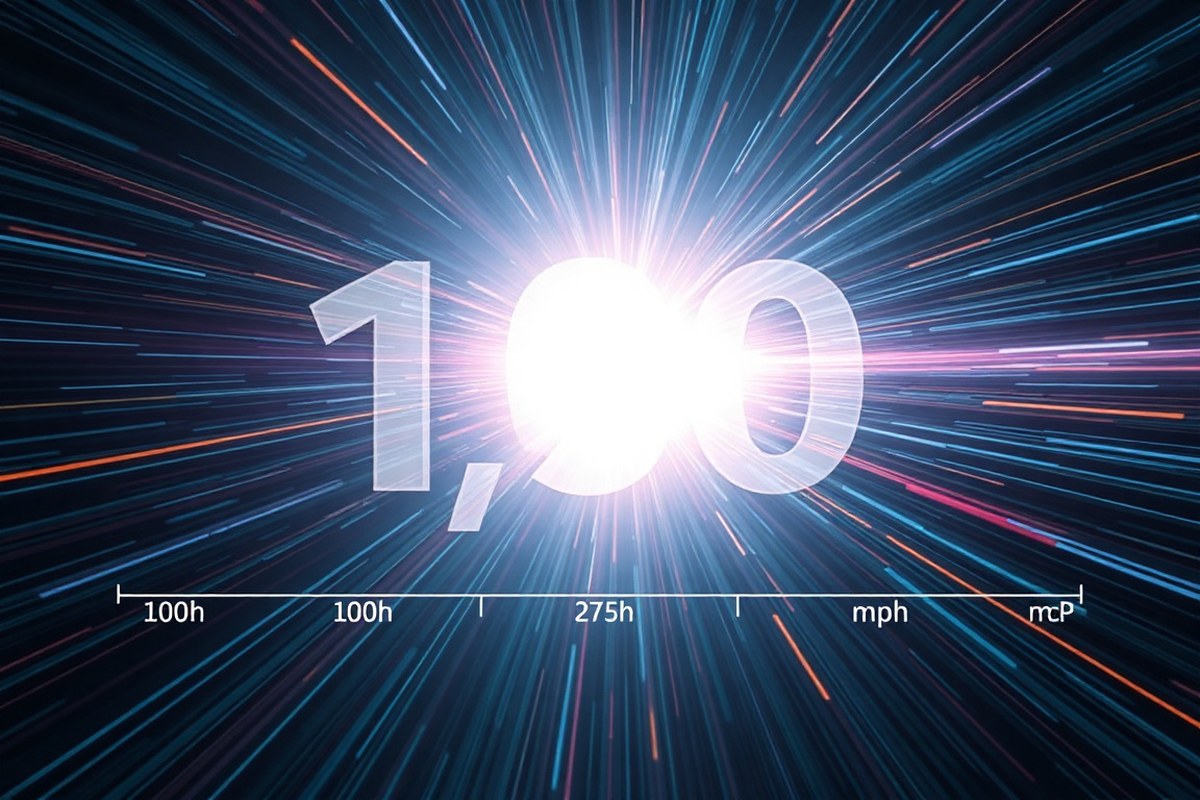
Light travels at exactly 299,792,458 meters each second in a vacuum. To find this speed in miles per hour, use the conversion where 1 mile equals 1,609.344 meters. Divide the speed in meters per second by 1,609.344 to get miles per second first.
That calculation looks like this: 299,792,458 meters per second ÷ 1,609.344 equals approximately 186,282.4 miles per second. Next, multiply that by 3,600 to convert seconds to hours. Multiplying 186,282.4 by 3,600 gives about 670,616,629 miles per hour.
This value, roughly 670.The speed of light in miles per hour is often shown as 6 million. This number is a common estimate you might see in books or online. It helps to make the speed easier to understand.
You convert meters per second to miles per hour using clear steps. These steps need precise conversion numbers to work correctly.
Following them carefully gives you the right speed in mph. Using 0.44704 meters per second per mph works too: dividing 299,792,458 by 0.44704 gives the same result.
How the Speed of Light Was Accurately Measured over Time
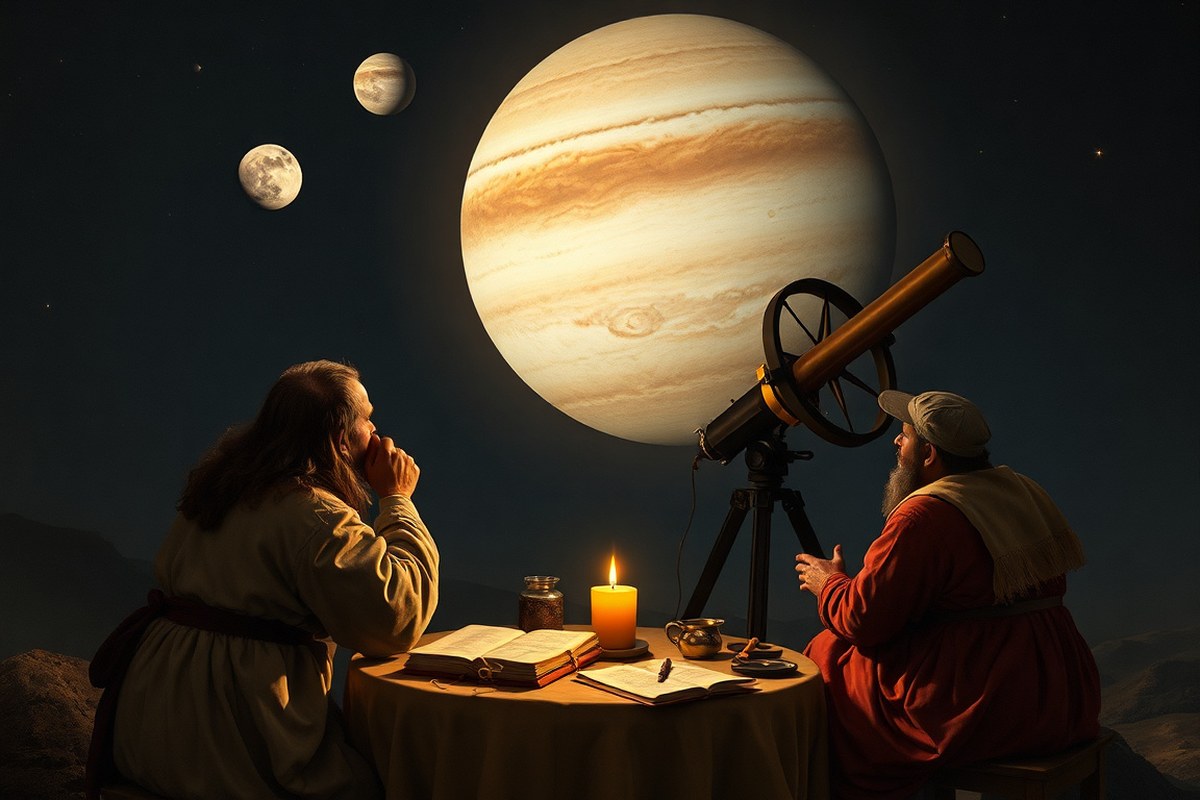
Ole Rømer’s Astronomical Method (1676)
Ole Rømer made the first successful speed of light measurement in 1676. He watched Io, a moon of Jupiter, and timed its eclipses. His estimate was about 214,000 kilometers per second, roughly 28% lower than we now know.
He noticed the eclipses appeared delayed when Earth was farther from Jupiter. Using this delay, he guessed how long light takes to cross Earth’s orbit. This idea showed light doesn’t travel infinitely fast.
Fizeau and Foucault’s Terrestrial Measurements
In 1849, Hippolyte Fizeau used a toothed wheel and mirror 8.6 kilometers apart to time light’s travel. He found a speed near 313,000 kilometers per second, about 4.5% faster than today’s accepted value.
Léon Foucault improved the speed of light measurement in 1862. He used rotating mirrors.
His results were close to 298,000 kilometers per second. His work reduced errors to about 0.6% below the modern speed of light.
These experiments showed how Earth-based tools could measure light speed with growing accuracy. Improvements continued with Albert Michelson’s rotating mirrors, reaching errors as low as 0.001% by 1926.
Laser-Based Modern Measurements (1970s-1983)
Laser technology allowed much better control and timing in the 1970s. Scientists fired laser beams over precise distances and measured travel times with high-speed electronics. This cut error margins to just a few parts per million.
In 1983, the meter was redefined by fixing the speed of light. It is exactly 299,792,458 meters per second.
This made the speed of light a standard measurement. This means modern “measurements” rely on the fixed speed and define distance units accordingly.
Modern laser methods confirm the speed of light constant. This helps technologies like GPS and fiber optics. They rely on this exact light speed.
Here is a basic outline of how classic terrestrial measurements were made:
- Shine a light through a rotating toothed wheel or onto a spinning mirror.
- Reflect the light beam off a distant mirror hundreds or thousands of meters away.
- Adjust wheel or mirror speed until the returning light is blocked or shifted in timing.
- Note the rotation rate and distance to calculate the time taken by the light.
- Use these values to find the light speed by dividing distance by time.
Accurate distance measurements and timing precision are key to reliable results in light speed experiments.
Why the Speed of Light Is a Constant and Universal Limit
The speed of light remains constant for all observers because of how space and time work. Albert Einstein’s special relativity shows light’s speed stays constant. It does not change no matter how you move.
This applies for every observer. Nothing with mass can hit or exceed this speed.
It acts as a universal speed limit in physics. No physical object can pass it.
How Relativity Keeps Light Speed Constant
Einstein’s theory reveals that space and time themselves adjust to keep light speed constant. Instead of light changing speed, time and space adjust instead. Clocks slow down and rulers shrink.
This keeps light’s speed the same for all. If you move toward light, you still measure its speed as 299,792,458 meters per second.
This speed never changes. It is always exactly the same.
This effect happens because space and time form a single fabric known as spacetime. Observers moving at different speeds slice this fabric differently. But everyone finds the speed of light to be the same.
Why Massive Objects Can’t Reach Light Speed
Objects with mass need more energy to speed up near light speed. The closer they get, the more energy they require. It becomes harder to go faster.
Their relativistic mass increases as they approach light speed. This means you need infinite energy to actually reach light speed.
It becomes impossible to pass. Since infinite energy isn’t possible, massive objects can’t get there.
For example, a spacecraft at 85% light speed needs huge energy to go faster. It requires more than just a small push. The energy needed grows quickly.
At 99.9%, that energy need grows dramatically and becomes impossible to meet. So, physical limits prevent anything with mass from hitting or exceeding light speed.
Relativity’s Universal Speed Limit
The speed of light, often called “c,” acts as the ultimate speed limit in the universe. No signal, particle, or object can exceed this speed without breaking known laws of physics. Going faster than light would mean moving back in time, which can’t happen.
Physics treats this as impossible. It breaks known physical laws.
This limit protects cause and effect, keeping events ordered in time. It maintains consistent physics and prevents paradoxes that would happen if faster-than-light travel were possible.
What Happens Near Light Speed
As you get close to light speed, time dilates and lengths contract. This means time for the traveler slows down compared to people at rest. Also, distances shrink along the direction of travel, helping the traveler avoid breaking that speed limit.
A spaceship traveling at 90% of light speed still measures light speed as exactly C. Its instruments always see light speed as unchanged.
Meanwhile, outside observers see the ship’s clocks slow down and its lengths shorten. These effects balance the measurements so light’s speed stays constant.
How Fast Is Light Compared to Spacecraft and Everyday Objects?
The speed of light is incredibly fast compared to everyday objects and even spacecraft. NASA’s Parker Solar Probe is the fastest human-made object, reaching about 429,000 mph (692,000 km/h). This speed is only about 0.064% of light speed.
Commercial jets fly at about 560 mph. GPS satellites circle Earth at roughly 8,700 mph.
Looking at these numbers gives you a better sense of just how fast light travels. Even the fastest spacecraft we built is still thousands of times slower than light. This big difference is important when scientists figure out space travel times.
It also matters for how GPS systems use the speed of light to find distances. Both rely on light’s speed to give accurate results.
| Object or Vehicle | Speed (mph) | Fraction of Light Speed (%) |
|---|---|---|
| Speed of light (vacuum) | 670,616,629 | 100% |
| Parker Solar Probe (fastest spacecraft) | 429,000 | 0.064% |
| GPS Satellites | 8,700 | 0.0013% |
| Commercial Jet Aircraft | 560 | 0.000083% |
| Speed of sound in air (Mach 1) | 767 | 0.00011% |
| Bullet from a high-powered rifle | 2,485 | 0.00037% |
GPS satellites must adjust their clocks for relativity effects caused by their speed and altitude. Their speed is just a tiny fraction of light speed.
But it still affects the timing. This correction ensures GPS can pinpoint your location accurately.
Commercial jets and even bullets travel far slower compared to light, by many orders of magnitude. The huge gap between these speeds shows why light’s speed is constant. It’s also why the speed of light sets a natural limit.
These facts shape many scientific and tech rules. Understanding these scales helps you appreciate both everyday travel and space exploration challenges.
How Long Does Light Take to Travel Common Cosmic Distances?
Light travels from the Sun to Earth in roughly 8 minutes and 20 seconds. The distance between the Sun and Earth measures close to 93 million miles. This means the sunlight you see left the Sun more than 8 minutes ago.
Proxima Centauri is much farther from Earth than the Sun is. It lies about 4.24 light-years away from us.
One light-year equals roughly 5.88 trillion miles of travel. This means light from Proxima Centauri takes more than four years to arrive.
These travel times help explain cosmic scales. For example, light crosses the distance between Earth and the Moon in just 1.28 seconds. The time light takes helps measure space distances directly.
This measure works because light travels at a constant speed. To find light travel time, divide distance by light’s speed.
Light moves at about 670 million miles per hour. This gives you how long light takes from an object.
Here’s a simple example: the average distance to the Moon is 238,855 miles. Divide that by 670 million miles per hour and convert hours to seconds. The calculation shows light reaches the Moon in 1.28 seconds, confirming the estimate used by astronomers.
For objects farther away, like the edge of our solar system, light takes nearly 1.87 years to arrive. The distance to the Oort Cloud, for instance, stretches billions of miles beyond Neptune. This shows that even within our solar neighborhood, light takes a long time to cross space.
Light travel times show what you’re actually seeing in space. The stars we view emit light that moved for years. This tells us about events from the past.
The farther away, the older the light. Telescopes do more than make objects look bigger.
They let you see objects as they were long ago. This is because of the time light takes to arrive.
Light travel times mean we see only the universe’s past. Astronomy never shows the current state of distant objects. This is because light takes time to get here.
How the Speed of Light Changes in Different Materials
Light travels at its fastest speed in a vacuum, about 670,616,629 miles per hour. It slows down when passing through materials like water, glass, and diamond. This happens because light interacts with the atoms in these substances, which delays its progress.
The measure of how much light slows down is called the refractive index. It compares light’s speed in a vacuum to its speed in the material. A higher refractive index means light moves slower through that material.
| Medium | Refractive Index (n) | Speed (miles per hour) | % of Speed in Vacuum |
|---|---|---|---|
| Vacuum | 1.000 | 670,616,629 | 100% |
| Water | 1.333 | 503,014,768 | 75.0% |
| Glass | 1.5 | 447,077,753 | 66.7% |
| Diamond | 2.42 | 277,115,207 | 41.3% |
Light moves through water at about 503 million mph. This is roughly 25% slower than in a vacuum.
In ordinary glass, the speed drops to about 447 million mph. This is one-third slower than its speed in empty space.
Diamond has a much higher refractive index, around 2.42. Here, light’s speed shrinks to about 277 million mph.
That means light travels just over 40% as fast as it does in a vacuum. The denser the material’s atoms, the slower light moves because it keeps interacting with them.
This slowdown affects technologies like lenses and fiber optics. Understanding how light speed changes helps you predict how light bends and behaves in different media. These changes are significant, but light still moves incredibly fast even through dense materials.
Common Misconceptions About the Speed of Light in MPH
Many people mix up the speed of light in miles per hour and miles per second. The speed of light is about 186,282 miles per second, not miles per hour. That means light travels roughly 670.6 million miles per hour in a vacuum.
People imagine objects can just add their speed to light’s speed. They think this lets objects go faster than light. But that idea does not happen in real physics.
A spaceship moving at 99% light speed aims at a laser. It does not see the laser moving at 199% light speed. Speeds don’t add up like normal in space.
Instead, it still measures the laser speed as about 186,000 miles per second. This happens because of how relativity adjusts velocity measurements.
Some confuse space itself moving faster than light with objects breaking the light speed limit. Certain galaxies do move away faster than light, but that’s because space expands. Objects inside space cannot exceed light speed; only the space between objects can.
- The speed of light is roughly 186,000 miles per second, not per hour.
- You cannot just add speeds when approaching light speed.
- Objects cannot travel faster than light in a vacuum.
- Space expansion can carry galaxies faster than light speed.
- Relativity changes how speeds combine near light speed.
These misunderstandings come from mixing units and ignoring relativity rules. The speed of light is a constant called “c.” It stays the same no matter how the observer moves.
This speed never changes. This constancy changes how we measure and understand speeds at very high velocities.
Knowing that light speed is about 670 million mph clears up common errors. It also helps explain why nothing with mass reaches or exceeds this speed in space travel. This speed limit is a key part of modern physics and astronomy.
How the Speed of Light Influences Modern Technology
GPS relies on signals from satellites that travel at the speed of light. Each satellite sends time-stamped signals, and your device calculates how far away each is. The speed of light is about 670 million miles per hour.
Tiny delays in time change distance. This means small errors can mean big differences in location.
Even a billionth of a second error changes your location by feet. Timing has to be very precise. Small mistakes add up to bigger location errors.
GPS receivers use the speed of light to sync clocks and position accurately. Accuracy depends on knowing how fast signals travel.
The system must fix delays from the atmosphere. These corrections keep locations accurate.
Fiber-optic communication sends data as pulses of light through glass cables. Light speed here dictates how fast information moves across continents. Light slows a little inside fiber cables.
It still moves around 124,000 miles per microsecond. This speed keeps data moving fast over long distances.
This speed helps deliver fast internet and phone connections worldwide. Engineers build networks to handle delays and signal loss. These problems matter most for real-time data.
Managing them keeps data flowing smoothly. Faster light transmission reduces lag in streaming, video calls, and cloud computing.
Processors inside computers handle billions of instructions every second. Chips don’t get faster by just increasing clock speed. Signals inside chips travel near light speed but face physical limits.
These limits stop speed from increasing infinitely. The speed of light limits how fast signals move inside devices.
This sets a maximum speed for electrical signals. No signal moves faster than light speed.
To boost performance, chip makers add more cores or use wider data paths for parallel processing. This design fits within the hard limit of light speed inside tiny circuits. Smaller chips cause bigger timing problems.
Signals must reach all parts in less time. This makes timing more challenging as chips shrink.
Always check the fiber-optic cable quality since impurities slow light signals and cause data loss.
How to Convert Between Miles per Hour and Other Light Speed Units
To convert the speed of light, use clear formulas. These formulas use exact values. They work for miles per hour and other units.
The speed of light is fixed at about 299,792,458 meters per second. This lets you switch between mph, m/s, km/h, and miles per second easily.
Converting Mph to Meters per Second
Meters per second is the standard unit for speed. Converting mph to m/s links daily measures to physics. This conversion helps understand speed in science terms.
One mile equals 1,609.344 meters, and one hour has 3,600 seconds. These exact values ensure precise conversions.
Follow these steps to convert mph to m/s or vice versa:
- Multiply the speed in mph by 1,609.344 to convert miles to meters.
- Divide the result by 3,600 to convert hours to seconds.
- The final number is the speed in meters per second (m/s).
- To convert back, multiply m/s by 3,600, then divide by 1,609.344.
Example: Convert 670,616,629 mph (light speed) to m/s. Multiply 670,616,629 × 1,609.344 = 1.079 × 10¹² meters per hour. Divide by 3,600 = 299,793,403 m/s (very close to exact 299,792,458 m/s due to rounding).
Using Natural Units in Physics
Natural units simplify physics by setting the speed of light, c, equal to 1. This removes the constant from equations and compares speeds as fractions of light speed. One natural unit of c means moving at 100% of light speed.
Speeds less than one in natural units show a fraction of light speed. For example, 0.2 natural units means 20% of the light’s velocity. Physicists use this to easily express relativistic effects without long decimal numbers.
Expressing Relativistic Speeds in Mph
Relativistic speeds come close to the speed of light, causing time and space to behave differently. You can express these speeds in mph as large values approaching 670 million mph. Using natural units, you simply show the ratio of this speed to light speed.
For instance, a spacecraft reaching 0.5c travels at about 335 million mph. Expressing speed in both mph and natural units helps explain and calculate relativistic effects. Remember, speeds greater than c are not physically possible.
| Unit | Equivalent Speed of Light Value |
|---|---|
| Miles per hour (mph) | ~670,616,629 mph |
| Meters per second (m/s) | 299,792,458 m/s |
| Kilometers per hour (km/h) | 1,079,252,848 km/h |
| Miles per second (mps) | 186,282 mps |
| Natural units (c) | 1 c |
Step-by-Step Action Plan to Understand the Speed of Light in MPH
Start with the basics to grasp the speed of light and its significance. Follow these steps to build your knowledge efficiently.
- Day 1: Memorize the exact speed of light in miles per hour: 670,616,629 mph. This helps you keep the number clear in your mind.
- Day 2: Review how scientists measured this speed over time. Check a simple history timeline to understand the evolution of measurements.
- Week 1: Understand why the speed of light is considered a universal constant. Use diagrams or videos to visualize light’s behavior.
- Week 2: Compare light speed to fast objects like spacecraft and everyday vehicles. Note the huge difference in speeds to grasp scale.
- Week 3: Calculate light travel times for common cosmic distances, like to the Moon or Mars. This clarifies how fast light really is.
- Week 4: You will see how light slows in materials. Try simple experiments with glass or water prisms. These tests show light speed changes in real time. Observe changes in speed visually.
- After Week 4: Explore the role of light speed in modern tech like GPS or internet. Recognize how this constant affects daily devices.
- Ongoing Practice: Change light speed from mph to km/h or m/s. Doing this helps you understand numbers and units better. Keep practicing for clearer insights.
Frequently Asked Questions
What Is the Speed of Light in Miles per Hour?
The speed of light is about 670,616,629 miles per hour. This value applies in a vacuum and is a fundamental constant in physics.
Why Is the Speed of Light Faster Than Any Spacecraft We’ve Built?
Light travels roughly 670 million mph, far beyond current spacecraft speeds. The fastest probe, NASA’s Parker Solar Probe, reaches only about 395,000 mph, less than 0.06% of light speed.
Do Changes in the Medium Affect the Speed of Light in Mph?
Yes, light moves slower in materials like water or glass. For example, in water, light’s speed drops to about 75% of 670 million mph.
How Do Scientists Measure the Speed of Light in Miles per Hour?
They convert measurements from meters per second into miles per hour using exact factors. This method ensures accuracy, reflecting light speed around 670 million mph.
Does the Speed of Light Ever Vary in Outer Space?
The speed of light stays constant in a vacuum throughout space. However, it slows down when passing through cosmic dust or gases.
Final Thoughts
The speed of light is about 670 million mph. This number is a key constant in physics. Scientists use it to understand how light travels.
You can start noticing its effects in technology and space measurements today. Try calculating light travel times to nearby planets to see its scale in action.