How Fast Can I Go with a Spare Tire? Safe Speed and Distance Limits Explained
How fast can I go with a spare tire is a common driver concern. The safe speed limit is usually 50 miles per hour or lower. This applies mostly to temporary or donut spares, which are not built for high speeds.
Driving faster than 50 mph on a spare risks tire failure or loss of control. Temporary spares have less tread and different construction than regular tires. They are meant just for emergency use and short distances.
Always check the tire sidewall or vehicle manual for exact speed limits. Start slow after mounting the spare and avoid sudden driving moves. Lowering speed helps maintain control and protects your vehicle’s drivetrain, especially if it’s AWD or 4WD.
Key Takeaways
- Do not exceed 50 mph when driving on a temporary or donut spare tire.
- Keep your spare tire pressure checked and at the recommended level.
- Limit the distance driven on a spare to no more than 50 miles.
- Replace your spare tire if it’s over 6, 8 years old, even if unused.
- Drive gently with a spare to avoid sudden braking or sharp turns.
- Check your vehicle manual for spare-specific speed and distance limits.
How Fast Can You Safely Drive on a Spare Tire?
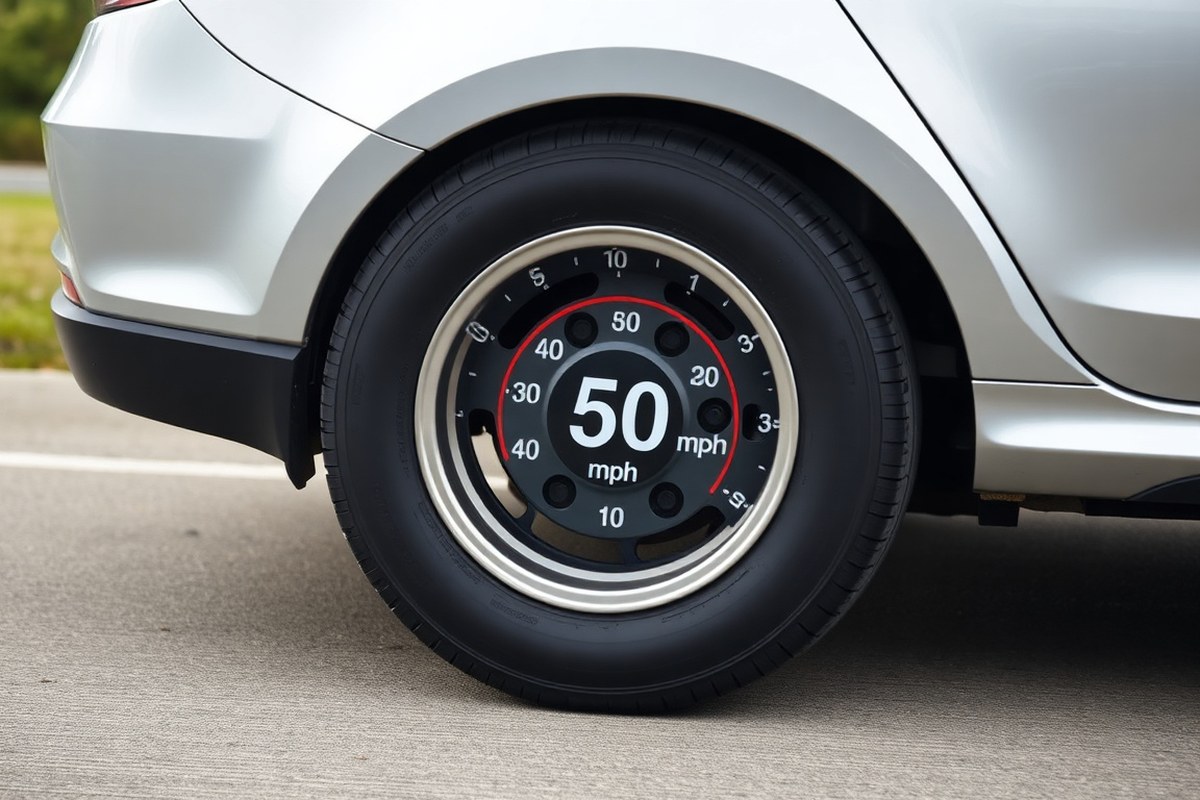
Driving on a spare tire calls for cautious speed limits. Your temporary “donut” spare tire is safe up to 50 mph. This limit exists because donut spares are smaller, narrower, and have less tread than regular tires.
Full-size spares that match your regular tires don’t have a special speed limit. You can drive at normal highway speeds with a matching spare tire. The spare must match your other tires in size and tread depth.
This keeps your car balanced and safe. These spares offer better traction and stability compared to donuts.
Run-flat tires also carry a speed limit, typically 50 mph. They are meant for short distances after a puncture, not long trips at high speeds. Always check your owner’s manual for exact limits, since they vary by manufacturer.
Don’t drive faster than 50 mph on a donut or run-flat spare tire. It risks tire failure. You could lose control of your vehicle.
The thin tread and reduced traction increase the chance of sliding, especially in bad weather. Exceeding this speed can cause the spare to overheat and wear out quickly.
At highway speeds like 70 or 80 mph, donuts are unsafe. These speeds create excessive heat and stress on the tire. You might experience vibrations, poor handling, or even a blowout, which can lead to accidents.
Driving at 50 mph or less keeps your spare tire in good shape. It helps prevent damage to the tire. It keeps you and others safer on the road.
Keep your speed low, avoid sudden braking, and plan to get a full tire replacement soon. This cautious approach reduces risks and prevents further damage to your vehicle.
Types of Spare Tires and Their Driving Limits
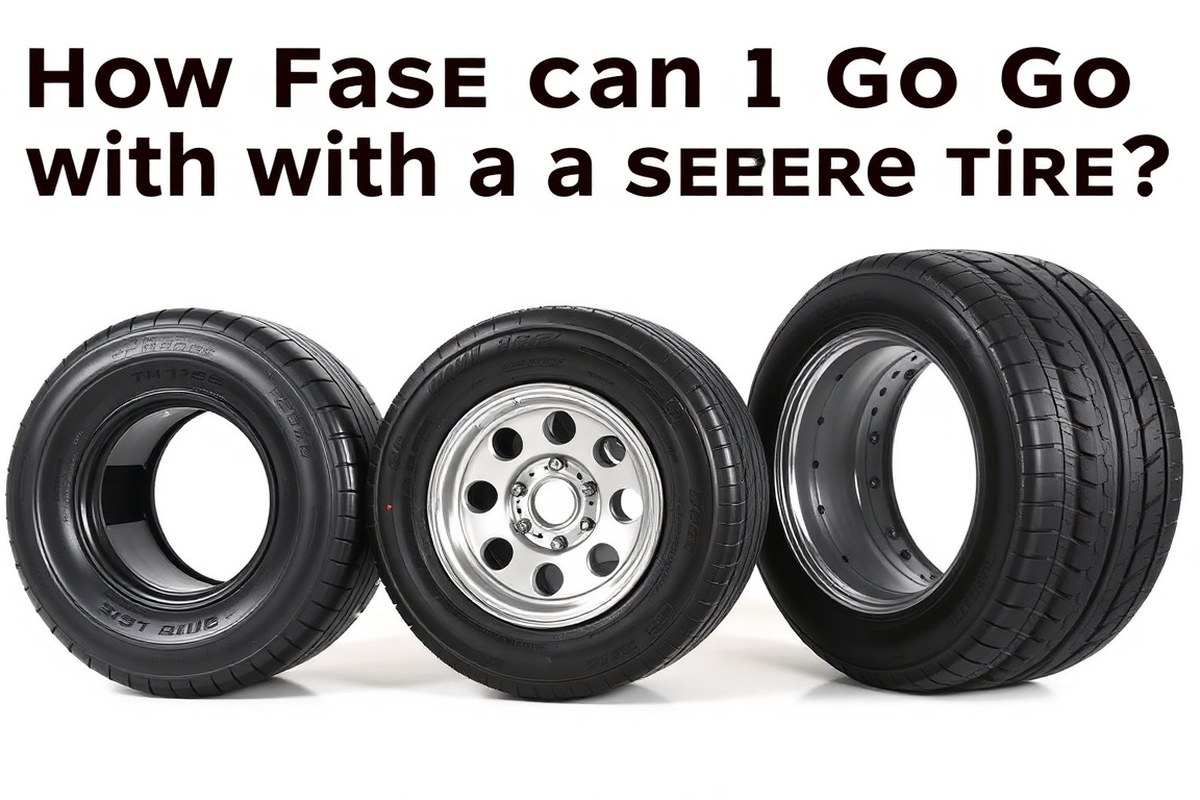
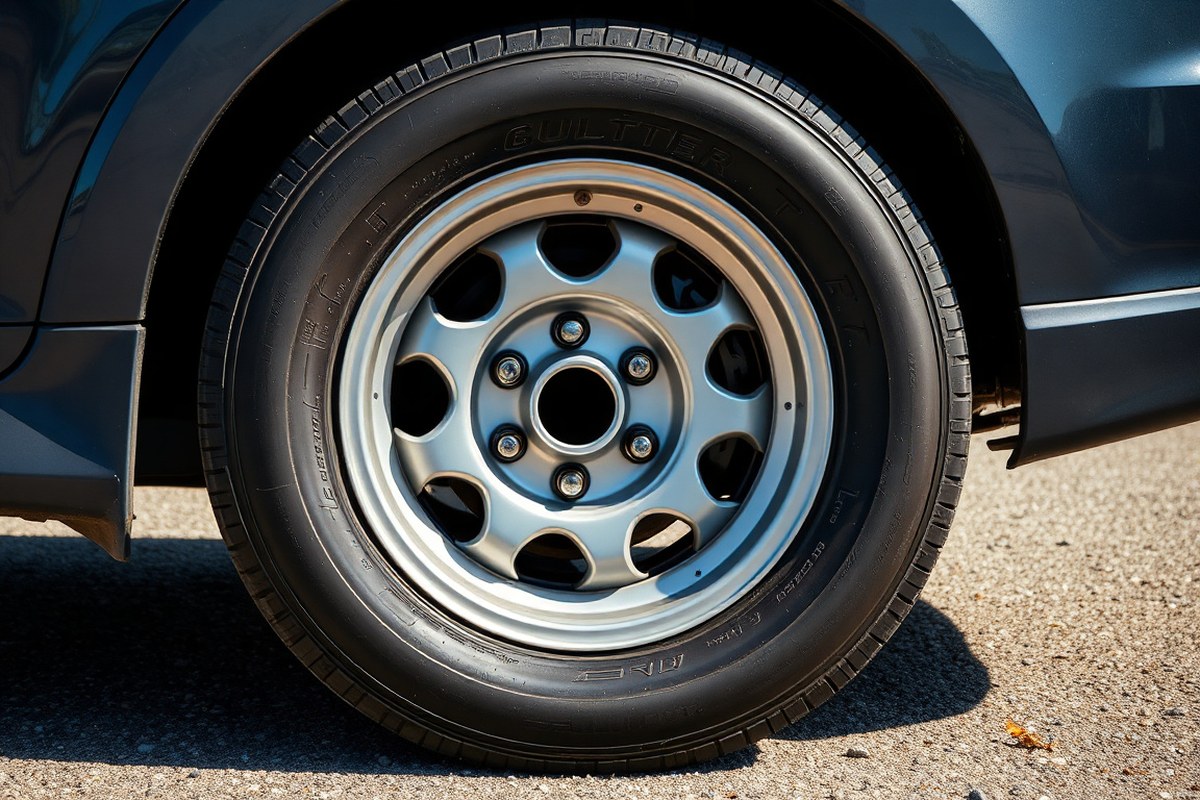
Spare tires come in three main types: donut (temporary), full-size, and run-flat. Each type has different speed and distance limits, which affect how you should drive on them. Knowing these helps you avoid damage and stay safe on the road.
Donut (Temporary) Spare Tires
Donut spares are small, lightweight, and thinner than regular tires. They usually fit smaller in diameter and width and are designed for limited use only. These tires let you drive about 50 miles at speeds below 40 or 50 mph.
They aren’t built for daily driving or rough road conditions. Most people exceed the recommended 50-mile limit within a few days. Using a donut beyond its limits can cause tire failure or hurt your vehicle.
These spares need higher inflation pressure, often around 60 psi or more. Check your owner’s manual or the tire sidewall to find the exact number.
Full-Size Spare Tires
Full-size spare tires match the regular tires in size and quality. Your full-size spare is the same type and size as your tires.
You can drive on it at normal speeds. Install it on the axle that had the flat tire for best results.
Using a mismatched full-size spare can harm your car’s drivetrain, especially on all-wheel or four-wheel-drive vehicles. Full-size spares last longer and are more durable than donuts but watch the tire age. Manufacturers often recommend replacing tires after 6 to 10 years, including spares.
Full-size spares are the best choice for longer trips. Use them if you must drive temporarily with a spare.
Run-Flat Tires
Run-flat tires act as spare replacements and let you keep driving after losing air. They often limit distance and speed.
Usually, up to 50 miles and 50 mph are allowed. This depends on the tire brand and vehicle manual.
They are different because you don’t have to switch to a spare tire right away. They’re meant for short distances to get to a repair shop safely. Run-flats can be more expensive and may wear out sooner due to stiffer sidewalls.
Use the table below to compare the types of spare tires and their limits.
| Spare Tire Type | Max Speed | Max Distance | Key Features | Intended Use |
|---|---|---|---|---|
| Donut (Temporary) | Below 40-50 mph | About 50 miles | Light, small, higher pressure (~60 psi) | Short term, emergency only |
| Full-Size | Normal driving speeds | Same as regular tires if matched | Same size and type as regular tires | Longer temporary use, normal driving |
| Run-Flat | Often up to 50 mph | Usually about 50 miles | Can run without air temporarily | Short emergency driving without changing |
Identify your spare by checking the tire size and sidewall markings. A donut spare is smaller and thinner than regular tires.
Full-size spares match the other tires exactly. Run-flat tires usually have markings like “Run Flat” or reinforced sidewalls.
Tip: Always check your car’s manual for your spare’s speed and distance limits to avoid damage. Never drive faster or farther than recommended with any spare type.
How Far Can You Drive on a Spare Tire?
You can drive on a spare tire for about 50 to 70 miles safely. Driving longer distances can damage the tire and your car. Temporary spares, especially donut types, are made for short-term use only.
Distance Limits by Spare Tire Type
Temporary spares, like donuts, typically allow 50 to 70 miles of driving. Full-size spares are stronger and can handle longer distances, around 100 to 150 miles. Compact temporary spares are less durable and should stay within the lower limits.
Long-term use of any spare is not recommended. These tires don’t have the same tread or heat resistance as regular tires. The wear builds quickly if you drive far on them.
Why Distance Limits Matter
Spare tires heat up faster and wear out more quickly on the road. Driving beyond safe distances risks tire failure or damage to the vehicle’s drivetrain. This is especially risky on rough or hot roads.
Ignoring the limits can cause uneven handling and increase accident risk. The car’s suspension and alignment may also suffer from prolonged spare use. Following distance rules protects both your safety and your car.
How Long You Can Keep a Spare Installed
Use a spare tire only until you repair or replace the flat one. This usually takes just a few days. Don’t drive on the spare longer than necessary.
Leaving it on longer can cause uneven tire wear and strain your vehicle’s systems. Don’t use it as a permanent tire.
Check the spare often during use to ensure air pressure stays correct. Low pressure causes overheating, which shortens the tire’s life. Replace or switch back to regular tires as soon as possible.
Driving for Several Days on a Spare Tire
It’s possible to drive for a few days on a spare. But keep daily mileage low.
Spread out your travel to stay within the safe distance limits. Avoid rough roads or high speeds to reduce wear and overheating.
Plan a stop at a repair shop soon on longer trips. This keeps your car safe and ready.
Driving on a spare for a whole week or more greatly increases the chance of failure. Your safety depends on timely tire repair or replacement.
Why Driving Too Fast or Far on Spares Is Dangerous
Driving too fast or too far on a spare tire puts you at serious risk. The tire can overheat, leading to sudden failure and poor vehicle control. This can cause accidents, damage your car, and create unsafe situations on the road.
Tire Overheating and Tread Failure
Spare tires, especially temporary spares, have thinner treads and less material to dissipate heat. Driving faster than recommended causes the rubber to heat up quickly. Too much heat damages the tread and sidewalls.
This raises the risk of a tire blowout. Avoid driving too long on a hot spare.
Overheating happens because spares often have a smaller contact patch and less air volume. This reduces their ability to stay cool under the stress of speed and distance.
The rubber softens and the tread can separate or crack. Blowouts can happen suddenly without warning.
Impact on Vehicle Handling and Braking
A spare tire’s smaller size or different tread pattern changes how your car handles. It makes steering feel loose or unstable, especially at higher speeds. Your braking distance will increase because the spare doesn’t grip the road as well.
These changes reduce your control and raise your risk of skidding or losing traction. Driving faster only amplifies this effect, making it harder to react safely to traffic or obstacles. That’s why most manufacturers recommend a max speed around 50 mph on spares.
Vehicle Damage Beyond the Tire
Spare tires often differ in diameter from the regular tires. Driving far or too fast can cause uneven wear on your differential, transmission, or axle parts. This problem happens more with AWD and 4WD vehicles.
All wheels must spin at the same speed. If they don’t, the system can get damaged.
Damage to drivetrain components like the transfer case or differential can lead to expensive repairs. Suspension parts may also suffer from unusual vibrations caused by mismatched tire sizes or speed. Taking it slow and short on a spare helps avoid these costly issues.
Examples of Accidents from Spare Misuse
There have been accidents where drivers ignored spare tire limits and lost control. A common case is a sudden blowout on the highway. It often happens after driving too fast on a donut spare.
Slow down to avoid this risk. The driver can swerve, causing crashes or rollovers.
Other problems include poor braking that causes rear-end crashes. Bad weather can make you lose lane control. Both are dangerous on spare tires.
Often these dangers happen because the tire overheated, failed, or the vehicle reacted unpredictably. Sticking to speed and distance limits reduces these risks.
How to Drive Safely on a Spare Tire
Spare tires are meant to get you to a repair shop, not for long trips. Drive slower than usual, typically below 50 mph, to avoid accidents. Your vehicle handles differently, so stay alert and give yourself extra space to stop.
Avoid sudden turns or hard braking while using a spare. These actions can cause the tire to lose grip and make your car unstable.
Remove heavy items from your car to keep the load light. This reduces stress on the spare tire and suspension.
- Check tire pressure before driving to prevent blowouts
- Keep speed below 50 mph or the tire’s specific limit
- Avoid sharp turns and hard braking to keep control
- Drive smoothly, especially on wet or uneven roads
- Remove heavy cargo to reduce weight on the spare tire
- Use headlights in poor visibility to increase safety
- Do not use cruise control to stay fully in control
Road and weather conditions affect spare tire safety. Wet roads reduce traction, so slower speeds help maintain control. On uneven surfaces, watch for bumps that could damage the smaller spare tire or rim.
Ignoring these precautions can lead to tire failure or accidents. A blowout may happen if the spare is overused or driven aggressively.
Treat a spare tire as a short-term fix only. Replace it with a regular tire as soon as possible.
Don’t drive more than 50 miles on a temporary spare to avoid tire damage or failure.
Special Considerations for AWD and 4WD Vehicles
All-wheel-drive (AWD) and four-wheel-drive (4WD) vehicles need extra care with spare tires. These systems rely on matching tire sizes and tread depths to work well. A spare tire that differs in size or tread can confuse the drivetrain and cause damage.
On AWD vehicles, even a small difference in tread depth can upset the system. For example, a full-size spare with much deeper tread than the others may mislead traction sensors.
This can trigger the ABS or traction control lights. Your vehicle may lose some braking or handling abilities as a result.
Most larger SUVs and trucks with AWD or 4WD come with a full-size spare. These spares often match the tire model and tread pattern.
This minimizes drive system errors and keeps handling steady. Using a compact or small temporary spare on these vehicles is riskier and usually not recommended.
Where you put the spare matters, too. Always mount the spare on the same axle as the tire it replaces. Swapping an unmatched tire between axles can strain the AWD system even more.
Putting a different tire on the front axle can cause damage. The tires spin at different speeds. This can harm the transfer case or differential.
When using a spare on AWD or 4WD, monitor tire pressure and tread depth closely. Rotate or replace your spare if it’s older than 6 to 8 years, regardless of condition.
Older tires get harder and may fail unexpectedly. Staying on top of spare tire health avoids costly drivetrain repairs down the road.
Driving on a mismatched spare on AWD or 4WD vehicles can wear parts faster. It increases repair bills and safety risks. Drive slowly and keep your distance short.
Replace the damaged tire with a matching one as soon as possible. This helps protect your vehicle’s complex systems and keeps control sharp.
When and How to Replace or Repair After Using a Spare
Stop driving on a spare tire as soon as possible. Fix or replace the original tire quickly. Don’t delay the repair or replacement.
Spares are smaller and less durable, meant for short-term use only. Driving on them too long or too fast risks blowouts or damage to your vehicle’s handling.
Check the spare’s condition before reusing it. Check the spare tire if it is over six years old. Look for cracks or signs of dry rot.
Also, check for low tread depth. Old spares lose their strength and grip, reducing safety and speed limits.
Once you’ve used a spare, head to a tire shop quickly. The sooner you repair or replace your original tire, the safer your drive will be. Small tire repairs usually take less than an hour.
The cost is generally between $20 and $50. This depends on the specific damage type.
Decide between repair and replacement based on the damage type and location. Punctures in the tread area can often be patched. Sidewall damage or large cuts mean you need a new tire.
Also, check your tire’s age. Most recommend replacing tires every six years regardless of appearance.
Here are the steps to follow after putting on a spare tire:
- Drive cautiously at or below the spare’s speed limit, usually 50 mph.
- Inspect the spare for signs of wear or damage before driving further.
- Plan to visit a tire shop within 50 to 70 miles or as soon as possible.
- Ask the shop to assess the original tire for repair feasibility.
- Choose repair if the puncture is small and in the tread area only.
- Replace the tire if the damage is on the sidewall or too large.
- Check the spare’s age; replace it if it’s older than six years.
- Keep your spare properly inflated and ready for the next emergency.
Treat your spare just like an emergency tool. Using it longer or faster risks tire failure and stress on your vehicle. Fix or replace tires quickly to keep you safe.
Delaying can cause uneven wear on all four wheels. It’s especially important for AWD and 4WD vehicles.
How to Check and Maintain Your Spare Tire’s Readiness
Check your spare tire pressure every few months using a tire gauge. Compare the reading to the number on the tire’s sidewall or the door placard. Temporary spares, like donuts, need 60 to 80 psi, higher than regular tires.
Check the spare tire for cracks, dry spots, or worn tread. Even if it hasn’t been used, age can make rubber brittle and unsafe.
A spare tire older than 6 to 8 years should be replaced. This helps prevent getting stuck with a bad tire.
When you inspect your spare, check these key points:
- Pressure level matches the recommended psi
- No visible cracks or dry rot on the rubber
- Tread isn’t too worn or uneven
- No dents or damage on the wheel rim
- Valve stem is intact and not leaking
- Storage area is clean and dry, free from chemicals
- Spare is easy to access and securely stored
A full-size spare that matches your regular tires can be used longer. But try to fix or replace the damaged tire soon. Donut spares are for short trips only.
Drive about 50 to 70 miles. Keep speeds under 50 mph while using one. Using a donut beyond these limits can risk a blowout or loss of control.
Always check your spare before driving fast. An old or underinflated spare can fail suddenly.
Taking a few minutes to check your spare tire’s condition can save you trouble later. Checking your spare costs almost nothing and takes under five minutes. Use a pressure gauge and visibly inspect the tire.
A ready spare lets you safely reach a service station after a flat. It can prevent long waits on the road.
Global Speed and Distance Regulations for Spare Tires
Spare tire rules vary between countries and car brands. Some countries set legal speed limits for driving on spares.
Others follow manufacturer advice. Local laws may control maximum speed and how far you can drive on a spare tire.
Speed limits usually range from 50 to 70 miles per hour, depending on the region. Distance limits also differ, commonly between 50 and 100 miles. Some manufacturers recommend driving even slower and shorter distances to avoid damage or loss of control.
| Country or Region | Typical Speed Limit | Common Distance Limit | Example Manufacturer Limit |
|---|---|---|---|
| United States | 50 MPH (80 km/h) | 50-70 miles (80-112 km) | Toyota: Max 50 MPH, 50 miles |
| European Union | 50-62 MPH (80-100 km/h) | 50-80 miles (80-130 km) | Volkswagen: Max 50 MPH, 80 miles |
| Japan | 37-50 MPH (60-80 km/h) | 30-50 miles (48-80 km) | Toyota: Max 50 MPH, 50 miles |
| Australia | 50 MPH (80 km/h) | 50-80 miles (80-130 km) | Ford: Max 50 MPH, 70 miles |
| Canada | 50 MPH (80 km/h) | 50-70 miles (80-112 km) | Honda: Max 50 MPH, 60 miles |
Car manufacturers often set more conservative limits than local laws require. Following these manufacturer limits helps protect your car and safety. Stick to recommended speeds and distance to avoid extra damage or tire failure.
Checking your owner’s manual or tire label shows exact limits for your spare. Some states may have specific rules about using spares on highways or toll roads. Always pay attention to local signs and regulations before driving with a spare tire.
Step-by-Step Action Plan for Using a Spare Tire Safely
Follow these steps to handle your spare tire properly and avoid damage or safety risks.
- Before you start driving: Check the spare tire’s pressure. It should match the psi marked on the tire. Check your vehicle manual for the recommended psi. This helps ensure safe use of the spare tire.
- Day 1 (right after a flat): Install the spare tire correctly. Tighten lug nuts in a star pattern until secure to avoid wobbling or loose fittings.
- Day 1 (immediately after installation): Drive slowly and cautiously. Keep your speed below 50 mph for compact spares. For full-size spares, stay under 65 mph. Going faster can damage the spare tire.
- Within 50 miles of use: Avoid hard turns and rapid acceleration. These can stress the spare and worsen wear.
- Within 2 days or 50 miles: Get your original tire repaired or replaced. Spares are temporary and should not be used beyond these limits.
- After replacing your damaged tire: Check your spare tire pressure again. Keep it ready for the next emergency.
- Monthly check: Inspect the spare tire for cracks, flat spots, or low pressure. Maintaining the spare means it will be reliable if needed.
Frequently Asked Questions
Can I Go 70 Mph on a Spare?
You should not drive 70 mph on a temporary spare tire. These spares usually have a limit of 50 mph. Driving faster can cause safety risks.
It might also damage the tire. Stick to slower speeds until you replace it with a regular tire.
What Happens If You Go over 50 Mph with a Spare Tire?
Going over 50 mph on a temporary spare can cause tire failure or loss of control. These tires have less tread and weaker construction.
So high speeds increase the risk of accidents. Keep your speed below 50 mph until you fix the main tire.
Can You Drive 55 Mph on a Spare Tire?
Driving 55 mph on a temporary spare isn’t recommended. Most donut spares are rated for a maximum of 50 mph to prevent damage. For full-size spares, normal speeds are usually safe, but check owner’s manual if unsure.
Can You Go 80 Mph on a Spare Tire?
It’s unsafe to drive 80 mph on a standard spare tire, especially temporary ones. These tires have speed and distance limits usually capped around 50 mph. High speeds risk blowouts and loss of control, so avoid them.
Is It Safe to Drive on a Spare Tire in Bad Weather?
Driving on a temporary spare in bad weather is risky. These spares have less traction and tread, which can cause slipping on wet or icy roads. Use caution and replace your regular tire quickly.
The Bottom Line
Drive no faster than 50 mph on compact spares and limit your distance to 50 miles. Replace or repair your damaged tire quickly to stay safe. Keep your spare ready by checking its pressure regularly.