How Much Gallons of Gas Does a Car Need? A Complete Guide with Practical Tips
The amount of gas a car needs depends on the size of its tank. Passenger cars usually have fuel tanks that hold 12 to 16 gallons. This range suits most cars, balancing capacity and weight for ordinary driving.
Your car’s actual usable gas is less than the tank capacity. That’s because 1 to 2.5 gallons is kept as a reserve. This reserve helps prevent the engine from stalling if you forget to refuel right away.
To know exactly how much gas your car needs, find its fuel tank capacity. You can check the owner’s manual or look inside the fuel door. That way, you won’t overfill and waste money or time at the pump.
Key Takeaways
- Most cars’ gas tanks hold between 12 and 16 gallons of fuel.
- Gas tanks reserve 1 to 2.5 gallons you should not rely on.
- Check your owner’s manual to find your car’s exact fuel capacity.
- Fuel gauges don’t always show the actual usable amount of gas.
- Estimate fill-up amounts using fractions like half or quarter tank left.
- The car model and size affect how many gallons the tank holds.
How Many Gallons of Gas Does a Typical Car Need?
Most passenger cars in the U.S. Hold between 12 and 16 gallons of gas. This range covers typical sedans, hatchbacks, and small SUVs. Larger vehicles like trucks and full-size SUVs can have tanks from 20 to 34 gallons.
It’s important to know the difference between the total tank capacity and usable fuel. The official number on your car’s manual includes a reserve of about 1 to 2.5 gallons.
This reserve is not meant for regular driving. So you usually fill less than the total capacity shows.
| Vehicle Type | Typical Tank Size (gallons) |
|---|---|
| Small Sedan | 12 – 14 |
| Standard Sedan | 13 – 16 |
| Small SUV/Crossover | 14 – 18 |
| Full-size SUV/Truck | 20 – 34 |
For example, imagine filling a 15-gallon tank from empty. You’ll rarely add all 15 gallons because the reserve gas limits filling.
Expect to pump about 13.5 to 14 gallons before the nozzle clicks off. This amount is your usable fuel for normal driving.
This reserve fuel matters because car manufacturers include it to prevent running completely dry. When your low fuel light comes on, you use the reserve. This reserve is about 10-15% of your tank.
It helps you drive a bit longer. That means on a 15-gallon tank, 1.5 to 2.2 gallons remain after the light turns on.
All vehicles have different tank sizes and reserve amounts. Because of this, filling up needs different gallons. It depends on your car’s capacity.
Knowing your car’s actual usable tank size helps you estimate fill-ups and plan trips. Check your owner’s manual to find the tank capacity, then subtract roughly 1 to 1.5 gallons to find usable fuel.
Knowing usable gallons can keep you from overestimating your fuel range. For instance, if your tank says 15 gallons, treat 13.5 gallons as the real fill amount. This method helps prevent running out of gas unexpectedly.
It also stops you from wasting money topping off early. The reserve can keep you going longer.
How to Find Your Car’s Exact Fuel Tank Capacity
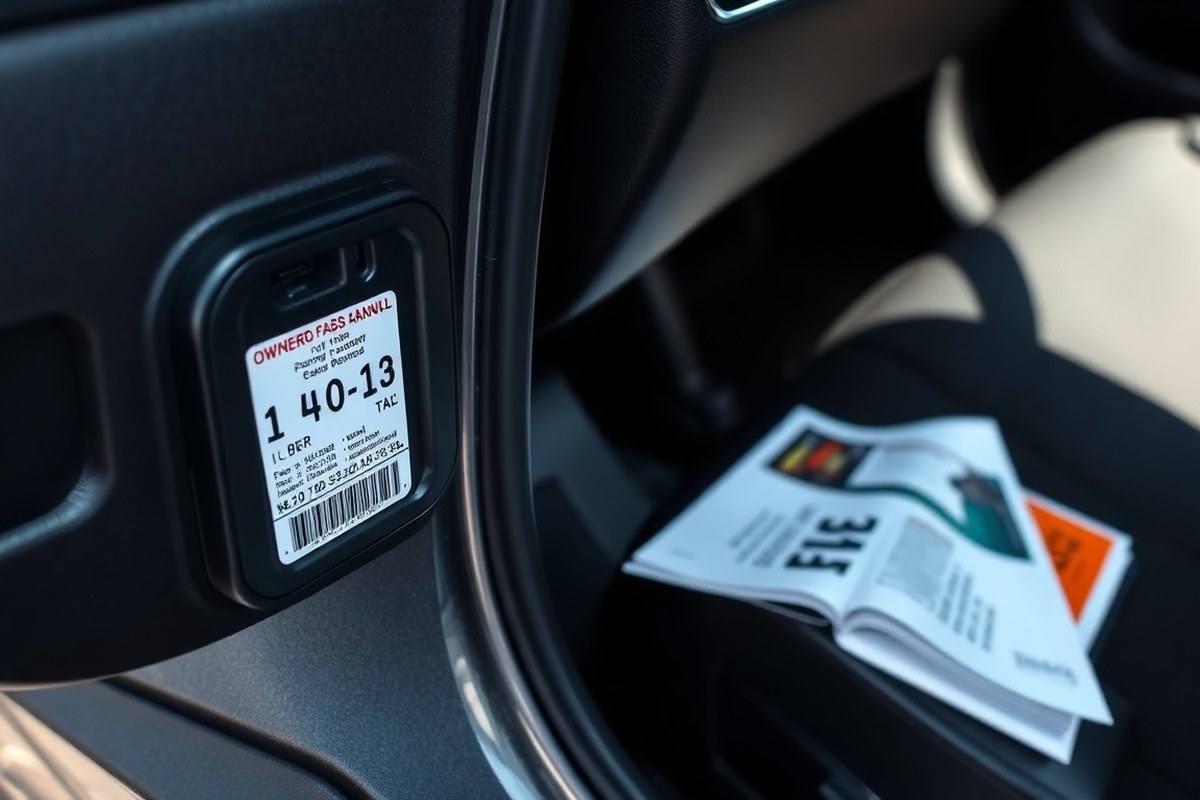
You can find your car’s exact fuel tank capacity through several reliable sources. The most accurate place is the owner’s manual or a sticker inside the fuel door.
Those are missing? Use your Vehicle Identification Number (VIN) online lookup.
Check the Fuel Door Sticker
Many cars have a sticker inside the fuel door or near the driver’s side door jamb. This sticker often lists the fuel tank capacity along with recommended fuel types.
It’s a quick way to find your tank’s exact capacity. No papers are needed.
Look closely at the sticker for a number followed by “liters” or “gal.” This tells you your tank’s volume.
Some stickers may state gallons directly. Others show liters, so you may need to convert.
Consult the Owner’s Manual
The owner’s manual is the most trustworthy source for your car’s exact fuel tank size. Find the section titled “Specifications” or “Fuel.” This part lists your tank’s capacity, usually in gallons and sometimes in liters.
You lost your manual? Many makers let you download PDFs from their sites.
This lets you check your car’s exact specs anytime. It works for all models.
Use Online Manufacturer Specs or Databases
Other ways failed? Use your VIN with an online VIN decoder to get info.
These sites provide detailed information, including fuel tank size, based on your vehicle’s exact build. Dealers or parts stores can also look this up for you.
Another option is to search your car make and model year online to find specs. Auto review sites and manufacturer pages often list tank sizes. Just match your exact model and trim to get the correct number.
Convert Liters to Gallons Easily
Some sources show fuel tank capacity in liters instead of gallons. To convert, multiply liters by 0.264172 to get gallons. For example, a 50-liter tank equals about 13.2 gallons.
Keep this cheat sheet handy for quick conversions:
- 10 liters = 2.64 gallons
- 20 liters = 5.28 gallons
- 30 liters = 7.93 gallons
- 40 liters = 10.57 gallons
- 50 liters = 13.21 gallons
Use this formula or table when your manual or sticker shows liters. It helps you plan how much gas you actually need at the station.
Practical tip: Never rely on your fuel gauge alone to know how many gallons fit. Check your manual or fuel door first for the exact tank size.
What Factors Influence How Much Gas Your Car Uses?
Your driving style changes how much gas your car uses. Quick acceleration uses more fuel than gentle starts. Keeping a steady speed on highways saves gallons because your engine works less hard.
Vehicles differ in how much gas they consume. Smaller cars usually hold 10-12 gallons and are lighter. Full-size trucks have fuel tanks over 25 gallons.
They use more fuel because they are heavy and big. This means they burn more gas on the road.
Weather and road type also affect fuel usage. Cold temperatures cause engines to run less efficiently, increasing gas use. Driving uphill or on rough terrain demands more power and burns more fuel than flat roads.
Other things to consider are the load your car carries and tire pressure. Extra weight, like passengers or cargo, lowers fuel efficiency. Underinflated tires create more rolling resistance, which means your engine burns more gas to keep moving.
To use less fuel, accelerate smoothly and avoid idling for long. Regular maintenance, like changing air filters and keeping tires at the right pressure, helps too. For example, inflating tires to the recommended pressure can improve fuel economy by up to 3%.
Different vehicles respond to these conditions in unique ways. A midsize sedan’s tank holds 14 to 16 gallons. A full-size SUV has a larger tank of 24 to 28 gallons.
These sizes change how far each vehicle can go. SUVs have bigger engines and weigh more than sedans.
This usually means they need refilling more often. The driving conditions stay the same for both vehicles.
Understanding MPG and Its Relationship to Gallons Used
MPG means how many miles your car runs on one gallon of gas. It shows fuel efficiency. For example, 30 MPG means 30 miles per gallon of fuel.
Divide the trip distance by your car’s MPG to find gallons needed. For example, 150 miles divided by 30 MPG equals 5 gallons. Suppose you want to travel 150 miles and your car gets 25 MPG.
You would calculate 150 ÷ 25, which equals 6 gallons. This means your car will use about 6 gallons for that trip.
MPG helps you predict fuel costs. Gas costs $3 per gallon.50 per gallon and you need 6 gallons, your trip will cost around $21 for gas.
Tracking your MPG over time shows how your driving habits affect fuel use. You can do this by noting miles driven and gallons used each time you refill.
Here’s an example to track MPG: Fill your tank and reset your trip odometer. When you finish driving and fill your tank, note the miles driven. Then write down the gallons needed to fill the tank again.
Divide miles driven by gallons used to get your real MPG. This number may differ from the EPA rating.
Improving your MPG lowers how much gas you use. Driving gently, keeping tires properly inflated, and reducing extra weight can help. Also, avoid long idling and use cruise control on highways for better efficiency.
How Far Can You Drive on One Gallon and a Full Tank?
You can drive different distances on one gallon depending on your car’s MPG. A car that gets 25 miles per gallon travels 25 miles per gallon. It means one gallon of gas drives the car about 25 miles.
So, 25 MPG equals 25 miles for every gallon you use. Knowing your car’s MPG lets you estimate how far you can go before refilling.
Most midsize sedans hold between 12 to 16 gallons of gas. Combining this with MPG gives you a practical estimate of your driving range. A car has a 15-gallon tank and gets 25 MPG.
Multiply 15 gallons by 25 miles per gallon. It can drive about 375 miles on a full tank.
| Vehicle Class | Tank Size (gallons) | Average MPG | Estimated Range (miles) |
|---|---|---|---|
| Compact Car | 12 | 30 | 360 |
| Midsize Sedan | 15 | 25 | 375 |
| SUV | 18 | 20 | 360 |
| Pickup Truck | 21 | 18 | 378 |
| Hybrid Car | 12 | 50 | 600 |
To calculate your own range, multiply the tank size by 0.264172 to convert liters to gallons if needed. Then multiply that by your car’s MPG. An 18-gallon tank and 22 MPG makes 396 miles.
Multiply 18 gallons by 22 miles per gallon. That means the car can go 396 miles. This helps you plan trips or fuel stops.
Fuel efficiency varies, so your range may differ from the estimate. Factors like traffic, speed, and load can reduce mileage. Knowing your car’s MPG and tank size helps with driving distances.
It lets you estimate how far your car can go daily. This gives more realistic mileage than guesswork.
Keep track of your real-world MPG by noting miles driven and gallons used. This helps avoid surprises when planning long trips.
What Happens When the Low Fuel Light Comes On?
The low fuel light comes on with about 1 to 2 gallons left. It shows you need gas soon. Don’t wait too long to fill up.
This amount is called the reserve fuel. Car makers set the reserve to give extra miles after empty.
But the extra distance is never very long. It’s just a small buffer.
You may drive 30 to 50 miles after the light appears. This depends on your car’s fuel efficiency. Driving conditions also change this number.
But this varies a lot. Driving at highway speeds uses fuel faster than city traffic does. Idling can burn around 0.2 to 0.5 gallons per hour.
It’s best not to rely on the low fuel light as your only warning. Waiting too long to refuel risks running out of gas and damaging your fuel pump.
The pump relies on fuel to stay cool and lubricated. So running dry can cause expensive repairs.
Check your owner’s manual to find your car’s exact reserve size. It also tells how far you can safely drive. This helps you plan refueling better.
Try to stop for gas before the light turns on. This is important if gas stations are rare on your route.
Don’t risk running out far from help. This avoids stress and keeps your car in good shape.
When the low fuel light comes on, guess your remaining miles. Use your average miles per gallon to estimate. This helps you avoid running out.
For example, if your car gets 25 mpg and you have about 1.5 gallons left, then you may have roughly 37 miles before empty. Adjust your driving to save fuel, like driving slower and avoiding stops.
Be cautious if you’re on rough or hilly terrain. Slopes and extra weight use more fuel, cutting into your reserve faster.
Also, low temperatures can affect gas mileage. So plan your refueling earlier in winter months.
Practical Steps to Estimate How Many Gallons You Need to Fill
To estimate gallons needed, start with your tank’s total capacity. Then, subtract your current fuel level. This gives you how many gallons to add.
This gives a rough idea of how many gallons you will pump. Minor variations in the tank and fuel system affect the exact amount.
Read Your Fuel Gauge Accurately
Look closely at your fuel gauge to see the needle’s position. The markings usually show full, half, quarter, and empty. Sometimes the gauge moves slowly or bounces, so check the average position.
Recognize that the empty mark doesn’t mean the tank is completely dry. There is often a reserve amount left to protect the fuel pump. The needle may rest just above empty when you still have some fuel left.
Know Your Tank’s Total Capacity
Find your vehicle’s total fuel tank capacity in your owner’s manual or online specs. Common tanks hold between 12 and 15 gallons, but sizes vary with car type. Knowing this total lets you calculate how many gallons are missing from your tank.
Be aware that the total includes a small reserve of 1 to 2.5 gallons. This reserve cools the fuel pump and won’t show on your gauge. It means you usually can’t fill your tank exactly to the stated capacity.
Calculate Based on Fractional Fill Levels
Estimate how empty your tank is by judging the gauge fraction. For example, the tank is half full. It holds 15 gallons total.
You need about 7 to 8 gallons to fill it. When the gauge shows a quarter tank, pump about 11 gallons.
Follow these steps to get your estimate:
- Check the current fuel gauge setting (e.g., half, quarter).
- Note your car’s total tank capacity in gallons.
- Convert the gauge setting to a decimal fraction (half = 0.5, quarter = 0.25).
- Multiply that fraction by the tank capacity to find how much fuel is left.
- Subtract that number from the total tank capacity.
- The result is the approximate gallons needed to fill your tank.
Adjust for Reserve and Meter Variations
Remember that your gauge and pump meter don’t match perfectly. You might only add 12 gallons to an empty 14-gallon tank.
The reserve and fuel system design cause this. Your estimate should factor this in for best accuracy.
You can refine your estimate by occasionally running low, then filling fully and noting gallons pumped. This practical check helps compensate for fuel left unused or sensor quirks. Adjust your mental calculations accordingly after a few tries.
How Much Gas Will $10 or $20 Typically Buy You?
With $10, you can buy about 2.5 gallons if gas costs around $4 per gallon. For $20, that doubles to about 5 gallons. To figure gallons from money, divide your dollars by the current gas price per gallon.
For example, if gas costs $3.80 a gallon, $10 buys roughly 2.6 gallons ($10 ÷ $3.80). $20 buys about 5.3 gallons. This quick calculation helps you plan fuel purchases during trips or daily drives.
Knowing the miles-per-gallon (MPG) your car gets shows how far those gallons take you. Say your car runs 25 MPG. Then 2.5 gallons give you about 62.5 miles (25 MPG × 2.5 gallons).
With 5 gallons, that’s 125 miles. MPG varies, so adjust these estimates based on your vehicle’s rating.
Gas prices change depending on location, weather, and market trends. When prices rise, $10 buys less fuel, shortening your range.
If prices drop, you get more gallons for the same money. Checking local prices often keeps your budget and driving plans on track.
Always check your local gas price before driving on a set budget. This avoids surprises at the pump.
Typical Tank Sizes for Popular Car Models and Vehicle Classes
Gas tank sizes vary widely between vehicle classes and models. Compact cars usually have smaller tanks than SUVs or trucks. Knowing the range helps you plan refueling and understand driving range better.
Compact and Subcompact Cars Tank Sizes
Most compact and subcompact cars hold between 10 and 13 gallons of gas. These smaller tanks keep cars light and efficient, supporting better fuel economy. Common models like the Honda Civic and Toyota Corolla fall into this range.
Because they use less fuel per mile, a smaller tank still offers decent range. You may refill more often during long trips. But daily driving usually won’t require topping off the tank too frequently.
Midsize and Full-Size Sedans Tank Sizes
Midsize sedans commonly have tanks around 13.5 to 16 gallons. This size balance suits drivers wanting good range without excess weight. Full-size sedans often have tanks in the same range or slightly larger.
These capacities work well for both city and highway driving. Popular midsize sedans include the Honda Accord and Toyota Camry.
Both have fuel tanks close to 15 gallons. These cars are common choices for many drivers.
SUV and Truck Tank Size Ranges
SUVs and trucks range more widely, usually between 18 and 30 gallons. Full-size SUVs often hold 23 to 30 gallons to support heavier loads and longer trips. Pickup trucks sometimes exceed 30 gallons for extended range.
This larger tank size helps offset their lower fuel economy. Examples include the Ford Explorer and Chevrolet Tahoe, with tanks typically around 20 to 25 gallons.
| Vehicle Class | Typical Tank Size (Gallons) | Example Models |
|---|---|---|
| Compact/Subcompact Cars | 10, 13 | Honda Civic, Toyota Corolla |
| Midsize Sedans | 13.5, 16 | Honda Accord, Toyota Camry |
| Full-Size Sedans | 14, 16 | Chevrolet Impala, Nissan Maxima |
| Full-Size SUVs | 23, 30 | Ford Explorer, Chevrolet Tahoe |
| Pickup Trucks | 23, 36+ | Ford F-150, Chevrolet Silverado |
Tank sizes can vary within classes due to trim or special fuel system designs. Larger tanks cost more upfront and add weight. A bigger tank means fewer stops but sometimes lower fuel economy.
Hybrid Vehicle Tank Capacities
Hybrids often have smaller tanks, usually near the lower end of their class range. Since hybrids get higher miles per gallon, they need less fuel overall. For example, many hybrid sedans carry about 10 to 12 gallons.
This smaller capacity helps reduce vehicle weight and keeps space for batteries. You might fill up more often than with non-hybrids on long trips.
Still, these cars usually use less gas overall. That helps save money at the pump.
Step-by-Step Action Plan for Managing Your Car’s Fuel Needs
Follow these steps to understand and manage how much gas your car needs. This helps you save money and avoid running low at bad times.
- Before your next fill-up: Check your car’s fuel gauge and note the current level. This helps you estimate how many gallons you’ll add.
- At the gas station: Watch the pump as you fill your tank. Note the gallons pumped and the price per gallon.
- After filling: Reset your trip odometer or write down the mileage. This prepares you to track fuel use accurately.
- Over the next week: Drive normally and check your fuel gauge daily. This shows real-world fuel usage in your usual conditions.
- End of the week: Calculate your miles driven and gallons used. Divide miles by gallons to find your actual MPG.
- Weekly habit: Compare your MPG to your car’s rated MPG. Check tire pressure and your driving habits if fuel efficiency drops.
- Monthly: Check gas prices in your area. Use this to budget how much fuel you can buy with $10 or $20. Adjust driving or refuel habits accordingly.
Frequently Asked Questions
How Many Gallons of Gas Does a Compact Car Typically Hold?
Compact cars usually have gas tanks holding about 12 to 13 gallons. This size helps balance fuel capacity and overall vehicle weight for good efficiency.
Can Aftermarket Fuel Tanks Increase a Car’s Gas Capacity?
Yes, aftermarket tanks can add gallons but may impact vehicle weight and space. Check local laws before making such changes, as some modifications affect safety.
How Do Winter Temperatures Affect How Many Gallons I’ll Need?
Cold weather can lower your car’s fuel efficiency, so you might need more gallons. Engine warm-up times and denser air reduce miles per gallon in winter.
Does Driving Style Change How Many Gallons Are Used?
Aggressive driving uses more gas, increasing gallons needed for trips. Smooth acceleration and steady speeds save fuel, meaning fewer fill-ups.
How Often Should I Actually Fill My Tank Based on Gallons?
Filling your tank when it hits a quarter or half full avoids running out. It also reduces fuel pump strain and potential dirt intake in the tank.
Before You Go
Knowing your car’s fuel needs helps you fill up smarter and save money. Watch your tank and track your miles to avoid surprises. Start by noting your fuel level at your next fill-up and see the difference.