How Much Is a Quarter Tank of Gas: A Complete Guide with Cost and Distance
How much is a quarter tank of gas? It usually holds between 3 and 5 gallons of fuel.
You can expect to pay about $10 to $20 to fill that quarter. The exact cost depends on the gas price near you.
The exact cost changes with gas prices and the size of your tank. First, check your car’s total tank capacity, then multiply it by 0.25 to find the gallons in a quarter tank.
Your fuel gauge isn’t perfectly precise. It might show a quarter tank even if you have more or less fuel.
Knowing the cost of a quarter tank helps you budget better and plan your next refuel. When the price per gallon is $3, a 4-gallon quarter tank costs about $12. This way, you won’t get caught off guard by fuel expenses when you’re out driving.
Key Takeaways
- A quarter tank typically holds 3 to 5 gallons, depending on the vehicle’s tank size.
- Multiply your full tank capacity by 0.25 to calculate gallons in a quarter tank.
- Gas prices vary. So multiply gallons by the current price per gallon for cost estimates.
- Your fuel gauge may not be completely exact. So use the number as an estimate.
- Budget your fuel stops by knowing quarter tank costs based on local gas prices.
- Rounding to the nearest half-gallon simplifies calculations when measuring used fuel.
What Does a Quarter Tank of Gas Mean in Gallons?
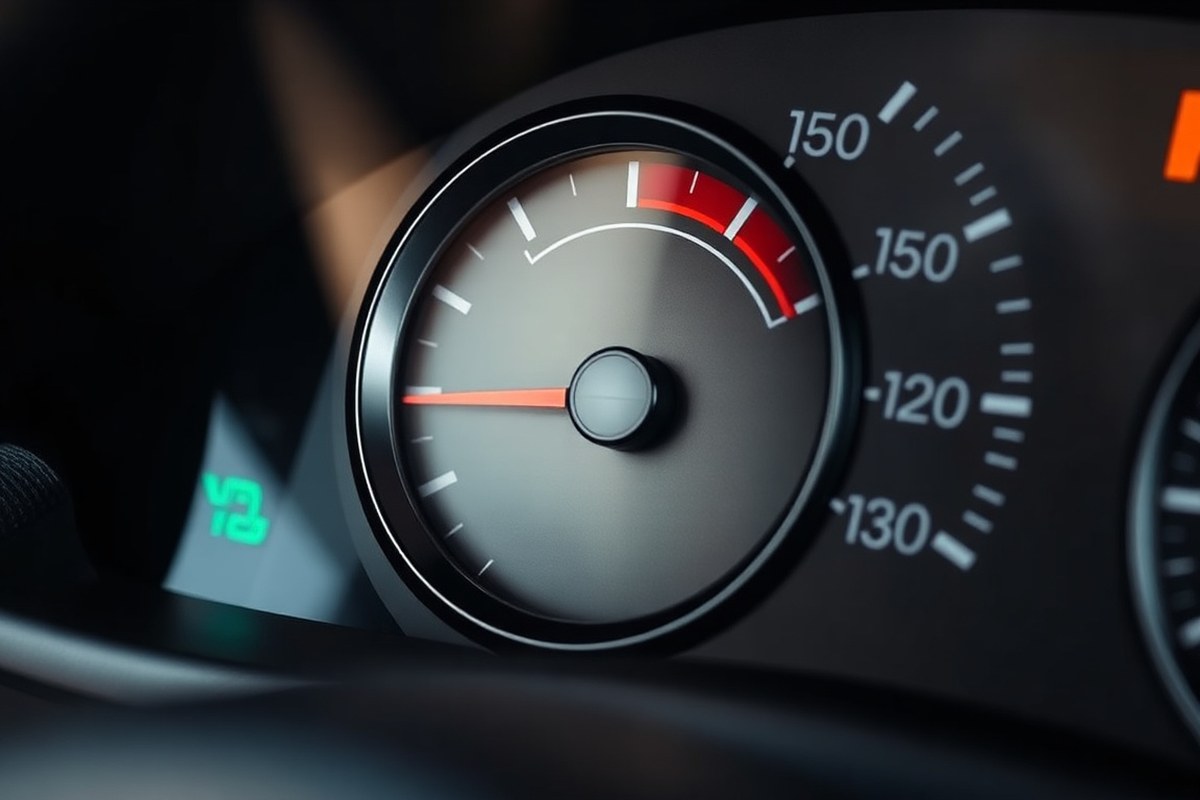
A quarter tank of gas means you have 25% of your fuel tank filled. The exact number of gallons in a quarter tank depends on your vehicle’s total tank size. Most passenger vehicles have tanks ranging from about 12 to 20 gallons.
For example, a 16-gallon tank holds about 4 gallons at a quarter. That means one-fourth of your tank is roughly 4 gallons. Smaller tanks near 12 gallons mean a quarter tank holds about 3 gallons.
Larger tanks closer to 20 gallons will have 5 gallons or more in a quarter tank. So, a quarter tank usually holds between 3 and 5 gallons of fuel.
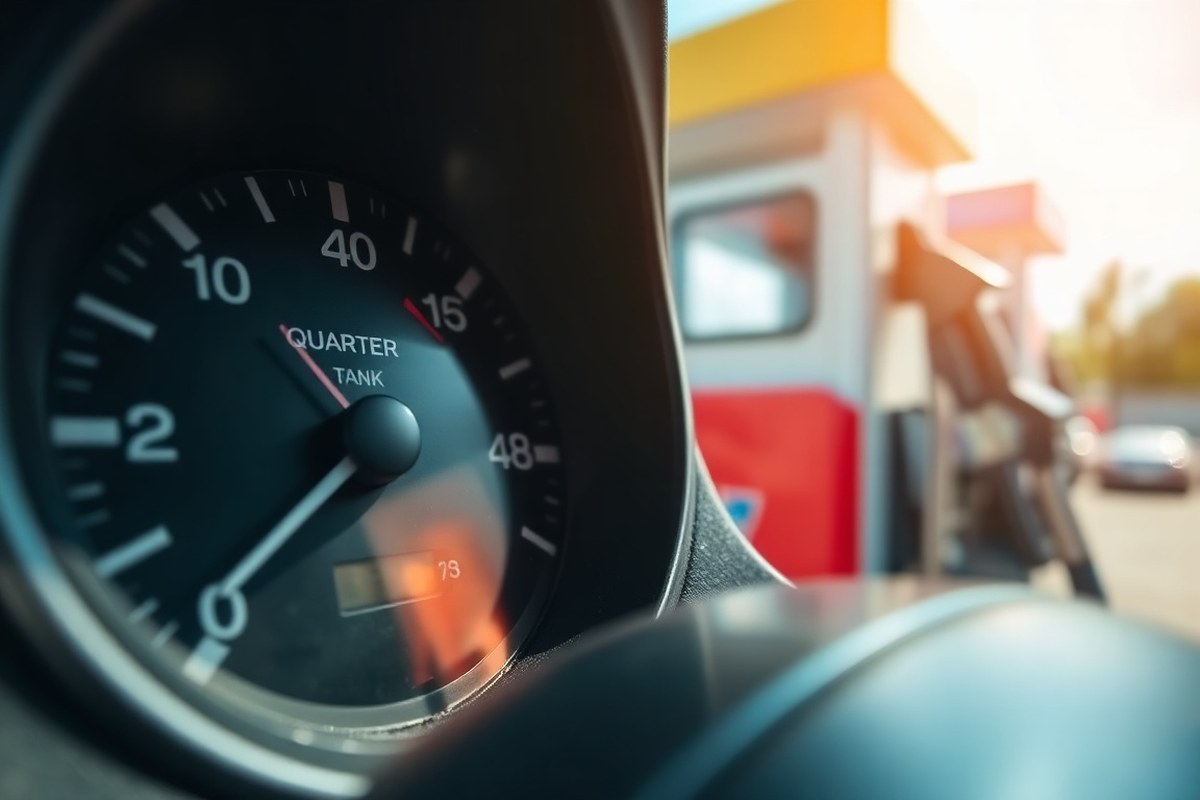
The fuel gauge shows this differently depending on the car. Your quarter tank is when the needle sits between empty and half. It’s about halfway to empty on the gauge.
Manufacturers place these marks based on sensor readings inside the tank. These sensors don’t always show exact gas levels.
That can cause small errors. Sometimes the gauge reading and real gas differ.
Older or low-quality sensors may not be accurate. They might show a quarter tank too early or late. This means 25% isn’t always exact.
Also, fuel sloshes inside the tank while driving, making the needle jump a bit. This means the quarter tank reading can wiggle when you brake, turn, or hit bumps.
Knowing how many gallons your quarter tank holds helps plan trips and budget fuel costs. Check your owner’s manual for your exact tank capacity.
You can also fill your tank completely and note the gallons used to fill it again. That gives a real number to count 25% of your total fuel.
How Much Does a Quarter Tank of Gas Typically Cost?
Gas prices and tank sizes directly affect how much you pay for a quarter tank. The typical car has about a 15-gallon tank. At $3 per gallon, filling a quarter tank costs roughly $11 to $12.50, since a quarter tank holds around 3.7 to 4 gallons of fuel.
Smaller cars often have tanks holding 10 to 12 gallons. Larger vehicles like trucks or SUVs might hold 20 gallons or more. The cost of a quarter tank changes a lot.
It depends on your vehicle’s size. The current price per gallon also matters.
| Vehicle Type | Tank Size (Gallons) | Quarter Tank Gallons | Cost at $3.00/gal | Cost at $4.50/gal |
|---|---|---|---|---|
| Compact Car | 12 | 3 | $9.00 | $13.50 |
| Average Sedan | 15 | 3.75 | $11.25 | $16.88 |
| Pickup Truck | 22 | 5.5 | $16.50 | $24.75 |
| SUV | 20 | 5 | $15.00 | $22.50 |
Fuel grade also impacts cost. Premium gas can cost $0.50 or more per gallon above regular prices. A 15-gallon vehicle needs a quarter tank of fuel.
Premium fuel could cost around $13 or more. Regular gas costs about $11 for the same amount.
Your choice of fuel grade affects the cost but also depends on the manufacturer’s recommendation. Using premium when it’s not needed raises your costs without benefits. The table shows how price changes strongly influence the amount spent to fill a quarter tank.
Keep an eye on fuel prices before you fill up. Costs can change quickly and affect your quarter tank spending.
How to Calculate the Cost of a Quarter Tank Yourself
You can find your tank size and current gas price. Then, adjust for fuel grade and pump quirks. Use these factors to estimate a quarter tank cost.
This lets you plan your fuel budget accurately. The steps break this down clearly, with tips to keep your math real-world accurate.
Step 1: Find Your Tank Capacity
Check your owner’s manual or the sticker inside the gas door for tank size. Most vehicles have tanks between 12 and 15 gallons.
For example, the Ford F-150’s tank holds about 23 gallons. Many sedans range close to 13 gallons.
Don’t have the manual? Search your car’s make, model, and year online.
Tank capacity usually shows up fast. Knowing this number is essential because the rest of the cost math depends on it.
Step 2: Calculate Gallons in a Quarter Tank
Divide your total tank capacity by 4 to get a quarter tank in gallons. For example, a 16-gallon tank divided by 4 equals 4 gallons. This step turns the abstract “quarter tank” idea into a specific volume you can price.
Keep in mind, your fuel gauge can be a little off. It’s smart to add a small buffer, like 0.1 to 0.2 gallons, to avoid underestimating how much fuel you actually have left.
Step 3: Multiply by Current Gas Prices
Look up the current price per gallon where you live. Say gas costs $4.20 per gallon.
Multiply that price by the gallons in a quarter tank from Step 2. For example, 4 gallons times $4.20 equals $16.80 for a quarter tank.
Use prices for the grade of fuel your car requires most often. Premium will cost more than regular, so be sure to pick the right figure. Prices can change daily, so check right before you want to calculate.
Step 4: Adjust for Fuel Grade and Conditions
Use mid-grade or premium fuel? Multiply your quarter tank amount by that price. Add 2% to 5% for pump rounding or partial fills.
This covers small payment differences. Gas stations often charge by the tenth of a gallon. So small differences add up.
Driving conditions affect how far your gas lasts but not this calculation. Still, extra idling or heavy traffic can make you feel like a quarter tank empties faster. Keep this in mind if you notice frequent refilling.
- Look up your vehicle’s fuel tank capacity in the manual or online.
- Divide that total number by 4 to find gallons per quarter tank.
- Check the current local price per gallon for your usual fuel grade.
- Multiply the quarter tank gallons by the price per gallon.
- Add a small buffer (0.1 to 0.2 gallons) for gauge inaccuracies.
- Include a small cost adjustment (2%, 5%) for pump rounding.
- Use this total to estimate your quarter tank cost anytime.
How Far Can You Drive on a Quarter Tank of Gas?
On average, a quarter tank of gas lets you drive between 100 and 150 miles. Your car’s miles per gallon and tank size mainly decide this range. Driving conditions like traffic affect how far you can go.
Hills also reduce your driving distance. These factors can change your fuel economy a lot.
How MPG and Tank Size Affect Quarter Tank Range
Multiply your car’s miles per gallon (MPG) by the tank’s total gallons, then divide by four. For example, a 15-gallon tank with 30 MPG gives about 112 miles on a quarter tank. That’s (30 MPG × 15 gallons) ÷ 4 = 112.5 miles.
A bigger tank or higher MPG means a longer distance on a quarter tank. A 24-gallon tank car with 20 MPG can drive roughly 120 miles on a quarter tank. Calculate your range by adjusting for your specific MPG and tank size.
Examples from Different Vehicle Types
Fuel-efficient hybrids like the Toyota Prius go far on a quarter tank. They can travel over 150 miles sometimes. That’s a long distance for low fuel.
They use features like regenerative braking to save fuel. For larger vehicles with lower MPG, the distance shrinks. An SUV with 15 MPG and an 18-gallon tank gets about 67 miles from a quarter tank.
That’s not very far. Bigger vehicles often have lower fuel ranges.
Sports cars or trucks with bigger engines burn fuel faster. Expect a quarter tank in these vehicles to last nearer 50 to 80 miles. Always check your specific vehicle’s MPG for better estimates.
How Driving Habits Influence Your Quarter Tank Distance
Highway driving usually gives better mileage and a longer range than city driving. Steady speeds and fewer stops save fuel, helping you stretch that quarter tank further. In contrast, constant stopping and starting in traffic drops fuel economy and cuts driving range.
Heavy acceleration, driving uphill, or using air conditioning all increase fuel use. These habits reduce the miles you get from a quarter tank. Smooth, calm driving helps maintain your car’s best fuel efficiency.
Other Factors That Impact the Quarter Tank Range
Terrain affects fuel use. Hilly or mountainous roads make your engine work harder, lowering range. Flat, level highways let you drive farther on the same amount of gas.
Weather also plays a part. Cold temperatures can reduce fuel efficiency because your engine takes longer to warm up. Using your heater or defroster adds load to the engine.
This extra load can reduce how far you drive. It may shorten your distance on a quarter tank.
Understanding the Fuel Gauge and Actual Gas Left
The quarter tank line on your fuel gauge means 20% to 30% fuel left. It’s not exactly a quarter. This range varies by car and tank size.
Different cars vary due to sensor differences. Your driving range at the quarter tank point may be more or less than expected.
This depends on driving habits and conditions. So, don’t always trust the gauge alone.
Gas pumps and fuel gauges aren’t perfectly precise. So it helps to treat quarter tank estimates as rough guides.
Check your car manual or fuel app for details tailored to your model. This keeps your trip planning more reliable.
Factors That Affect Quarter Tank Miles and Cost
Fuel efficiency changes a lot based on weather and temperature. Cold weather makes engines work harder to warm up and burn more gas.
When temperatures fall below 40°F, expect your fuel economy to drop. It can decrease by up to 12%, says the U.S. Department of Energy.
Driving style also affects how far your quarter tank takes you. Aggressive driving with fast acceleration and heavy braking uses more fuel. Smooth acceleration and consistent speed save gas, letting you stretch that quarter tank further.
Your vehicle’s features and type change how quickly you use a quarter tank. Heavier cars and trucks with bigger engines generally consume more fuel.
Hybrid and newer cars have more efficient engines. They get more miles per quarter tank than older models.
- Cold or hot weather increases fuel use due to extra engine effort and air conditioning.
- Driving on hilly or rough terrain demands more fuel than flat, smooth roads.
- Stop-and-go city driving uses more gas than highway cruising at steady speeds.
- Heavier vehicles and those with bigger engines use more fuel each mile.
- Smooth, gentle driving saves gas compared to rapid acceleration and braking.
- Using air conditioning or roof racks can increase fuel consumption noticeably.
Fuel economy drops significantly at temperatures below 40°F and above 90°F. Engines take longer to reach ideal operation, using more fuel at cold temps. Hot weather adds fuel use from extra air conditioning. Also, driving in mountains or rough roads burns gas faster than flat surfaces.
Watch your habits to control fuel use from a quarter tank. Avoid speeding or harsh braking to keep gas use lower.
Using cruise control on highways helps keep speed steady, saving fuel. Choose a fuel-efficient car or keep your current vehicle well maintained.
Keep tires properly inflated to improve fuel efficiency and stretch your quarter tank. Low tire pressure can lower gas mileage by up to 3%.
Common Mistakes When Estimating Quarter Tank Fuel and Costs
Fuel gauges rarely show the amount of gas exactly at a quarter tank. The gauge uses a float inside the tank. The float can shift unevenly.
This causes the gauge to change readings. Temperature changes and road slopes affect the reading too, making it inaccurate sometimes.
Using the wrong price per gallon causes mistakes in your cost estimate. Gas prices vary by state and even day to day.
For example, California averages $3.65 per gallon, while Texas is about $2.33. Checking current prices on your phone right before filling up helps you get the right number.
Fuel reserve and warning lights add another layer of uncertainty. They usually turn on after the fuel gauge hits the quarter mark but differ between vehicles. It may look like you have more gas.
You could run out sooner than you expect. This can catch you off guard.
- Assuming quarter tank means exactly 25% of the tank’s capacity
- Ignoring current gas prices or regional variations
- Relying solely on the fuel gauge without considering warning lights
- Not accounting for the fuel reserve your car holds after the light comes on
- Forgetting that fuel gauge readings fluctuate with temperature and angle
- Using outdated price data from previous fills
Watch how your gauge moves over time. Learn when the reserve light turns on. This helps you estimate fuel left better.
Check real-time prices on apps or websites before calculating costs. Keep track of miles between fill-ups.
This will explain your quarter tank range. It gives a clear idea of when to refuel.
Know your car’s fuel system quirks. This prevents sudden gas shortages. It helps you avoid surprise stops.
Fill up before you reach quarter tank. This avoids emergency stops on the road. It’s safer to refill early.
This is smart when gas costs are high. Also when gas stations are few on your route. It helps avoid running dry.
Is It Safe and Efficient to Drive Regularly on a Quarter Tank?
Driving regularly on a quarter tank is generally safe but not ideal for your car. The fuel pump relies on gas to stay cool and lubricated. When fuel gets too low, the pump may suck in dirt and debris.
Dirt wears out the pump faster. Keep enough fuel to avoid this problem.
Car makers suggest keeping fuel above a quarter tank. This protects the pump. It also prevents unexpected running out of gas.
Fill up when your gauge nears the quarter mark. This is key in city traffic. Stop-and-go driving uses more fuel.
On highways, you might stretch a quarter tank longer. But it’s still better to avoid letting fuel dip too low regularly.
Besides protecting the fuel pump, maintaining at least a quarter tank can help your gas mileage. Running on too low fuel doesn’t directly increase miles per gallon. But a full or near-full tank adds weight and can tilt fuel efficiency slightly.
Regular tune-ups, clean air filters, and good tire pressure help your car. These can improve fuel economy by 2 to 5 percent. Proper maintenance saves fuel.
Getting your car serviced every 5,000 to 7,500 miles ensures the engine burns fuel efficiently. Keeping gas above a quarter tank reduces stress on the fuel system. It prevents engine sputtering or stalling.
Running very low is risky for your car. It takes just a few minutes to fill up from a quarter tank.
The cost is usually $10 to $15. This small cost can save you trouble.
In colder weather, low fuel leads to water condensation inside the tank. This can cause rust over time. Keep your tank filled to avoid this.
This issue makes keeping a comfortable fuel level more important in winter months. Older vehicles or ones with fuel system issues should avoid less than half a tank.
Driving low can cause early, costly repairs. Protect your vehicle by filling up sooner.
Fuel efficiency benefits come mostly from regular upkeep rather than fuel level alone. Keeping gas above the quarter mark offers extra protection for the fuel pump. It helps stop sudden fuel shortages.
This simple step benefits your car’s health. Refuel a bit earlier to avoid expensive repairs.
Simple planning keeps your car running smoothly longer. Filling up early is smart care for your vehicle.
Practical Tips to Manage Gas and Refuel Based on Quarter Tank
Refueling when your gas gauge hits a quarter tank balances safety and cost. It gives you enough time to find gas without paying peak prices. You also avoid running out of fuel.
This keeps you safe and saves money. This fuel level is good for city driving.
It also works well on longer trips. Stops might be far apart on those trips.
Budgeting your fuel means using quarter tank estimates to track spending. Check how many miles you get with a quarter tank. Then multiply that by the price per gallon.
This helps you plan fuel costs. This helps you set a fuel budget monthly or weekly and avoid surprises. Check prices at nearby stations as they vary by location and time.
To stay safe and avoid running out of gas, keep a few habits. Don’t wait until the tank is below a quarter, especially in unfamiliar or rural areas.
Have an emergency kit with water and phone chargers in case you do run low. Monitor your driving style since heavy loads and speeding reduce fuel economy.
- Refuel before the gauge drops below a quarter tank.
- Note city versus highway driving fuel consumption differences.
- Track fuel prices weekly for budget planning.
- Keep emergency supplies in your vehicle.
- Avoid rapid accelerations to save fuel.
- Plan driving routes with fuel stops in mind on long trips.
Don’t ignore the quarter tank warning light; refuel early to avoid emergencies.
When your gauge hits a quarter tank, use it as a sign. Plan your next gas stop soon. Don’t wait too long to fill up.
This timing reduces stress and helps you buy fuel at better prices. Even in city traffic, it’s smart to fill up early.
Don’t wait till your tank is very low. This avoids problems caused by slow traffic.
Keeping to these guidelines can stretch your gas budget and keep you safe. You’ll also avoid the higher costs and hassles that come with emergency refueling or running out. Try to stop for gas before your low fuel warning lights.
This is especially true on long trips or in remote areas. It keeps you from running dry.
How Different Vehicles and Technologies Affect Quarter Tank Use
A quarter tank of gas holds different amounts depending on the vehicle type. Hybrids, trucks, compact cars, and electric vehicles all show unique fuel capacities and costs. Knowing these differences helps you understand fuel use and expenses better.
Quarter Tank in Hybrids Versus Conventional Cars
Hybrids usually have smaller fuel tanks than regular cars but use fuel more efficiently. A quarter tank in a hybrid often covers more miles than in a conventional gas car. This happens because hybrids combine electric power with gasoline, so they burn less fuel.
A hybrid with a 12-gallon tank holds about 3 gallons at a quarter. This means the tank is filled to 25 percent. You can check your fuel gauge for this.
A conventional car with a 16-gallon tank holds about 4 gallons in a quarter tank. So you might fill up less often with a hybrid and spend less on gas.
Impact of Truck Tank Sizes on Quarter Tank Volume
Trucks and SUVs tend to have much larger fuel tanks than cars. Their tanks often hold 20 to 30 gallons.
So a quarter tank can hold 5 to 7.5 gallons. Filling a quarter tank in a truck costs more because you’re buying more gas.
That higher cost matters if gas prices rise. Say gas costs $4 per gallon. Filling a quarter of a 25-gallon tank costs around $25.
This is because you multiply 25 by 0.25 and then by 4. In a 15-gallon car tank, it would cost around $15. The bigger tank means higher costs for the same quarter tank level.
| Vehicle Type | Typical Tank Size (gallons) | Quarter Tank Volume (gallons) | Approximate Cost for Quarter Tank ($4/gallon) |
|---|---|---|---|
| Compact Car | 12-16 | 3-4 | 12-16 |
| Hybrid | 12 | 3 | 12 |
| Pickup Truck | 20-30 | 5-7.5 | 20-30 |
Larger fuel tanks let trucks travel longer between fill-ups with a quarter tank. But the volume and cost for a quarter tank are higher compared to smaller cars.
Electric Vehicles and Fuel Level Equivalents
Electric vehicles (EVs) do not have gas tanks. So a quarter tank means something different.
Instead of volume, you track battery charge by percentage or miles left. A quarter battery charge on an EV generally means about 25% of the full driving range.
For instance, if an EV has a 250-mile range, a quarter charge gives roughly 62 miles. Charging costs vary but usually run less than filling a gas tank. EV owners watch battery percentage rather than gallons to plan trips and stops.
Step-by-Step Action Plan to Manage Your Quarter Tank Fuel
Follow these steps to track and manage your gas better. You’ll know how far you can drive and save money on fuel.
- Before You Drive: Check your vehicle’s gas tank capacity in the owner’s manual. This tells you how many gallons are full and helps measure a quarter tank.
- After Filling Up: Note your odometer reading and fuel level. Record how many gallons you added. This sets your baseline for future tracking.
- Day 3 or 4: Check your gas gauge to see when it hits a quarter tank. Write down the miles driven since filled. This shows your real quarter tank range.
- Weekly: Calculate your average miles per gallon using miles driven and gallons used. Compare this to your car’s official MPG to spot any changes in fuel efficiency.
- When Near Quarter Tank: Plan your next refuel based on cost trends in your area. Use apps or gas station signs to pick the cheapest fuel prices.
- After 2 Weeks: Review your records to see if driving habits affect your quarter tank distance. Adjust your speed or routes to improve fuel use.
- Monthly: Inspect your vehicle’s tire pressure and engine health. Proper upkeep saves gas and extends quarter tank range.
- Before Long Trips: Use your quarter tank data to estimate fuel stops. Carry a small fuel container for emergencies if safe and legal.
Frequently Asked Questions
How Many Gallons Are in a Quarter Tank of Gas?
A quarter tank usually holds about 3 to 5 gallons of fuel. The exact amount depends on your car’s total tank size.
What Is the Typical Cost of a Quarter Tank of Gas?
The cost varies with gas prices and tank size, often around $10 to $20. Check current local prices to estimate better.
How Do I Calculate the Cost of Filling a Quarter Tank Myself?
Multiply your tank size by 0.25, then by the gas price per gallon. This gives a close estimate of the cost.
How Far Can I Drive on a Quarter Tank of Gas?
Generally, you can travel about 24 miles on a quarter tank. This depends on your car’s fuel efficiency.
Is It Safe to Regularly Drive with Only a Quarter Tank?
Yes, it’s safe and can save you money on gas. Just avoid letting your tank get close to empty often.
Final Thoughts
A quarter tank of gas depends on your car’s size. It usually covers a practical distance. This travel is often at a reasonable cost.
Track your fuel use with simple steps to know exactly when to fuel up. Start today by checking your tank size and noting your next fill-up.