Does Statue of Liberty Have Chains on Her Feet? A Complete Historical Guide
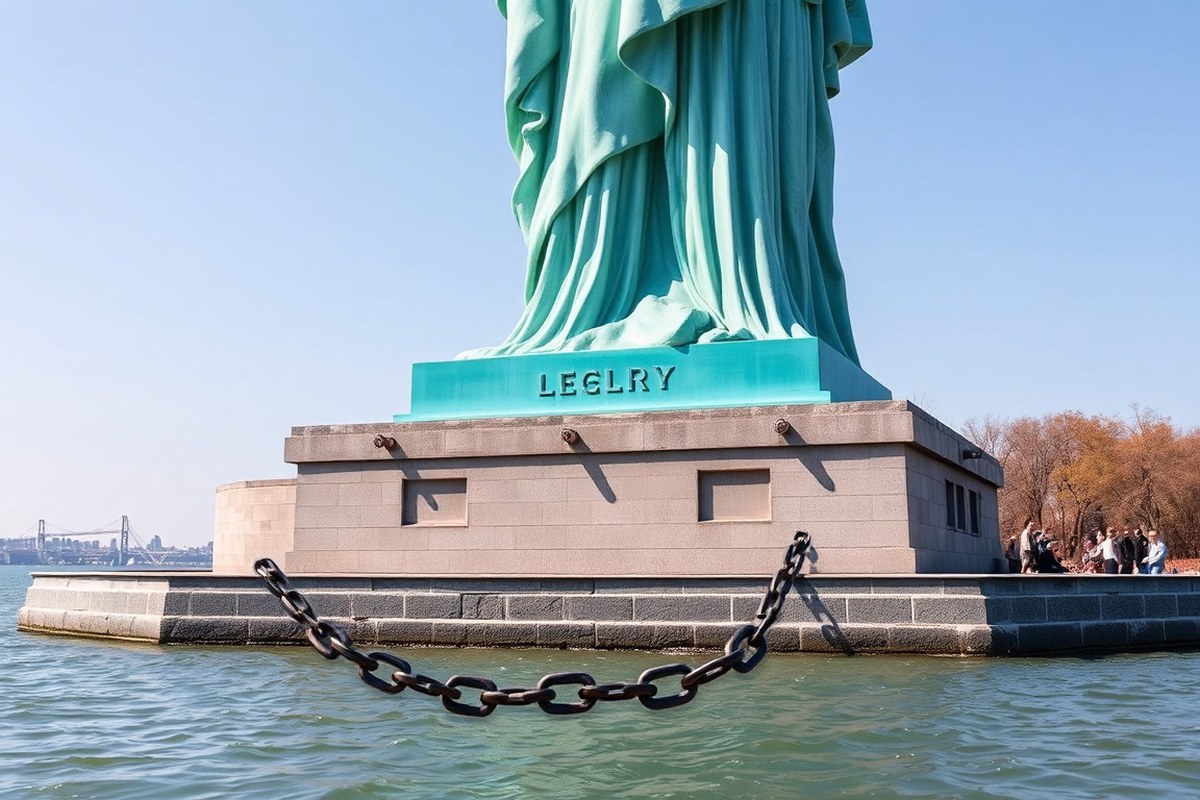
Does the Statue of Liberty have chains on her feet? Yes, it does.
Look closely and you’ll see broken chains lying beneath her sandals. These chains are a symbol, not just decoration.
The broken chains represent freedom from oppression and slavery. They highlight a key part of why the statue was gifted to America. You might miss them at first because they blend into the statue’s base.
The chains are placed near the statue’s feet, symbolizing breaking free from bondage. This visual detail tells a story about liberty overcoming tyranny and slavery. It connects to the statue’s full name, “Liberty Enlightening the World.”
Standing near the statue’s pedestal helps you see the chains better. Knowing this detail adds meaning to your visit and what the statue stands for. It reminds us of the struggles people faced to achieve freedom.
Key Takeaways
- The broken chains at the Statue of Liberty’s feet symbolize freedom from slavery.
- Visitors often overlook the chains because they are subtle and near the base.
- The chains were part of the original design and symbolize a major historic change.
- France gave the statue to America to celebrate liberty and democracy.
- The statue’s dedication came soon after the U.S. Abolished slavery in 1865.
- Original plans showed chains held in Liberty’s hand. But final design placed them at her feet.
Does the Statue of Liberty Have Chains on Her Feet?
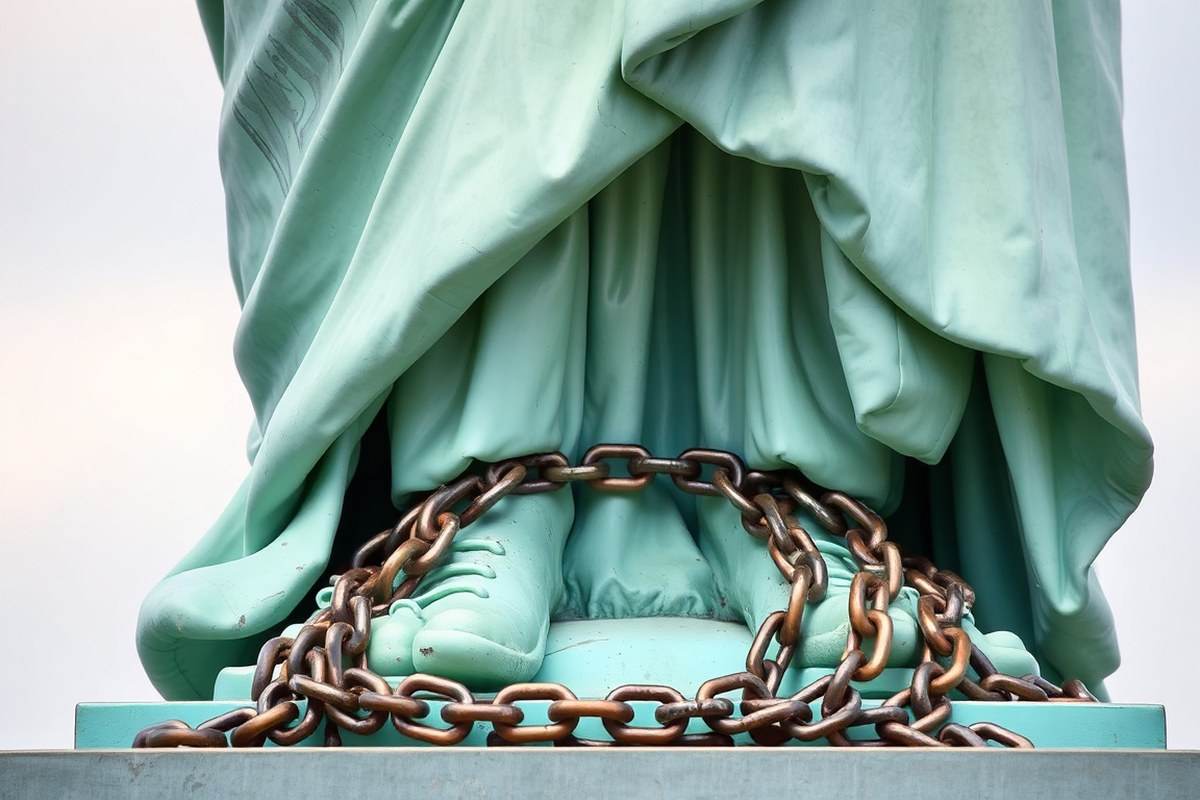
The Statue of Liberty does have chains on her feet. But they are not easy to see.
These chains lie broken underneath her robe at the base of the statue. They represent the breaking of oppression and slavery.
Frédéric Auguste Bartholdi, the statue’s sculptor, placed a broken shackle and chains at her feet deliberately. This detail symbolizes freedom overcoming slavery, showing that oppression has been crushed beneath her steps. Most visitors don’t see the chains at the statue’s feet.
They blend in with her dress folds. The chains also rest on the ground and stay out of view.
The chains look like heavy metal shackles at her feet. They appear broken and partly hidden by her robe. The statue’s dress covers some of the chains.
You have to look very closely near the bottom to spot them. People on Liberty Island or the ferry often miss the chains.
The chains are tucked away and hard to spot. Most focus on the torch and the crown instead.
What Do the Broken Chains on the Statue Symbolize?
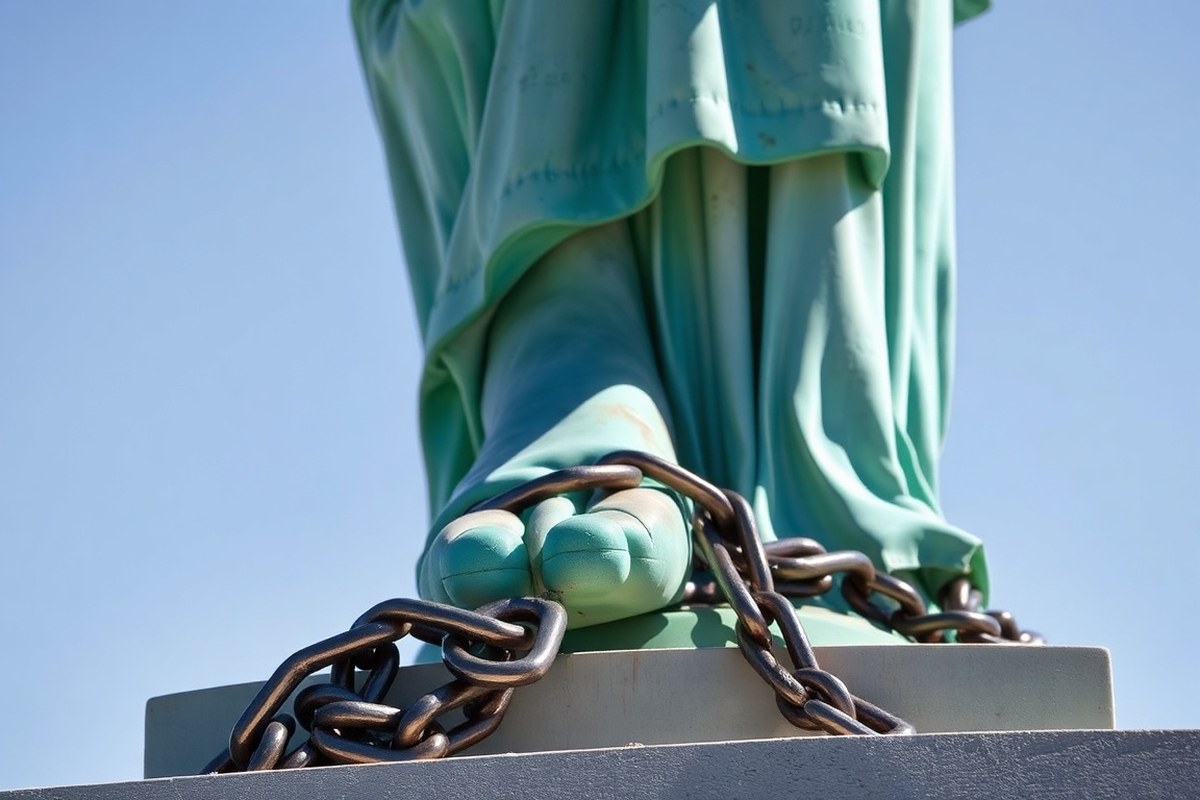
The broken chains at the Statue of Liberty’s feet show freedom. They stand for victory over slavery and cruelty. These chains tell you about the hard times enslaved people faced.
France gave the United States the statue in 1886, right after slavery ended here. The broken shackles show hope and the promise of liberty after long hardship. The chains are small and not easy to see.
They honor the people freed from slavery. These chains also mean justice and equality for all.
Originally, the sculptor Bartholdi wanted the broken chains in Liberty’s left hand. He decided to place them at her feet because holding chains was too controversial. This small detail sends a strong message about stopping slavery.
It stands for fighting against all kinds of unfair treatment. The chains remind you of the fight for freedom.
The symbolism goes beyond American slavery. It connects with ongoing battles against different types of tyranny worldwide. The statue’s chains keep reminding you that freedom needs constant protection and care.
You can see broken chains at Liberty’s feet if you look close. They quietly show the tough fight for freedom. These chains tell a story about liberty’s price.
Who Designed the Statue and Planned the Chains’ Placement?
French sculptor Frédéric Auguste Bartholdi designed the Statue of Liberty. He first planned for chains to be in her left hand. Later, he moved the chains to her feet.
This change shifted the statue’s meaning about freedom. It also changed how people see its message.
Bartholdi’s Original Vision with Chains
Bartholdi initially wanted the statue to hold broken chains in her left hand. This was meant to show the act of breaking free from slavery directly.
The chains showed the end of oppression. They symbolized freedom the figure held in her hand.
Early drawings and models clearly show chains clutched in the statue’s hand near the tablet. This placement made the symbol easier to notice and link to emancipation. Bartholdi aimed to connect the statue strongly with the abolition of slavery and justice.
Reasons for Changing the Chains’ Placement
The chains were later moved from the hand to the feet in the final design. This happened because the hand needed to hold the tablet with the date of the U.S. Declaration of Independence. Holding the tablet was essential to emphasize liberty’s foundation in law and democracy.
Moving the chains to the feet made them less visible to visitors. It created a more subtle symbol of liberation, showing chains crushed beneath the statue. Bartholdi’s team decided this refinement kept the message strong without distracting from the statue’s welcoming gesture.
Final Design Decisions and Their Impact
In the statue, the left hand holds a tablet. Broken chains lie at her feet.
This design still tells a story of freedom but in a more understated way. Visitors often overlook the chains, missing some of the layers of meaning Bartholdi intended.
Changing the chains’ placement affected how the statue’s message is understood. It shifted from active breaking of chains to standing on them, symbolizing victory over slavery. This subtlety fits the statue’s broader theme of hope, justice, and immigration’s promise.
You can explore Bartholdi’s decisions step-by-step. Look at how the chains changed from idea to final statue.
- Study the original sketches and models by Bartholdi showing the chains in the left hand.
- Review the design changes focusing on functional needs, like holding the tablet.
- Analyze why the chains moved from hand to feet for clearer overall symbolism.
- Compare early public reactions to the active versus subtle uses of chains.
- Observe the statue today to see how placement influences what visitors notice.
- Reflect on how the shift reflects changing ideas about freedom and justice.
- Consider how the chains fit into the statue’s role as a symbol of hope.
- Use these insights to understand Bartholdi’s balancing of art, message, and history.
Historical Context of the Statue’s Dedication and Slavery
The Statue of Liberty was dedicated on October 28, 1886. This decade came right after the Civil War and the official end of slavery in 1865. The country was deeply divided about race and Black rights.
These issues caused conflict across many communities. People were uncertain about true freedom for all.
The statue was a gift from France meant to celebrate the emancipation of American slaves. Slavery had ended just two decades earlier. But laws and social systems still limited freedoms for Black people.
Ongoing struggles made the statue’s broken chains a clear symbol. They stood for hope and fresh starts. Many saw them as signs of change.
Understanding the timing helps connect the statue’s symbolism to real history. The chains on the statue relate directly to slavery’s end. The chains represent breaking free from slavery and unfairness.
They mark the start of a fairer society. Full equality, however, took a much longer time.
| Year | Event | Significance |
|---|---|---|
| 1865 | End of American slavery | Official emancipation after Civil War |
| 1886 | Dedication of the Statue of Liberty | Gift from France celebrating emancipation |
| Late 1800s | Enactment of laws limiting Black freedoms | Ongoing racial and social oppression |
| 20th century | Statue inspires civil rights movements | Symbol of freedom and equality struggles |
The statue’s chains acknowledge a history of struggle and hope. They recognize the complexity of freedom during a time of racial tension. This is why people link the statue to civil rights work.
It goes beyond just helping immigrants. The statue stands for many kinds of freedom fights.
The broken chains tell a story of liberation and ongoing challenges. The chains remind you that freedom was hard won. It also shows that the struggle continues today.
Freedom is not yet fully complete. The statue’s unveiling date makes visitors consider history’s long road.
It shows the shift from slavery to citizenship rights. This timeline helps viewers reflect on the past.
How Do the Chains Honor Freed Slaves and Emancipation?
The broken chains on the Statue of Liberty honor freed slaves. They show these people were released from bondage. This symbol reminds us of freedom’s value.
These chains symbolize the end of slavery and the struggles enslaved people endured to gain freedom. The chains remind us that liberty was a real promise.
It was not just an idea. It meant hope for those who suffered enslaved.
This symbolism links directly to American ideals of liberty and justice. The statue represents these ideals visually, with the broken chains standing for freedom from oppression. These chains highlight that liberty should be for everyone.
Justice is for all people. Especially for those who were once denied rights.
Through this imagery, the statue pays respect to the courage and perseverance of freed slaves. The chains celebrate the passage of emancipation. This was a key moment in American history.
It moved the nation closer to its ideals. This connection between the chains and emancipation helps people understand freedom as something hard-won and precious.
These broken chains remind people to value justice and equality today. Their presence signals that liberty is complete only when all citizens share it equally.
The Statue of Liberty’s chains make a strong statement. They show the country’s ongoing commitment to liberty and justice.
Look closely at the statue’s base to see broken chains. They are faint outlines but very meaningful. This small detail is important.
Why Are the Chains Hardly Visible to Visitors?
The chains on the Statue of Liberty lie at her feet. They are hard to spot because of their low placement. The designer chose this spot to show liberty breaking free from bondage.
Most visitors miss the chains due to their blending with the base. The chains are not raised for easy viewing.
Visitors looking up at the statue from the grounds usually focus on her torch or crown. The chains are low and partly hidden by shadows and the statue’s flowy robes. The sunlight and angles also make the chains less obvious than you might expect.
Park rangers and tour guides point out the chains during visits. They explain how the broken chains represent freedom from oppression and slavery.
Still, there is little physical signage near the statue itself about the chains. So many visitors miss this detail without a guide.
- The chains are at the statue’s feet, near the base pedestal.
- Chains appear as broken shackles to symbolize freedom.
- Common viewpoints focus above the statue’s head and torch.
- Low lighting and statue shadows hide the chains from plain sight.
- Rangers mention the chains during ranger-led tours and talks.
- There’s limited direct signage explaining the chains on site.
- Visitors need to look down low while on the pedestal to notice them.
To see the chains clearly, you can visit the pedestal level or the museum nearby. Look closely around the base for the broken links modeled into the design.
Without a guide, the chains stay hidden in the statue’s message. You need a close look to notice them well.
How Has the Meaning of the Chains Evolved over Time?
The meaning of the chains on the Statue of Liberty has shifted since 1886. Originally, they symbolized the end of slavery and freedom from oppression after the Civil War. Over time, these broken chains have grown to represent broader ideas of liberation and human rights.
Today, the chains carry weight in conversations about racial justice and equality. Movements like Black Lives Matter bring renewed focus on the statue’s symbolism. They see the broken chains as a reminder of ongoing struggles against systemic racism and injustice.
Cultural figures use the chains in speeches and art. They also use them in protests to link past and present fights for freedom. Activists point out the barely visible chains in the statue.
They do this to call for a clearer reckoning with history. This shows how the statue still inspires calls for equality.
You can learn about the statue’s history to engage with its meaning. Notice the subtle details during your visits to connect with the symbolism.
Understanding how the chains relate to today’s social issues helps deepen appreciation. It also encourages conversations on how freedom is a continuing effort, not just a historical fact.
Original Statue Designs Compared: Chains in Hand vs. At Feet
The early sketches of the Statue of Liberty showed chains in her hands. But the final statue has chains lying broken at her feet.
These different placements carry distinct meanings. The shift reflects a careful choice about symbolism and how the statue would communicate its message.
Early Chain-In-Hand Sketches
The initial designs by Frédéric Auguste Bartholdi featured the figure holding chains in her raised hand. This showed active breaking of bondage, symbolizing liberation as a direct action. The chains were more visible, aiming to make the struggle for freedom obvious.
Bartholdi’s models also included chains wrapped around one arm, rather than at the feet. This posed a risk of distracting from the statue’s main symbols, like the torch and tablet. Placing chains in the hand made the message urgent but potentially less subtle.
Symbolic Differences of Placements
Chains in the hand symbolize direct combat or voluntary breaking of oppression. It suggests the person actively holding power over the chains. Meanwhile, chains at the feet show defeat and submission of tyranny, with liberty standing firmly free.
Chains on the ground are broken, meaning the struggle is over. This conveys lasting freedom already won, rather than ongoing battle. The feet placement also avoids cluttering the statue’s upper features, preserving visual balance.
Historical and Political Considerations
During the late 1800s, open references to slavery and bondage were sensitive in the U.S. Designers feared strong images of chains might offend Southern states. This risked alienating supporters or weakening the statue’s unifying message at dedication.
Hiding chains at the feet made their meaning more subtle and less likely to spark controversy. It emphasized hope and freedom without confronting painful divisions head-on. The placement also harmonized with classical statues of victory and peace.
| Chain Placement | Symbolism | Pros | Cons |
|---|---|---|---|
| Chains in hand | Active breaking of bondage | Powerful, direct message of liberation | Distracts from other symbols, politically sensitive |
| Chains at feet (final) | Defeated oppression, lasting freedom | Subtle, balanced, less controversial | Harder to notice for visitors |
Choosing the right chain placement shaped public perception and acceptance. Keeping the chains at the feet allowed the statue’s message to reach more people gently. It also fit better with artistic traditions for monuments.
Look closely at the statue’s base to spot the broken chains, it’s easy to miss.
Visitor Tips: How to Notice and Understand the Chains Today
Finding the chains on the Statue of Liberty takes a close look at her feet. They are broken and partly hidden.
So you’ll need to know where to look and what they represent. Guides should share the chains’ meaning clearly to avoid confusion during visits.
Locating the Chains at the Statue’s Base
The chains are at the statue’s left foot, right where it steps on a broken shackle. You have to look down from the pedestal level. You can also see from the museum area near the base.
Both spots show the chains clearly. They appear as thick, rust-colored links lying on the ground under Lady Liberty’s foot.
Visitors using the official ferry can spot the chains after getting off on Liberty Island. Check near the statue’s supporting platform. Bring binoculars for a better view from far away.
The chains are not very large or easy to spot. Binoculars help to see the details.
Key Historical Points to Mention
The chains represent broken shackles from slavery, showing freedom breaking free. The design symbolizes the end of oppression as the chains lie shattered beneath Liberty. Guides should connect this image to the Emancipation Proclamation and the broader abolition movement.
Explain that the chains were meant to remind visitors of America’s promise of liberty for all. The chains were placed to create a symbolic effect. They are not just random decoration on the statue.
This detail adds meaning to the statue. Sharing this gives visitors deeper meaning beyond just the statue’s appearance.
Common Myths to Correct During Tours
Many believe the chains wrap around Lady Liberty’s wrists. They do not.
The chains are only at her feet and are broken to show freedom. Remind visitors this to avoid confusion.
Some think the chains are hard to see because they were removed or never there. The chains are still part of the statue itself. They stay close to the base and blend with the ground.
It makes them hard to notice up close. Clarify that the chains are subtle but always present.
- The chains are on the left foot, near the base of the statue
- They are broken, showing shackles that no longer confine
- The chains do not wrap around her wrists or arms
- Look from the pedestal or museum areas to spot them best
- Binoculars help because the chains are small compared to the statue
- The chains symbolize the end of slavery and oppression
- They are a permanent part of the design, not removed or hidden
During your visit, listen for guides to include these points so you understand the symbolism right. Asking questions about the chains can help clear up any doubts or misconceptions. That way, you will get more from the experience than just the view.
Step-by-Step Action Plan to Spot and Understand the Chains on the Statue
Learn to recognize the chains on the Statue of Liberty and grasp their meaning. Follow these steps to notice this detail and reflect on its significance.
- Before your visit: Read about the chains’ symbolism. Knowing why they matter will help you spot them quicker.
- Arrival at Liberty Island: Pick a viewpoint from the island’s pathway near the statue’s base. Look closely at her feet.
- During the visit: Use binoculars or a zoom lens to see the chains better. Confirm you spot broken loops near her feet.
- While touring the pedestal museum: Check exhibits about the statue’s history. Notice how the chains represent freedom from slavery.
- After your walk around: Reflect on what the broken chains mean to American history. Think about emancipation and ongoing liberty struggles.
- Share the insight: Discuss the chains’ symbolism with friends or family. Teaching others helps you remember and appreciate the detail.
Frequently Asked Questions
Does the Statue of Liberty Truly Have Chains on Her Feet?
Yes, the sculptor placed broken chains at her feet to symbolize freedom. You might miss them because they are low and partly hidden from usual viewpoints.
Why Are the Chains on the Statue of Liberty Not Easy to See?
The chains lie at the Statue’s feet where most visitors don’t look closely. Their location and the platform’s height make them hard to spot unless you know to search.
Were the Chains a Common Part of the Original Statue of Liberty Design?
Early models showed broken chains either in the hand or at the feet. Bartholdi finally settled on chains at the feet to symbolize slavery’s end more subtly.
What Do the Broken Chains at the Statue of Liberty’s Feet Represent?
They stand for breaking free from slavery and oppression. This powerful symbol honors the end of slavery in the United States after the Civil War.
Who First Pointed Out That the Statue of Liberty’s Chains Are Often Overlooked?
Historian DeGruy highlighted how guides rarely mention the chains during tours. She started telling visitors about their significance to raise awareness of freedom’s struggle.
Final Thoughts
The Statue of Liberty does have broken chains hidden at her feet, symbolizing freedom from slavery. Spotting these chains takes a keen eye and a little patience. Next time you visit, bring binoculars and reflect on this quiet but powerful symbol of liberty.