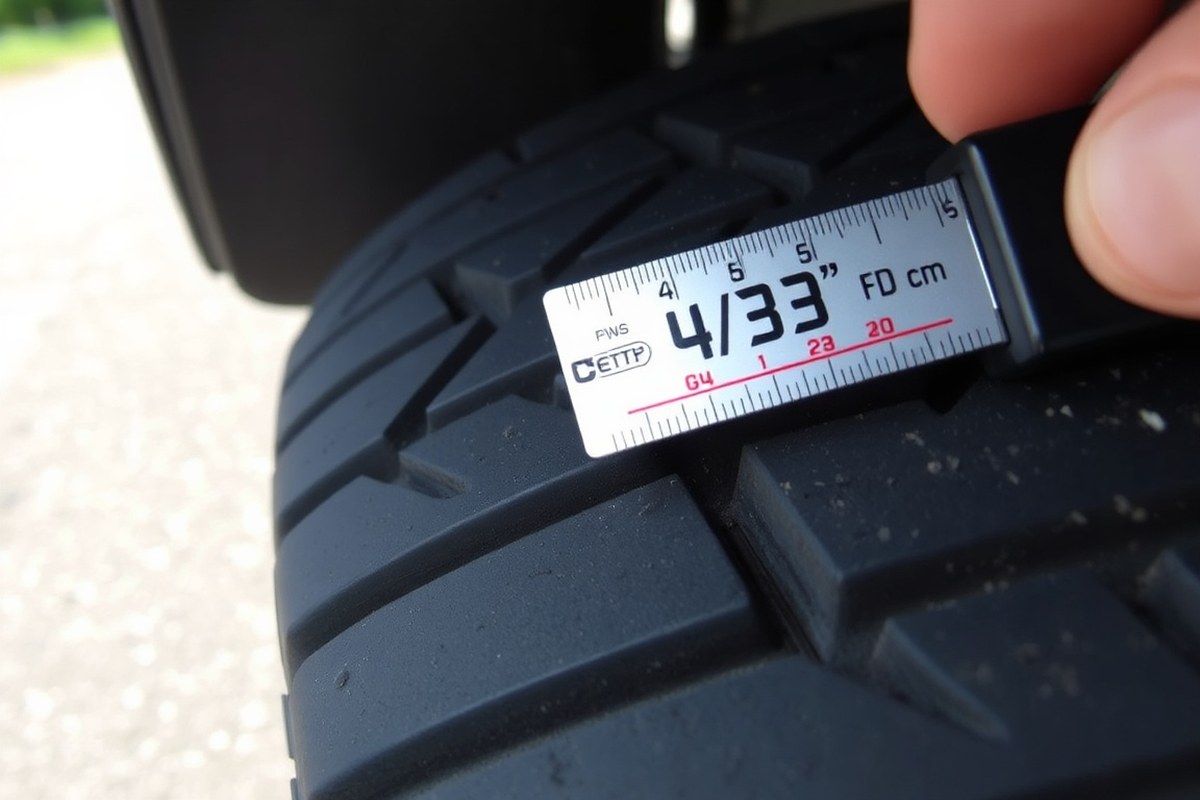
Should I Replace Tires at 4/32? A Complete Safety and Cost Guide
Should I replace tires at 4/32? Yes, that is the safe time to replace them.
Tires at 4/32 tread depth still pass legal rules but lose much wet-road grip. They need about 43% more stopping distance in rain compared to new tires.
You can wait until they reach 2/32. But that’s the legal limit, not the safe limit.
Driving on tires worn below 4/32 increases risks during wet weather. Start by measuring your tread depth regularly and watch for uneven wear or damage.
Many drivers extend tire life past 4/32, but you lose wet traction quickly. Replace sooner if you drive in rain often or see early signs of wear. It’s better to be safe than sorry when braking on slippery roads.
Key Takeaways
- Replace tires at 4/32 tread depth for safer wet-road traction.
- At 4/32 tread, stopping distances on wet roads increase by 43% or more.
- Check tread depth regularly with a proper gauge or penny test.
- Rotate tires every 5,000 to 8,000 miles to avoid uneven wear.
- Replace tires earlier if you drive mostly in rainy or wet conditions.
- Keep an eye out for age, damage, or bulges regardless of tread depth.
Is 4/32 the Right Time to Replace Tires?
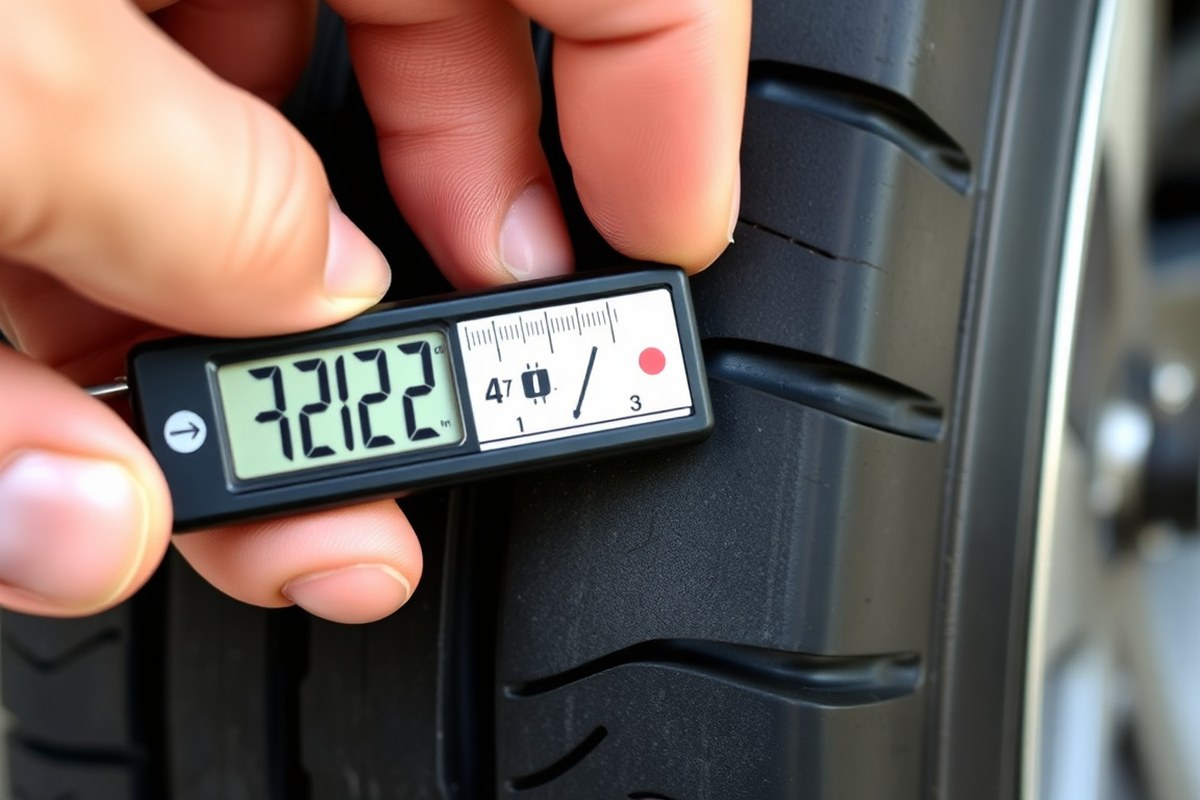
Changing tires at 4/32 inch tread depth is a good idea. Don’t wait for the legal minimum of 2/32 inch. This keeps you safer on the road.
At 4/32, your tires still have some tread left. But wet road performance drops noticeably. Stopping distances get longer, and you risk more hydroplaning in rain or slush.
Most states set 2/32 as the legal limit. But that’s the bare minimum before tires become unsafe. The law doesn’t mean it’s safe to keep driving.
4/32 is a common recommendation because it balances safety and cost. You get better wet traction and more time to shop around for replacements.
You can check if you need new tires with a tread gauge. A quarter works too. Just measure the tread depth.
Tread at or below 4/32 inch means it’s time to plan for replacement. This is true especially on wet or snowy roads. You should not delay.
Driving mostly in dry weather lets you keep tires a little longer. Watch for signs of wear closely. Don’t wait too long though.
Uneven tread wear or any tire damage means replace your tires right away. Don’t wait for the tread depth to drop. Safety matters most here.
Tires at 4/32 often still meet legal limits but don’t handle water as well. Wet braking takes longer and your risk of sliding grows as tread thins. For example, hydroplaning risk increases as tread drops from 5/32 to 4/32.
Frequent rainy driving calls for tire replacement at 4/32 inch depth. This keeps your stopping distance shorter and better grip on wet roads.
Testing tread depth only takes a minute with a tool or quarter. Place a quarter upside down in the groove to check tread.
If the top of Washington’s head shows, tread is under 4/32 inch and you’ll want new tires soon. Replacing four tires usually costs $400 to $800, depending on type and shop.
Replacing at 4/32 protects you from sudden loss of control in bad weather. Waiting until 2/32 means you risk poor grip on wet roads and longer stopping distances. Replace tires at 4/32 inch tread for better control and safety.
This is especially important in rain or winter conditions. Don’t wait too long to switch them out.
How to Accurately Measure Tire Tread Depth
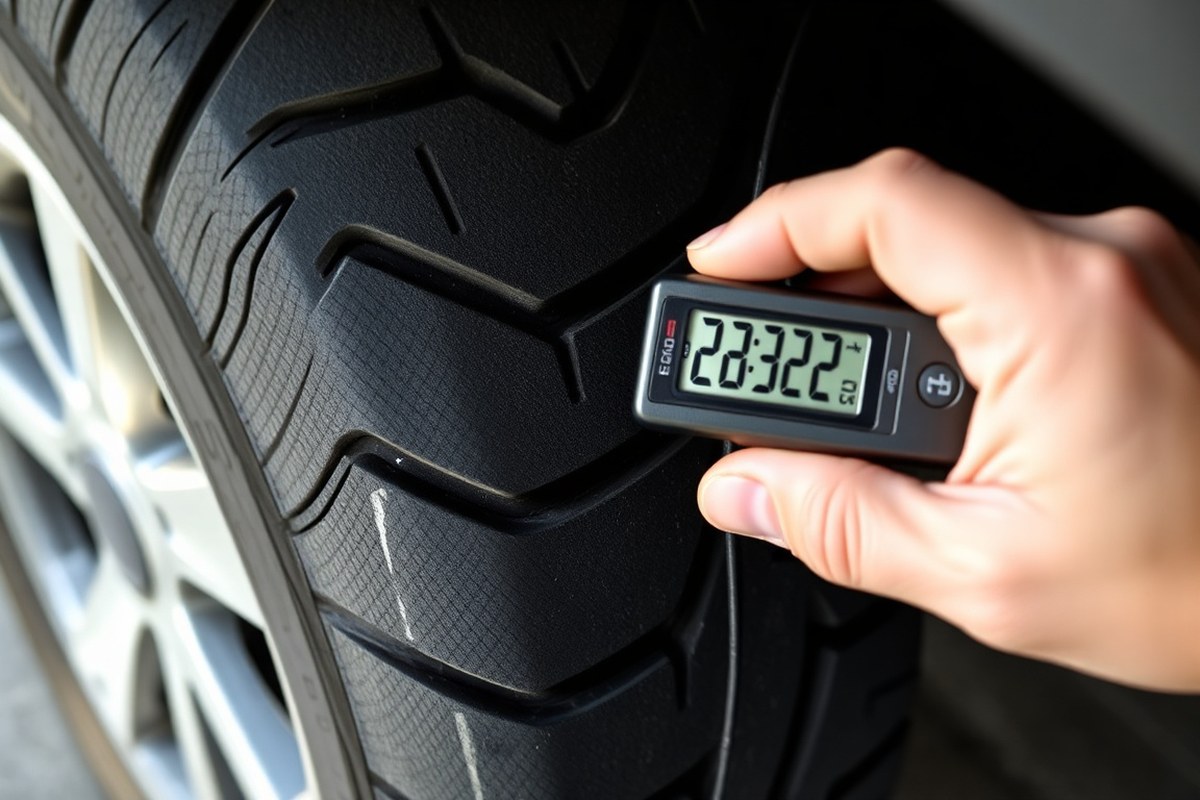
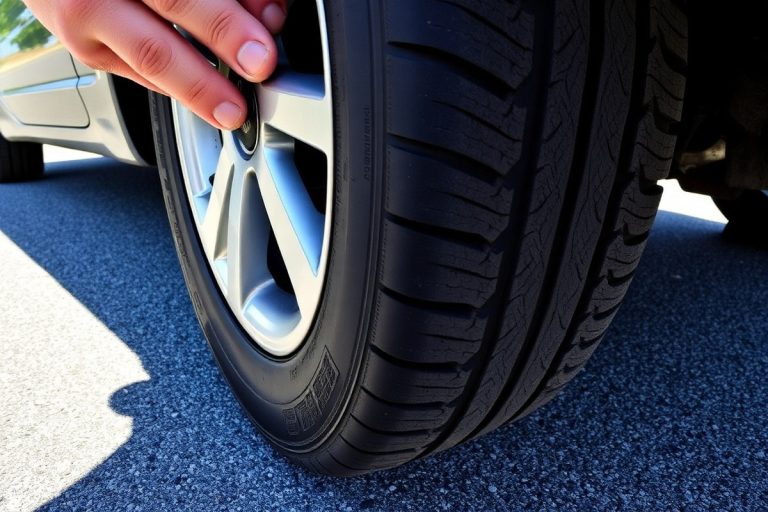
Measuring tire tread depth helps you know if your tires have reached 4/32 inch. You can use simple coins or a tread depth gauge to get a clear picture. Checking multiple grooves on each tire gives the most accurate reading.
Using a Penny and Quarter Test
The penny test is a quick way to guess if tread is low. But the quarter test gets you closer to 4/32 inch.
Insert the coin into a tread groove with Lincoln or Washington’s head facing down. You see the coin’s top when the tread is shallow.
Use both the penny and quarter tests across the tire’s center and edges for best results. The penny flags 2/32 inch.
The quarter flags about 4/32 inch, which helps spot when replacement approaches. These tests don’t give exact numbers but signal when to check more precisely.
Digital and Mechanical Tread Depth Gauges
Tread depth gauges cost $10 to $30 and measure depth in 32nds of an inch. Digital gauges show numbers on a screen.
Mechanical ones have a sliding scale you read. Both are easy to use and more reliable than coins.
Measure in several grooves on each tire, including the center, inner edge, and outer edge. Record the lowest reading to ensure safety across all tread areas. Keep a gauge in your glove box and check every oil change for a handy routine.
- Clean dirt from the tread grooves before measuring.
- Insert the depth gauge into a groove until it touches the bottom.
- Read the measurement on the gauge carefully.
- Repeat in multiple grooves, including edges and center.
- Write down the lowest measurement for each tire.
- Compare readings to 4/32 inch to decide on replacement.
Check several spots per tire to avoid missing uneven wear.
Reading Built-In Tire Wear Bars
Wear bars are small rubber strips running across tread grooves at 2/32 inch depth. When the tread looks level with these bars, the tire has reached legal minimum tread. These bars help confirm if tires need replacing soon.
Check all four tires in several places for wear bar exposure. The tread is near 4/32 and just above the bars; replace soon. Don’t rely only on bars; use gauges or coins for earlier warnings.
What Happens to Tire Performance at 4/32 Tread?
Tire tread depth directly affects how well your tires grip the road. New tires usually start with around 10/32 inch of tread. By the time they reach 4/32 inch, wet braking distance increases significantly.
At 70 mph, new tires can stop on wet roads in 195 feet. At 4/32 inch tread depth, stopping distance increases to about 290 feet.
That is roughly 50% longer stopping distance. That extra stopping distance can be the difference in avoiding an accident in rainy conditions.
Hydroplaning risk also grows as tread wears down. New tires can channel water away efficiently, keeping your contact with the road. At 4/32 inch tread depth, your tires lose much of this ability.
Hydroplaning risk increases as tread depth gets lower. Less tread means less water gets squeezed out from under the tire. This makes hydroplaning more likely.
On slick or wet roads, your tires may slip or slide. It can feel like you suddenly lose control. This feels unsafe and scary while driving.
Here’s a clear comparison of tread depths and their typical wet stopping distances at 70 mph:
| Tread Depth | Wet Stopping Distance (feet) | Compared to New |
|---|---|---|
| 10/32 (New) | ~195 | Baseline |
| 4/32 | ~290 | ~50% Longer |
| 3/32 | ~335 | ~72% Longer |
| 2/32 (Bald) | ~380 | ~95% Longer |
On dry roads, 4/32 inch tread still lets your tires perform fairly well. You won’t feel much loss in grip or handling under normal conditions. However, wet or rainy roads reveal the real impact of worn tread.
The tire’s ability to grip tight curves or stop quickly drops. Replace tires at 4/32 if you drive in wet areas.
This helps keep good water traction on rainy days. It’s a smart safety choice.
Braking effectiveness drops progressively as tread wears thinner. The difference from new to 4/32 might add about two car lengths to your stopping. By 2/32 inch, the legal minimum, wet stopping distance nearly doubles, creating a serious hazard.
Tires at 4/32 aren’t bald yet but aren’t safe either. Wet driving risk goes up a lot at this point. Changing tires before this is best.
How Long Will Tires Last After Reaching 4/32?
Tires with 4/32″ tread usually last 8,000 to 15,000 miles. This happens before they reach the 2/32″ legal limit. This range means about 6 to 12 months of driving time.
It depends on how often and where you drive. For example, a daily driver covers 12,000 miles a year. They might have 6 to 10 months before replacing tires.
Heavy vehicles like SUVs wear tread faster than smaller cars. They use up 4/32″ tread in 6,000 to 10,000 miles. City driving with lots of stops, starts, and turns also speeds up tread loss.
Driving style affects tread wear too. Hard braking and quick acceleration wear tires faster than smooth driving.
Touring tires last longer than others. They can keep tread over 15,000 miles from 4/32″ to 2/32″. Stop-and-go traffic or heavy loads wear tires faster.
Expect the lower mileage range if this describes your drives. Rotating tires every 5,000 to 8,000 miles helps even wear. This can slightly extend the tire lifespan.
Example: If tires hit 4/32″ after 30,000 miles and you drive 1,200 miles monthly, expect 8,000 more before 2/32″. That means roughly 6 to 7 months before you need new tires. Carrying heavy cargo or aggressive driving might reduce this to 5 months or fewer.
Once tread hits 4/32″, the rubber is softer, offering better grip but wearing down faster. This shrinking window means it’s smart to plan replacements earlier rather than later.
Waiting until 2/32″ tread depth is risky and illegal. It raises slip chances, especially on wet or slick roads.
How Climate and Driving Habits Affect Replacement Timing
Drivers in rainy or snowy areas should replace tires around 4/32 tread depth. Below this point, wet stopping distance grows noticeably longer. Tires lose grip on water and ice, which makes sliding and hydroplaning much more likely.
Smooth highway miles wear tires slower than stop-and-go city driving. Rapid braking, quick acceleration, and sharp turns speed up tread loss. Your tires will wear faster if you drive often through traffic lights or potholes.
Rain alone does not sharply increase wear. But wet or icy roads affect safety more. For wet climates, many safety groups suggest changing at 4/32.”
In snowy regions, aim for 5/32 or more. That extra tread helps the tire bite deeper into soft snow and improve braking.
Replacing tires earlier in these conditions costs more but reduces accident risk. You can spread replacement over time by swapping two at once and rotating regularly. Check tread depth before rainy seasons and plan the swap to avoid slipping in wet weather.
Replace your tires at 4/32 tread depth. Do it sooner if you drive in rain or snow. This helps you keep control.
Driving style impacts tread life too. Abrupt stops and hard accelerations wear tread quickly. Try gentle driving and avoid spinning tires to extend their life and stay safer.
Highway drivers who drive 12,000 to 18,000 miles a year see tires last longer. Urban drivers wear tires out faster due to stop-and-go conditions. Less frequent braking and steady speeds slow tread loss.
Still, replace tires once they reach 4/32 tread depth. This matters especially if you live where it rains often.
What to Do If You Notice Uneven Tread Wear At 4/32
Uneven tread wear at 4/32 means your tires are getting worn out. This can cause safety risks while driving. You should watch for this problem closely.
You need to check what is causing the uneven wear first. Fix any alignment or rotation problems you find.
Then decide if you must replace the tires sooner. Catching these problems early can save you money and improve vehicle handling.
Common Causes of Uneven Wear
Uneven wear usually comes from alignment, suspension, or rotation problems. For example, front tires on a front-wheel-drive car wear faster if you don’t rotate them regularly. Misaligned wheels often cause one side of the tire tread to wear quicker than the other.
Suspension issues like worn-out shocks can also make tires wear unevenly. Underinflated or overinflated tires wear differently across the tread. Ignoring these causes can lead to fast tread loss, which is dangerous below 4/32 depth.
How to Inspect for Uneven Patterns
Use a tread depth gauge to measure across various spots on each tire. One part reads 4/32 and another reads 2/32. This shows you have uneven wear.
Look for signs like more wear on the tire’s inner edges. Check if the outer edges have more wear than the center.
Check your tires in good light, and clean off any mud or debris. Tires with bigger depth differences indicate alignment or rotation needs, not just natural wear. Confirm tire pressure matches the manufacturer’s recommendation before measuring.
Preventive Maintenance and Correction
These steps can stop uneven wear from getting worse. They might let you use your tires a little longer safely.
Addressing issues before replacing tires keeps new ones from wearing unevenly too fast. Regular rotation, proper inflation, and wheel alignment are key to even wear.
Here’s how to handle uneven tread wear at 4/32:
- Check tire pressure and adjust to recommended levels for all tires.
- Inspect tread depths at three points: inner edge, center, and outer edge.
- Look for any visible damage, like bulges or cracks, that may need repair.
- Take your car to a mechanic for a wheel alignment check and correction.
- Ask about suspension parts if uneven wear persists after alignment.
- Rotate tires according to your vehicle’s schedule, usually every 5,000 to 7,000 miles.
- Decide if tire replacement is needed sooner, especially at 3/32 tread depth. If any part is 3/32 or less, replace the tires.
Fixing alignment and rotation costs about $75 to $150. This is less than replacing tires earlier than needed.
Uneven wear that reaches the cords damages suspension and safety systems. Regularly checking tires and fixing uneven wear extends tire life and lowers risk on the road.
Can You Replace Only Two Tires at 4/32? When It’s Okay
Replacing only two tires at 4/32 tread depth can be safe on two-wheel-drive vehicles. You should put new tires on the rear axle. This helps keep control on wet roads.
It improves your car’s stability in slippery conditions. The older tires stay on the front where they handle steering. The newer tires prevent hydroplaning risks in the back.
A pair of new tires usually costs $100 to $300. Installation adds about $30 to $60. These prices depend on tire type and shop.
Balancing and mounting generally take 30 minutes for two tires. This should keep your car steady.
Make sure your tread difference doesn’t exceed 2/32 inch. More than that can cause handling problems.
All-wheel-drive (AWD) and four-wheel-drive (4WD) vehicles need special care. Their drivetrains can be damaged if tires have different diameters from uneven tread depths.
Many AWD manuals require all four tires to match within a very small tread-depth difference. This means you often must replace four tires at once to avoid costly repairs.
Uneven tread depths cause your tires to roll at different speeds. This forces the center differential in AWD cars to work harder. That can wear down drivetrain parts fast.
It may lead to costly repairs. Even small differences in rolling circumference can set off warning lights.
They may cause rough handling too. This is risky on slippery roads.
High-performance tires, like summer or ultra-high-performance ones, wear quickly. At 4/32, they lose grip fast and stop channeling water properly. For these tires, replacing all four at once is often safer.
This applies even if only two show 4/32 tread. It helps keep balance across all tires.
The safe rule is to measure tread depth on all tires first. Two worn near 4/32 and the other two above 6/32? Replacing two works only for 2WD cars.
AWD cars need more even tire tread. On AWD or 4WD vehicles, check your owner’s manual for maximum allowed tread differences. Many manufacturers limit differences to less than 2/32 to prevent damage.
For a practical decision, examine your tires with a tread gauge. Your car is AWD with front tires at 4/32 and rears near 6/32 or more. You likely need four new tires to avoid damage.
Price out a full set, which is $400 to $1,200 depending on brand and vehicle. Installation takes about an hour and ensures balanced, safe contact with the road.
Some drivers risk replacing just two tires on AWD vehicles hoping to save money. This often leads to extra drivetrain stress and expensive repairs later. Check your owner’s manual or ask a trusted mechanic before you decide.
Balancing tire tread keeps your car stable. It extends your drivetrain’s life too. It also stops uneven wear that shortens tire life.
Costs and Time Involved in Replacing Tires At 4/32
Tire replacement near 4/32 tread depth typically costs between $100 and $300 per tire. This price depends on the brand, size, and tire type you choose. Standard tires usually cost less, around the lower price range.
Specialty tires, like all-season or performance types, tend to be pricier. The price difference depends on the tire type and features.
Installation alone takes about 30 to 60 minutes per tire at most shops. The process takes some time.
It includes taking off the old tire, putting the new one on, and filling it with air to the proper pressure. Busy shops may take longer, so booking an appointment can save waiting time.
| Cost Item | Typical Range | Notes |
|---|---|---|
| Tire Cost | $100 – $300 per tire | Depends on brand, size, and tire type |
| Installation | 30 – 60 minutes per tire | May take longer for busy shops |
| Balancing | $15 – $25 per tire | Usually done with installation |
| Wheel Alignment | $50 – $100 | Recommended if uneven wear or handling issues |
Most shops include balancing when installing new tires. Balancing prevents vibrations and uneven wear.
Skipping balancing can make tires wear out more quickly. Your ride may also feel bumpier without proper balancing.
Alignment isn’t needed every time but check it if you see uneven tire wear or your car pulls to one side. Misalignment causes uneven tread damage and shortens tire life. The cost ranges from $50 to $100 and can help you avoid extra expenses later.
Replacing tires without fixing uneven wear causes the next set to wear similarly fast.
Besides costs, you should check what causes your tires to wear out. Low tire pressure leads to shoulder wear, while alignment issues cause one-sided wear. Fix these problems before replacing tires to avoid burning through new tires quickly.
Choosing the Right Replacement Tires After 4/32
Replacing tires at 4/32 tread depth means selecting the right type for safety and your budget. Choose a tire designed for your common driving conditions and weather. Pay attention to brand quality to get better performance and longer tire life.
Evaluating Tire Types and Uses
Matching your replacement tires to your usual driving conditions helps maximize safety. All-season tires work for mixed weather.
But summer tires give better grip in hot, dry roads. For rough or off-road driving, all-terrain tires offer extra durability and traction.
Consider how often you face rain, snow, or dry heat. All-terrain tires may wear faster on paved roads. Choose tires carefully to match your typical road type and climate.
Considering Brand and Warranty
Higher quality brands often cost more but usually last longer past 4/32 tread depth. They also improve wet-road traction and reduce risks of hydroplaning. Check manufacturer warranties for mileage and defects to compare value.
Buying from reputable brands helps avoid unsafe tires that wear unevenly or degrade fast. Premium tires may cost $100 or more each.
They offer better safety. This can give you more peace of mind.
Look for these key tire features:
- Good wet-weather traction rating
- Long mileage warranty (40,000 miles or more)
- Positive customer reviews on durability
- Matching tire size and speed rating for your vehicle
- Availability for your local climate zone
Matching Tires to Driving Conditions
Climate affects your tire choice after 4/32. Wet or snowy areas need tires with deeper tread and softer rubber. Consider replacing tires earlier if you drive mostly in rain or snow.
Warmer, dry climates allow tires with harder rubber compounds and less aggressive tread. These last longer but perform worse in wet conditions. Factoring your local weather helps pick safer, longer-lasting tires.
Step-by-Step Action Plan for Tire Replacement at 4/32 Tread Depth
Follow these steps to decide if you should replace tires at 4/32 tread depth. Doing this helps you keep driving safely. Make your choice with confidence.
- Day 1: Measure your tire tread depth using a tread depth gauge or a penny. Confirm it reads at or below 4/32 on your tires.
- Day 2: Inspect the tires for uneven tread wear or visible damage like cuts or bulges. Replace immediately if damage is found.
- Week 1: Check your usual driving conditions. You drive in rain or snow a lot. Plan to replace tires sooner than drivers in dry areas.
- Week 2: Decide whether to replace two tires or all four. Check manufacturer advice and your budget. Replace tires on the same axle if only two.
- Week 3: Shop for tires matching your vehicle size. Pick tires that fit your driving needs. This keeps you safe and handling well.
- Week 4: Schedule tire installation by a pro. Get an alignment to ensure even wear. This helps your tires last longer.
- Ongoing: Check tire pressure and tread depth every few months. Catch wear early to stay safe on the road.
Frequently Asked Questions
Do I Need to Replace All Four Tires at 4/32 Tread Depth?
No, you can replace just two tires at 4/32. Put the new tires on the rear axle instead.
This helps keep better control of your car. This helps keep better traction where slip is more dangerous and balances the car’s grip.
Can I Continue Driving in Dry Conditions with Tires At 4/32?
Yes, in dry city driving, tires at 4/32 are often still usable if wear is even. However, it’s smart to monitor them closely and plan to buy new tires soon.
How Does Tire Age Affect the Decision to Replace At 4/32?
Tire age matters even if tread is above 4/32. Replace tires older than 6 years as rubber degrades, regardless of tread depth. Check tire manufacture date along with tread measurement.
What Should I Do If My Tires Wear Unevenly but Have 4/32 Tread Overall?
Uneven tread wear may mean replacing tires earlier than at 4/32. Address alignment or suspension issues before investing in new tires. Uneven wear reduces safety and tire life.
Can Tire Rotation Extend the Time I Can Drive on 4/32 Tread Depth?
Regular rotation helps even out wear but won’t greatly extend safe use at 4/32. Rotate every 5,000 to 8,000 miles to keep wear balanced and avoid early replacement.
Before You Go
Replacing your tires at 4/32 tread depth depends on your driving and local conditions. Start by measuring your tread depth carefully. Then, book your replacement to stay safe on the road.