
How Much Does 5 Gallons of Gasoline Weigh? A Complete Guide with Calculations
How much does 5 gallons of gasoline weigh? It usually weighs about 30 to 31.5 pounds.
A practical number to remember is around 31 pounds for everyday use. This estimate works well for most regular gasoline blends.
The exact weight can shift slightly due to gasoline type and temperature. Cold gasoline is denser and weighs a little more, while warm gasoline weighs less. Still, these differences are small and rarely cause major changes in weight.
Gasoline is lighter than water; 5 gallons of water weigh about 42 pounds. This means gasoline adds less weight than an equal volume of water. Knowing the weight helps you plan for transporting or storing fuel safely.
Carrying 5 gallons of gas adds roughly 30 pounds to your load. This extra weight might affect your vehicle’s fuel efficiency and handling. Using the solid estimate of 31 pounds helps keep things simple and safe.
Key Takeaways
- Five gallons of gasoline weigh about 31 pounds under normal conditions.
- Temperature changes cause small weight differences in gasoline volume.
- Ethanol blends slightly lower gasoline weight compared to pure gasoline.
- Gasoline weighs roughly 25 to 30 percent less than the same water volume.
- Carrying 5 gallons adds about 30 pounds to your vehicle or fuel can.
- Use 31 pounds as a simple, practical estimate for 5 gallons of gas.
How Much Does 5 Gallons of Gasoline Weigh Exactly?
Five gallons of gasoline weigh about 30 to 31.5 pounds under standard conditions. That range covers most regular unleaded fuels at a typical temperature of 60°F (15.5°C). The average figure often used is around 31 pounds, or about 14.3 kilograms.
Gasoline’s density usually hovers near 0.74 kilograms per liter. Since one U.S. Gallon equals 3.785 liters, multiply 3.785 by 0.74 and then by 5 gallons. That calculation gives you roughly 14 kilograms, confirming the practical weight of about 31 pounds.
For example, a standard 5-gallon fuel can holds about 31 pounds of gasoline. This weight comes just from the fuel inside the container. Adding the weight of the container can push this total higher.
So plan accordingly when carrying fuel. This weight matters when you carry or move gasoline. You want to avoid strain or overloading your vehicle or gear.
How Temperature Changes Affect Gasoline Weight
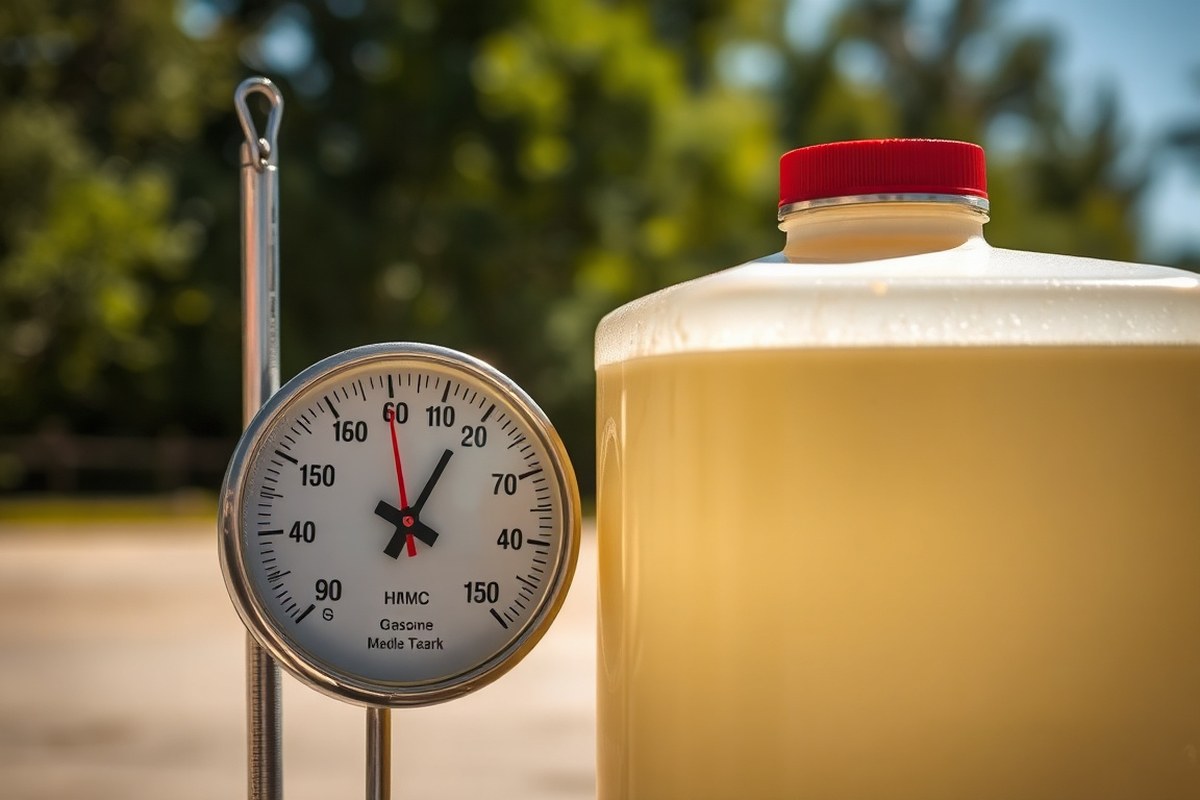
Gasoline weight changes with temperature because its density varies as it warms or cools. Fuel expands when heated, making it less dense and lighter per gallon. When cold, gasoline contracts, increasing its density and weight slightly.
The standard temperature for fuel density measurements in the U.S. Is 60°F. At this temperature, a gallon of gasoline weighs about 6.3 pounds. So five gallons weigh roughly 31.5 pounds. This number lets fuel distributors and vehicle owners have consistent reference points.
The weight difference between hot and cold gasoline isn’t huge but is noticeable. Across typical U.S. Temperature swings, the weight of five gallons shifts by less than 1%, or about 0.3 pounds. For example, gasoline weighing 31.5 pounds at 60°F might weigh around 31.8 pounds at 40°F and drop to about 31.2 pounds at 80°F.
To get precise fuel weight, measure the fuel’s actual temperature. Then, adjust the density based on that temperature. This gives you a more accurate weight.
Many fuel calculators use the 60°F standard density and do not include temperature changes. You can change this manually using density correction factors.
These come from fuel data sheets or trusted industry sources. Use them to get the right fuel weight.
Always check temperature effects if accurate fuel weight matters for transport or storage. Even small shifts can affect safety calculations or load limits.
How Ethanol Content Influences Gasoline Weight
Ethanol blends change gasoline’s density, affecting its weight slightly. Ethanol is denser than pure gasoline, so E10 weighs a bit more. Heavier ethanol blends like E85 raise the weight further compared to regular gasoline.
Density of Pure Gasoline vs Ethanol
Pure gasoline has a density around 6.1 to 6.3 pounds per gallon. Ethanol weighs more, about 6.6 pounds per gallon. That higher density makes ethanol blends heavier than pure gasoline.
Since gasoline is mostly hydrocarbons, its weight varies by grade and season. Ethanol is an oxygenate added to fuel for cleaner burning. Its slightly higher density then nudges the overall fuel weight upward.
Weight of Common Ethanol Blends per Gallon
Short ethanol blends like E10 include about 10% ethanol by volume. E10 weighs around 6.2 to 6.3 pounds per gallon, a small bump over pure gasoline. Higher blends like E85, with 85% ethanol, weigh more around 6.5 to 6.6 pounds.
The following table shows the weight per gallon for different fuels and ethanol blends. It gives you a clear idea of how ethanol content raises fuel weight.
| Fuel Type | Weight Per Gallon (lb) | Weight Per Gallon (kg) |
|---|---|---|
| Regular Unleaded (E10) | 6.1, 6.3 | 2.77, 2.86 |
| Mid-Grade Gasoline | 6.1, 6.2 | 2.77, 2.81 |
| Premium Gasoline | 6.1, 6.3 | 2.77, 2.86 |
| E85 Ethanol Blend | 6.5, 6.6 | 2.95, 2.99 |
| Diesel Fuel | 6.9, 7.1 | 3.13, 3.22 |
This table helps you compare different fuels’ weights by gallon. Remember, E10 blends add a few tenths of a pound per gallon.
This is slightly heavier than pure gasoline. It makes a small difference in weight.
Impact on 5-Gallon Weight Estimates
You can estimate the weight difference for 5 gallons by multiplying the weight per gallon. For example, 5 gallons of E10 weigh about 31 pounds compared to pure gasoline near 30.5 pounds. E85 blends push 5 gallons closer to 33 pounds.
The difference is small. But enough to affect weight-sensitive tasks like carrying fuel or loading equipment.
Use the table weights to adjust your estimate whenever ethanol content changes. That way, you get a more accurate picture of the liquid weight involved.
Comparing Gasoline Weight to Diesel and Water
Five gallons of gasoline weighs about 30 to 31.5 pounds. Diesel is heavier by roughly 4 to 5 pounds for the same volume. Water weighs the most, about 42 pounds for five gallons.
Weight per Gallon for Gasoline, Diesel, and Water
Gasoline weighs around 6.1 to 6.3 pounds per gallon, making it lighter than diesel. Diesel fuel typically runs between 7.0 and 7.2 pounds per gallon. Water is much denser and weighs about 8.34 pounds per gallon.
This variation happens because of each liquid’s density and composition. Gasoline’s lower density makes it lighter, which affects handling and fuel storage needs.
Total Weight for 5 Gallons Across Fuels
For five gallons, gasoline weighs approximately 30.5 to 31.5 pounds. Diesel clocks in heavier at around 35 to 36 pounds. Water leads with a total near 41.7 pounds for the same volume.
These differences mean carrying five gallons of diesel adds roughly 5 pounds more than gasoline. Water’s weight is about 10 pounds heavier than diesel for five gallons.
| Liquid | Weight Per Gallon (lb) | Weight for 5 Gallons (lb) |
|---|---|---|
| Gasoline | 6.1, 6.3 | 30.5, 31.5 |
| Diesel Fuel | 7.0, 7.2 | 35, 36 |
| Water | 8.34 | 41.7 |
Knowing these exact weights helps you estimate total load and plan your fuel handling. It’s especially useful in transport, storage, and safety checks.
Practical Implications of Weight Differences
Gasoline’s lighter weight means less strain when carrying or transporting it. Diesel’s extra pounds add up with large quantities, affecting vehicle load and fuel economy. Water weighing about 30% more than gasoline makes it unsuitable as a fuel substitute.
For trucks or vehicles, every extra pound matters in fuel efficiency and safety. Knowing these weights helps you avoid overload and maintain your vehicle’s handling. This info is also critical for storage safety, since heavier liquids increase pressure and risk.
Calculating Gasoline Weight from Volume and Density
To find out how much 5 gallons of gasoline weigh, multiply the amount by its density. Gasoline density changes based on temperature and ethanol mix, so adjust those factors. For metric units, change pounds into kilograms after calculating the weight.
Basic Weight Calculation Formula
Gasoline weight depends on volume and density. Use the formula: Weight (lbs) = Volume (gallons) × Density (lbs/gallon).
For gasoline at room temperature, density averages around 6 pounds per gallon. So, 5 gallons × 6 pounds/gallon = 30 pounds.
Adjusting for Gasoline Density Variations
Gasoline density changes with temperature and ethanol level. Warmer gasoline is less dense and weighs less per gallon.
Use the adjusted density value in the calculation rather than the typical 6 pounds per gallon. For example, 5 gallons × 5.9 pounds/gallon = 29.5 pounds. Here’s how to calculate precisely:
- Measure the fuel volume in gallons.
- Find the gasoline density in pounds per gallon, adjusted for temperature or ethanol.
- Multiply volume by adjusted density for the weight in pounds.
- To get the volume in liters, multiply gallons by 3.785.
- You can change pounds into kilograms by following these simple conversion steps.
Use specific density values from fuel labels or local sources for best accuracy.
Converting Pounds to Kilograms and Vice Versa
One pound equals approximately 0.454 kilograms. Multiply pounds by 0.454 to convert to kilograms.
To convert kilograms back to pounds, multiply kilograms by 2.205. This covers both directions easily.
So 30 pounds × 0.454 = 13.62 kilograms exactly. This helps if you want metric weight.
How Carrying 5 Gallons of Gasoline Affects Vehicle Load
Adding 5 gallons of gasoline adds about 31 pounds to your vehicle’s weight. This extra weight is like carrying a small adult passenger just in fuel. For most cars, this increase is small and usually doesn’t affect how the vehicle handles.
Still, extra weight can slightly reduce fuel economy. Your engine uses more energy to move a heavier load. So expect a minor drop in miles per gallon with 5 gallons added.
The change is barely noticeable during normal driving. But carrying 15 to 30 gallons or more shows a clearer impact on fuel efficiency.
For trucks, the weight of fuel affects payload capacity. Carrying full tanks reduces the legal limit for other cargo or passengers. Truck drivers must include fuel weight when calculating total load.
This helps avoid overloading. It also keeps handling safe.
Boats also feel the impact of fuel weight. A 50-gallon marine tank adds about 305 pounds, affecting how the vessel sits in the water. This weight sits low in the hull.
That can help stability. It also changes how the vehicle handles. Skippers monitor fuel load carefully to keep balance and performance safe.
To manage handling effects, spread the extra fuel weight evenly. Check your vehicle manual for load limits. Stick to those limits.
Avoid topping off if you already carry heavy cargo. Consider filling tanks only as needed for planned trips. This helps keep steering, braking, and ride quality consistent under different fuel loads.
What a Full 5-Gallon Gas Can Weighs Including the Container
An empty plastic 5-gallon gas can usually weighs about 2 pounds. Gasoline weighs around 30 to 31 pounds when full.
The total weight is about 32 to 33 pounds. This weight includes both the fuel and the container.
Metal gas cans weigh more than plastic ones. An empty metal can often weighs between 6 and 8 pounds.
Adding 5 gallons of gas brings the total to roughly 36 to 38 pounds. This extra weight matters for carrying and storage.
The type of gas can affects how heavy it feels. Plastic cans are lighter and easier to carry, especially when full near 33 pounds.
Metal cans, while heavier near 38 pounds, offer more durability and often better safety features. Choose based on your needs for portability or toughness.
Seasonal and Ethanol Variations That Influence Gasoline Weight
Gasoline weight shifts slightly with seasonal blend changes. Winter blends typically have lighter hydrocarbons and more volatile compounds to improve cold starts.
Summer blends have heavier hydrocarbons to stop evaporation. This makes them weigh a bit more per gallon.
Ethanol is mixed with gasoline in varying amounts that also affect weight. Higher ethanol content means the fuel blend is less dense, as ethanol weighs about 6.59 lbs per gallon compared to gasoline’s roughly 6.3 lbs. But these changes are usually small enough not to require adjusting your calculations for everyday use.
Tracking fuel costs or efficiency over many gallons shows differences. Adding seasonal and ethanol changes keeps your numbers right.
Calculate gasoline weight by averaging gasoline and ethanol volumes. Use the season’s usual vapor pressure blend for accuracy.
- Check your local fuel ethanol content percentages for the season.
- Use 6.3 lbs/gal for gasoline and 6.59 lbs/gal for ethanol as base weights.
- Multiply each component’s percentage by its weight to find blend weight.
- Sum these values for total fuel weight per gallon.
- Adjust estimates slightly higher for summer fuels due to heavier hydrocarbons.
- Use this method when calculating fuel load or logistics planning.
Don’t rely on a fixed weight for all gasoline. Seasonal blends and ethanol content change it enough to matter over many gallons.
For example, if your fuel is 90% gasoline and 10% ethanol, calculate weight like this: (0.9 × 6.3) + (0.1 × 6.59) = about 6.34 lbs per gallon. Then multiply by the number of gallons to get total weight. Summer blends might increase that by about 1-2% due to heavier molecular makeup.
These slight variations affect large shipments or fleet fuel tracking more than occasional fueling. Adjust your calculations for fuel weight changes each season or with ethanol amounts. This keeps your results clear and expected.
Checklist for Safely Carrying and Transporting 5 Gallons of Gasoline
Always carry gasoline in approved containers made for fuel. These containers reduce leaks and vapors that cause fires. Make sure the container seals tightly to avoid spills.
Keep gasoline containers upright and secured during transport to prevent tipping. Place them on a flat surface where they won’t shift or slide. Avoid keeping them inside the passenger area; use the trunk or truck bed instead.
- Use only red, clearly marked 5-gallon gasoline containers.
- Fill containers no more than 95% full to leave room for fuel expansion.
- Store gasoline in a well-ventilated area, away from heat or flames.
- Keep gasoline away from children and pets at all times.
- Avoid static electricity by grounding the container when filling.
- Do not smoke or use electronic devices near gasoline during handling.
- Take extra caution during hot weather because gasoline expands and vapors increase.
Carrying 5 gallons of gasoline adds about 31.5 pounds (14.3 kilograms) to your load. Don’t stack heavy items on the container, which could damage it. Check for cracks or damage before each trip.
Gasoline fumes can build up inside a closed car, creating fire risks. Open windows slightly during transport to allow fresh air. If you spill gasoline, clean it immediately with absorbent material and dispose of it safely.
Step-by-Step Action Plan for Handling 5 Gallons of Gasoline
Follow these steps to know the weight of gasoline and manage it safely. Check each step before moving on to the next one.
- Before you start: Identify the gasoline type and note its ethanol content. Confirm the weight range based on fuel grade and ethanol percentage.
- Day 1: Measure the temperature of gasoline you plan to carry. Use a thermometer and log the reading to estimate weight changes.
- Day 2: Calculate gasoline weight using volume and density charts. Confirm your result falls between 28.5 and 31 pounds for 5 gallons.
- Day 3: Weigh an empty 5-gallon fuel can. Record this weight to add to gasoline weight later.
- Day 4: Fill the fuel can with 5 gallons of gasoline and weigh it again. Ensure the total weight matches your calculations plus container weight.
- Day 5: Check your vehicle’s load capacity and factor in the gasoline weight. Adjust cargo or passengers to keep within limits.
- Week 2: Practice safe transport by securing the fuel can in your vehicle. Confirm no spills or movement during travel.
- Month 1: Recheck fuel weight if the gasoline or temperature changes. Update your notes for future trips and handling.
Frequently Asked Questions
How Much Does 5 Gallons of Gasoline Weigh Including the Container?
Five gallons of gasoline weighs about 30 pounds. Add roughly 5 pounds for an empty 5-gallon gas can, bringing total closer to 35 pounds.
Is Gasoline Heavier or Lighter Than Water by Volume?
Gasoline is lighter than water. Five gallons of water weigh nearly 42 pounds, about 25% heavier than gasoline’s 30 pounds.
How Does Adding Ethanol to Gasoline Affect Its Weight?
Ethanol lowers gasoline’s density slightly. For example, 5 gallons of E10 weigh about 31 pounds, a bit less than pure gasoline.
Why Does Temperature Affect Gasoline Weight?
Higher temperatures make gasoline expand, lowering its density and weight per gallon. Cooler gasoline is denser and weighs more per gallon.
Can the Weight of 5 Gallons of Gasoline Change by Location?
Yes, local formulation and ethanol content affect gasoline density. Plus, temperature changes can cause small weight differences anywhere.
The Bottom Line
Five gallons of gasoline usually weigh between 29 and 31 pounds. Temperature and ethanol content affect the exact weight. These two factors cause small weight differences.
You can weigh your fuel with a scale to get the exact number. Start by measuring your fuel and container weight before transporting for safety and accuracy.




One Comment