
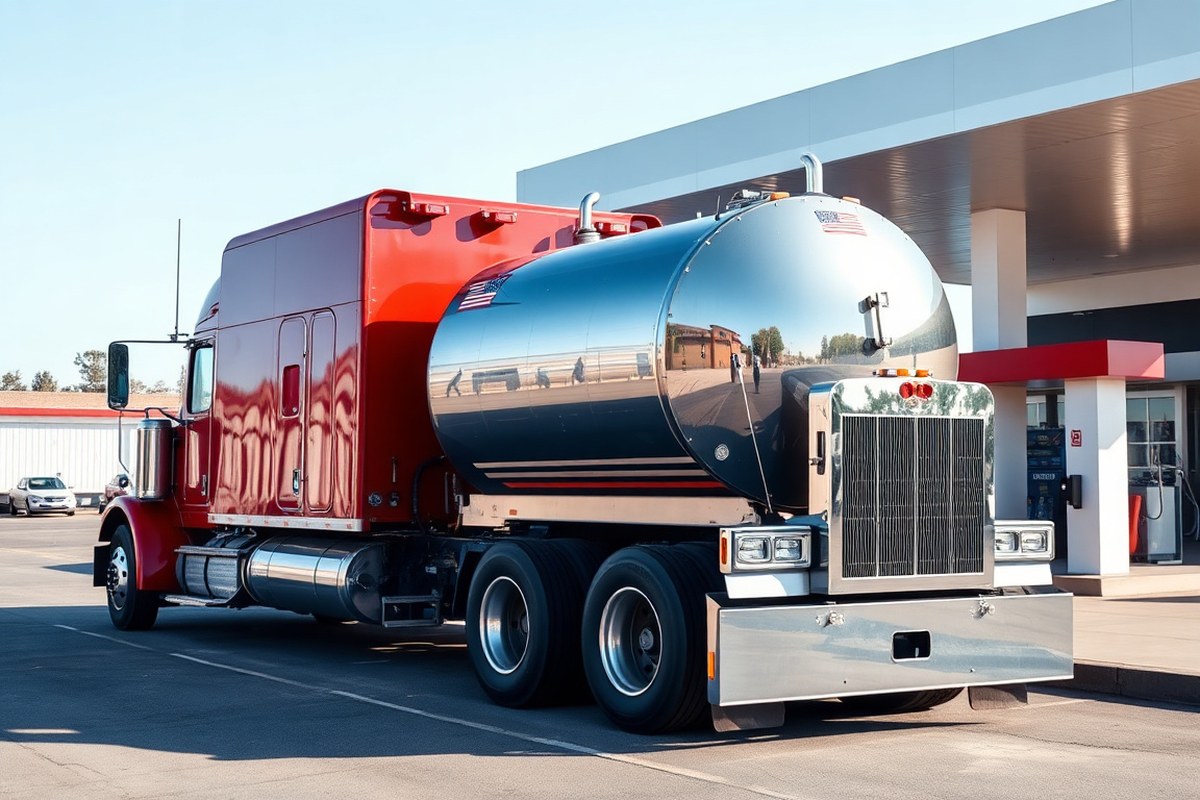
How Many Gallons of Gas Does a Semi Truck Hold: A Complete Guide for Drivers
Semi trucks usually carry between 100 and 300 gallons of diesel fuel. Many have dual tanks, often totaling 200 to 300 gallons combined. These tanks support long trips without frequent refueling stops.
Tank size varies by the truck’s model and setup. Some trucks mount one tank on each side to improve range and weight balance. Larger tanks add weight but cut down refueling time.
A typical semi gets about 6 miles per gallon. With a 200-gallon tank, it can run roughly 1,200 miles on the highway. Fuel economy changes depending on load, speed, and terrain.
Knowing your truck’s fuel capacity helps plan stops better. Tracking fuel levels during a haul prevents surprises. It also aids in managing costs and scheduling breaks on long routes.
Key Takeaways
- Most semi trucks have between 120 and 150 gallons per tank.
- Dual fuel tanks increase total capacity to about 200 to 300 gallons.
- Tank size depends heavily on the truck’s make and model.
- Plan refueling every 1,000 to 1,200 miles on a full tank.
- Separate DEF tanks usually hold 15 to 25 gallons.
- Fuel economy varies but averages around 5.6 to 6 mpg on flat roads.
How Many Gallons of Gas Does a Typical Semi Truck Hold?
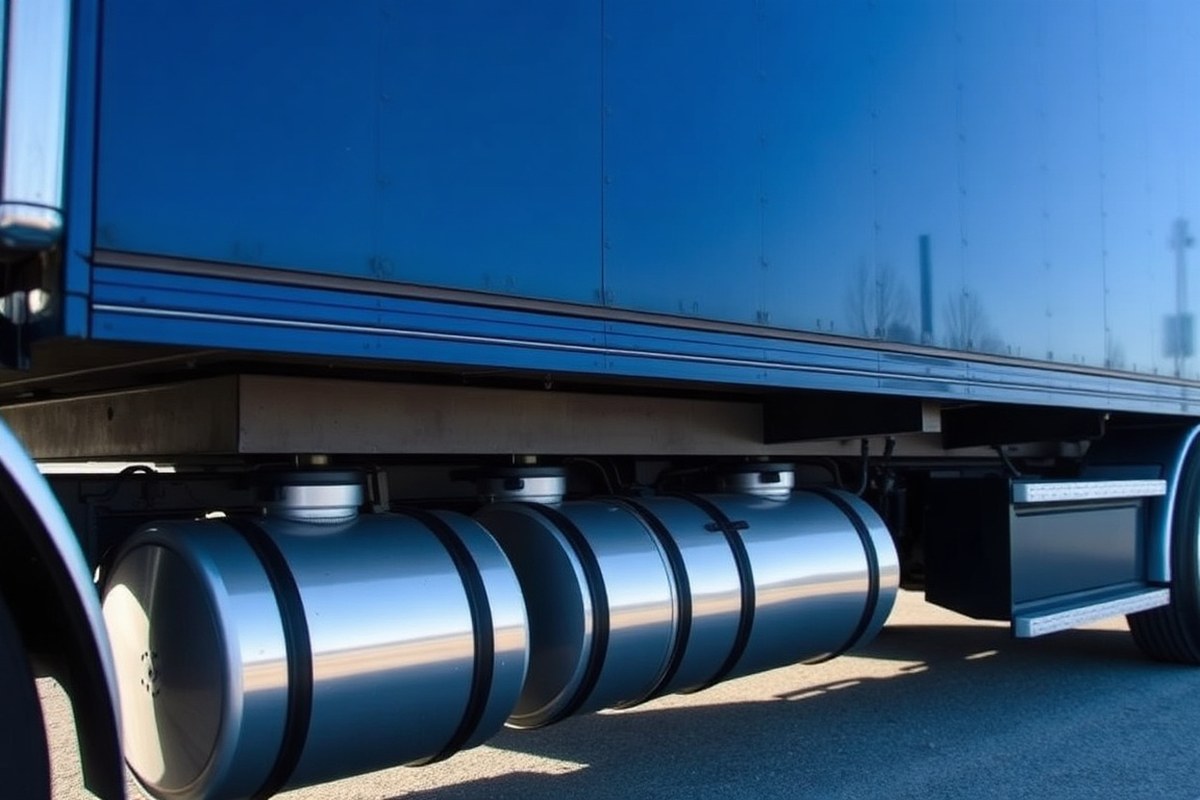
A typical semi truck usually has a fuel tank size of 100 to 150 gallons. This is for trucks with a single tank.
Most trucks, though, come with dual tanks mounted on each side of the chassis. This setup gives a combined capacity between 200 and 300 gallons of diesel fuel.
Dual tanks serve a practical purpose. They extend the truck’s driving range so drivers can cover longer distances without refueling. Dual tanks let you fill up one tank while using the other.
This keeps the truck running longer without stopping. This flexibility helps reduce downtime during long hauls.
Single tanks are common for trucks on short routes. These trucks carry lighter fuel loads. Dual tanks fit long-haul drivers who travel far.
They help maximize range and save time. These tanks vary by make, model, and the specific needs of the fleet.
- Single tank capacity usually ranges from 100 to 150 gallons
- Dual tank setups hold a combined total of 200 to 300 gallons
- Some trucks have custom tanks holding over 400 gallons each
- Dual tanks let drivers refuel on one side while running on the other
- Single tanks are lighter and better for short-distance regional work
- Fuel type (mostly diesel) slightly affects tank design and capacity
- Dual tanks help meet longer route and operational demands
For example, a Freightliner FSX might have dual tanks totaling 260 gallons. Kenworth T660 trucks often have dual 120-gallon tanks for 240 gallons. Custom extended-range tanks can boost total capacity beyond 300 gallons, depending on the trucking operation’s needs.
Choose single or dual tanks based on your routes. Also consider how far you drive before refueling.
Standard Fuel Tank Sizes and Variations by Truck Model
Semi trucks usually hold between 120 and 300 gallons of fuel. Tank size depends on the truck model, brand, and tank configuration. Some trucks come with one or two tanks, affecting total capacity.
Kenworth Tank Capacities
Kenworth T680 trucks generally have fuel tanks ranging from 120 to 300 gallons. Most models come equipped with two tanks that usually hold between 100 and 150 gallons each. This setup offers flexibility in fuel management for long hauls.
Choosing larger tanks on a Kenworth T680 increases your driving range but adds weight. The truck’s frame size and use case will determine how big the tanks can be.
Freightliner Tank Capacities
Freightliner Cascadia tanks typically hold between 120 and 300 gallons. Two tanks are standard, with individual tank sizes ranging from 100 to 200 gallons. Freightliner gives various configurations based on fuel needs and route length.
Freightliner offers medium-sized tanks for short routes and larger tanks for long-haul trucking. This allows fleet managers to optimize fuel stops and overall efficiency on different routes.
Peterbilt Tank Capacities
Peterbilt 579 models can have fuel tanks between 120 and 300 gallons. Tanks often come in pairs, with capacities from 150 gallons up to 300 gallons combined. The larger tanks are common among drivers who want fewer stops on long trips.
Peterbilt models are known for more tank size options, adapting well to specialized trucking needs. These choices affect fuel range and the truck’s weight balance.
Custom and Specialty Models
Custom fuel tanks can exceed 300 gallons in capacity. Some extended-range tanks push capacity to 400 gallons or beyond for extra-long routes. These tanks add range but increase weight and cost.
Specialty trucks may also use different tank configurations due to space and safety rules. Drivers need to balance fuel capacity with payload space and regulations.
| Truck Model | Typical Fuel Tank Capacity (Gallons) |
|---|---|
| Freightliner Cascadia | 120, 300 |
| Peterbilt 579 | 120, 300 |
| Kenworth T680 | 120, 300 |
| Volvo VNL | 150, 300 |
| International LT Series | 120, 280 |
| Mack Anthem | 120, 280 |
The table shows how different brands offer similar tank size ranges. Larger tanks provide more miles between stops but increase fuel weight. Tank size choices depend on your route and hauling needs.
Check that your fuel tanks follow local safety rules. Weight limits matter too. This helps you avoid fines and damage.
What Is the 95% Rule and Why Does It Matter for Fuel Tanks?
The 95% rule says you fill semi truck fuel tanks up to 95%. You don’t fill tanks completely full. This helps prevent problems with fuel expansion.
This helps keep fuel system parts safe and prevents fuel loss. It’s a standard practice that matters for handling and truck efficiency.
Explanation of the 95% Rule
Truck fuel tanks usually have space left empty on purpose. Filling to 100% causes fuel to expand and spill when hot. The 95% rule leaves room to avoid this expansion and fuel overflow.
Most semi trucks hold between 100 and 300 gallons of fuel. So, 95% full means leaving 5% or about 5 to 15 gallons empty in the tank. This small gap reduces pressure on tank components.
Safety and Efficiency Benefits
Fuel expands with temperature changes during driving and refueling. Overfilling a tank risks spills, fires, or damage from pressure. The empty space prevents such hazards.
Avoiding full fill also protects fuel system parts like pumps and suction tubes. These aren’t built to handle fuel pulling directly from a completely full tank. You save repair costs over time by following this rule.
Efficient fuel use improves with proper fill levels. Trying to use fuel beyond 95% risks clogging or premature component wear. This can decrease miles per gallon (MPG) and range, hurting performance.
How to Apply the Rule Effectively
Follow these steps to fill tanks safely to 95% capacity while fuelling:
- Check your truck’s exact fuel tank size from the manual or tank label.
- Calculate 95% of tank capacity to know your maximum fill amount.
- Monitor the fuel pump meter or display while filling the tank.
- Stop filling just before reaching the calculated 95% mark.
- Allow time for fuel to settle and expand before continuing fuel stops.
- Keep an eye on fuel gauges over time to spot inaccurate readings.
- Record fuel amounts and stops to learn your truck’s real range.
This controlled filling limits pressure changes and fuel spills. Remember, filling to 100% risks losing gallons of fuel and damaging parts. Drivers who rack up thousands of miles benefit from preventing costly breakdowns.
How Fuel Tank Size Affects Semi Truck Driving Range
A semi truck’s driving range depends mainly on its fuel tank capacity and fuel efficiency. For example, a truck with 300 gallons of usable fuel that averages 6.5 miles per gallon can travel about 1,950 miles on a full tank. This gives you a clear idea of how far you can go before refueling.
Fuel efficiency changes a lot based on load, driving conditions, and terrain. Heavier loads cut your miles per gallon because the engine works harder.
Driving uphill or on rough roads also uses more fuel than smooth highways. Weather like strong winds or extreme temperatures can reduce fuel efficiency too.
To estimate your range, multiply your truck’s fuel tank capacity by your average miles per gallon. For example, if you have 240 gallons and get 7 MPG, multiply 240 by 7.
That gives you 1,680 miles per tank. This quick math helps you plan routes and stops.
Keep in mind, semi trucks usually average 6 to 8 miles per gallon. If your load is light and roads are flat, you might hit 7 or 8 MPG. With heavy loads or hilly terrain, expect closer to 6 MPG or less.
Also, don’t assume you can fill the tank 100%. Many drivers fill to 95% to allow fuel expansion.
The cost to fill up depends on fuel prices and tank size. Diesel costs roughly $3 to $4 a gallon. So filling a 150-gallon tank might cost $450.
Two tanks mean a bigger fill-up cost but also a longer range between stops. Knowing your real-world MPG helps avoid surprises on long hauls.
Materials and Construction: Aluminum vs. Steel Fuel Tanks
Semi truck fuel tanks are usually made from aluminum or steel. Each material has pros and cons in durability, weight, cost, and maintenance. Knowing these helps you pick the right tank for your trucking needs.
Durability and Lifespan
Steel fuel tanks hold up well against abuse and rough handling. They handle dents and impacts better than aluminum. However, steel tanks need coatings to prevent rust and corrosion.
Aluminum tanks resist corrosion naturally and don’t need coatings. They last long on highways where exposure to salt and moisture occurs. Still, aluminum is softer and can dent more easily in rough use.
Weight and Fuel Efficiency Impact
Aluminum tanks weigh less than steel ones. This weight difference improves your truck’s fuel efficiency, especially on long hauls. Lighter tanks let you carry more fuel without going over gross weight limits.
Steel tanks add more weight but suit off-road or heavy-duty trucks better. Their toughness can handle harsh conditions but lowers fuel economy. This suits trucks that face tough terrain rather than highway miles.
Cost and Repair Considerations
Steel tanks cost less upfront and are easier to repair in the field. Weld repairs on steel tanks usually take fewer tools and less expertise. This makes them cheaper to maintain when damage happens on the road.
Aluminum tanks cost more and require specialized welding if damaged. Repair shops with aluminum welding tools are less common along trucking routes. They also need more care to avoid costly damage.
| Feature | Aluminum | Steel |
|---|---|---|
| Weight | Lighter | Heavier |
| Corrosion Resistance | Excellent (no coating needed) | Requires coating |
| Repairability | Harder to field repair | Easier to weld repair |
| Cost | Higher | Lower |
| Best for | On-highway, weight-sensitive fleets | Off-road, heavy-duty, abuse environments |
Choosing aluminum helps keep your truck lighter and ready for highway miles. Steel is better for trucks that work in rugged, tough environments. It’s smart to match the tank material to the truck’s daily job.
Check your tank coatings regularly if you choose steel. Unchecked rust can cause leaks and costly damages.
Practical Fuel Tank Maintenance Tips for Long-Haul Trucks
Fuel tanks on long-haul trucks need regular checks to avoid leaks and corrosion. Start by inspecting the tank’s outside surface for dents or rust every month. Use a flashlight to spot any wet spots or stains that might show a slow leak.
Cleaning the fuel tank helps too. Drain any water or sediment at least once every six months. This helps prevent clogs in fuel lines.
When the tank has a drain plug, open it at low fuel. Catch the waste in a container. Dispose of it safely following environmental rules.
Here’s a simple checklist to keep your fuel tank in good shape:
- Visually check the tank exterior monthly for dents, rust, or leaks
- Drain water and sediment from the tank every 6 months
- Clean fuel filters and replace every 20,000 to 40,000 miles
- Inspect fuel lines and connections for cracks or damage monthly
- Keep the tank filled enough to reduce moisture buildup
- Use fuel stabilizers if the truck sits unused for over 30 days
- Schedule a professional inspection annually or after any impact
After inspections, you want no sign of fuel smell or leaks under the truck. Corrosion should not spread beyond small surface spots. Spot deep rust?
Schedule a repair quickly to avoid bigger issues. Repair costs start at $200 for minor fixes. Replacement can cost over $1,000.
Professional inspections help catch problems that are hard to see, like internal rust or worn seals. They use pressure tests and specialized tools. Trucks in harsh climates or rough roads need inspections more often.
You can find local service shops through your fleet company or manufacturer. Avoid delays because leaks risk fines and dangerous spills.
Regulatory and Safety Factors Impacting Fuel Tank Size
The Federal Motor Carrier Safety Administration sets weight limits affecting fuel tank size. The maximum gross vehicle weight is typically 80,000 pounds. This includes the truck, trailer, cargo, and the fuel in the tanks.
A fully loaded fuel tank can add thousands of pounds to your rig’s weight. Diesel weighs about 7 pounds per gallon.
So a 200-gallon tank adds roughly 1,400 pounds. That much fuel can push an axle over its legal weight limit.
Each axle has a specific weight limit set by the DOT. If fuel sits mostly on one axle, it can overload it even if the overall weight is legal. Placement matters as much as tank size.
No direct rule caps fuel tank gallons, but weight limits govern the effective maximum. When adding extra fuel tanks, you should calculate how much fuel weight the new tanks add. Keep axle weights within DOT limits to avoid fines or vehicle shutdowns.
Sometimes you must compromise tank size to stay within axle weight regulations. For example, a large auxiliary tank may reduce your allowable cargo weight. This can limit profitability, so balancing fuel and cargo is key.
Fuel expands in heat. So a 95% fill rule usually applies to avoid pressure buildup and spills.
This also affects usable tank volume under weight rules. Trucks carrying heavier diesel fuel face stricter weight checks than those running on lighter fuels.
Trucking companies often have their own rules on fuel tank size and refueling habits. These policies may limit tank sizes further to improve fuel economy or reduce station stops. Check company guidelines before installing larger tanks.
In short, weight limits and axle load rules shape semi truck fuel tank sizes. You need to weigh the fuel and its placement carefully to stay legal and safe. Always plan fuel capacity around these factors, balancing range with legal weight limits.
Custom and Extended Range Fuel Tanks for Specialized Needs
Trucks use custom fuel tanks mainly for long hauls or remote routes. When stops for refueling are rare, bigger tanks help by holding more fuel. Some custom tanks hold up to 300 gallons or more.
Standard tanks often hold up to 150 gallons. Custom tanks provide much larger capacity than standard ones.
Choosing a bigger tank means more weight when full. That extra weight can reduce how much cargo you can carry and may impact fuel economy. Installation costs time and money.
It can cost several thousand dollars. Costs depend on tank size and the materials used.
Custom tanks also need space on the truck frame and proper fittings for safety. Many fleets work with ASE-certified technicians for this. They ensure tanks meet safety rules.
They also fit tanks well on the truck. This avoids issues with balance or clearance. Drivers often avoid running below 25% capacity to keep fuel pumps safe inside these large tanks.
For example, a driver hauling freight through remote areas might upgrade to dual 150-gallon tanks. That gives a total of 300 gallons for longer runs without stops. But adding these tanks can add 300 to 500 pounds of weight and raise maintenance needs.
Make sure any extended tank setup matches your truck’s axle weight limits to avoid fines.
How Load, Driving Conditions, and Route Affect Fuel Capacity Needs
Cargo weight directly affects fuel consumption because heavier loads require more engine power. Carrying a full trailer can raise fuel use by 20 to 30 percent. This is compared to driving an empty trailer.
More weight means more fuel burned. You might need bigger fuel tanks to cover long distances.
Or plan more stops for refueling. It depends on your route and load.
Mountainous routes demand more fuel due to constant climbing and braking. Engines work harder on steep grades, burning more fuel per mile than flat highways. Plan your routes carefully when hauling heavy loads over hills.
Know where you can stop for fuel. Avoid running low on gas far from stations.
Wind and traffic also influence fuel use. Driving into a strong headwind lowers fuel efficiency, sometimes by up to 10 percent.
Stop-and-go traffic causes more idling and acceleration, which burns extra fuel. Adjusting your fueling strategy for these conditions can save money and time on the road.
Check your fuel tank size against your expected route and load. Long trips of 1,200 to 1,800 miles need tanks holding 150 to 300 gallons. Avoid guessing too low to skip extra stops or delays.
To optimize fueling, track how your truck’s mileage changes with different loads and terrains. For example, if you get 6 mpg on flats but 4 mpg in mountains, plan more stops. Or add extra tanks for longer range.
This helps prevent getting stuck without fuel. Monitoring routes and fuel use helps you avoid running dry.
Choosing when to refuel depends on your route’s nature. On flat, open roads, refuel closer to empty since gas stations are more frequent.
For remote or mountainous areas, top off the tank whenever possible to avoid being stranded. Planning fueling points with these factors in mind reduces risk and keeps deliveries on schedule.
Step-by-Step Action Plan for Managing Semi Truck Fuel Capacity
Keep your semi truck running efficiently by managing fuel capacity smartly. Follow these steps to get started and track success.
- Before your trip: Check your truck’s fuel tank size and note the 95% fill limit. This ensures you follow safety rules and avoid spills.
- Day 1 of driving: Fill the tank just under the 95% mark. Track how far you drive on this fill. Write down your exact distance for fuel use data. The range matching your plan means your fuel capacity works for you.
- Week 1: Monitor fuel consumption across different routes and loads. Adjust your refills based on what tanks hold and driving conditions.
- After 2 weeks: Check fuel tanks for any wear or leaks. Focus on the tank material like aluminum or steel. Make sure there are no signs of damage or rust. Fix any problems to avoid fuel loss.
- Week 3: Look at your fuel needs again. Remember to include custom or bigger tanks. This is for special hauls or longer routes. Confirm that your setup fits your job.
- Monthly: Review federal and state regulations for fuel tanks. This keeps you compliant and aware of any new safety requirements.
- Ongoing: Keep detailed fuel logs. They help you spot irregularities and plan fuel stops efficiently.
Frequently Asked Questions
How Many Gallons of Gas Does a Semi Truck Typically Hold?
A semi truck typically holds between 100 and 300 gallons of diesel fuel. Tank size differs based on the truck model and configuration, from single to dual tanks.
Do All Semi Trucks Have the Same Fuel Tank Size?
No, fuel tank sizes vary widely depending on the tractor’s design and intended use. Some have smaller tanks around 100 gallons. Others hold up to 300 gallons with dual tanks.
How Does Fuel Type Affect a Semi Truck’s Fuel Tank Size?
Most semi trucks use diesel, and their tanks are sized for that fuel type. Gasoline tanks in trucks are far less common and usually smaller because diesel engines dominate.
How Often Do Semi Trucks Need to Refill Their Gas Tanks?
Semi trucks usually refill every 1,000 to 1,200 miles, depending on tank size and fuel efficiency. A 200-gallon tank with a 6 mpg average covers about 1,200 miles before refueling.
Can Semi Trucks Carry Extra Gas in Portable Tanks?
Yes, some drivers use portable gas or diesel tanks for emergencies or long hauls. These add weight and caution is needed to store and secure them properly.
The Bottom Line
Semi trucks usually hold 100 to 300 gallons of fuel. Amount depends on tank size and use. This varies by type and road conditions.
Know your tank’s capacity and follow the 95% rule for safety. Start by checking your fuel tank and planning refills around your route for better fuel management.




3 Comments