
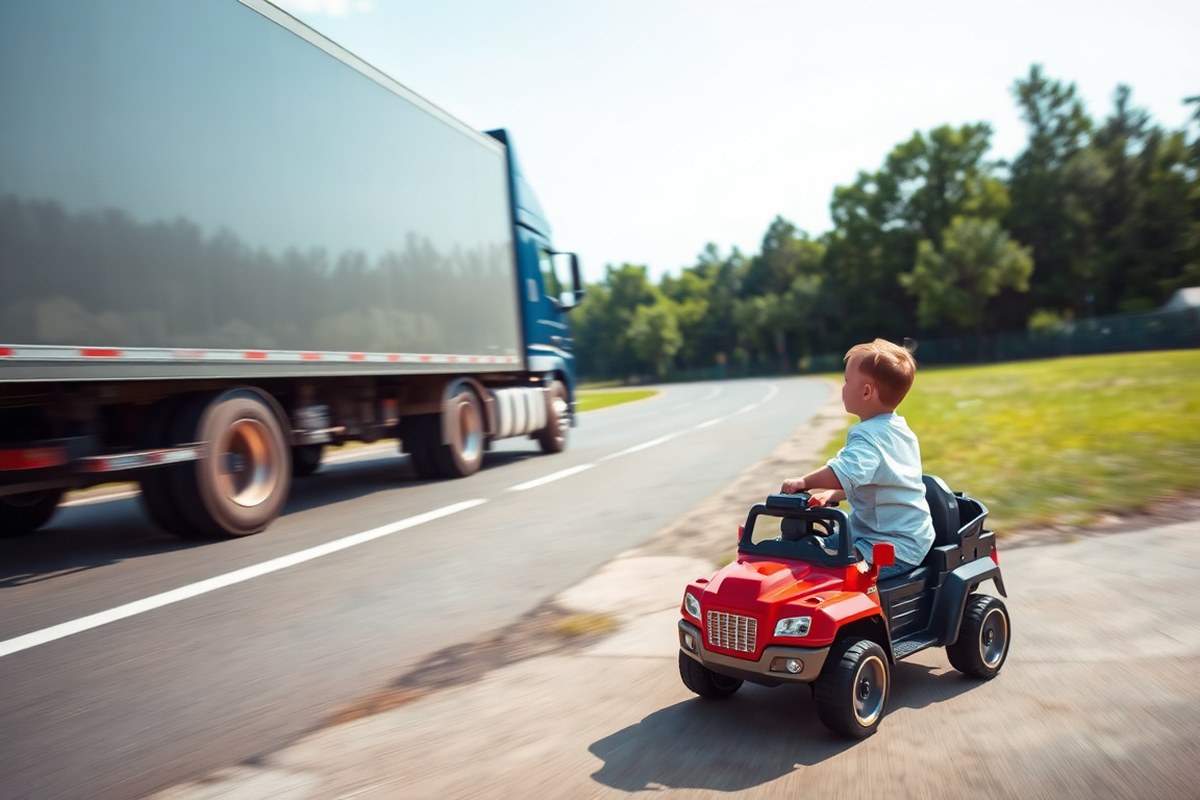
How Fast Can a Big Truck Go for Kids a Complete Guide to Speeds and Safety
Wondering how fast a big truck can go for kids? Most full-size big trucks top out around 65 miles per hour on highways.
That speed matches the common limit for commercial vehicles. This ensures trucks stay within safety rules and don’t speed.
Kids’ ride-on trucks move much slower, with top speeds from 2 to 12 miles per hour. Battery voltage, kid’s weight, and motor size all affect how fast these toys can safely go. Starting with slower models for younger kids helps keep control simple and safe.
Big truck weight slows stopping distance and overall speed on the road. Ride-on trucks also slow down with heavier riders or rough terrain like grass or gravel. Remembering these factors helps you pick the right truck speed for each situation.
Key Takeaways
- Big trucks usually have a 65 mph speed limit on highways for safety.
- Kids’ ride-on trucks range from 2 to 12 mph depending on battery power.
- Lower voltage models suit toddlers with speeds up to 3 mph for safety.
- Heavier loads reduce big truck speed by 5 to 10 mph or more.
- Kee trucks carry 770 lbs but go slower when fully loaded or uphill.
- Ride-on truck speed drops on rougher terrain or with heavier children.
How Fast Can Big Trucks and Kids’ Ride-On Vehicles Go?

Big trucks like semi-trucks or 18-wheelers can reach 60 to 68 mph. These speeds occur on highways. They are built to travel fast for long distances.
Their engines can potentially hit 125 mph. But safety rules usually set the limits lower. Electronic speed limiters often keep them at or below 65 mph to comply with federal guidelines.
Kids’ ride-on vehicles are much slower and designed for safety and age. Their top speeds depend on battery voltage and vehicle size. Most 24V ride-on cars go about 4 to 6 mph.
This speed is good for outdoor play. They work well on grass or driveways.
Ride-on trucks and cars come in various battery sizes, influencing speed. Ride-on toys range from 2 mph for toddlers’ 6V models to over 15 mph for 48V high-speed ones. The speed depends on the battery voltage.
More voltage means higher speed. These speeds keep kids safe while letting them have fun and build driving skills.
Here’s a look at how typical top speeds differ between big trucks and kids’ ride-on vehicles:
| Vehicle Type | Battery / Engine | Typical Top Speed (mph) | Typical Top Speed (km/h) | Best For |
|---|---|---|---|---|
| Big Semi-Truck | Diesel Engine | 60 – 68 | 97 – 109 | Highway driving |
| Kids Ride-On – 6V | 6V Battery | 2 – 3 | 3 – 5 | Toddlers 1, 3 yrs, indoors and flat surfaces |
| Kids Ride-On – 12V | 12V Battery | 3 – 5 | 5 – 8 | Ages 3, 6, driveways and yards |
| Kids Ride-On – 24V | 24V Battery | 5 – 8 | 8 – 13 | Ages 6, 10, light off-road and grass |
| Kids Ride-On – 36V | 36V Battery | 8 – 10 | 13 – 16 | Older kids, rough terrain |
| Kids Ride-On – 48V | 48V Battery | 10 – 15+ | 16 – 24+ | Big kids, drift cars, high-power buggies |
Kids’ ride-on toys are much slower than commercial trucks. This keeps children safe while letting them enjoy driving at their level. Higher voltage toys cost more but offer longer playtime and faster speeds for older kids.
Big trucks at 60 mph can handle highway traffic safely. Their large size means they need careful operation. Drivers must be cautious to avoid accidents.
Kids’ ride-ons limit speed to balance fun and safety. They go from 2 to 15 mph.
The speed depends on the child’s age and terrain. Your choice of vehicle and speed should match your child’s abilities and playground type.
What Factors Affect How Fast a Big Truck Can Go?

Big trucks slow down when carrying heavy cargo because the engine has to work harder. More weight means more force is needed to keep the truck moving. A truck that normally hits 65 mph may slow to 55 mph fully loaded.
This speed drop is common, especially on hills. The extra weight makes the engine work harder.
Hills and road types also change how fast a truck can go. Climbing a steep hill adds resistance, making the truck lose speed. On a 6% hill, a loaded truck’s speed can drop drastically.
It may slow from 55 mph down to 40 mph. This happens because the truck needs more power to climb.
Engine power and gearing decide how well a truck handles weight and hills. Trucks with more horsepower and better gear ratios keep speed better uphill and when loaded.
A 5-speed manual lets drivers pick gears for power or speed. Older 3-speed automatics often slip and reduce top speed.
Speed limiters help trucks stay within legal limits and improve safety. Many big trucks carry loads up to 80,000 pounds, and high speeds increase stopping distances dangerously. Limiting speeds to around 65 mph makes sudden stops safer and prevents engine overheating.
Always check your truck’s load and road before driving fast. Slow down uphill or when heavy. Safety depends on adapting speed to conditions.
How Battery Voltage Determines Speed in Kids’ Ride-On Toys
Battery voltage directly affects the speed and power of ride-on toys for kids. Higher voltage means a stronger motor and faster top speed. However, it also requires better safety gear and closer supervision.
6V and 12V Ride-On Vehicles
Lower-voltage ride-on toys like 6V and 12V are perfect for toddlers and younger kids. They run slower, about 2 to 5 miles per hour.
This speed makes them easy to control. They’re perfect for small yards or patios.
These vehicles fit kids aged 2 to 6 years old. They provide a gentle start to electric ride-ons.
Kids can learn safely at this age. Their slower speeds reduce risks and give kids a safer learning experience.
24V to 48V Ride-On Toys
Models with 24V, 36V, and 48V batteries offer much more power and speed. They can go between 6 and 18 miles per hour.
This fits older kids and teenagers well. These speeds offer more excitement and challenge.
Faster vehicles handle larger outdoor spaces and light off-road terrain better. Some, like 24V go-karts, reach speeds up to 15 mph.
Quad motor UTVs can also hit that speed. These need proper adult supervision while used.
Higher voltage lets these toys maintain speed on grass and rough ground without slowing down. That makes them more fun but also requires stronger safety measures.
Safety Concerns by Voltage Level
As voltage and top speed increase, safety gear becomes essential. Helmets, seat belts, and knee pads should be used, especially for 24V toys and above.
Parents should watch kids closely when they use high-voltage ride-ons to prevent accidents. Remember, speeding can lead to falls or crashes if the ground is rough.
Always check the manual for each ride-on’s voltage limits. Never upgrade batteries or motors without expert help.
Doing it wrong can cause safety risks. Doing so risks electric damage and safety problems.
| Battery Voltage | Top Speed | Recommended Age | Safety Tips |
|---|---|---|---|
| 6V | Up to 2-3 mph | 2-5 years | Use on flat ground; supervise closely |
| 12V | Up to 4 mph | 3-6 years | Wear helmet; use smooth surfaces |
| 24V | Up to 6 mph | 5+ years | Helmet required; supervise in larger areas |
| 36V | Up to 15 mph | Older children | Helmet, pads, and protection gear needed |
| 48V | Up to 18 mph | Teenagers | Full safety gear; use open, private land |
Choosing the right battery voltage means balancing speed with safety for your child’s age. Low-voltage toys give younger kids a safe introduction. Higher voltage suits older, more experienced kids who can handle faster speeds.
Age-Appropriate Ride-On Vehicle Speeds and Safety Tips
Kids under 3 should use ride-on toys limited to about 3 mph. These toys often have 12V or 24V batteries with low-speed modes. At this pace, toddlers can safely learn balance and steering while parents stay close to help.
For children 3 to 5 years, speeds up to 4 mph work well. This gives more fun without losing control.
Parents can usually switch speed modes or choose models with adjustable settings. This age group still needs direct supervision and proper protective gear.
Kids 6 and older can manage speeds of 5 to 6 mph. This is easier on models with all-wheel drive. Good tires also make riding safer and smoother.
Around 6 mph feels fast but controlled thanks to better traction. These ride-ons usually have dual motors and suspension to handle the speed safely.
- Always use a properly fitting helmet to protect your child’s head.
- Wear closed-toe shoes and long pants to prevent scrapes and cuts.
- Consider knee and elbow pads for younger or less experienced riders.
- Choose ride-ons with adjustable speed settings or parental remote controls.
- Set clear rules: no riding near stairs, roads, or water.
- Keep constant adult supervision to spot hazards quickly.
- Check the weight limit and ensure your child fits the ride-on vehicle’s guidelines.
Parents can control speeds with built-in low-speed modes or remote controls. These features help keep your child within safe limits, especially at the start. Watching your child and adjusting the speed over time is key.
Setting clear safety rules helps avoid accidents. Let your child know the boundaries, like not racing or riding alone. Wearing the right gear every time helps reduce injury risk.
It protects if kids fall or hit something. Good gear means a safer ride overall.
Understanding How Weight and Terrain Impact Ride-On and Truck Speeds
Rider weight changes how fast a ride-on vehicle can go. Most ride-ons have a max weight rating. When a child is close to that limit, the vehicle’s top speed drops a bit.
For example, a 24V ride-on car usually reaches 6 mph with a light rider. Add 30 extra pounds, and speed might slow to 5 mph. The motor works harder, which also cuts battery life by about 10 to 15 percent.
Terrain really matters too. Smooth pavement lets ride-ons hit top speeds easily. Hills or rough patches slow them down because the motor pushes harder.
Suppose your child rides a ride-on UTV on flat ground at 6 mph. Going uphill at a 10% grade, speed might drop to 3.5 or 4 mph. That’s because the motor uses more power to climb, reducing overall speed and running time.
Big tires and all-wheel drive help on tough ground. AWD vehicles spread power to all wheels, keeping speed steadier on dirt or grass. Ryder Toys’ AWD Buggy has four motors, each with 55W.
It handles hills and heavy riders without losing much speed. If you want a ride-on for off-road play, choosing one with bigger tires or AWD can keep speeds closer to flat ground numbers.
Do not overload your ride-on past its weight limit. Losing speed means more battery drain and motor strain.
What Is a Kei Truck and How Fast Can It Go?
Kei trucks are small utility vehicles originally from Japan with limited speed and size. Their top speed usually reaches about 60 mph, making them slower than full-size trucks. They carry less weight and mostly work on farms or quiet roads, not highways.
Kei Truck Specs and Speed Limits
The typical kei truck runs on a 660cc engine producing between 37 and 58 horsepower. This power allows speeds around 55 to 60 mph on flat roads.
But the engine revs hard near the top speed. Payload usually maxes out around 1,000 pounds, which limits cargo compared to bigger trucks.
Payload and gearing choices directly affect how fast a kei truck can cruise. Lower gearing improves pulling strength but lowers max speed.
Some models come with small 12-inch wheels. But upgrading to larger wheels lowers engine RPM for quieter rides on smoother roads.
| Vehicle Type | Engine Size | Top Speed (mph) | Payload Limit (lbs) | Typical Use |
|---|---|---|---|---|
| Kei Truck | 660cc | 55-60 | ~1,000 | Farm, rural roads |
| Small Utility Truck | ~1,000cc | 60-70 | 1,500-2,000 | Light commercial |
| Full-Size Pickup | 3,000cc+ | 80-100+ | 3,000+ | Highway, heavy loads |
This comparison shows why kei trucks suit light tasks better than full-size pickups. Their lighter engines limit both speed and load capacity significantly.
Legal Status of Kei Trucks on Roads
Most states in the U.S. Do not legally allow kei trucks on interstates or major highways. Even with 25-year rule clearance, local laws limit usage. They often restrict these vehicles to private land.
Rural roads may also allow limited use, depending on the area. They don’t meet freeway speed limits.
Trucks usually go between 55 and 75 mph there. So kei trucks can’t keep up on highways.
Legal import rules let you buy kei trucks after 25 years of age. But they still lack full road approval. Driving a kei truck outside allowed areas risks penalties.
You could face fines or vehicle towing. It’s best to stick to approved zones. Their design focuses on low-speed work, not highway safety or long-distance travel.
Suitability of Kei Trucks for Kids’ Use
Kei trucks are not made for young kids. They require careful driving skills and experience due to their size and speed. Even teenagers should use them cautiously, avoiding busy or high-speed roads.
Parents should stick to age-appropriate ride-on toys designed specifically for children. These toys move much slower than real trucks. Their speeds range from 2 to 8 mph.
Safety features protect small children while playing. Kei trucks’ speed and weight make them too risky for most children.
Common Myths and Safety Mistakes About Ride-On Speeds
Ride-on speed does not always mean more fun or safety. Kids riding too fast face a higher risk of crashes and falls. The Truck Safety Coalition explains that slower speeds work well and keep children safer.
Some parents let kids modify batteries to make ride-ons go faster. This is risky because it can cause the toy to overheat or break, leading to accidents.
Speed limiters on ride-ons prevent them from going beyond safe speeds. They work by controlling the battery power and protect kids from dangerous speeds.
Parental supervision really matters with fast ride-on toys. Quad bikes can reach speeds up to 15 mph. You should watch kids closely when they ride them.
Kids need help learning how to ride safely and must always wear helmets. Supervising also means checking the ride-on for damage or battery problems before each use.
- Myth: Faster ride-ons are always safer, slower speeds reduce injury risk.
- Myth: Modifying batteries is a good way to increase fun, it can cause fires or damage.
- Mistake: Skipping helmets, helmets protect children from serious head injuries.
- Mistake: No speed limiters, these devices keep speed manageable and safe.
- Mistake: Letting inexperienced kids ride without help, supervision teaches control and prevents accidents.
Ride-on tractors use 12V batteries and go about 4 mph. They work well for kids aged 3 and up. These speeds suit young children’s abilities best.
Ride-on quad bikes usually use 24V or 36V batteries and can reach 15 mph. So they need extra care. Matching ride-on speed to a child’s age keeps them safe.
Size also matters when choosing the right speed. This makes riding fun and safer for kids.
How to Choose the Right Ride-On Vehicle Speed for Your Child
Choose the right ride-on speed for your child’s age and skill. Also, think about where they will ride. Matching these helps keep them safe and happy.
Start slow for younger kids and smaller yards. Increase power and speed as your child gets older and more confident with controlling the vehicle.
Assess Your Child’s Experience and Size
Kids aged 3 to 6 do best with speeds around 3 to 5 mph. Slower rides help them learn control and build confidence. Keep the speed low for safety.
These speeds keep the fun going while letting them control their ride safely. As your child grows, you can increase the speed setting.
This works well for ages 4 or 5 and above. Only raise speed if they show good skill and confidence.
Look for vehicles offering two-speed controls or a low-speed lock. This helps keep top speeds off-limits until your child is ready. Many ride-ons also include remote controls so parents can override speeds if needed.
Evaluate Terrain and Usage Environment
Smooth surfaces like driveways allow for faster speeds without many risks. Rough or grassy yards may require slower pace and more powerful motors for climbing and traction. Check that your vehicle’s motor power matches the surface type.
This avoids stalling or poor control during rides. Proper power keeps the ride smooth and safe.
Here are some things to check before you pick a ride-on for your terrain:
- Battery voltage matching outdoor terrain needs (12V for flat, 24V+ for rough or slopes)
- Motor power strong enough to avoid slowing down on hills
- Tire type suited for dirt, grass, or gravel
- Ground clearance for uneven surfaces
Matching the ride-on’s features to the environment ensures better control and less frustration for your child.
Check Safety Features and Speed Controls
Speed limiters and parental remotes are essential for safe riding. First-time riders or younger kids benefit from locked lower speeds. Safety features like seat belts, sturdy construction, and automatic brakes help prevent accidents.
Look for ride-ons with an easy-to-reach speed switch. This lets you change speed without stopping the play. Pick models with clear weight limits and age guidelines.
This prevents overloading and using the toy wrongly. Following these instructions protects your child and the vehicle.
Always test the parental remote and speed lock before your child rides for the first time.
How Big Trucks’ Speed Limits Affect Highway Safety
Big trucks follow speed limits set by each state and federal rules. These limits often differ from passenger car limits to keep highways safer for everyone. Most commercial trucks drive a bit slower than cars, especially in busy or tricky spots.
Stopping distance grows fast with speed, especially for huge trucks. At 65 mph, a large truck needs about 525 feet to stop.
That’s nearly two football fields long. Trucks take longer to slow down because they weigh a lot more.
Here’s a table showing typical speed limits for trucks by state and truck type. Some states like Indiana match truck limits to regular highways. Others cap them lower.
Limits change for smaller vehicles like kei trucks in some states. These trucks are often banned from highways with speeds over 55 mph.
| State | Truck Class | Typical Speed Limit (mph) | Notes |
|---|---|---|---|
| Indiana | Commercial trucks | Match highway speeds | Same as passenger cars on freeways |
| Arkansas | Kei trucks | 55 or lower | Interstates off limits |
| Colorado | Kei trucks | 55 or lower | Phasing in rules through 2027-2028 |
| Louisiana | Kei trucks | 55 or lower | Interstates off limits |
Nationally, authorities are considering laws requiring speed limiters on trucks. These devices prevent trucks from exceeding safe speeds. The Federal Motor Carrier Safety Administration supports this to reduce accidents.
The National Highway Traffic Safety Administration works on a uniform speed limit for trucks too. But there are disagreements on exact limits and enforcement, so changes take time. Many trucking companies already back speed limiters to boost safety.
Step-by-Step Action Plan for Safe and Fun Big Truck and Ride-On Play
Follow this plan to pick the right speed for kids’ trucks. This helps keep kids safe while they play with ride-on toys. Speed matters for fun and safety.
- Before you buy: Look at the vehicle’s age and speed limits. Make sure they fit your child’s size and skills. This keeps play safe and fun.
- Day 1: Teach your child basic controls and safety rules before they start driving. Watch for quick stops and turns.
- Week 1: Supervise rides on flat, smooth surfaces to see how your child handles the speed. Adjust if they seem overwhelmed.
- Week 2: Introduce slightly uneven terrain if the toy is made for it. Monitor speed changes and slow down if needed.
- Month 1: Regularly inspect battery and tire condition to keep speed steady and safe. Replace worn parts promptly.
- Ongoing: Reinforce not riding near roads or traffic. Always use helmets and protective gear during every ride.
- Seasonal check: Review vehicle speed settings before weather changes. Wet or icy grounds require slower speeds and more caution.
Frequently Asked Questions
How Fast Can a Big Truck Go for Kids?
Big trucks can reach speeds up to 65 mph or higher. They’re much faster than kids’ ride-on toys.
Safety limits on highways affect their top speed. The truck’s heavy load also slows it down.
Can Kids Ride on Real Trucks?
Kids should never ride on real trucks while they’re moving. Big trucks are very heavy and take a long time to stop.
It’s unsafe for children to ride unless properly seated inside. Always seat kids safely if they must ride.
How Fast Are Electric Ride-On Trucks for Toddlers?
Electric ride-on trucks for toddlers usually top out at about 2 to 3 mph. This speed matches a toddler’s walking pace and keeps the ride safe for young kids.
Do Bigger Batteries Always Mean Faster Ride-On Trucks?
Bigger batteries often mean faster speeds but also heavier toys. The voltage decides how quickly the ride-on goes. But weight and terrain can slow it down.
Why Are Ride-On Trucks Slower on Hills?
Hills make ride-on trucks slower because gravity adds resistance. Even a full load in a toy truck can slow it down.
Speed can drop by up to 10 mph on hills. Expect rides to be slower when climbing uphill.
Final Thoughts
Big trucks and kids’ ride-on toys can go pretty fast. But safety always comes first.
Start by matching speed to your child’s age and skill level. Try out these steps today to make playtime both fun and safe.

3 Comments