How Fast Do Sailboats Go? A Complete Guide to Speeds and Performance
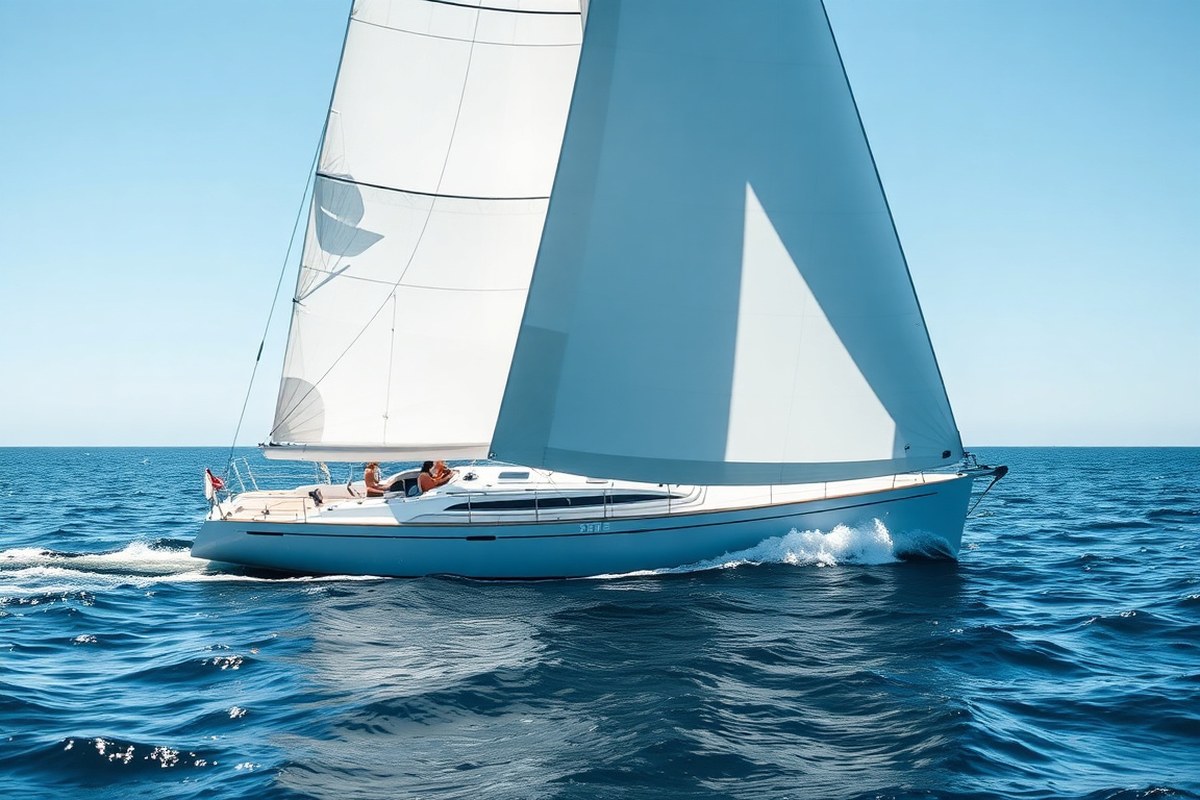
How fast do sailboats go mostly depends on their size and design. A typical 20-foot day boat cruises slower than a 50-foot cruiser. Larger boats can reach higher speeds because they cut through water differently and often have more sail area.
Waterline length directly sets the maximum speed for single-hull boats. You can roughly calculate max speed by multiplying 1.34 by the square root of the waterline length in feet. This gives the theoretical hull speed in knots, showing why longer boats usually move faster and can handle rougher seas more smoothly.
Wind direction also changes your boat’s speed significantly. Sailing about 80 percent off the apparent wind is easier and faster than running straight downwind. Knowing this helps you adjust sails and course to get the most speed with the wind you have.
Key Takeaways
- A 50-foot sailboat often travels faster than a 20-foot model under similar wind.
- Calculate hull speed by multiplying 1.34 by the square root of waterline length.
- Sailing at roughly 80 percent off the apparent wind boosts speed efficiently.
- Sailboats over 35 feet usually have designs optimizing wind flow for better speed.
- Moderate winds between 6 and 15 knots are best for most sailboats’ speed.
- A 27-foot boat with a 24-foot waterline length hits about 6.6 knots max hull speed.
How Fast Do Typical Sailboats Travel?
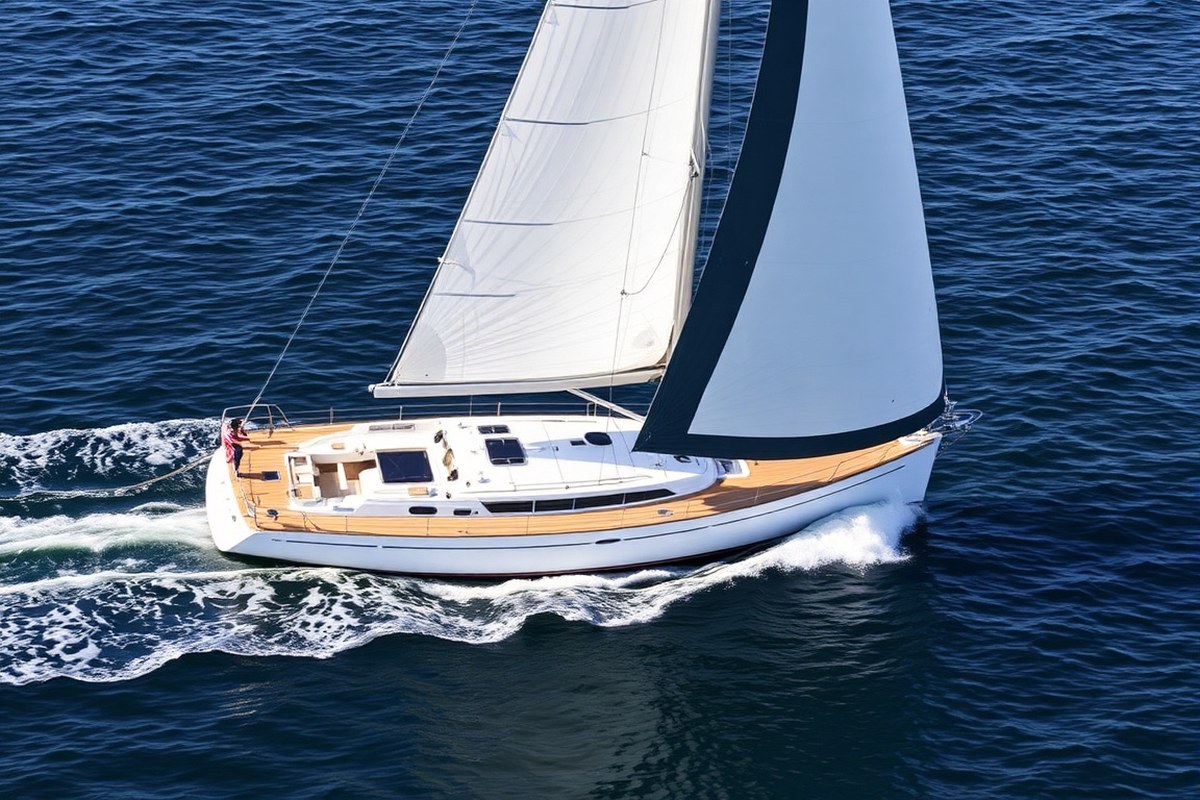
Sailboats usually travel at speeds between 4 and 10 knots depending on their size and type. Small cruising monohulls are usually 25 to 30 feet long. They cruise at about 4 to 6 knots.
Top speed can reach 6 or 7 knots. Mid-size monohulls measure between 35 and 45 feet.
Cruising speed is around 5 to 7 knots. At top speed, they reach 8 to 9 knots.
Catamarans usually go faster because they have less hull in the water. A typical cruising catamaran might sail at 6 to 9 knots on average. In stronger conditions, these boats can hit speeds in the low to mid teens.
Planing dinghies and sport boats vary a lot but often cruise well above 15 knots. High-performance offshore racing yachts can reach 30 knots or more.
Time on the water will look very different in knots compared to miles per hour. Knots measure nautical miles per hour. One knot equals about 1.15 miles per hour.
So sailing at 5 knots means you’re actually going about 5.75 miles per hour on land. Nautical miles relate better to latitude and longitude.
This helps you navigate open water more easily. It makes planning your course simpler.
The fastest recorded sailboat speed ever was 68 knots, or nearly 78 miles per hour. That kind of speed comes from specialized foiling catamarans designed for racing, not typical cruising boats. Most sailors find 5 to 7 knots a realistic and comfortable cruising pace.
At 5 knots, you cover about 5 nautical miles per hour. This helps you plan your trip well. You can estimate passage times accurately.
How Waterline Length Determines Maximum Hull Speed
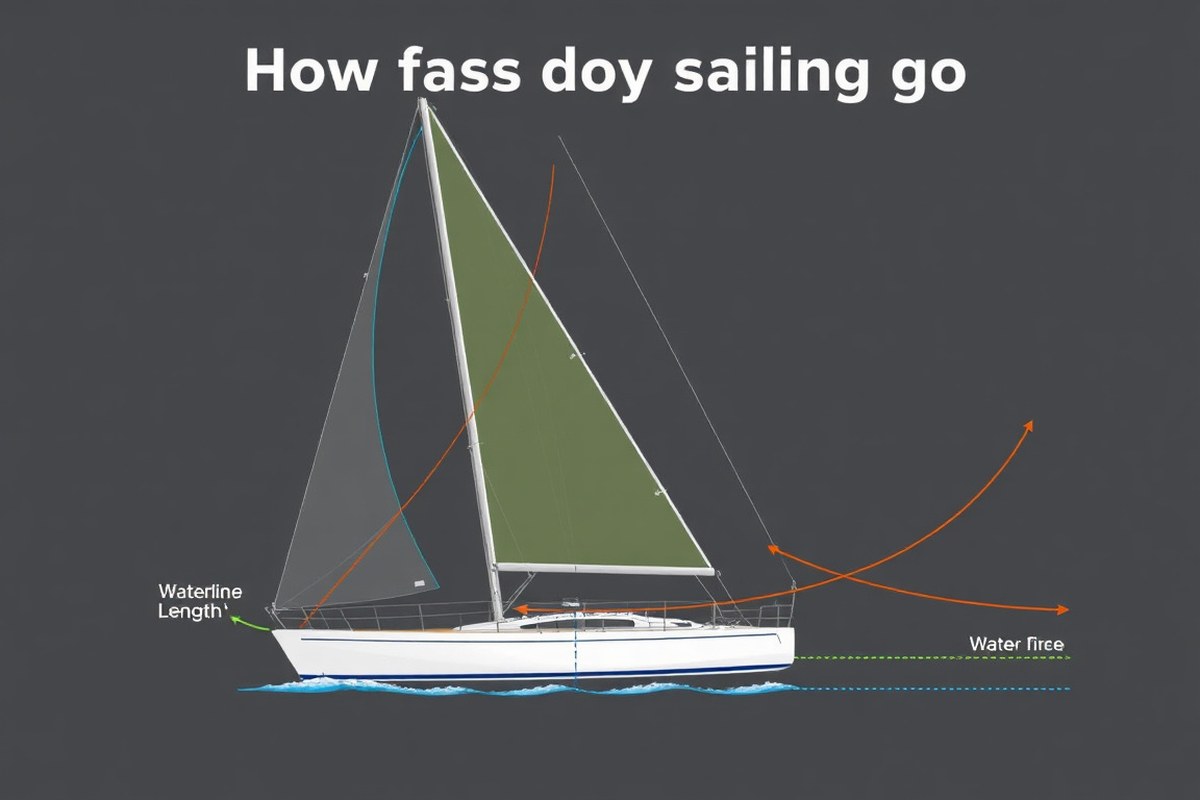
Hull speed sets the top speed limit for displacement sailboats. It depends directly on the waterline length (LWL), the part of the hull touching the water. That limit appears because these boats create waves that get harder to climb as speed increases.
What Hull Speed Means for Sailboats
Hull speed is the fastest speed a displacement hull can sail efficiently. When a boat moves, it creates a bow wave. That wave grows with speed and length approximately matches the waterline length.
Once the boat tries to go faster, it must climb its wave. Climbing the wave needs much more energy.
This slows the boat down. This often becomes impossible for displacement hulls, so they rarely exceed hull speed.
The Formula to Calculate Hull Speed
To find hull speed in knots, multiply 1.34 by the square root of the waterline length in feet. The formula looks like this: hull speed = 1.34 × √LWL. “LWL” means the boat’s length at the waterline, not overall length.
For example, a sailboat with a 24-foot waterline length has √24 ≈ 4.9. Multiply 4.9 by 1.34 to get about 6.57 knots, or about 7.6 mph, as its hull speed.
Why Waterline Length Limits Speed
Displacement hulls move by pushing water aside rather than riding above it like planing boats. Their speed is limited by the size of the wave they create. The longer the waterline, the longer the wave.
A longer wave lets the hull go faster. The boat moves faster before climbing its wave.
Smaller boats have shorter waterlines and lower hull speeds. For instance, a 16-foot waterline means about 5.4 knots maximum. Larger cruisers with 36-foot waterlines reach close to 8 knots before hitting their limit.
Worked Example: Calculating Hull Speed Step-by-Step
Step one, measure or find the boat’s waterline length. Step two, calculate the square root of that length. Step three, multiply that square root by 1.34 to get hull speed in knots.
For a sailboat with a 25-foot waterline, calculate the square root. The square root of 25 is 5. This helps find the hull speed.
Multiply 5 by 1.34 to get 6.7 knots. This number shows the fastest speed your displacement hull can usually sail.
Adjustments and Real-World Factors
Waterline length controls theoretical hull speed, but other things affect actual speed. Hull shape, displacement, and sea state all play a role. You might reach or fall below hull speed depending on these conditions.
Multihulls and planing hulls bypass this limit by rising over waves. But displacement sailboats rarely break it. Cruisers usually max out near 10 to 12 knots because of hull speed.
Remember, pushing a displacement hull beyond hull speed demands much more power and drains energy quickly.
How Different Types of Sailboats Compare in Speed
Sailboat speeds vary widely by type. Monohulls usually cruise between 6 and 9 knots.
Catamarans cruise faster at 8 to 15 knots. Racing and performance boats can surpass 20 knots in ideal conditions.
Monohull Speeds and Characteristics
Monohulls tend to have a single hull and displace more water, which limits their speed. Average cruising speeds fall between 6 and 9 knots depending on length. Larger monohulls over 50 feet can reach 12 to 15 knots at their fastest.
These boats offer stability and comfort. But their hull shape means most have a speed cap near 12 knots. Brands like J Boats, X-Yachts, and Swan build monohulls known for balancing speed with cruising ability.
Catamarans and Multihulls Speed Advantages
Catamarans have two hulls, spreading weight and reducing drag. This design helps catamarans cruise between 8 and 15 knots, faster than most monohulls. Longer catamarans, over 46 feet, can exceed 25 knots on good days.
Trimarans follow a similar pattern, often sailing between 10 and 15 knots. They can hit extreme speeds above 30 knots. Makers like Outremer and Gunboat produce catamarans designed for both cruising comfort and speed.
High-Performance and Racing Sailboats Speeds
Racing sailboats focus on speed, sacrificing some stability and comfort. High-performance monohulls often reach cruising speeds near 10 knots and max out around 15 knots. Performance brands include Pogo, J Boats, and X-Yachts.
Multihulls built for racing, especially trimarans, can push speeds well above 20 knots. Some modern foiling boats even break 60 knots.
But those are mostly experimental or race-specific. These boats require skilled crews and specialized tuning.
Here’s a table showing speeds by sailboat type and size:
| Type of Boat | Cruising Speed (knots) | Maximum Speed (knots) | Example Brands |
|---|---|---|---|
| Monohull (11, 15m / 36, 49ft) | 6, 8 | 10, 12 | J Boats, X-Yachts, Precision |
| Monohull (15m+ / 50ft+) | 7, 9 | 12, 15 | Swan, Beneteau First, Solaris |
| Catamaran (11, 14m / 36, 46ft) | 8, 12 | 20 | Outremer, Catana |
| Catamaran (14m+ / 46ft+) | 10, 15 | 25+ | Gunboat, HH Catamarans |
| Trimaran | 10, 15 | 30+ | Neel, Dragonfly |
You see how catamarans typically maintain higher cruising speeds than monohulls. Their multihull design cuts drag, pushing their top speeds much further. Trimarans and racing models hold the top end of the speed spectrum.
How Wind Conditions and Sailing Angles Affect Speed
Wind strength directly affects how fast your sailboat moves. The best speeds usually happen in winds between 10 and 20 knots. In this range, cruisers often reach 5 to 10 knots.
Speed depends on boat type. Sea conditions also affect how fast you go.
How you sail relative to the wind, your point of sail, makes a big difference. Sailing close-hauled, nearly into the wind, slows you down. Sailing about 80 degrees off the wind is called a beam reach.
This usually gives you the fastest speeds. It’s a popular angle for speed. Sailing straight downwind is often slower and feels less stable.
Apparent wind is the wind you feel on the boat. It changes with both the true wind and your boat speed.
As you speed up, apparent wind shifts forward and strengthens, especially on reaches. This is why sailboats can sometimes sail faster than the actual wind speed.
The angle between your boat and the wind matters because it affects your sails’ lift. When set just right, they act like airplane wings, pushing you forward efficiently.
Loose or tight sails for the wind angle reduce power. You lose speed when sails don’t match the wind.
Another thing is sail trim and rig tuning. Adjust your sails to fit wind strength and angle. This keeps the boat balanced and smooth.
You can tighten or loosen them as needed. Modern rigs with adjustable controls let you fine-tune sail shape on the go for better speed.
Beware of too little or too much wind. Less than 5 knots means slow speeds and little excitement. Speeds over 20 knots can be tough to control.
You often have to reduce sail to manage the boat. This cut in sail lowers your speed. Strong gusts also make consistent speed tough to maintain.
Currents and sea state also play roles in your speed. Sailing against strong currents or heavy waves slows you down. Know how wind direction works with tide and waves.
This helps you pick the fastest course and point of sail. It leads to quicker passages.
For faster sailing, try reaching with the wind about 70 to 90 degrees off your bow. Trim your sails exactly to the wind angle.
Pay attention to how the apparent wind changes as you pick up speed. This skill grows with practice and watching your instruments closely.
How Sailboat Weight, Hull Shape, and Drag Influence Speed
Weight affects a sailboat’s speed by increasing the water it displaces. More weight means the boat sits lower in the water, creating more resistance. This extra drag slows the boat, especially in light winds when every pound counts.
Hull shape shapes how water flows past the boat. A sleek, narrow hull slices through water easier, causing less drag. Flat-bottomed hulls ride higher on the water surface.
They can be less stable. These hulls also make more spray, which slows you down.
Streamlined hulls and sharp entry angles reduce turbulence below the waterline. Rounded bilges and smooth curves let water flow cleanly.
A wide beam adds stability but often adds drag. Narrower hulls usually move faster but may feel less secure in choppy water.
- Keep your hull clean and smooth to cut 5, 10% drag.
- Remove unnecessary gear to lighten the load.
- Look for hulls with fine entry and moderate beam for good speed.
- Inspect keels and rudders for damage or roughness, repair if needed.
- Use high-quality, smooth bottom paint to reduce surface friction.
- Balance the boat’s load for even weight distribution.
Drag comes from rough spots like barnacles, old paint, or chipped keels. Even small dents or protrusions cause water to churn and slow the boat.
Regular bottom cleaning and polishing keep drag minimal. You can save fuel and time by preventing excess resistance.
Always check your hull and keel for barnacles before sailing. They add significant drag and slow your boat down.
The keel’s shape also matters for speed and handling. A deep, narrow keel slices through water more easily. It cuts down sideways slip.
This lets you sail closer to the wind. Bulky or damaged keels create more drag and can cost you knots, especially upwind.
Weight, hull design, and drag work together to set your sailboat’s speed. Lighter boats with smooth, well-shaped hulls glide faster and respond better to wind. Consider your sailing style and conditions when choosing hull shapes and managing your boat’s load.
When and How Sailboats Exceed Hull Speed Limits
Sailboats usually hit a speed limit called hull speed. This limit comes from the length of their waterline.
Heavier boats push against waves, making it harder to go faster. Some special boats break these limits by planing or foiling.
Planing happens when a boat’s hull lifts and skims on top of the water. This reduces drag, letting the boat speed up quickly. Performance deck-saloon yachts and racing hulls often plane.
They need strong wind and smooth seas to lift the hull. Once on a plane, adding more sail or throttle raises speed easily. Heavy cruisers rarely plane because their shape and weight keep them in displacement mode.
Foiling boats use hydrofoils, which are underwater wings. These wings lift the hull out of the water almost completely. This stops most drag from water resistance.
Foiling racing boats can hit speeds over 50 knots. Popular foiling models include the Moths and America’s Cup yachts. They require clean water and steady winds of 10 to 15 knots or more.
Controlling the foils needs skill and quick reactions. Without that, the boat might crash back into the water.
Hydrodynamic lift helps reduce drag in both planing and foiling boats. In good conditions, lift means the hull doesn’t fight against waves as much. This is why foilers and planing boats accelerate quicker than displacement boats.
You need lightweight materials and advanced sail setups to benefit from lift. These boats also need smooth water or slightly choppy seas to maintain speed.
Not every sailboat can plane or foil. Smaller, lightweight boats or those built with special designs do best. Recreational foiling boats tend to be smaller due to the cost and complexity.
Strong winds, steady seas, and skilled handling make higher speeds possible. Without good conditions or crew know-how, planing or foiling won’t happen safely. The gear and skill required can cost thousands and take practice to master.
How to Estimate Passage Times Using Realistic Speed Calculations
To estimate passage time, first figure out the distance. Then, know your average speed. Divide distance by speed to get the time.
Distance in nautical miles equals speed in knots times time in hours. Say your sailboat goes 5 knots on average. The trip is 100 nautical miles.
Divide 100 by 5. The result is 20 hours.
Speed changes when wind, currents, or sea conditions shift. The Gulf Stream can add or subtract 1, 2 knots.
Strong gusts might slow you down, while steady trade winds push faster. Planning with average speeds means expecting some slowdown or bursts of speed.
Use this checklist to make realistic time calculations. Think about your boat’s normal cruise speed, typical wind conditions on your route, and currents.
Include a safety margin for bad weather or equipment checks. Plot courses that avoid sailing directly upwind, as that reduces your speed.
- Choose your distance: Measure the route in nautical miles on your chart or GPS.
- Estimate your average speed: Use your usual cruising speed, adjusted for likely wind and currents.
- Calculate baseline time: Divide distance by average speed to get hours of sailing.
- Add time for delays: Add 10, 20% extra for weather, tacking, or slow conditions.
- Consider currents and tides: Add or subtract 1 to 2 knots for strong currents. Adjust your speed where you expect tides.
- Check weather forecasts: Confirm wind directions and strengths before leaving and during the passage.
- Plan breaks and contingencies: Include time for rest, repairs, or anchoring if needed.
- Review and update: Recalculate your expected arrival if conditions or performance change.
For example, from Norfolk to Bermuda is about 700 nautical miles. You expect an average speed of 5 knots. That means 140 hours total.
This equals almost 6 days without stopping. Add 20% for currents and variable winds, and you get around 7 days. Checking forecasts during the trip can help adjust your speed estimates in real time.
Good passage plans keep you safe and on schedule. Overly optimistic estimates often miss arrival windows or run into trouble. Plan for the slower speeds, and you’ll set yourself up for a smoother sail.
How Crew Experience and Sailing Techniques Improve Speed
Crew experience and sailing techniques play a big role in how fast your sailboat goes. Skilled sailors adjust sails and steer precisely to catch the best wind. The right number of crew members helps manage these tasks smoothly and keep your boat balanced.
Sail Trim and Balance Techniques
Adjusting the sails to match wind conditions tunes your boat for speed. Trimming sails means tightening or loosening them for better airflow and power. A well-balanced boat has sails set to avoid too much heel.
Too much heel or drag will slow your boat down. Set sails right to keep your boat steady and fast.
Here’s how to trim sails well:
- Use telltales on the sails to check airflow direction.
- Adjust the main sail and jib so both catch smooth wind.
- Keep the boat balanced side to side by shifting crew weight.
- Tighten the outhaul and vang to shape mainsail correctly.
- Use the traveler to fine-tune mainsail angle relative to the wind.
Practicing these steps keeps your boat fast and steady, especially in changing winds. Regular focus on sail shape pays off in higher speeds and easier steering.
Effective Tacking and Jibing
Changing direction efficiently can save time and keep speed up on your course. Tacking is turning the bow through the wind.
Jibing is turning the stern through the wind. Both need smooth coordination to avoid losing momentum.
Try these tips to improve your turns:
- Plan your turns early so crew are ready.
- Trim sails quickly but carefully during maneuvers.
- Coordinate one clear call to start the turn.
- Minimize extra turns or unnecessary jibing.
One mistake is doing too many jibes, which slows the boat. Instead, choose routes with fewer direction changes to maintain speed.
Too much jibing kills speed; keep turns smooth and minimal.
Crew Coordination and Roles
The number of crew affects how well you can handle sails and balance your boat. On a 50-foot yacht, a crew of 4 to 6 experienced sailors is ideal. Each person takes specific roles to work the sails, helm, and balance the boat.
Common roles include:
- Helmsperson steering the boat.
- Main trimmer adjusting the mainsail.
- Jib trimmer focused on the foresail.
- Tactician calling maneuvers and watching conditions.
- Bow crew handling sail changes and lines.
Clear roles mean fewer mistakes and faster responses to wind changes. Short-handed sailing works but usually lowers your speed due to slower adjustments.
How to Practically Increase Your Sailboat’s Speed
Keeping your sailboat in top shape boosts its speed noticeably. Clean the hull regularly to remove barnacles and algae.
A smooth bottom reduces drag significantly and saves you time on the water. Check the rudder and keel for damage or growth that slows you down.
Tuning your sails makes a big difference, especially with changing winds. Look for wrinkles during a tack or when close-hauled. They show the sails need adjustment.
Use the outhaul and Cunningham to tighten sails properly, giving you better shape and power. Don’t forget to inspect sails for tears or wear before heading out. Small repairs can avoid big losses in speed.
Upgrading hardware can add speed without a full boat overhaul. Lightweight lines and blocks reduce friction and make trimming easier.
Consider a new, larger genoa or a better mainsail cut for more drive. High-quality bearings in winches and traveler systems save precious effort and keep trims clean.
- Regularly clean hull and inspect for marine growth
- Tune sails using outhaul, Cunningham, and boom vang
- Repair sail damage before every trip
- Replace heavy rigging with lightweight alternatives
- Upgrade to larger, better-cut sails for more power
- Maintain and lubricate winches and traveler hardware
- Trim sails frequently to respond to wind changes
Small changes often bring noticeable gains. For example, swapping to low-stretch lines costs around $100 to $300 but improves sail control. Sail repairs can be done for $50 to $150, depending on size and damage.
Larger sails might run $1,000 or more. But you’ll catch more breeze and gain speed. A smooth hull polish session takes about an hour but adds speed by reducing water resistance.
Your First Steps to Speed Up Your Sailboat
Here’s a simple plan to start sailing faster while staying safe. Follow these steps in order and check your results as you go.
- Before You Sail: Review your boat’s waterline length and hull type. This helps you set realistic speed goals based on your boat’s design.
- Day 1: Check your sails for proper trim and make small adjustments while in steady wind. You’ll notice smoother sailing and slight speed gains.
- Week 1: Practice different sailing angles to the wind. Try close-hauled, beam reach, and broad reach. Record which angle gives your best speed.
- Week 2: Reduce extra weight on board and trim any gear dragging in the water. Your boat should feel lighter and move more easily.
- Week 3: Focus on teamwork with your crew. Clear communications and quick sail adjustments will help maintain speed in changing winds.
- Week 4: Learn how to use the spinnaker or gennaker safely for downwind runs. This can boost your speed beyond hull speed.
- After 1 Month: Track your average speeds and compare them to theoretical hull speed. Adjust your sailing style based on where you can improve most.
- Ongoing: Keep up with maintenance like cleaning the hull and checking rigging tension. A clean, well-tuned boat always sails faster.
Frequently Asked Questions
What Is the Average Top Speed for a 20ft Day Sailboat?
A 20ft day sailboat often reaches 5 to 7 knots in decent wind. They are lighter and easier to handle, which helps them accelerate faster in moderate breezes.
Can Sailboats Go Faster Than the Wind Speed?
Yes, certain sailboats can exceed wind speed especially with hydrofoils. These designs lift the hull above water, cutting drag and increasing speed significantly beyond normal limits.
How Does a Sailboat’s Draft Affect Its Speed?
A deeper draft improves stability and can help a sailboat sail faster upwind. It reduces sideways slip, allowing better control. But may slow speed in shallow, choppy waters.
Do Sailboats Sail Faster Downwind or at an Angle?
Sailboats generally sail faster about 80% off the apparent wind rather than directly downwind. Sailing at an angle to the wind captures more power and improves speed.
What Role Does Sail Size Play in Sailboat Speed?
Larger sails catch more wind, boosting speed, especially in lighter breezes. However, too much sail can overpower the boat and make handling tricky in strong winds.
Wrapping Up
Sailboat speed depends on many things like wind, boat shape, and skill. You can see real progress by practicing trimming and sailing angles. Start today by noticing how your boat feels at different points of sail.