How Fast Is Mach 2 MPH? Precise Speeds, Calculations & Real-World Comparisons
Wondering how fast is Mach 2 mph? Mach 2 means twice the speed of sound.
At sea level, this is roughly 1,522 miles per hour. That speed can push a jet fighter across the United States in just a couple of hours.
However, Mach 2 speed changes with altitude and temperature. At 36,000 feet, Mach 2 moves faster than at sea level.
Cold air high up slows down how fast sound travels. This makes Mach 2 about 1,320 mph at that height due to thinner air and lower temperature.
The speed unit “Mach” is always relative to the speed of sound nearby. Sound travels slower in cold air and faster in warm air. Pilots adjust their speed readings using local weather conditions to stay at a precise Mach number.
Understanding Mach 2 involves knowing local air conditions. Altitude and temperature strongly affect sound speed and aircraft velocity. This info helps in calculating true airspeed while flying at supersonic speeds.
Key Takeaways
- Mach 2 equals about 1,522 mph at sea level under standard conditions.
- At higher altitudes, Mach 2 decreases to around 1,320 mph due to colder air.
- The speed of sound (Mach 1) is roughly 761 mph at sea level.
- Calculate Mach speed by multiplying Mach number by local sound speed.
- Altitude affects Mach speed because air temperature and density change with height.
- Mach 2 is supersonic but below hypersonic speeds starting at Mach 5.
How Fast Is Mach 2 in Miles per Hour?
Mach 2 equals about 1,522.5 miles per hour at sea level. This number assumes standard atmospheric conditions with a temperature of 15°C (59°F).
At sea level, the speed of sound is roughly 761 mph. So Mach 2 is double that speed.
At 35,000 feet, Mach 2 equals about 1,320 miles per hour. The air temperature near that altitude is around −56.5°C (−69.7°F), causing sound to travel slower. Since Mach 2 means twice the local speed of sound, its mph value decreases as you climb higher.
These values differ because sound speed depends on air temperature and density. At high altitudes, air is cold and thin. This makes sound waves move slower than at sea level.
Sea level air is warmer and denser, so sound moves faster there. Pilots and engineers use tables matching altitude and temperature to convert Mach to mph accurately.
Why Does Mach 2 Speed Change with Altitude?
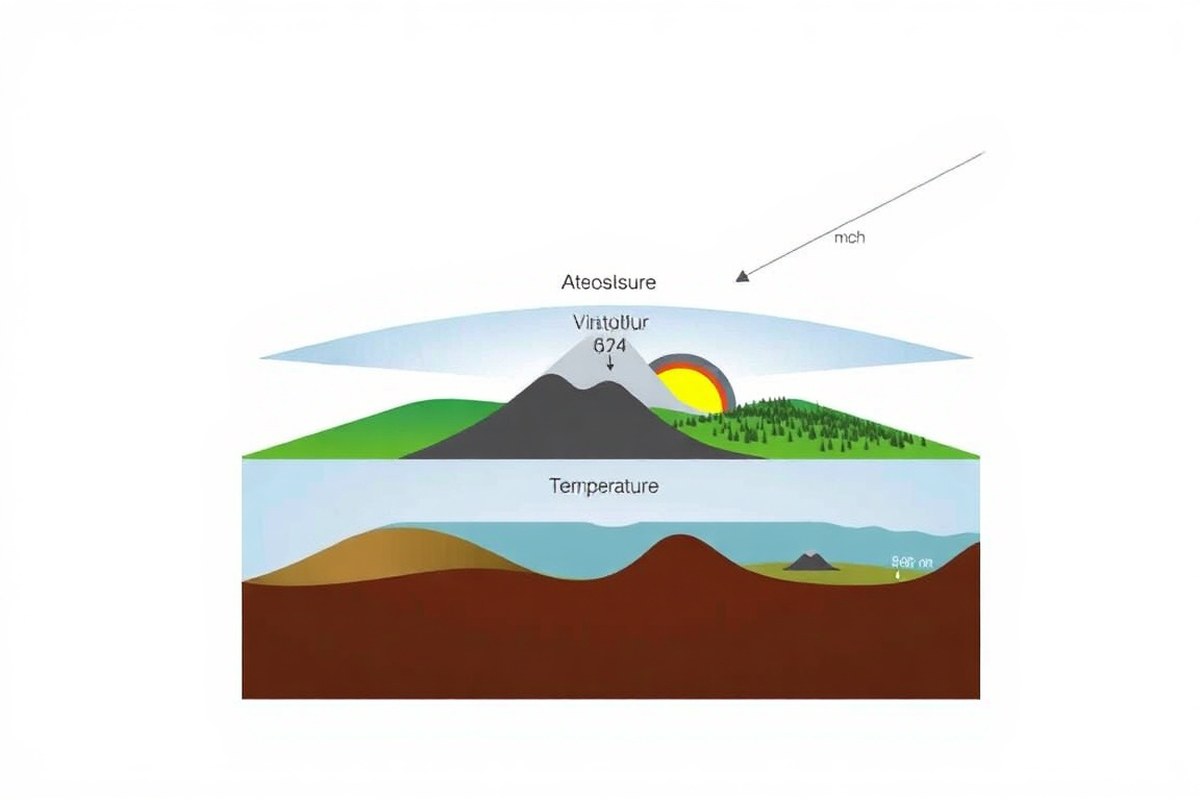
The speed of Mach 2 changes with altitude because the speed of sound is not constant. It varies mainly with air temperature and density. This means Mach 2 represents different speeds in miles per hour depending on where you fly.
How Temperature Affects the Speed of Sound
Sound travels faster in warmer air because the air molecules move quicker. When the temperature drops, the speed of sound slows down since the molecules have less energy.
For example, at room temperature of 68°F, sound travels around 767 mph. But this speed falls in colder conditions.
Mach 2 is twice the speed of sound. It slows down as air gets colder. This happens because sound travels slower in cold air.
This means flying at Mach 2 in cold air requires a lower true airspeed. Pilots must adjust their airspeed calculations to reflect local temperature changes.
Speed of Sound Changes in Troposphere and Stratosphere
The troposphere goes up to around 36,000 feet. Temperatures drop as altitude increases here. This makes the air colder the higher you fly.
When air gets colder, sound moves slower too. So Mach 2 slows in mph as you climb.
The speed drops steadily with temperature. This drop continues up to the tropopause, the boundary between the troposphere and stratosphere.
Above this point, in the lower stratosphere, the temperature remains more constant or even warms slightly. This stabilizes or slightly increases the speed of sound. So, Mach 2’s mph value can “zig-zag,” dropping then rising again at very high altitudes.
Why Mach 2 Is Slower at Higher Altitudes
The main reason Mach 2 slows in mph at higher altitudes is the colder air. Thin air means lower temperature, leading to a slower speed of sound. At around 50,000 feet, typical temperature drops near −56.5°C, and Mach 2 corresponds to about 1,320 mph, lower than at sea level.
Lower temperature and air density also reduce drag on the aircraft. Flying at Mach 2 is more efficient at high altitude. Even if mph speed appears slower.
Thin, cold air reduces drag on the aircraft. Pilots must keep in mind Mach 2 is relative.
It’s always twice the local sound speed. That speed changes with altitude and temperature.
Calculating Mach 2 Speed at Different Altitudes
Mach numbers depend on local air temperature to find the speed in mph. You multiply Mach 2 by the speed of sound at your altitude. For example, at 660 mph local sound speed, Mach 2 equals 1,320 mph.
That’s the true speed at that altitude. Pilot speed readings rely on local conditions.
This requires temperature data from weather models or onboard instruments. Using this data, you adjust your calculations and flight controls accordingly. Errors can happen if you ignore temperature changes or assume a fixed speed of sound.
What Happens to Air Density and Mach 2 Speed
Air density decreases as altitude rises, which usually lowers temperature too. This double effect impacts the speed of sound and consequently Mach 2’s mph value. Thinner air means less drag but cooler temperatures too.
That cuts sound speed, changing true airspeed for Mach 2. So Mach 2’s mph can shift with altitude.
For example, pilots flying supersonic at sea level face much more drag and heat. They rarely fly Mach 2 low down because dense air pushes speed requirements higher. At altitude, Mach 2 is easier to maintain with less energy due to these changes.
Always check the local air temperature before calculating Mach 2 speed to avoid errors.
What Is the Speed of Sound (Mach 1) in MPH at Sea Level and Altitude?
The speed of sound, or Mach 1, changes with altitude and temperature. At sea level, it travels faster than it does at high cruising altitudes.
This baseline matters because Mach 2 is simply twice this speed. So knowing Mach 1 speeds lets you calculate Mach 2 easily.
Sea Level Speed of Sound Values
At sea level, the speed of sound is about 761 mph. This speed changes a little with temperature. This speed corresponds to about 661 knots or 1,225 km/h.
Pilots and engineers use this as the standard ground baseline. They apply it when defining Mach speeds.
Here’s a table showing Mach 1 speed at sea level in different units. This helps you understand its speed clearly.
| Unit | Mach 1 Speed |
|---|---|
| Miles per hour (mph) | 761 mph |
| Knots (kt) | 661 kt |
| Kilometers per hour (km/h) | 1,225 km/h |
The 761 mph figure applies when the air temperature is about 59°F (15°C) at sea level. Changes in temperature or humidity can cause small shifts in this baseline speed.
Speed of Sound at Typical Cruising Altitudes
At around 35,000 feet, where many jets cruise, the air is much colder and less dense. The speed of sound drops to approximately 660 mph or 332 mph in knots. This slower speed means Mach 1 is lower here than at sea level.
Jets measure speed compared to this baseline. Their Mach number varies from the sea-level speed you expect. For example, the Boeing 787 cruises near Mach 0.85, about 560 mph at altitude.
Using Mach 1 to Calculate Mach 2
Mach 2 simply doubles the speed of Mach 1 at the current altitude. Mach 1 equals 761 mph at sea level.
So Mach 2 equals 1,522 mph there. At 35,000 feet, with Mach 1 near 660 mph, Mach 2 is just 1,320 mph.
To find Mach 2 speed at altitude, start with Mach 1 speed. Multiply that by 2 to get Mach 2 speed. This gives you the Mach 2 speed, which varies based on local conditions.
Knowing these baseline speeds helps pilots fly safely and understand their true airspeed versus ground speed. This is important for flight planning and aircraft performance management.
How to Calculate Mach 2 MPH at Different Temperatures and Altitudes
Formula for Mach to Mph Conversion
Mach number times the local speed of sound equals speed in miles per hour. The speed of sound depends on air temperature, not just altitude. To find mph, multiply Mach 2 by the speed of sound.
The speed of sound changes with air temperature. Use the current air temperature for the most accurate result.
The basic formula is: Speed (mph) = Mach number × Speed of sound (mph). The speed of sound changes because air temperature affects it. On average, at sea level (15°C), the speed of sound is about 761 mph.
Adjusting Speed for Temperature Variations
Air temperature affects the speed of sound noticeably. You can calculate the speed of sound using air temperature. Convert temperature to Celsius first.
This helps you adjust to changing conditions. The formula is: A = 38.967 × √(T + 273.15), where A is speed in mph and T is air temperature in °C.
Because temperature drops with altitude until about 36,000 feet, the speed of sound also decreases. Above that, temperature stays near -56.5°C. So speed of sound levels out near 660 mph. This formula works without advanced tools, using only a calculator or spreadsheet.
Worked Example Calculation at 30,000 Feet
At 30,000 feet, the air temperature is about -44.4°C. You first find the speed of sound using the formula for temperature. Then, multiply that by Mach 2 to get the mph speed. Follow these steps to calculate Mach 2 at 30,000 feet:
- Note the air temperature: -44.4°C.
- Add 273.15 to convert to Kelvin: -44.4 + 273.15 = 228.75 K.
- Calculate the square root of 228.75: √228.75 ≈ 15.13.
- Multiply by 38.967 to get speed of sound in mph: 15.13 × 38.967 ≈ 589 mph.
- Multiply the speed of sound by Mach 2: 589 × 2 = 1,178 mph.
This calculation matches speed data from reliable tables. Mach 2 equals about 1,091 km/h or 678 mph.
These are typical speeds at this altitude. Variations come from rounding and local conditions.
How Does Mach 2 Compare to Other Supersonic Speeds?
Mach 2 means twice the speed of sound. Mach 2 is almost twice as fast as Mach 1. This is true at the same altitude and temperature.
The speed doubles in miles per hour under these conditions. However, since the speed of sound varies with conditions, Mach 2 exact mph can shift.
Supersonic speeds include anything above Mach 1 and below Mach 5. Hypersonic speeds are those Mach 5 and faster.
Mach 5 is about 3,800 mph, which is more than twice as fast as Mach 2. Mach 10 doubles that to roughly 7,600 mph. These speeds are in very different flight classes.
Supersonic speeds like Mach 2 refer mostly to fast military jets and early supersonic transports. Hypersonic speeds push into experimental and high-speed spaceflight technology.
The table below compares these speeds in mph clearly:
| Speed | Mph (approx.) | Category | Example |
|---|---|---|---|
| Mach 1 | 761 | Supersonic (base speed of sound) | Sound barrier |
| Mach 2 | 1,522 | Supersonic | Concorde cruising speed |
| Mach 5 | 3,800 | Hypersonic (start) | Experimental hypersonic craft |
| Mach 10 | 7,600 | Hypersonic | Advanced concept vehicles |
The term “supersonic” covers any speed faster than sound but slower than Mach 5. “Hypersonic” starts at Mach 5 and higher. This is important for how aircraft and missiles are designed.
High speeds change materials and flight dynamics. For example, Concorde held steady at Mach 2. But few modern jets reach Mach 2 for long periods.
Mach 2 flies about 25 times faster than cars on highways. It is also nearly three times faster than regular commercial jets. This shows how quickly supersonic aircraft move.
That’s why supersonic flight often needs special designs to handle heat and stress. Hypersonic speeds place even greater demands on these systems.
Flying above Mach 1 requires strict safety protocols to manage shock waves and extreme heat.
Is Mach 2 Speed the Same as Ground Speed?
Mach 2 measures how fast an aircraft moves compared to the air around it. It does not show how fast the plane travels over the ground. Ground speed is the speed relative to the Earth’s surface.
It changes with wind and flight conditions. It shows how fast you move over the ground.
If a plane flies at Mach 2 in still air, the true airspeed is about 1,534 miles per hour. This speed is measured at 35,000 feet altitude. It shows the plane’s speed through the air.
A 100-mile-per-hour tailwind adds to the plane’s speed. This raises the ground speed to about 1,634 miles per hour.
Winds push the plane forward over the ground. A headwind would subtract from the ground speed but would not change the Mach number.
Pilots use Mach numbers during supersonic flight to understand airflow. These numbers show how air moves around the aircraft. This helps pilots keep control at high speeds.
The Mach number is important for understanding airflow compressibility, which affects lift, drag, and engine performance. Ground speed alone can mislead pilots on true flight conditions.
It ignores air pressure and temperature that change sound speed. Mach numbers give a better idea of flight speed.
To find ground speed using Mach, start with true airspeed. True airspeed depends on the current altitude and air conditions. Then adjust for wind to get ground speed.
Then add or subtract wind speed depending on direction. Instruments onboard measure airspeed based on air pressure, while GPS provides ground speed. These two numbers help pilots ensure they fly efficiently and safely.
Keep in mind that higher altitude changes the speed of sound. That means Mach 2 at 40,000 feet means a different true airspeed than at 20,000 feet. Pilots adjust calculations constantly, so Mach numbers help keep things consistent.
Ground speed changes a lot because of winds, even at the same Mach. Two planes flying at Mach 2 may have very different ground speeds. Wind direction and speed cause this difference.
Operating at Mach 2 involves challenges, including fuel consumption and heat from air friction. Using Mach numbers over groundspeed helps manage these factors better. Using Mach numbers keeps the aircraft within design limits.
It helps pilots control acceleration and deceleration during supersonic flight. This keeps the plane safe in critical phases.
Common Mistakes When Converting Mach 2 to MPH
Many people think Mach 2 means twice the sea level speed of 761 mph. This is not always true. Mach numbers depend on conditions, not just doubling speed.
This is often wrong because the speed of sound isn’t constant. It changes with temperature. So Mach 1 at high altitude is usually slower than 761 mph.
Another common mix-up happens with airspeed types. Indicated airspeed shows on your aircraft’s gauges. It differs from true airspeed.
True airspeed is the real speed flying through the air. Indicated airspeed usually reads lower as altitude rises. So you must use true airspeed for correct Mach conversions.
Avoid these usual conversion mistakes by following clear steps. Knowing the temperature at your altitude lets you get the right speed of sound.
Then calculate true airspeed, not the indicated one. This approach prevents errors when finding Mach 2 in mph.
- Don’t just double 761 mph for Mach 2, check temperature and altitude.
- Use true airspeed (TAS), not indicated airspeed (IAS), for accuracy.
- Apply local speed of sound based on current air temperature.
- Remember standard atmosphere temperature drops about 1.98°C per 1,000 feet.
- Calculate speed for the right altitude, not sea level, for real results.
- Use aviation tools or formulas that consider these environmental changes.
Ignoring temperature effects leads to wrong mph speeds for Mach 2. For example, at 36,000 feet, Mach 1 equals about 660 mph, not 761 mph.
So doubling 761 mph would overshoot by about 200 mph in this case. Using a corrected speed of sound value based on altitude and temperature is the simplest fix.
Finally, check your aircraft’s instruments carefully. Use true airspeed inputs rather than nose gauges to get an accurate Mach number. This information helps you convert speeds correctly.
It shows true speed compared to ground or indicated airspeed. This matters during your flights.
Which Aircraft Can Reach Mach 2 and What Challenges Does It Present?
The Concorde is one of the most famous jets reaching Mach 2 speeds. It cruised at about Mach 2.04, cutting transatlantic flight times by more than half. The English Electric Lightning, a British interceptor, also reached Mach 2 with a remarkable climb rate.
The SR-71 Blackbird surpassed Mach 3 but also faced challenges common at Mach 2 speeds. Heat is the biggest engineering hurdle at these speeds. The air friction causes intense temperatures that can weaken materials and damage systems.
Aircraft designed for Mach 2 need special materials that tolerate heat and pressure. Their engines have to handle high internal stress and maintain thrust efficiently. Supersonic jets also require streamlined shapes to reduce drag and manage airflow.
Traveling at Mach 2 raises operational costs, especially for commercial flights. Concorde’s fuel efficiency was much lower than subsonic planes, leading to pricey trips. Environmental concerns and strict sonic boom rules limited the routes these planes could fly.
High speeds create strong heat and infrared signatures, making military jets easier to spot. Large engines needed for Mach 2 can also reduce stealth by increasing the aircraft’s radar visibility. These factors force trade-offs in design, balancing speed with survivability and range.
Supersonic flight needs thorough maintenance to handle heat damage and engine wear safely.
Keeping a plane flying at Mach 2 isn’t just about power. It’s about controlling heat and friction.
Designers must use advanced alloys and cooling systems to protect the airframe. Even then, aircraft often have limited hours before parts need replacement due to stress.
Practical Comparisons to Understand How Fast Mach 2 Really Is
Maching 2 is roughly twice the speed of sound. That is about 1,522 miles per hour at sea level. To picture this speed, think of a commercial jet like a Boeing 747.
It cruises at around 570 mph. This is much slower than Mach 2. Mach 2 is nearly three times faster than that.
Flying nonstop around the Earth’s equator covers about 24,901 miles. At Mach 2, a jet could circle the globe in roughly 1 hour and 40 minutes.
A regular commercial flight takes around 42 hours to cover that distance. So Mach 2 cuts travel time drastically.
Everyday fast objects don’t come close to Mach 2. A fast car might hit 150 mph, which is only about one-tenth Mach 2. A bullet travels faster, but only for short distances.
Bullets are unsafe for normal travel. Mach 2 is a speed mostly reached by military jets. Regular roads and daily speeds don’t come close.
Travel times improve greatly at Mach 2. Crossing the US coast to coast is about 2,500 miles. At Mach 2, it could take under two hours.
Commercial flights often take close to five hours for the same distance. This speed lets you reach distant locations faster, saving hours or even days on long trips.
Flying at Mach 2 needs advanced technology and high fuel use. That’s why it’s mostly for military jets. Economic costs keep it out of standard commercial travel for now.
Understanding Mach 2 shows how much faster supersonic travel is. It beats common flights and vehicles by far.
Your Quick-Start Plan to Understand and Use Mach 2 Speeds
Follow this simple plan to get comfortable with Mach 2 speeds and what affects them. Check your progress as you go to see what you really learned.
- Day 1: Learn the basic Mach 2 speed at sea level, about 1,522 mph. Knowing this number helps you start comparing speeds.
- Day 2: Explore how altitude changes the speed of sound by looking at temperature effects. Notice how cooler air means a slower sound speed.
- Day 3: Try calculating Mach 2 speeds for different altitudes using simple online tools or formulas. Verify your answers with reliable references.
- Day 4: Compare Mach 2 with other supersonic speeds you find in aircraft specs. Check which planes reach or exceed this speed.
- Day 5: Understand the difference between Mach speed and ground speed. Use real flight examples to see how wind affects them.
- Day 6: Read about challenges pilots and engineers face at Mach 2 speeds. Spot how heating and control get tricky.
- Day 7: Relate Mach 2 speed to everyday things, like crossing a state in minutes. This helps lock in your understanding.
Frequently Asked Questions
How Fast Is Mach 2 in Miles per Hour at Sea Level?
Mach 2 at sea level is about 1,522 miles per hour. This speed doubles the local speed of sound in standard atmospheric conditions.
Does Mach 2 Speed Vary with Temperature Changes?
Yes, Mach 2 speed changes as air temperature affects sound speed. Colder air at higher altitudes lowers the speed you need to double for Mach 2.
What Is the Difference Between Mach Speed and Ground Speed?
Mach speed relates to sound speed through the air, not ground speed. Wind and aircraft direction can cause ground speed to differ from Mach speed.
Can Commercial Passenger Planes Reach Mach 2 Speed?
No, regular passenger jets fly below Mach 1, around 500 to 600 mph. Only specialized military or experimental aircraft reach Mach 2 speeds.
What Challenges Do Pilots Face at Mach 2 Speeds?
Pilots must manage intense heat and aerodynamic forces at Mach 2. Reacting quickly to changing flight conditions becomes critical at this speed.
The Bottom Line
Mach 2 means flying at about 1,522 mph near sea level. Altitude and air temperature affect this speed. You can figure out Mach 2 for your area to understand better.