How Long Is a Block in Miles? Complete Guide to Block Lengths & Conversions
How long is a block in miles? City blocks vary in length. A typical one is about 1/20th mile.
That equals roughly 264 feet. In many cities, blocks range between 260 and 900 feet long. So their length in miles differs depending on where you are.
In cities like Manhattan, a block is roughly 0.05 miles long. Chicago’s longer blocks reach about 0.125 miles. Knowing your city’s block length helps you estimate walking distances and travel times more accurately.
Start by checking local block measurements or using a map’s scale for better accuracy. Keep in mind block lengths can change within the same city, especially between avenues and streets.
Key Takeaways
- A city block usually measures between 260 and 900 feet in length.
- Manhattan blocks are about 264 feet long, roughly 0.05 miles.
- Chicago’s long blocks are around 660 feet, about 0.125 miles.
- Eight Chicago long blocks equal approximately one mile when walking.
- Block lengths vary even inside cities, so check local data first.
- Use map scales or GPS apps to measure blocks yourself.
How Long Is a City Block in Miles?

In many US cities, a typical city block is about 264 feet long. This length is close to one-twentieth of a mile. To find blocks per mile, divide 5,280 feet by 264.
Block lengths vary, but many fall between 200 and 400 feet. If blocks are 300 feet long, divide 5,280 by 300. You get about 17 blocks per mile.
This helps estimate how many blocks fit into a mile.6 blocks per mile. This basic math helps you estimate distance when walking or navigating cities with different block sizes.
Knowing how to convert blocks into miles helps you plan your route accurately. Count how many blocks you walk. Then multiply that by the block length in feet.
Divide that number by 5,280 to get miles. For instance, if you walk 10 standard 264-foot blocks, you cover about half a mile.
Some cities have blocks longer than 600 feet, meaning fewer blocks fit in a mile. Chicago’s blocks are about 330 by 660 feet. So eight blocks make one mile on the longer side.
Philadelphia blocks run roughly 400 to 500 feet. So you’d count about 10 to 13 blocks per mile.
The exact length of a block depends on the city’s street layout and block shape. Measure the block length in feet. Divide 5,280 feet by that length.
This tells you the number of blocks in one mile. This lets you convert city block distances into miles easily for walking, running, or traveling.
Typical Block Lengths in Major US Cities
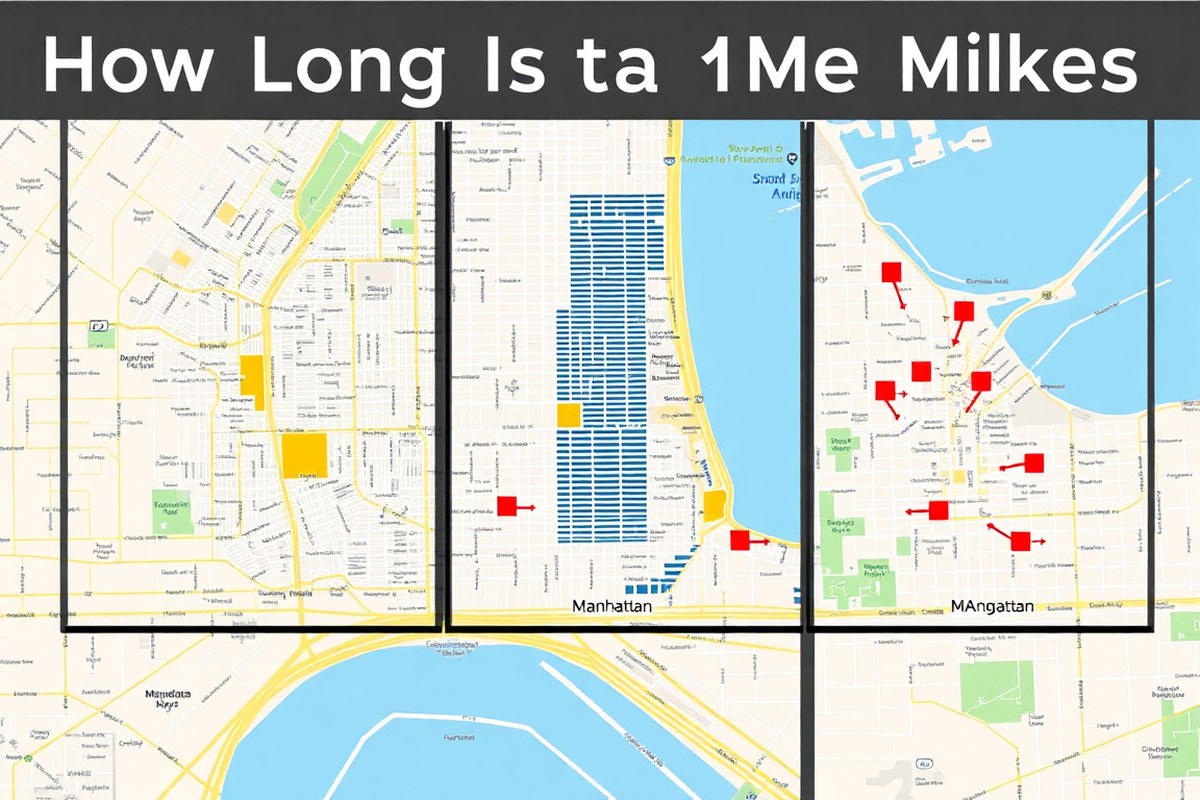
Block lengths vary a lot between major U.S. Cities. Manhattan’s streets run about 264 feet from north to south. That equals about 20 blocks in a mile.
Each block is shorter than in many cities. But blocks between avenues are longer, ranging from 600 to 920 feet. Chicago blocks have two key measures.
The long sides usually hit 660 feet, or one-eighth of a mile. The short side is around 330 feet, half the long side. This means Chicago has about 8 long blocks to a mile and 16 short blocks.
Los Angeles blocks can be as long as 750 feet. This length is more than most U.S. City blocks. That makes walking a block here cover more ground.S. Portland has smaller blocks, around 200 feet downtown.
These block size differences come from city planning choices. Each city has a different street grid layout. This affects how long or short blocks are.
Older areas often have shorter and more irregular blocks. Newer cities or districts tend to have larger blocks for vehicle traffic and development.
| City & Direction | Typical Length (feet) | Approximate Blocks per Mile | Walk Time at 3 mph (minutes) |
|---|---|---|---|
| Manhattan, street to street (north-south) | 264 | 20 | 1 |
| Manhattan, avenue to avenue (east-west) | 600 to 920 | 6 to 9 | 2.3 to 3.5 |
| Chicago, long side | 660 | 8 | 2.5 |
| Chicago, short side | 330 | 16 | 1.25 |
| Los Angeles, typical block | 750 | 7 | About 2.8 |
| Portland, downtown | 200 | 26 | 0.75 |
Numbers like these help you convert blocks to miles based on your city. This comes in handy when walking or estimating travel times. A “five-block” walk means very different distances in each city.
Portland’s blocks are shorter than Los Angeles or Manhattan blocks. Always check block sizes to know how far you’ll walk. These variations also affect public transit planning and urban navigation.
Remember that your walking speed changes the time it takes to cross blocks. So use distance instead of time to stay accurate.
Why Do Block Lengths Vary Between Cities?
Block lengths vary because cities grew under different historical and planning conditions. Older cities often have irregular blocks since planners then lacked modern tools. Many parts of London or Tokyo grew naturally over time.
Their blocks are uneven. This fits each city’s unique history.
Geography shapes block sizes too. Cities on hills or uneven ground must adjust blocks to follow the land. San Francisco’s hills change its block shapes and lengths a lot.
Chicago is flatter. Its blocks tend to be 660 feet long.
Urban density also changes block size. Dense cities need smaller blocks to allow more streets and easier walking.
Lower-density suburbs have larger blocks with more space between them. This variation helps cities offer different living styles, balancing traffic flow and building needs.
How to Convert Blocks to Miles Accurately
To convert blocks to miles accurately, start by knowing the block’s average length in feet. Then divide the total feet walked by 5,280, the number of feet in a mile. Adjust your calculation if block lengths vary across the area you’re measuring.
Basic Formula and Units
The basic formula to convert blocks into miles uses feet as the middle unit. Each block has an average length, often measured in feet. You multiply the number of blocks by the block’s length in feet.
Next, convert feet into miles by dividing by 5,280. This gives you a distance in miles based on the blocks you counted.
Calculating with Regular Block Sizes
Block lengths that stay the same make conversion easy. For example, assume each block is 350 feet long. Multiply your block count by 350 to get the total feet walked.
Then divide by 5,280 to get miles. So walking 20 blocks of 350 feet each equals (20 × 350) ÷ 5,280 ≈ 1.33 miles. Follow these steps to convert a known number of blocks to miles:
- Find out the average length of a block in feet.
- Count the number of blocks you are measuring.
- Multiply the block count by the average block length.
- Divide the total feet by 5,280 to get miles.
- Round the answer to your desired precision.
Adjusting for Varying Block Lengths
Block lengths may vary in your city or block segment. Your average block length should reflect this variation to get more accurate miles. For example, some parts might have 400-foot blocks, others 300-foot blocks.
Calculate a weighted average block length when blocks vary. Add the lengths of all blocks walked, then divide by the number of blocks. Use this average in the conversion formula.
Say you walk 10 blocks. Each block is between 300 and 450 feet.
The average block length is (300 + 450) / 2 = 375 feet. For 10 blocks: (10 × 375) ÷ 5,280 ≈ 0.71 miles.
How Long Does It Take to Walk One Block?
Walking one city block usually takes about one to two minutes. This depends on your walking speed and the block’s length. A typical block is about 264 feet long.
Walking it at 3 mph takes roughly one minute. This helps you estimate your walking time better.
Many American cities have blocks close to 300 to 350 feet long. Walking these blocks at a normal 3 mph pace takes about 45 seconds to a minute.
In places like Manhattan, longer avenue blocks can reach 900 feet. Those take around three and a half minutes when walking briskly at 3.5 mph.
Your speed changes your walk time more than a few extra feet in block length. Slow walking at 2 mph might push a 300-foot block to near two minutes. Casual walking speeds near 3 mph keep most city blocks under a minute.
To find your travel time, multiply blocks by your time per block. Adjust your time per block based on your walking speed. This gives a closer estimate of your total walk.
Check your route’s typical block length before estimating. So you don’t pick a time that’s way off.
Tools and Methods to Measure Block Length Yourself
You can measure block length yourself with different tools. Use measuring wheels or GPS devices. Manual methods also work for this task.
Each tool has different accuracy levels and ease of use depending on your situation. Picking the right tool helps you see block size clearly.
You can measure in miles or feet. That way, results are easy to understand.
Measuring Wheels and Tape Devices
A measuring wheel gives a direct way to measure block length on foot. Roll the wheel along the sidewalk, and it counts the distance for you.
These wheels often measure in feet, meters, or miles and cost between $20 and $100. Cheaper ones may lose accuracy if the surface is uneven.
- Choose a wheel with a large diameter for smoother rolling and better accuracy.
- Use a start and stop method, marking each block’s start and end points clearly.
- Measure on flat sidewalks to avoid errors from slopes or obstacles.
- Reset the wheel counter at the start of each new block measurement.
- Use a tape measure for very short distances under 100 feet for more precision.
A tape measure is good for small or odd-shaped blocks. It’s not practical for measuring long distances.
For long blocks, use other tools. Measuring wheels speed up the process and work best on consistent pavement.
GPS and Smartphone Apps
GPS devices and smartphone apps like Google Maps let you measure walking distance easily. They track your route and show the total distance in miles or feet.
The accuracy depends on the GPS quality and signal. Good GPS apps can measure block length within a few feet.
- Use apps like Google Maps, Map My Walk, or Strava for tracking distance.
- Start tracking at one street corner and stop at the next corner to measure one block.
- Ensure your phone has a clear sky view for better GPS accuracy.
- Check the app’s unit settings to display distance in miles or feet.
- Review the path on the app after walking to confirm you followed the block edges.
These apps cost nothing or have free versions. They can record irregular block shapes too. However, GPS glitches can cause slight distance errors, usually under 5%.
Manual Measuring Techniques
You can manually estimate block length by counting your walking steps. First, measure your average stride length in feet.
Then walk the block, counting each step. Multiply the steps by stride length to get the block distance.
- Walk 10 steps on flat ground to measure your stride. Then, divide the total distance by 10. This gives your average step length.
- Count your steps precisely from one street corner to the next.
- Preferably wear consistent footwear to maintain the same stride length.
- Use a stopwatch or phone timer to keep track of walking time for other estimates.
This method works well when you don’t have tools but is less exact. Factors like walking speed and terrain can affect your step count. Still, it gives a quick block distance estimate without gadgets.
Common Misconceptions About Blocks and Miles
Not all city blocks are the same length. Blocks often vary based on the city’s design and geography.
For example, some blocks in New York City are about 300 feet. But others can stretch to 800 feet or more.
Many people think 8 blocks always equal one mile. That’s a common shortcut but not always true. Engineers use about 17 blocks per mile.
Each block is about 300 feet long. Streets add extra space to make a full mile of 5,280 feet.
A mile always equals 5,280 feet. However, the number of blocks in a mile changes because blocks aren’t uniform. Streets, sidewalks, and the gaps between properties add extra distance beyond the block’s length itself.
Some blocks might be as short as 200 feet. Others, like those between Sixth and 12th Avenue in Manhattan, are around 800 feet. Block sizes vary a lot between cities.
That means block counts don’t always equal miles. You can’t trust a fixed block number everywhere.
Ignoring these differences can cause errors in estimating distances or travel times. Say you think each block is 300 feet.
But blocks are really 800 feet long. Your mile estimate will be more than twice off.
Measure a few blocks for better accuracy. Or check a trusted city map first.
This helps convert blocks to miles better. This approach helps you understand the real lengths and avoid mistakes in navigation or planning.
How Block Length Affects Urban Navigation and Planning
Block size directly shapes how you estimate walking distances in a city. When blocks are short, you cover more intersections in less distance, so your pace changes. Longer blocks mean you walk farther between turns.
This makes your route simpler. But it might be less flexible for shortcuts. Cyclists and runners use this info to plan routes.
They aim for steady intervals. This helps balance speed and rest spots.
In urban design, block measurements guide how planners arrange streets, parks, and buildings. Smaller blocks create more corners and options, supporting walkability and public transit access. Larger blocks reduce traffic signals and crossings but might lead to longer pedestrian gaps.
Block size affects where shops and services locate. This makes block size key for city layouts. It helps create efficient public spaces too.
Real estate values respond to block length and shape. Smaller, consistent blocks often boost property appeal. They promise easy access and a trusted grid.
People find these areas reliable. Planners designed many grids to keep blocks regular, ensuring lots are easy to define and buy. Counting blocks can help judge distance to amenities.
It also shows how close public transit might be. This can affect property price.
In cities with blocks of 1/20 mile, multiply blocks by 0.05. This gives you the distance in miles. It’s a handy quick math tip.05 mile when measuring a route.
This precise conversion helps runners track mileage and real estate appraisers calculate lot sizes. Knowing block lengths saves time when you navigate.
It helps avoid underestimating travel distances. Also, it stops overpaying for places far from essentials.
Don’t count blocks alone to find distances. Always check with a map tool too. This is especially important in cities with uneven block sizes.
Estimating Distance in Cities with Irregular Block Sizes
Estimating distances in cities with irregular block sizes is tricky but doable. You have to adjust your pace and use tools beyond simple block counting. Combining methods gives a more reliable mile estimate in these areas.
Recognizing Irregular Block Patterns
Bumpy or winding streets make block sizes change a lot. Some neighborhoods mix big blocks with small ones, which throws off simple counting. Watch how far one block actually feels or looks in each area.
City layouts in places like Boston can make blocks uneven and hard to judge. Noticing patterns of shorter or longer blocks helps you avoid wrong guesses. This way, you don’t over- or under-estimate your distance.
Using Alternate Distance Estimation Tools
Beyond block counting, try using apps like Google Maps for distance measures. These tools usually offer walking routes and can show exact miles instantly. You can also use online maps with scale bars for a rough measurement.
Here’s a quick checklist to estimate distance without perfect block info:
- Note block length changes as you walk different streets
- Use phone maps to measure sections you can’t count easily
- Check local city websites or guides for block size info
- Estimate based on your walking speed and time
- Use marked trails or bike paths where available
- Carry a small ruler or measuring wheel for sample blocks
This mix of tools covers what block counting misses in messy grids.
Combining Blocks with GPS and Pedometers
Counting blocks while watching a GPS or pedometer gives better feedback. Both devices track your actual steps, which reflect real distance more accurately. You can compare step counts per block to find an average block size on the go.
Try this simple approach:
- Walk one or two blocks with your pedometer or GPS active
- Check the distance recorded for those blocks in miles
- Divide miles by block number to find an estimated block length
- Use this average to estimate longer walks in the area
This way, you adjust for irregular blocks by measuring actual walking distance instead of guessing.
Step-by-Step Action Plan for Measuring and Using City Blocks
Start by finding out the block length in your city. Then practice measuring and converting blocks to miles for your walks or runs.
- Before you start: Find a reliable map or app with scale info. You’ll need this to measure blocks accurately.
- Day 1: Count how many blocks you plan to walk. Note this number for distance estimation.
- Day 2: Measure one block’s length using the map scale or a GPS tool. Check if it matches typical block lengths in your city.
- Week 1: Convert your block measurement to miles. Use this formula: miles = block length (feet) × number of blocks ÷ 5,280.
- Week 2: Walk the planned distance, timing your pace. Compare the time and distance to your estimate.
- After 2 weeks: Adjust your block length estimate if your real-world measurements differ. Use updated numbers for future walks.
- Monthly: Try measuring irregular blocks or new areas. Update your block-to-mile conversions accordingly.
Frequently Asked Questions
How Long Is a Typical Block in a US City in Miles?
A typical city block in the US is about 0.05 to 0.17 miles long. Block lengths depend on the city and street layout. So check local maps for accuracy.
Why Do Block Lengths Change Within the Same City?
Block lengths vary due to street design or geographical features like rivers or parks. Cities also grew at different times, causing inconsistent block sizes along streets.
How Can I Estimate Walking Distance Using Blocks in Miles?
To find mileage, count the blocks you walked. Knowing the block length in your area helps avoid incorrect distance estimates.
What Is the Shortest City Block Length Recorded in Miles?
The shortest city block noted is Edgar Street in NYC at 63 feet or about 0.012 miles. Short blocks usually appear in older or irregular city areas.
Is Counting Blocks a Reliable Way to Measure Distance?
Counting blocks gives an estimate, but irregular block lengths reduce accuracy. Use a measuring app or GPS for precise urban distances.
Final Thoughts
City block lengths vary widely, but you can measure yours easily. Use maps or GPS to get accurate block distances. Start measuring today to estimate your walking or running miles better.