When Was Aluminum Invented? A Complete Guide to Its Origins and Breakthroughs
When was aluminum invented? The first successful isolation happened in 1825.
A Danish scientist, Hans Christian Ørsted, produced tiny bits of metal from aluminum chloride. He managed this by using a chemical reaction involving potassium.
Later, in 1827, Friedrich Wöhler improved the process and created purer aluminum powder. Both discoveries marked key milestones in aluminum’s history. Before then, aluminum was just a theory found in minerals.
Aluminum stayed very expensive for decades because extracting it was tough. The metal binds strongly to oxygen, requiring intense heat to separate. This made early production slow and costly.
It wasn’t until the late 1800s that cheaper ways appeared. The Hall-Héroult process, developed in 1886, made aluminum easier to produce. This process uses electrolysis to break aluminum oxide into pure metal.
Key Takeaways
- Aluminum’s first isolation took place in 1825 by Hans Christian Ørsted.
- Friedrich Wöhler improved aluminum purity in 1827 with better techniques.
- The metal binds oxygen tightly, demanding extreme heat for extraction.
- Early aluminum costs were high due to difficult and slow production.
- Aluminum was initially rarer than gold because of extraction challenges.
- Mistaking aluminum’s discovery as recent ignores early 19th-century breakthroughs.
When Was Aluminum Invented and by Whom?
In 1886, aluminum became practical for use as a metal. Charles Martin Hall in the US and Paul Héroult in France found the same way independently. Their process enabled industrial-scale aluminum production.
Before 1886, scientists struggled to isolate aluminum because previous methods were expensive and inefficient. Hall and Héroult’s method melted aluminum oxide in cryolite. They then passed electricity through the mixture.
This separated pure aluminum metal from the oxide. This dual invention formed the basic approach still used worldwide.
Charles Martin Hall, a young American chemist, stumbled on the process in early 1886. Around the same time, Paul Héroult in France found the same method independently.
Neither inventor worked together or knew about the other’s progress. Yet both reached the breakthrough within months.
Before Hall and Héroult, others tried similar electricity methods. Sainte-Claire Deville and Robert Wilhelm Bunsen worked on it. Their attempts helped lead to the final breakthrough.
These early attempts laid groundwork but did not achieve cost-effective aluminum production. The 1886 discovery was the turning point.
Study of aluminum started decades earlier. People found bauxite in 1821. Scientists also worked on isolating aluminum in the 1820s.
Hall and Héroult’s process changed aluminum’s role. Aluminum went from rare curiosity to widely usable metal.
This method made aluminum easy to produce. This breakthrough helped trigger a major transformation in manufacturing and materials science.
How Was Aluminum First Isolated and Produced?
Aluminum metal was first isolated by chemically reducing aluminum compounds using reactive potassium mixtures. Early chemists heated aluminum chloride with potassium alloys to extract tiny metal particles. These early methods were hard and made little aluminum.
The aluminum was impure. Electrolytic methods came later and improved this.
Berthier’s Discovery of Bauxite
In 1821, French chemist Pierre Berthier discovered bauxite, the main ore containing aluminum oxides. Bauxite contains aluminum minerals bound with oxygen and impurities like iron oxides.
This ore needed extensive chemical treatment to free aluminum metal. Berthier’s work marked the starting point for finding a source for aluminum extraction.
ØRsted’s 1825 Reduction Attempts
Hans Christian Ørsted first produced impure aluminum in 1825 by reacting aluminum chloride with potassium amalgam. This reaction combined aluminum chloride and a mercury-potassium alloy.
The process involved mixing anhydrous aluminum chloride with a dilute potassium amalgam at controlled temperatures. The reaction released aluminum metal fragments but they were impure and small.
- Obtain dry aluminum chloride (AlCl3) powder to avoid unwanted water reactions.
- Prepare potassium amalgam by dissolving potassium metal into mercury carefully.
- Mix the aluminum chloride gently with the dilute potassium amalgam.
- Allow the mixture to react under controlled heat, roughly 150°C to 200°C, avoiding high moisture.
- Separate the resulting aluminum metal remnants from the mixture by washing and filtering.
- Dry the aluminum fragments to remove mercury and residual chemicals.
Handle potassium carefully; it reacts violently with water and air, posing safety risks.
Wöhler’s Pure Aluminum Powder In 1827
Friedrich Wöhler improved Ørsted’s method by using metallic potassium instead of potassium amalgam in 1827. This produced a much cleaner aluminum powder.
He mixed dry aluminum chloride with potassium metal. This reaction turned aluminum ions into metal particles. This method produced the first recognized pure aluminum samples.
- Secure anhydrous aluminum chloride to prevent hydrolysis during reaction.
- Handle potassium metal under inert atmosphere or oil to keep it from oxidizing.
- Gradually add potassium metal to the aluminum chloride at low temperatures.
- Allow the mixture to react fully, generating aluminum powder and potassium chloride salt.
- Isolate aluminum powder by washing away potassium chloride with a non-reactive solvent.
- Dry the aluminum carefully to obtain a fine pure metal powder.
Using dry reagents and careful handling prevents contamination and moisture damage to products.
Why Was Aluminum so Expensive and Rare Initially?
Aluminum was once more expensive than gold because producing it was extremely difficult. Early methods needed complex chemical steps and rare materials. This limited supply kept aluminum rare and valuable in the 1800s.
In the 1850s, aluminum sold for around $17 an ounce, about the price of gold. Its extraction required reducing alumina, but producing alumina cheaply was a challenge. Until 1855, when Louis Le Chatelier found a better way to get alumina, costs stayed high.
The main problem was aluminum’s strong bond with oxygen. Breaking this bond called for high heat or powerful chemicals.
Early techniques, like those used by Sainte-Claire Deville, used sodium reduction but were slow and costly. Because of this, only tiny amounts of aluminum could be made at a time.
This tiny supply meant aluminum was a precious metal for decades. For example, Napoleon III had aluminum dining utensils made to show off wealth. Pure aluminum is soft and not very practical for many uses.
This softness kept the demand for it low. People needed stronger metals for everyday work.
Before 1886, no way existed to make aluminum on a big scale cheaply. That changed when Hall and Héroult invented the electrolytic process.
It cut production costs, increased supply, and caused prices to fall fast. By 1898, aluminum cost dropped to around $1 per kilogram.
Aluminum costs were high because of tricky chemistry and rare methods. Demand was strong but supply was very low. This gap made aluminum expensive early on.
The combination made it a precious metal until new technology allowed mass production. Its rarity then limited its use to fancy objects rather than everyday materials.
What Are the Hall-Héroult and Bayer Processes?
The Hall-Héroult and Bayer processes make aluminum metal on a big scale. These two steps are the main methods used in aluminum production. They help turn raw materials into usable aluminum metal.
Bayer’s process turns bauxite ore into alumina, or aluminum oxide. Then, the Hall-Héroult process uses electrolysis to turn alumina into pure aluminum metal.
Mechanics of the Hall-Héroult Electrolysis
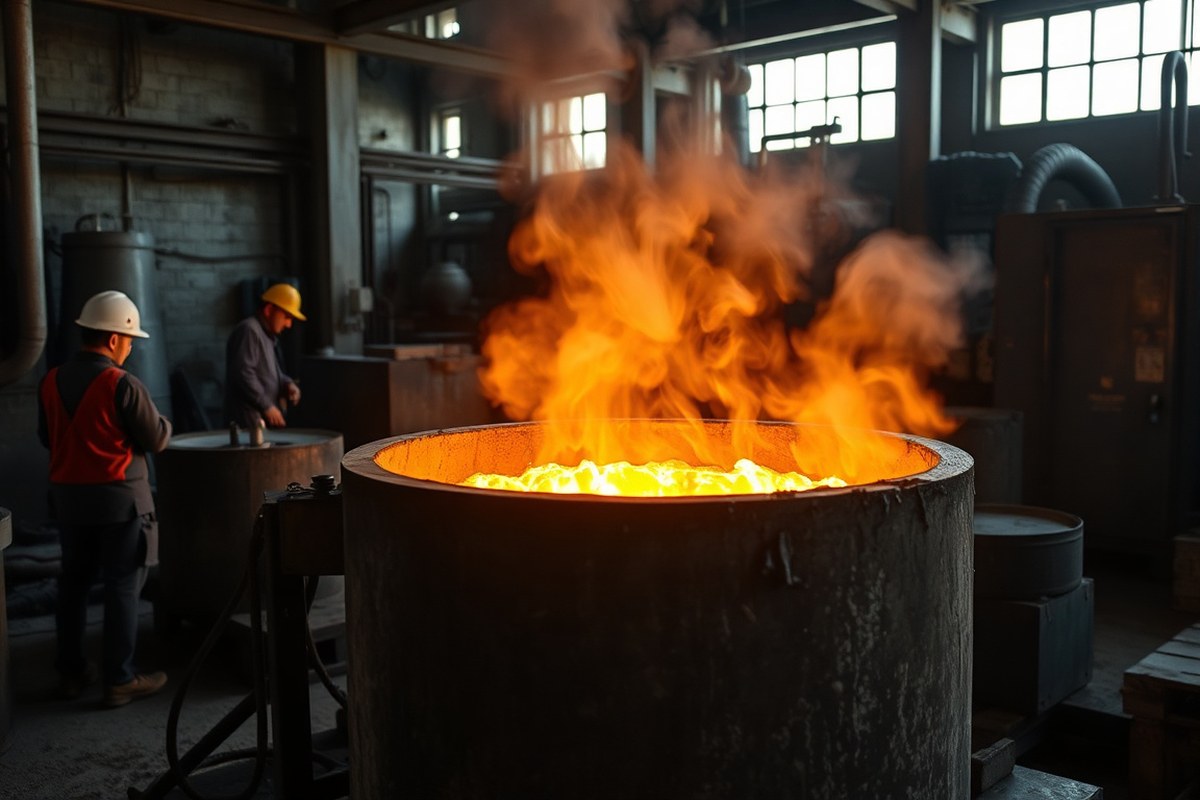
The Hall-Héroult process melts alumina in molten cryolite at about 960° Celsius. This lowers the melting point and makes the alumina easier to electrolyze. An electric current flows through the molten mixture, breaking alumina into aluminum and oxygen atoms.
Aluminum gathers at the bottom of the electrolysis cell. This metal is then tapped off as a liquid. The process keeps the aluminum in liquid form for collection.
Oxygen atoms combine with carbon electrodes to produce carbon dioxide gas. This process needs lots of electricity, making aluminum one of the most energy-intensive metals to produce.
Alumina Refining in the Bayer Process
Bayer’s process starts by crushing bauxite ore, which contains aluminum minerals mixed with impurities. The ore is heated and mixed with hot sodium hydroxide, dissolving the aluminum-bearing compounds. Impurities such as iron and silica remain undissolved and get filtered out as red mud waste.
The solution is then cooled to let aluminum hydroxide crystals form. These crystals are washed and heated in rotary kilns at over 960° Celsius. The heating removes any leftover water, leaving pure white alumina powder ready for electrolysis.
Interdependence of Both Processes
Bayer’s alumina refining produces the pure feedstock needed by the Hall-Héroult process. Without the Bayer step, the alumina would contain impurities that disrupt the electrical current during electrolysis. Combining both processes creates a continuous industrial chain from bauxite mining to aluminum metal production.
This pairing lowered costs and made aluminum widely available. The energy needed in each step adds up.
So improvements in either process have major effects on overall efficiency. Together, Bayer and Hall-Héroult enable modern aluminum manufacturing on an industrial scale.
How Did Aluminum Production Become Industrially Viable?
Aluminum production became industrially viable after the discovery of the Hall-Héroult process in 1886. The electrolytic method cut aluminum extraction costs a lot. It used electric current to separate aluminum from alumina.
This made the process cheaper and faster. Two years later, this new process dropped aluminum’s price.
It cost about $2 per pound then. This made aluminum easier to use in factories.
The Bayer process, developed shortly before Hall-Héroult’s method, made refining bauxite ore into pure alumina efficient. Bauxite, the main aluminum ore, is abundant but needed this treatment to be useful. These two chemical breakthroughs shaped modern aluminum making.
They helped the industry grow bigger. They set the standards still used today.
Mining bauxite became a major step in growing the aluminum industry. Since bauxite contains hydrated aluminum oxide mixed with impurities, proper mining and processing were essential. Countries with lots of bauxite, like Australia and Guinea, led supply.
Their deposits supported aluminum production around the world. They became key players in the market.
Around 1855, small factories in France and other places tried aluminum. Big growth started after 1886. Before then, it was mostly just experiments.
Alcoa began in the early 1900s and grew into a world leader. It focused on refining and smelting aluminum. The company shaped the global market.
These companies built huge electric smelters as infrastructure. They used cheap hydroelectric power to run these plants. This choice cut costs a lot.
Electricity is still the largest cost factor in aluminum production. Smelting requires continuous power at high temperatures, often exceeding 950°C. Aluminum plants near hydroelectric power lowered costs significantly.
They raised production and made aluminum more common. This helped industries like transport and construction.
Recycling aluminum saves about 95% of the energy used in making new aluminum. This energy saving is key to industry sustainability. Recycling keeps costs and waste down.
This recycling process became a pillar of aluminum manufacturing, reducing environmental impact and lowering costs. It also highlights the ongoing importance of infrastructure beyond mining and refining.
Recycling aluminum saves about 95% of the energy compared to mining new ore. So prioritize recycling whenever possible to cut costs and protect resources.
How Did the Price of Aluminum Drop Dramatically After 1886?
The price of aluminum fell sharply after 1886 thanks to two young inventors. Charles Martin Hall from Ohio and Paul Héroult from France each created an electrolytic way to get aluminum from its oxide. This new method replaced costly chemical techniques and made aluminum much cheaper to produce.
Before 1886, aluminum sold for about $20.70 per pound, costing more than gold. By 1887, the price dropped to about $8 per pound. Even with less than 140,000 pounds made since 1854, this new process helped manufacturers increase output and cut costs.
The Hall-Héroult process worked by passing electric current through molten aluminum oxide dissolved in cryolite. This step used less energy and avoided costly chemicals. Producers could now make aluminum in larger quantities faster and cheaper, which brought prices down.
Lower prices made aluminum accessible for many new uses. Its light weight and strength started to attract industries like transportation and packaging. Demand increased as manufacturers replaced heavier metals with aluminum to save fuel and costs.
Price drops created a feedback loop. More demand led to more production, pushing prices even lower.
By the late 19th century, aluminum began to enter construction, electrical wires, and machinery. Without the sharp price fall, these applications might have waited decades.
Table: Approximate Aluminum Prices Over Time (per pound)
1880: $20.70
1887: $8.00
1890s: Around $1.00 to $2.00 (due to improving production)
1978: Aluminum became a commodity on the London Metal Exchange
The cost to produce aluminum kept falling as technology evolved. Later advances and better ore refining helped drop costs further.
This made aluminum one of the most widely used metals by the 20th century. The 1886 breakthrough started a shift from scarce luxury to everyday metal.
Common Misconceptions About Aluminum’s Invention
People often think aluminum was invented as a new element. In fact, aluminum is a natural element found widely in Earth’s crust.
Scientists didn’t create aluminum out of nowhere. They discovered it and learned how to isolate it from ores.
Another common mistake is to credit just one person with inventing aluminum. Charles Martin Hall and Paul Héroult each found how to extract aluminum in 1886. They made this discovery independently.
Their work together, though unaware of each other, laid the foundation for affordable aluminum production. Chemists like Pierre Berthier already knew aluminum was part of clay materials. But they couldn’t make the pure metal.
Some confuse aluminum with alum, but they are not the same. Alum is a group of compounds used since ancient times for dyeing and preserving wood.
For example, around 100 B.C., a Roman named Archelaus found alum-treated wood resisted fire. Aluminum metal, however, is pure and much harder to extract because it binds strongly with oxygen.
Myth versus fact shows why these mistakes persist. Myth: Aluminum was invented suddenly. Fact: It took decades to isolate and go from ore to metal.
Myth: One scientist alone invented aluminum. Fact: Multiple chemists contributed independently before mass production became possible.
Myth: Aluminum and alum are identical. Fact: Alum is a compound containing aluminum but isn’t the metal itself.
Understanding these points helps you see how aluminum’s discovery fits history. It’s the result of gradual science, not a single invention. This explains why aluminum stayed costly and hard to produce.
It was true even though aluminum is Earth’s third most common element. Making usable aluminum needs breaking very strong bonds at high heat. New electrochemical methods later made this easier.
How Aluminum’s Early Use and Applications Evolved
Aluminum quickly moved from being a precious metal to a practical material. By the early 1890s, people used it for jewelry, eyeglass frames, and optical instruments. This early adoption showed aluminum’s appeal for everyday items with a lightweight feel at first.
Its rise continued as aluminum alloys became key in many industries. The early 1900s saw aluminum alloys reshape transportation and packaging.
Aluminum-manganese alloys appeared in beverage containers. Aluminum-magnesium alloys found uses in appliances and utensils.
Aircraft designers especially valued aluminum-copper alloys. These alloys gave planes lightweight, strong skins and structures during both World Wars. Aluminum cut aircraft weight.
This helped boost fuel efficiency. It was key for military and commercial aviation.
The metal’s wide adoption followed industrial advances that dropped production costs dramatically. In buildings and vehicles, aluminum-magnesium-silicon alloys helped reduce weight and resist corrosion. This made aluminum standard for things needing durability without heavy mass.
Manufacturers also liked how aluminum parts shaped easily and could be recycled effectively. This opened up uses from construction to electronics. Aluminum shifted from luxury to everyday use.
It served packaging well. It also helped in transport.
Keep in mind that aluminum alloys vary greatly. Choosing the right alloy is key for strength and corrosion resistance in your project.
Why Aluminum Remains Important and How It’s Produced Today
The original invention of aluminum shaped how we make it today. It led to the Hall-Héroult and Bayer processes. These methods are still used for aluminum production.
Recycling plays a huge role in reducing energy use and waste in the aluminum life cycle. Addressing energy demands and environmental issues remains a big focus for producers and consumers alike.
Continuing Use of Hall-Héroult Process
The Hall-Héroult process still produces most aluminum worldwide. It uses electrolysis to extract aluminum from alumina at very high temperatures. This method consumes 13 to 16 kilowatt-hours of electricity per kilogram of aluminum, making it energy-intensive.
Despite the energy demands, this process is essential because it yields pure metal efficiently. Modern plants refine the procedure with improved equipment and controls. They also use the Bayer process to purify the alumina before electrolysis, keeping production streamlined.
Growth of Aluminum Recycling Programs
Recycling aluminum greatly cuts down on energy use and reduces the need for bauxite mining. Producing recycled aluminum uses about 5% of the energy compared to making new metal from ore. Recycling aluminum saves a lot of energy.
Because of this, over 60% of aluminum from companies like Novelis is recycled. This big saving is why recycling is so common.
Most aluminum ever produced is still in use, thanks to recycling and durable products. Recycling centers collect and process scrap, especially from cans that often get reused quickly. This closed loop helps keep aluminum in circulation for decades, preserving resources and lowering costs.
Current Challenges and Future Innovations
The high electricity use of aluminum production means environmental concerns remain strong. Producers work to adopt cleaner energy sources to power plants. Some pilot projects test inert anodes to reduce greenhouse gas emissions from electrolysis.
Finding cost-effective, scalable ways to cut energy use and emissions carries big economic and ecological benefits. Innovations aim to improve recycling efficiency and develop greener production methods. These efforts will shape aluminum’s role in sustainable manufacturing going forward.
Your Quick-Start Plan to Understand Aluminum’s Origins and Use
Follow these steps to grasp how aluminum was invented and how it became common. Each step builds your knowledge in clear stages.
- Day 1: Read about the first aluminum isolation by Hans Christian Ørsted in 1825. Spot how he used chemical reactions to get aluminum metal.
- Day 2: Learn the challenges in early aluminum production and why it was costly. Note the role of rare materials and complex methods.
- Week 1: Study the Hall-Héroult and Bayer processes invented in 1886. Understand how these methods made aluminum cheaper and easier to produce.
- Week 2: Explore how industrial factories adopted these methods. Check facts on how aluminum price dropped and demand grew.
- Week 3: Review common myths about aluminum’s invention. Recognize who actually invented it and avoid confusion from old stories.
- Week 4: Investigate early aluminum uses in decoration and aviation. Think about why its lightweight and strength matter.
- Ongoing: Keep up with modern aluminum production techniques and products. Notice how aluminum stays important in many industries today.
Frequently Asked Questions
How Many Years of Aluminum Is Left?
Aluminum is the third most abundant element in Earth’s crust. Mining and recycling should provide aluminum for many centuries. Supplies depend on demand and recycling efforts worldwide.
Has Pure Aluminum Ever Been Found?
Pure aluminum has never been found naturally. It always appears combined with other elements in ores like bauxite. Extracting it requires special chemical and electrical processes.
When Were Aluminum Cans First Used?
Aluminum cans were first used in 1959 by the Coors beer company. They replaced heavier, less recyclable packaging materials. This change helped make aluminum a common beverage container.
Why Was Aluminum so Rare in the 1800s?
Aluminum was rare because no efficient way existed to extract it from ores. Early methods needed expensive chemicals or electricity. This made aluminum costlier than gold during that time.
Who First Showed Aluminum Could Be a Metal?
British chemist Humphry Davy first identified aluminum as a metal in 1808. He called it alumium at first. However, pure aluminum took decades more to isolate fully.
Final Thoughts
You learned when and how aluminum was invented and grew into a key metal. Try visiting a museum with aluminum displays or a factory tour nearby. Seeing these stories in real life makes them easier to remember.