Is Carbon Fiber Stronger Than Steel? A Complete Guide to Strength and Uses
Is carbon fiber stronger than steel? Yes, but it depends on what kind of strength you mean.
Carbon fiber has much higher tensile strength when compared by weight. Steel can still outperform carbon fiber in other strength measures, especially under compression or impact.
Carbon fiber is about 5 times lighter than steel. So it offers better strength-to-weight ratio. That’s why you often see it in aerospace and sports equipment.
Watch for carbon fiber’s brittleness. It can fail suddenly if stressed beyond limits, unlike steel which bends.
Steel is cheaper and easier to shape. So it’s common in buildings and automotive frames.
Using carbon fiber makes sense when saving weight boosts performance or efficiency. Remember, cost and durability should guide your choice, not just pure strength numbers.
Key Takeaways
- Carbon fiber’s tensile strength is about 12 times greater than steel’s by weight.
- Steel’s density is around 7.85 g/cm³, while carbon fiber is about 1.6, 2 g/cm³.
- A component can weigh up to 70% less using carbon fiber instead of steel.
- Steel absorbs impacts better, making it more durable in many crash scenarios.
- Carbon fiber manufacturing is more costly and requires precise processes.
- Steel remains the best choice for heavy-load, impact-prone structures.
Is Carbon Fiber Stronger Than Steel? What Strength Really Means
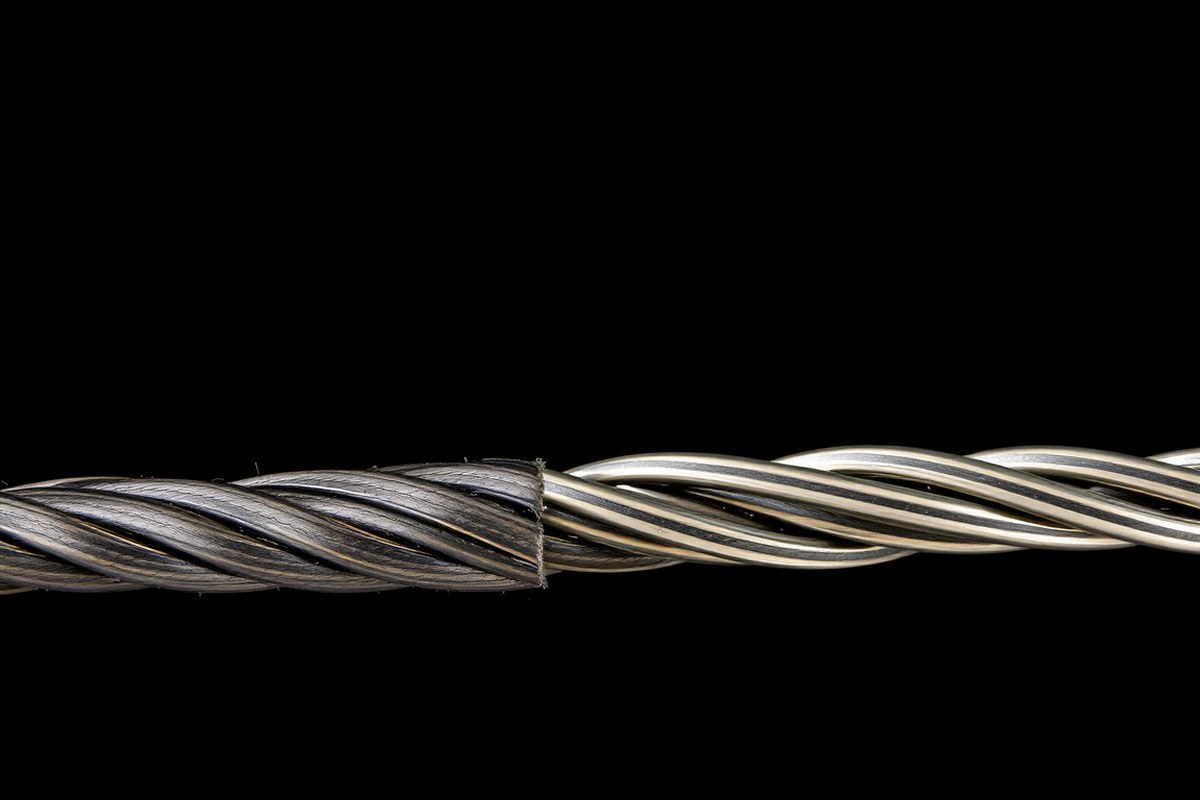
Strength means different things depending on the force type. Tensile strength measures how much pulling force a material resists before breaking.
Compressive strength tests how much pushing or crushing force it can handle without deforming or cracking. Flexural strength shows how well a material withstands bending forces without failing.
People often compare carbon fiber and steel by looking at tensile strength. Carbon fiber can have tensile strength from 3,500 to 7,000 MPa.
Steel usually has lower tensile strength, around 400 to 1,200 MPa in common grades. Some high-strength steels reach 2,000 to 2,600 MPa.
For compressive strength, steel clearly wins. Steel resists pushing forces well and manages stress by bending instead of cracking.
Carbon fiber has lower compressive strength because its resin matrix can crack or buckle under pressure. This makes carbon fiber brittle in push or crush tests compared to steel.
Flexural strength also differs. Carbon fiber performs well in bending if aligned properly. But it is more brittle than steel, which flexes without breaking.
The toughness of steel helps it absorb impact energy. Carbon fiber tends to snap under sudden forces. That’s why steel is better for heavy-impact uses.
Density plays a big role here. Carbon fiber weighs about 1.6 grams per cubic centimeter, much lighter than steel’s 7.8 grams per cubic centimeter. This means carbon fiber’s strength-to-weight ratio is several times higher than steel’s.
A carbon fiber part weighing the same as steel stretches less under tension. It typically holds more weight before breaking. This makes it stronger for pulling forces.
However, steel has higher strength per unit volume due to its density. Volume or space might be more important than weight in some cases. Steel could handle forces better if you can use more bulk.
That matters for parts where size counts more than mass. A thick steel beam can support heavier compressive loads than carbon fiber.
The steel’s volume lets it carry more weight without squashing. This gives steel an edge in compression tasks.
Carbon fiber beats steel when it comes to tensile strength and strength-to-weight ratio. It’s lighter and stronger in pulling stress. But other factors can change which material is better overall.
Steel is stronger under compression and impact because it bends instead of breaking. Knowing which strength you need helps you choose the right material.
Pulling strength favors carbon fiber, but crushing strength might favor steel. Consider your project’s demands before picking one.
How Carbon Fiber and Steel Differ in Weight and Density
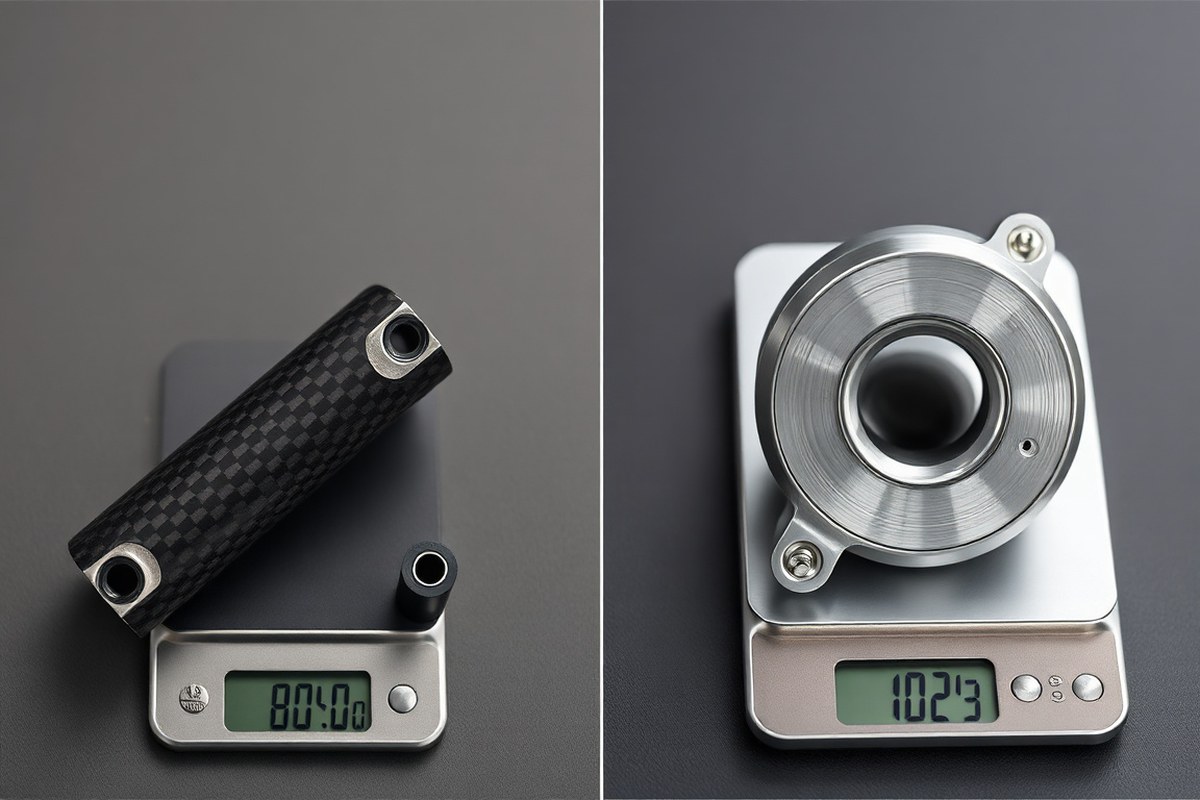
Carbon fiber weighs significantly less than steel due to its much lower density. Its strength-to-weight ratio exceeds steel’s by several times, making it ideal where weight matters most. This ratio helps engineers pick materials that boost performance without extra bulk.
Density Differences Between Carbon Fiber and Steel
Carbon fiber has a density around 1.6 grams per cubic centimeter. Steel’s density is much higher, roughly 7.8 grams per cubic centimeter. This means carbon fiber is about five times lighter than steel for the same volume.
Carbon fiber has low density due to its composite structure. It is made from carbon strands in a resin matrix. This makes it lighter than many other materials.
Steel is a dense metal alloy made primarily of iron, making it heavier by volume. Counting weight instead of volume matters most for many applications.
Strength-to-Weight Ratio Explained
Strength-to-weight ratio compares how strong a material is relative to its weight. Carbon fiber’s tensile strength ranges from about 3,500 to 7,000 megapascals. This is much stronger than most steel grades.
It can handle high stress without breaking. When you divide strength by density, carbon fiber scores between 2,200 to 4,400 MPa·cm³/g.
Steel’s tensile strength varies from 400 to 1,200 MPa. But its density lowers its strength-to-weight ratio to between 50 and 150 MPa·cm³/g. This big difference means carbon fiber performs better per pound.
It is important for aerospace and automotive design. Engineers choose it to reduce weight while keeping strength.
Why Strength-to-Weight Ratio Matters in Engineering
Lower weight materials improve efficiency and handling in vehicles and aircraft. Using carbon fiber lets you reduce part weight while maintaining or boosting strength. Engineers design lighter frames for bicycles or cars, improving speed and fuel economy.
Steel’s weight is a disadvantage when weight savings directly impact performance. Steel is still popular because it costs less and is easy to shape. It also performs well when material ductility is critical for safety.
This makes steel a go-to material. These factors balance the choice depending on the job.
Practical Comparison of Density, Strength, and Weight
For a quick comparison, carbon fiber weighs about 1.6 g/cm³ and ranges up to 7,000 MPa in tensile strength. Steel weighs nearly five times more at 7.8 g/cm³ but has tensile strength around 670 MPa for common alloys. When strength adjusts for weight, carbon fiber’s advantage becomes clear.
When choosing materials, you must consider volume, weight, and strength demands. Carbon fiber is stiff and resists corrosion well. This suits it for lightweight parts that need high strength.
Its properties help make durable and reliable components. Steel remains practical for structural parts where toughness is key.
Choosing carbon fiber mainly benefits applications that need the lightest, strongest material possible. Careful design ensures you don’t just get light weight but also reliable performance.
Understanding Stiffness and Elasticity in Carbon Fiber vs Steel
Carbon fiber can be stiffer than steel, but it depends on the type. Steel has a steady modulus of elasticity around 200 gigapascals (GPa).
Carbon fiber stiffness varies from 70 to over 350 GPa. It depends on the fiber grade and layout.
You can pick carbon fiber to be less stiff than steel. Or choose one much stiffer than steel.
High-modulus carbon fiber, with values above 350 GPa, clearly outmatches steel in stiffness. Standard-modulus carbon fiber might fall below steel’s level in some cases.
Stiffness affects how a material resists bending or stretching under load. A stiffer material deflects less, which can improve performance in precision parts or structures. For example, a carbon fiber bike frame can flex less while being much lighter than steel.
However, stiffness isn’t the only factor. Carbon fiber is directional, meaning its stiffness is strongest along the fiber direction.
Steel is isotropic and maintains consistent stiffness regardless of loading direction. You need to consider the loading conditions carefully.
Choosing stiffer carbon fiber helps save weight where geometry supports it. Complex shapes or fixed space may favour steel’s consistent stiffness.
Your design needs strict shape control with little bending. High-modulus carbon fiber works well but costs more.
Carbon fiber components cost more because high-grade fibers and labor-intensive processes add up. Steel is cheaper and easier to manufacture with reliable performance. The tradeoff depends on your budget, weight limits, and how stiffness affects the final product.
Durability, Impact Resistance, and Failure Modes Compared
Carbon fiber is stronger than steel for its weight but is more brittle. Steel bends and deforms before it breaks, making it more ductile. Carbon fiber fails suddenly, often shattering under impact instead of bending.
Brittleness vs Ductility Explained
Carbon fiber is brittle because it has a stiff, tightly bonded structure that resists deformation. It cracks rather than bends when stressed too far. Steel, in contrast, can stretch and bend, absorbing energy without breaking right away.
Ductility in steel means it can deform significantly before it breaks. This gives steel a visible warning through bending or stretching. Brittle materials like carbon fiber don’t give that warning and can fail without changing shape first.
Typical Carbon Fiber Failure Modes
Carbon fiber usually fails by cracking or delaminating layers. This happens suddenly when the load surpasses its limit.
Unlike steel, carbon fiber cannot plastically deform to spread stress. So damage tends to concentrate and cause sharp failure.
Small impacts can cause internal cracking in carbon fiber without visible dents. This hidden damage can drastically reduce strength. In extreme cases, carbon fiber composites can shatter like glass under high impact.
Steel Failure and Deformation Characteristics
Steel typically bends, dents, or stretches before breaking. This ductile failure allows steel parts to deform under heavy load rather than snap quickly. The deformation helps distribute stresses and prevents sudden failure.
Steel’s ability to handle complex loads and compressive forces reduces catastrophic failure risk. It can also handle repeated impacts and absorbs energy by bending or denting. Steel yields before it fractures, giving time for repairs or warnings.
Impact and Fatigue Resistance Differences
Carbon fiber resists fatigue well, meaning it endures many stress cycles without cracking. This makes it ideal for applications like wind turbine blades exposed to repeated forces. However, carbon fiber’s impact resistance is poor due to its brittle nature.
Steel absorbs impact energy by deforming. For example, in a car crash, steel panels bend and stretch, reducing damage to passengers. A similar impact could crack or shatter carbon fiber parts, which don’t flex under sudden loads.
This difference means steel is better for high-impact or heavy-load designs. Carbon fiber suits lighter, fatigue-heavy uses where weight savings and stiffness matter more than impact toughness.
How Manufacturing Processes Affect Carbon Fiber and Steel Strength
Manufacturing methods greatly impact the strength and consistency of carbon fiber and steel. Carbon fiber requires precise fiber alignment and slow, energy-heavy steps. Steel strength hinges on alloying and heat treatment, which shape its toughness and uniformity.
Carbon Fiber Production Steps
Carbon fiber making begins with carbonizing a precursor fiber, usually polyacrylonitrile (PAN). The chemical change makes thin, strong fibers.
These fibers need careful handling. You must protect their strength throughout the part.
- Prepare precursor fibers by cleaning and arranging in bundles.
- Heat fibers in an inert atmosphere at 1000, 3000°F to carbonize.
- Treat fibers to improve bonding, washing and surface coating.
- Align fibers on a mold or layup surface carefully, controlling direction.
- Apply resin matrix to hold fibers, often epoxy or similar.
- Cure composite in an autoclave with heat (250, 350°F) and pressure, for several hours.
- Trim and finish the part, inspecting for defects or misalignment.
The whole process takes much longer than metal forming, often days. The slow heating and careful placement ensure fibers carry loads well. Missteps in alignment or curing cause weak spots and wasted material.
Avoid rushing the curing step. Too fast heat or uneven pressure weakens the fiber bond.
Steel Manufacturing and Alloying
Steel starts from iron ore or scrap metal melted in a furnace. Alloying elements like carbon, manganese, and chromium are added for strength and hardness. This mix changes steel’s properties significantly.
Steel shaping happens by casting, rolling, forging, or extrusion, which aligns its crystalline grains. Heat treatment at 1,200, 1,600°F can harden or soften steel depending on requirements.
Steel production is faster than carbon fiber. Melt and cast steps take hours. Rolling and finishing require careful temperature control but happen quickly, often in less than a day.
Impact of Alignment and Processing on Strength
Carbon fiber’s strength depends on how well the fibers align with stress directions. Straight, continuous fibers give maximum strength and stiffness. Misaligned or chopped fibers reduce strength by early failure points.
Steel gets strength from uniform grain size and properly dispersed alloy particles. Heat treatment controls grain boundaries to optimize toughness and tensile strength. Uneven heating or poor alloy mix causes weak spots and brittleness.
Consistency in both materials relies on tight process control. Carbon fiber needs even resin distribution and exact curing pressure. Steel demands controlled cooling rates to avoid cracking or warping.
Comparing Cost and Environmental Impact of Carbon Fiber and Steel
Carbon fiber costs much more than steel because of raw materials and manufacturing. Steel raw materials are cheap and easy to get. Carbon fiber needs special fibers and resins.
Carbon fiber costs more due to its complex production process. Steel is cheaper because its manufacturing is simpler and faster. This speed makes steel more affordable overall.
Energy use highlights another big difference. Making carbon fiber takes about 14 times more energy than making steel. Carbon fiber production uses a lot of energy.
This leads to more greenhouse gas emissions. It also creates a larger carbon footprint than steel.
| Factor | Carbon Fiber | Steel |
|---|---|---|
| Raw Material Cost | High, due to specialized fibers and resins | Low, from abundant iron ore availability |
| Manufacturing Cost | High, complex layup and curing processes | Low, efficient melting and forming processes |
| Energy Use | Approximately 14 times higher than steel | Relatively low energy per unit produced |
| Greenhouse Gas Emissions | Significant, due to energy-intensive steps | Lower, from established, efficient methods |
| Availability | Limited, specialty suppliers dominate | High, worldwide production and recycling |
Steel costs less and uses less energy to produce. This makes it ideal for projects with tight budgets. It’s also better for large volume orders.
Carbon fiber offers performance benefits but at a premium. Its heavier environmental footprint matters more in sustainability-focused designs.
Choosing between carbon fiber and steel requires balancing budget against environmental goals. You might accept extra carbon fiber costs for lighter weight or design needs. Otherwise, steel is often the cheaper and greener choice on balance.
Where Carbon Fiber Outperforms Steel in Real-World Applications
Carbon fiber shines in industries where keeping things light and strong matters most. Its strength-to-weight ratio beats steel by a large margin. This makes it perfect for parts carrying heavy loads.
It adds very little mass. Its corrosion resistance helps parts last much longer.
This matters in harsh places where steel rusts. Rust weakens steel over time.
In aerospace, carbon fiber replaces steel in wing components and fuselage panels. This saves fuel by cutting aircraft weight, while keeping structural strength. Racing car makers use carbon fiber for frames and panels.
These parts stay rigid while keeping the car light. This helps the car go fast. It also absorbs vibrations better than steel, improving handling at high speeds.
- Aircraft wings and fuselage: lightweight, fuel-efficient, corrosion-proof
- Sports cars and racing chassis: strong yet light frames, better handling
- Pro racing bicycles: stiff frames that maximize power transfer
- Marine vessels: resist saltwater corrosion far better than steel
- Wind turbine blades: need stiffness and lightness to spin efficiently
- Medical devices and prosthetics: strong, light, and biocompatible parts
Carbon fiber helps bicycle designers build frames that stay stiff without the heavy bulk of steel. This means less energy is lost when you pedal. In marine use, it withstands salty, corrosive air far better than steel.
This extends the lifespan of boat parts exposed to water and weather. Carbon fiber turbine blades can be larger and lighter.
This boosts energy output significantly. It also lowers installation costs.
Medical prosthetics feel lighter and stronger thanks to carbon fiber. This improves comfort and function for patients. The drawback is carbon fiber costs more than steel.
It also needs careful making to avoid cracks. Flaws can cause serious damage. Still, when light weight and longevity outweigh price concerns, carbon fiber is the clear choice.
When Steel Remains the Best Choice over Carbon Fiber
Steel still holds an edge when cost is tight and toughness matters most. Unlike carbon fiber, steel bends before breaking.
That ductility helps steel absorb shocks and point impacts better. It proves valuable in structures facing sudden loads, like automotive frames or building supports.
Repair matters too. Steel parts can be welded or hammered back into shape on-site. Carbon fiber, however, needs specialized tools and more time to fix.
This makes steel a practical choice for field repairs and heavy-use components. Plus, steel tolerates heat well, so it suits high-temperature environments.
You should lean toward steel if your project needs consistent strength from many directions. It handles compressive and flexural forces solidly due to its volume. Bridges rely on steel for that reason, carbon fiber’s strength can drop off under those loads.
- When budget limits rule cost-effective mass production
- Applications needing strong, multidirectional load handling
- Parts requiring durable, easy-to-repair materials
- Situations with high impact or point loads
- Designs exposed to heat or thermal cycling
- Projects where steel’s conductivity aids cooling
- Structures requiring compression and bending resistance
Prices can be stark. Carbon fiber parts often cost 40 to 100 times more than steel equivalents.
That places carbon fiber out of reach for many projects. It also needs longer, more complex manufacturing steps.
Choose steel if you have a tight budget. You also want ductility and toughness. These qualities fit well with steel.
Pick carbon fiber mainly when weight savings dominate your goals. Keep in mind how you’ll join or repair parts too. Steel is straightforward there; carbon fiber demands care.
Don’t use carbon fiber if you expect heavy impacts or easy repairs. Steel performs better in those conditions.
Common Myths About Carbon Fiber Strength Debunked
Many believe carbon fiber is always stronger than steel, but that’s not true. Carbon fiber tensile strength ranges from 3,500 to 7,000 MPa. This strength is higher than typical steel’s pulling force.
Carbon fiber can resist more stretch than steel. However, steel often outperforms carbon fiber in compression and impact resistance. That means carbon fiber isn’t simply “stronger” in every way.
Another mistake is thinking carbon fiber is equally durable in all conditions. It resists corrosion better than steel but can crack under sharp impacts or repeated stress.
Steel bends or dents first, warning you before failing. Carbon fiber parts might fail suddenly without visible signs.
Here are common myths versus facts you should know when comparing carbon fiber and steel strength:
- Myth: Carbon fiber is always stronger than steel. Fact: It depends on the load type.
- Myth: Carbon fiber doesn’t corrode. Fact: It resists corrosion but can delaminate or crack.
- Myth: Carbon fiber can replace steel everywhere. Fact: It’s expensive and less impact tolerant.
- Myth: Steel is heavy and weak. Fact: Steel’s compressive strength and toughness are excellent.
- Myth: Carbon fiber parts are easy to recycle. Fact: Recycling carbon fiber isn’t widely efficient yet.
To evaluate strength claims, ask about the test type (tensile, compressive), load conditions, and environment. Check for independent lab results rather than marketing facts. Consider the full picture, including toughness, fatigue resistance, and failure mode.
Choosing carbon fiber solely for its strength may lead to poor results. Its light weight works best in tension-heavy parts like bike frames or aerospace components.
Steel remains the better choice for heavy loads, crushing forces, or budget constraints. Understanding each material’s limits helps you pick what really fits your project.
Step-by-Step Action Plan for Choosing Between Carbon Fiber and Steel
Use this plan to decide which material fits your project’s needs. Test and compare key properties step by step.
- Before you start: Define your project’s strength, weight, and cost requirements. Write down your key goals to focus your choice.
- Day 1: Check available carbon fiber and steel options for your project. Look at datasheets for tensile strength and density to compare.
- Week 1: Test sample materials if possible, focusing on stiffness and flexibility. Note which feels stronger and suits your design.
- After 2 weeks: Review costs including manufacturing and environmental impact. Choose the material that balances price and performance well.
- Week 3: Check how strong your product is. Test or study stresses it will meet. Find out how and why it might fail.
- Week 4: Consult with fabricators or engineers about manufacturing challenges. Confirm your chosen material fits production methods.
- End of month: Finalize your decision based on all collected data. Start ordering materials or preparing for production.
Frequently Asked Questions
Is Carbon Fiber Stronger Than Steel in Tensile Strength?
Yes, carbon fiber has tensile strength about 12 times that of steel by weight. It withstands pulling forces much better than steel.
This makes it strong and lightweight. This makes carbon fiber ideal for applications needing high strength without extra weight.
Can Carbon Fiber Replace Steel in Heavy Load-Bearing Structures?
Not always, because steel supports more weight per volume due to its density and toughness. Carbon fiber excels in weight-sensitive uses but may fall short in thick, heavy-load parts.
Does Carbon Fiber Resist Impacts Better Than Steel?
No, steel usually absorbs impacts better because it’s tougher and less brittle. Carbon fiber can crack or splinter under sudden shocks.
It is less suited for extreme impact situations. You should consider impact risks before using it.
Is Carbon Fiber More Expensive Than Steel?
Yes, carbon fiber costs significantly more due to complex manufacturing and expensive raw materials. The price gap narrows only if weight savings lead to fuel or efficiency gains.
How Does Corrosion Affect Carbon Fiber Compared to Steel?
Carbon fiber does not rust or corrode like steel does. This makes it better for humid or salty environments.
It lasts longer in these conditions. Still, the resin matrix can degrade over time, so maintenance is needed.
The Bottom Line
Carbon fiber offers higher strength-to-weight ratio than steel but depends on the project specifics. Pick carbon fiber for lightweight strength needs or steel for durability and cost benefits. Test your materials early to find what works best for your design.