Will Diesel Fuel Burn? Clear Answers and Safety Tips You Need
Yes, diesel fuel can burn, but it ignites differently than gasoline. Diesel needs a higher temperature to catch fire, around 125.6°F or more. Gasoline, by contrast, ignites at a much lower temperature.
Diesel is labeled combustible, not highly flammable. It won’t catch fire from a small spark or flame at room temperature. Its flash point ranges from 125°F to 180°F, making it safer to handle and store.
Diesel fires need more heat or direct flame to start, lowering accidental fire risks. But diesel vapors can ignite under certain conditions, so you must be cautious. Proper use and storage are essential.
Store diesel in cool, ventilated spots away from heat. Keep containers tightly sealed to limit vapor buildup. This helps prevent fires and protects your equipment and safety.
Key Takeaways
- Diesel fuel ignites at a flash point above 125°F, making it less flammable than gasoline.
- Keep diesel fuel temperatures below 125°F to prevent accidental combustion.
- Store diesel in cool, ventilated areas away from direct heat or flames.
- Diesel produces flame temperatures between 1,300°F and 1,800°F when burning properly.
- The high carbon content in diesel provides strong energy output during combustion.
- Handle diesel with care since it is combustible, not non-flammable.
Will Diesel Fuel Burn and How Easily?
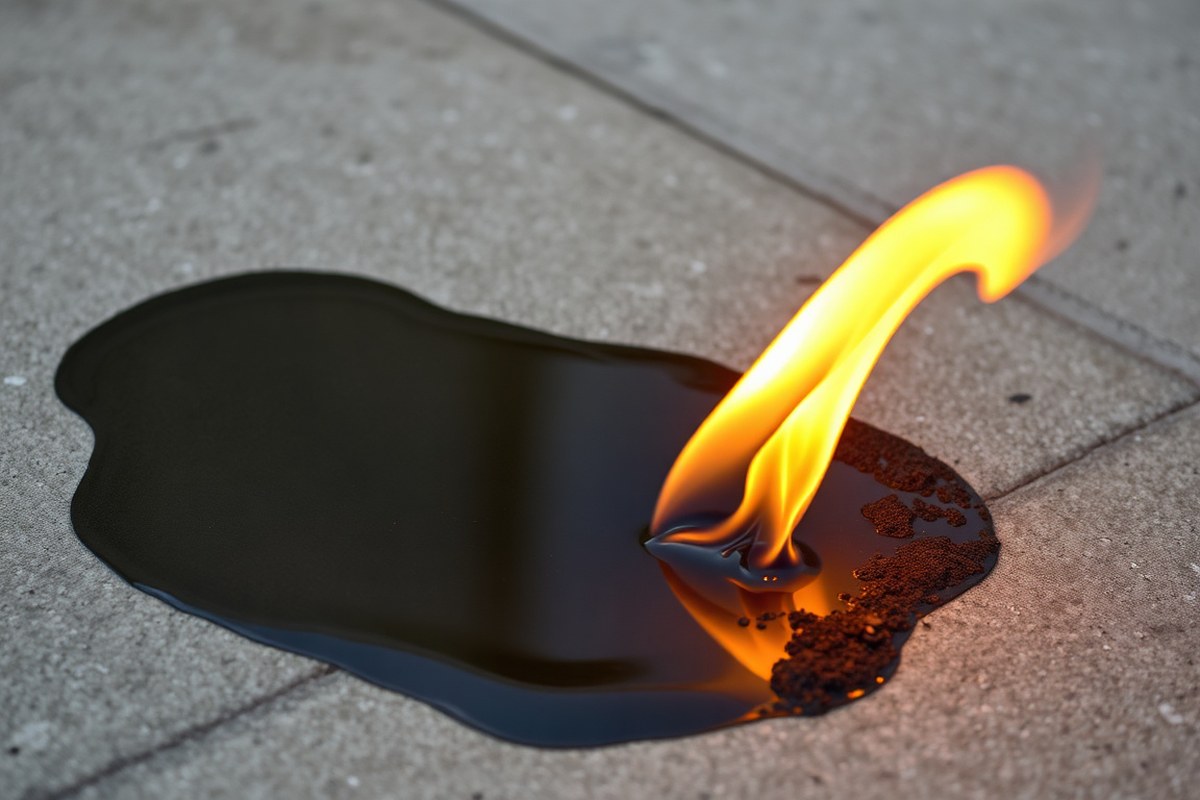
Diesel fuel does burn, but it does not ignite easily. Diesel needs heat or pressure high enough to reach its flashpoint.
The flashpoint ranges between 126°F and 205°F. It depends on the diesel type. Below about 125°F, diesel won’t catch fire from a spark or open flame.
Unlike gasoline, diesel won’t light from a regular lighter or match. Gasoline vapors ignite quickly because they evaporate more and mix with air easily. Diesel fuel is less volatile, so it produces fewer flammable vapors at normal temperatures.
A spark or flame alone won’t ignite diesel. The fuel or its vapors must be hot enough. Without that heat, ignition won’t happen.
Diesel must be hotter than its flashpoint to produce vapors. These vapors can ignite once they reach the right temperature.
Cold diesel won’t catch fire easily. This happens when diesel heats up or when compression raises temperature inside an engine.
This controlled heat is how diesel engines work. They compress air to very high temperatures.
When diesel is injected into this hot air, it ignites spontaneously without a spark plug. That’s why diesel fuel burns well inside engines but won’t easily burn outside under normal conditions.
Diesel can also burn if poured on an existing fire. The flames heat the diesel above its flashpoint, sustaining combustion. Diesel burns slowly, unlike gasoline’s fast flames.
This slow burn makes diesel safer near sparks. That’s why diesel is handled with less fire risk.
So, you can’t just light diesel from a lighter. It needs heat above about 130°F or a strong compression like inside an engine. When cool, the fuel remains stable and secure.
Small sparks won’t make it catch fire. You can handle diesel safely at low temperatures.
What Is Diesel Fuel’s Flash Point and Why It Matters
Diesel fuel’s flash point is the lowest temperature it can ignite in air. This temperature usually ranges between 126°F and 205°F. It depends on the specific diesel type you use. The flash point matters because it decides if diesel is classified as flammable or combustible.
Diesel generally has a flash point between 152°F and 199°F (67°C to 93°C). Since this is higher than 140°F, diesel is mostly combustible, not highly flammable.
Gasoline has a much lower flash point, near -45°F (-43°C). So it is highly flammable.
| Fuel Type | Typical Flash Point (°F) | Typical Flash Point (°C) | Flammability Class |
|---|---|---|---|
| Diesel (common grades) | 152 to 199 | 67 to 93 | Combustible liquid |
| Diesel (lower grade, under 140°F) | 126 to 140 | 52 to 60 | Flammable liquid |
| Gasoline | -45 to -40 | -43 to -40 | Highly flammable liquid |
Knowing this flash point lets you handle diesel safely. Heating diesel above its flash point can release flammable vapors. Vapors near a spark or flame can ignite quickly.
Fire can start very easily in such cases. Diesel won’t ignite below this point because it does not create enough vapor.
Contamination or mixing diesel with gasoline lowers the flash point. Even about 1% gasoline contamination can drop diesel’s flash point by 15 to 20°C. This raises the fire risk and may change how you classify the fuel’s hazard. It’s important to test for contamination to maintain safety.
Always keep diesel fuel below 125°F during storage to avoid fire risks.
To decide if a liquid is flammable or combustible, compare its flash point to 140°F. Liquids below 140°F fall into the flammable class. Those above are combustible. Typical diesel has a flash point above 140°F. It does not ignite as fast as gasoline does.
This flash point difference explains why diesel has a lower fire risk in storage and transport. Diesel’s low vapor pressure means fewer vapors form, even if it’s warm. Handle diesel away from open flames and sparks.
But it doesn’t ignite as fast as gasoline. Still, keep heat sources well away.
How Diesel Combustion Works Inside Engines
Diesel combustion works by forcing air to get very hot through compression. Instead of a spark, diesel ignites from the heat created by squeezing air inside the cylinder. This process differs from gasoline engines, which use spark plugs to ignite a fuel-air mix.
Stage 1: Compression Heating of Air
The engine compresses only air at first, not mixing fuel until later. This compression ratio ranges between 14:1 and 25:1, much higher than gasoline’s 8:1 to 12:1. Compressing air raises its temperature sharply, making it hot enough to ignite diesel fuel.
Air temperature inside the cylinder can reach over 900°F (480°C) due to compression. These conditions are necessary because diesel requires heat and pressure to start burning. A cold engine or environment needs more effort to reach these temperatures.
Stage 2: Diesel Fuel Injection Timing
Fuel injection happens after the air is compressed and heated. A high-pressure injector sprays diesel as a fine mist right into the hot air. This misting helps diesel burn efficiently by mixing it with the hot air quickly.
The timing of injection is critical and happens milliseconds before the piston reaches its top position. Injecting diesel too early or late can cause rough running or incomplete burning. High-pressure injection systems play a key role in controlling this step.
Stage 3: Ignition and Flame Propagation
The heated air ignites the diesel almost immediately as it hits the cylinder. Ignition spreads through the misted fuel and burns rapidly, pushing the piston down. This power stroke transfers energy to move the vehicle or equipment.
Compared to gasoline engines, diesel flames burn hotter and last longer during their cycle. These flames create efficient torque at lower engine speeds. Proper ignition timing and good fuel atomization make combustion smoother.
Here is how diesel combustion typically unfolds inside an engine:
- Compress air inside the cylinder, raising its temperature.
- Inject diesel fuel as a fine mist into the hot, compressed air.
- Allow heat from the compressed air to ignite the diesel instantly.
- Spread the flame throughout the fuel mist, burning it fully.
- Use the expanding gases to push the piston and create power.
- Exhaust the burned gases to prepare for the next cycle.
Typical Diesel Fuel Burn Temperatures
Diesel fuel burns at temperatures typically ranging from about 1,200°F to 2,500°F during combustion. These temperatures depend on factors like engine pressure, fuel type, and additives. Diesel engines often reach combustion temperatures near 2,200°F under normal conditions.
Typical Combustion Temperature Ranges
Diesel fuel’s burning temperature isn’t a single fixed number. It usually burns within a range of 1,200°F to 2,500°F. The lower end reflects partial combustion or lower pressure. Higher pressures produce temperatures above 2,200°F in diesel engines.
Inside a diesel engine, air is compressed to very high pressures before fuel injection. The compression raises the temperature inside the engine cylinder.
Diesel ignites around 1,400°F due to this heat. It can burn at temperatures over 2,200°F. These high temperatures ensure efficient fuel burn and power production.
How Fuel Type and Additives Affect Heat
Different diesel types can slightly change combustion temperatures. ULSD (Ultra-Low Sulfur Diesel) is common and burns cleaner but usually at comparable temperature ranges. Additives like cetane improvers can make the diesel ignite faster, impacting how quickly temperatures rise.
Some additives also affect the diesel’s chemical makeup, changing how it burns. For example, better lubricity additives improve fuel injection but don’t greatly shift burn temperatures. However, higher sulfur content diesel may produce soot and incomplete burn, lowering the effective temperature.
Engine Pressure and Combustion Heat
The pressure inside the combustion chamber strongly affects temperature. Higher pressures, common in modern diesel engines, push temperatures over 2,000°F. Common rail injection systems work at tens of thousands of PSI.
This high pressure helps the diesel burn hotter. It also leads to cleaner combustion.
When pressure drops or fuel injection is delayed, combustion temperatures can fall. This can cause incomplete fuel burning, more emissions, and lower engine efficiency. Maintaining proper fuel pressure and injection timing ensures the diesel fuel burns at its optimal temperature.
Environmental and Operational Effects on Burning
Ambient temperatures influence how diesel burns too. Diesel must be heated above its flashpoint, around 150°F, to vaporize efficiently.
Diesel does not ignite well below 140°F. Cold starts become harder and combustion temperature stays low at first. This makes the engine struggle to start.
Contaminated or old diesel can also affect burn temperature. Impurities reduce combustion efficiency, lowering peak temperatures and increasing smoke. Regular fuel system maintenance helps keep combustion temperatures within the expected range for clean, hot burns.
Factors Affecting Diesel Fuel Ignition and Safety
Several factors affect diesel fuel ignition and the potential dangers involved. The flash point, contamination, and storage temperature all influence how easily diesel vapor ignites. These aspects control how much vapor forms and how dangerous it becomes around heat or sparks.
Contamination by gasoline or solvents lowers diesel’s flash point, making it easier to ignite. For example, pure diesel has a flash point around 125°F to 180°F (52°C to 82°C).
If mixed with 10% gasoline, the flash point can drop below 100°F (38°C). This change increases fire risk during handling or storage, especially in warm environments.
- Flash point controls vapor ignition temperature
- Contamination lowers flash point and raises fire risk
- Storage temperature affects evaporation rate and vapor buildup
- Poor ventilation can trap vapors, increasing ignition chance
- Diesel type and additives influence combustion properties
- External heat or open flames may trigger ignition
- Pressure and fuel atomization impact the combustion process in engines
Temperature plays a big role in storage safety. Diesel stored above its flash point creates more vapors that may ignite.
Keeping diesel tanks cool and away from direct sunlight helps reduce vapor formation. Proper ventilation ensures these vapors do not build up indoors or in enclosed spaces.
Always store diesel fuel in cool, ventilated areas to prevent vapor buildup and reduce fire risk.
Knowing these ignition factors lets you manage diesel fuel safely. Avoid contamination by using clean equipment and separate containers.
Regularly check fuel quality and store it below 80°F (27°C) if possible. These steps lower vapor production and make diesel handling safer around homes or garages.
How to Handle and Store Diesel Fuel Safely
Handling diesel fuel needs care to avoid spills and fire hazards. Always work in a well-ventilated area, away from any flames or sparks. Pour diesel slowly to prevent splashes, which can cause skin irritation or contaminate surroundings.
Wear personal protective equipment like gloves, goggles, and fire-resistant clothing. Respirators can help if you’re working around diesel fumes for extended periods. Using proper PPE reduces risks of burns, inhalation, or chemical exposure during fuel handling.
- Store diesel in approved, sealed containers labeled clearly
- Keep storage away from heat, direct sunlight, and ignition sources
- Place containers in ventilated, cool, shaded areas
- Check storage tanks regularly for leaks or damage
- Clean up all spills immediately and dispose of waste properly
- Have fire extinguishers rated for flammable liquids nearby
- Inspect fuel transfer equipment before each use
Proper diesel fuel storage keeps it stable and reduces contamination risks. It’s important to maintain a temperature below 125.6°F (52°C) to avoid vapor buildup. Leaks or spills can lead to serious fire risks or environmental damage if not addressed quickly.
Following these safety steps costs little but prevents costly accidents. Regular inspections and prompt cleanup protect you and your equipment. When unsure about handling or storage safety, consulting a licensed professional is the safest choice.
Comparing Diesel and Gasoline Burning Properties
Diesel and gasoline differ a lot in how they burn and ignite. Diesel fuel has a higher flash point and is less volatile than gasoline. This makes it harder to ignite but gives it more energy per gallon.
| Property | Diesel | Gasoline |
|---|---|---|
| Flash Point | Typically 125°F to 180°F | About -45°F |
| Volatility | Low (less vapor) | High (more vapor) |
| Energy Content (per gallon) | About 139,000 BTU | About 125,000 BTU |
| Ignition Ease | Harder to ignite (needs heat or compression) | Easier to ignite (vapor ignites at lower temperature) |
| Explosion Risk | Lower risk, burns slower | Higher risk, vapor can explode |
This table shows why diesel doesn’t ignite as easily as gasoline. Gasoline’s low flash point means it produces enough vapor to catch fire quickly. Diesel’s higher flash point means it needs heat or pressure for ignition.
- Diesel burns slower and creates steadier flames, useful for engines.
- Gasoline vapors ignite easily, making it more explosive and risky around open flames.
- Higher energy in diesel means more power but needs proper combustion conditions.
Because diesel vapors are less volatile, it’s less likely to cause sudden explosions. It burns steadily, which suits diesel engines working under compression. Gasoline’s quick vapor release makes it tougher to handle safely near sparks or flames.
Can Diesel Fuel Explode or Cause Explosions?
Diesel fuel is not highly explosive under normal conditions. It’s classified as combustible, meaning it burns rather than ignites quickly or explodes. Diesel can explode if it becomes an aerosol mist under pressure.
This happens when exposed to a strong ignition source. The mist can ignite quickly and violently.
Burning or exploding diesel depends on how the fuel spreads and lights. Diesel burns more slowly when it stays as a liquid or vapor. Explosions occur when diesel is in fine droplets mixed with air.
Diesel usually needs an open flame or spark to start burning. It ignites the liquid or vapor slowly. The process takes longer than an explosion.
Explosions happen with tiny diesel droplets in air inside tight spaces. The droplets form a mist that ignites fast. This causes a sudden pressure blast.
Diesel leaking in a closed area can spread as a mist. If a spark or high heat gets near, it can ignite. This leads to a dangerous fire or explosion.
This creates a “diesel bomb” scenario, though such cases are rare. Diesel’s flash point is around 125.6°F (52°C). So it needs to be fairly hot to release enough vapors to burn or explode.
Diesel under pressure also poses explosion risks. Shaking or storing diesel wrong can cause pressure to build. This pressure can force the fuel out as a fine spray.
That spray can become dangerous if it meets fire. Presence of any ignition source can cause a strong fire or explosion.
Keep diesel away from sparks or flames. This is why handling diesel safely around heat or sparks is critical.
Changes in temperature can cause diesel to expand, risking tank leaks or spills. These spills increase fire hazards if they touch hot surfaces or open flames.
Diesel is less volatile than gasoline but still needs caution. Handle and store it carefully to avoid accidents and fires.
Never allow diesel to spray or mist near flames or sparks. It can trigger explosions in closed spaces.
How Diesel Type and Contamination Impact Burning
Different types of diesel and contaminants affect how diesel fuel burns. Biodiesel burns with a higher flash point but can alter engine performance. Gasoline contamination lowers diesel’s flash point, making it more flammable and risky.
Biodiesel vs Regular Diesel Differences
Biodiesel comes from vegetable oils or animal fats, unlike regular diesel made from petroleum. Diesel usually has a higher flash point. It is around 320°F (160°C).
Petroleum diesel’s flash point is about 125°F (52°C). This means biodiesel is less likely to ignite accidentally.
Biodiesel burns cleaner, producing fewer emissions but may cause fuel filter clogging if not handled well. It has a slightly different energy content. So engine power and fuel economy can change a bit.
Your engine uses biodiesel blends. Check the manufacturer’s fuel filter and injector maintenance advice.
Effects of Gasoline Contamination
Even small amounts of gasoline mixed with diesel can lower the flash point drastically. Just 5% gasoline in diesel can lower the flash point. It drops from about 125°F to nearly 80°F. That turns diesel into a more volatile and hazardous fuel.
Gasoline contamination also impacts combustion timing and raises engine wear risks. It can cause rough running, deposits in injectors, and damage to emission control equipment. Avoid contamination by using dedicated diesel pumps and storing fuel in clean, sealed containers.
- Use only diesel-grade pumps for refueling.
- Store diesel in clean, sealed tanks or drums.
- Keep gasoline and diesel containers separate.
- Regularly inspect and replace fuel filters.
- Drain tanks completely before switching fuel types.
Contamination means draining and flushing the tank. Replace the fuel filter right away. This helps prevent long-term engine damage and unsafe combustion conditions.
Additives Influencing Combustion
Additives can improve diesel burn by boosting ignition and cleaning injectors. Combustion temperature sometimes rises slightly with cetane improvers, which help diesel ignite more quickly. This can smooth engine operation and reduce smoke.
Some additives improve fuel stability and prevent gelling in cold weather. Others improve lubricity, protecting fuel system parts from wear. However, additives won’t make contaminated diesel safe but can improve the performance of clean fuel.
Step-by-Step Action Plan for Safe Diesel Handling and Use
Follow these steps to handle diesel fuel safely. Use the fuel correctly for your vehicle or equipment. This helps keep you and your engine safe.
- Before Use: Check your diesel fuel for contamination or water. Clean fuel prevents poor engine performance and reduces fire risk.
- Day 1: Store diesel fuel in a cool, well-ventilated area in approved containers. This lowers fire hazard and keeps fuel quality stable.
- Day 2: Avoid smoking or open flames near diesel storage or fueling areas. This stops accidental ignition of vapors or spilled fuel.
- Week 1: Regularly inspect fuel lines and tanks for leaks or damage. Fix any issues quickly to avoid spills and fire risks.
- Ongoing: Use diesel fuel within its recommended shelf life, usually six months to a year. Fresh fuel burns cleaner and is safer.
- Month 1: Learn your engine’s starting steps first. Use heat or glow plugs to help if it’s cold. Cold weather can slow the ignition process. Proper start reduces engine wear and emissions.
- After Fueling: Clean any spills immediately with absorbent materials. This prevents slip hazards and limits fire chances.
Frequently Asked Questions
Will Diesel Fuel Burn?
Yes, diesel fuel can burn, but it needs to be heated first. It has a high flash point. So it won’t catch fire easily at room temperature.
Does Diesel Fuel Catch Fire Easily?
Diesel does not catch fire easily like gasoline does at normal temperature. It requires a heat source around 199°F or higher to ignite.
Will Old Diesel Fuel Still Burn?
Old diesel fuel can burn but might cause engine problems. Over time, it degrades and may clog filters or reduce engine efficiency.
What’s the Safest Way to Store Diesel Fuel?
Store diesel in a cool, well-ventilated place away from sparks and flames. Use approved containers and keep it sealed to avoid contamination.
Which Fuel Does Not Catch Fire Easily?
Diesel resists catching fire more than gasoline because of its higher flash point. Some fuels, like water-based or non-flammable liquids, don’t catch fire at all.
Final Thoughts
Diesel fuel does burn. But it needs enough heat and proper conditions to ignite safely.
Handling and storing it correctly lowers risks around your vehicle or equipment. Start checking your diesel fuel quality and storage today to keep everything safe and working well.