Why Is My Rpm High When Accelerating at Low Speed: 9 Clear Causes with Fixes
Why is my RPM high when accelerating at low speed? Usually, it means your engine works harder than it should at low gears.
This can be caused by transmission issues, throttle problems, or engine sensor faults. Fixing it often involves checking these parts and adjusting or repairing what’s wrong.
High RPM at low speed wastes fuel and can damage your engine over time. Start by watching for other signs like poor acceleration or strange noises. Catching the issue early helps you save money and avoid bigger repairs later.
Key Takeaways
- Normal idle RPM is about 700 to 1500 revolutions per minute.
- RPM rises to 3000, 4000 when accelerating but should drop when cruising.
- Transmission problems often cause high RPM at low speeds by slipping gears.
- Vacuum leaks and throttle faults increase RPM by confusing engine control.
- Fuel and ignition issues can cause your engine to race unusually.
- Check critical sensors like the throttle position sensor and MAF sensor first.
1. Why Is RPM High When Accelerating at Low Speeds?
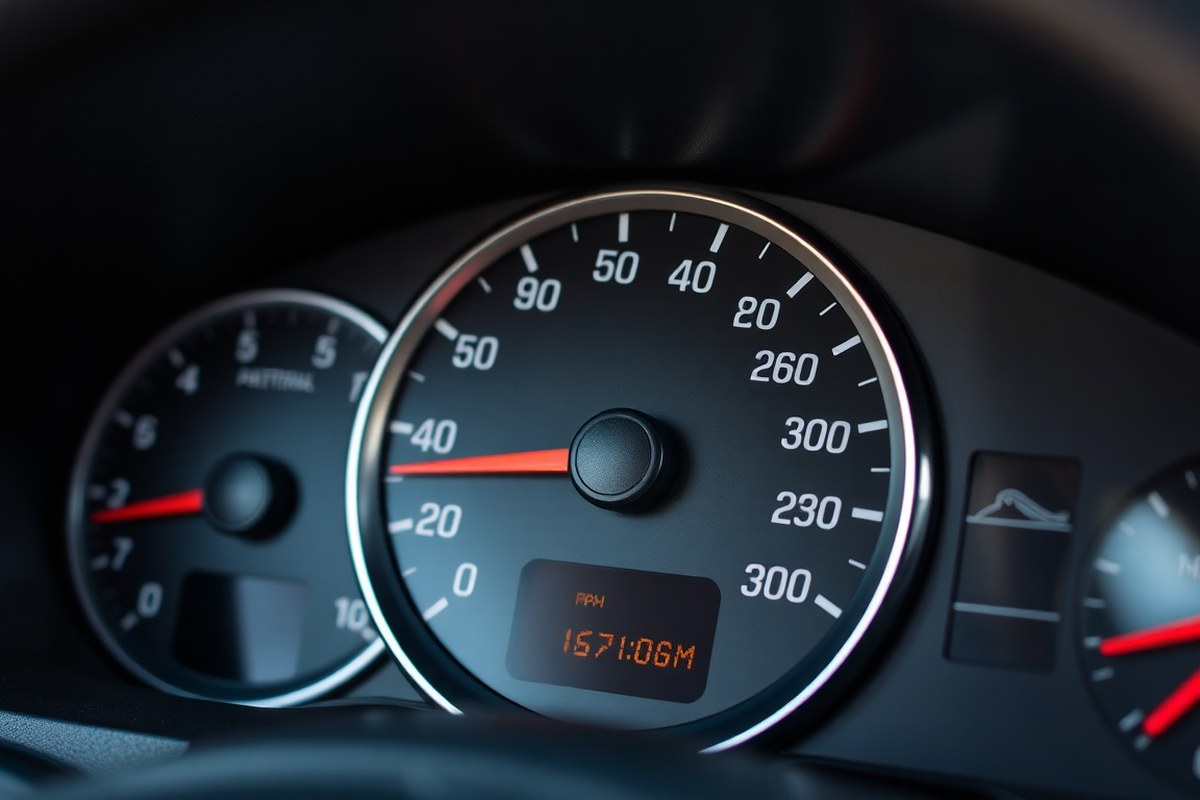
Your engine’s RPM goes high during slow acceleration. This happens because the engine works harder than the wheels or transmission. This mismatch causes the engine to spin faster without a matching increase in speed.
A common cause is transmission slipping. It lets the engine race without fully powering the wheels.
For manual transmissions, RPM signals the right moment to shift gears for smooth driving. The clutch might be slipping when the RPM is high but the car isn’t speeding up.
This slip means your engine turns fast. But your wheels don’t roll faster, leading to poor acceleration and increased wear.
Automatic transmissions use clutches, bands, and hydraulic pressure inside. These parts match engine speed to wheel speed. Worn clutches or low transmission fluid can raise engine RPM.
This happens because less power reaches the wheels. You might also notice rough or delayed gear shifts when this happens.
Engine problems can add to high RPM at low speeds. The throttle system or vacuum leaks can give the engine too much air or fuel. This raises RPM without increasing speed.
Ignition problems or bad sensors can confuse the car’s computer. This makes the RPM go up as the engine struggles to react.
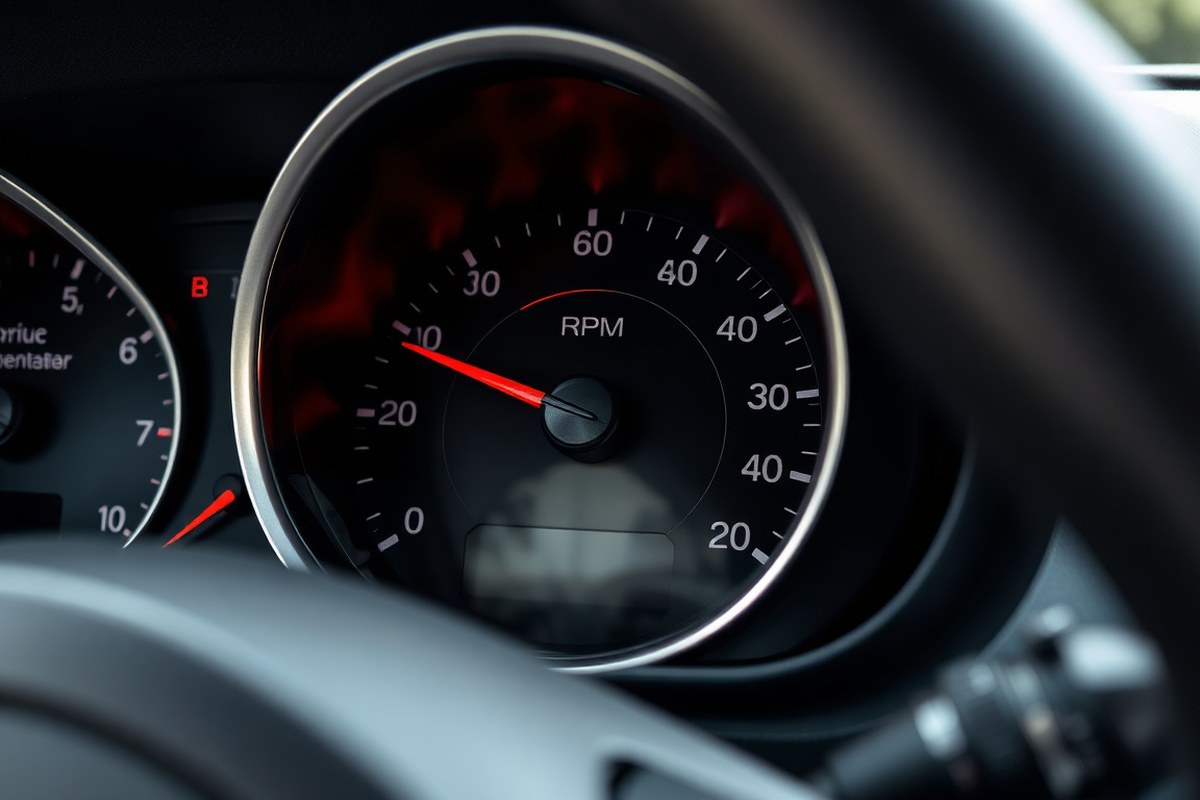
Check your engine speed using the tachometer when accelerating slowly. RPM rising above 4,000 with no speed increase likely means slippage or mechanical problems.
Regular RPM during slow acceleration sits around 3,000 to 4,000. Above this means the engine is overworking.
Look for signs of clutch slippage to confirm the cause. These include a burning smell or hard gear shifting in manuals. In automatics, slipping usually comes with odd noises and gear delays.
A diagnosis usually costs $100 to $200 for the inspection. But repair costs rise if transmission parts need replacing.
2. What Are Normal RPM Ranges During Acceleration and Idle?
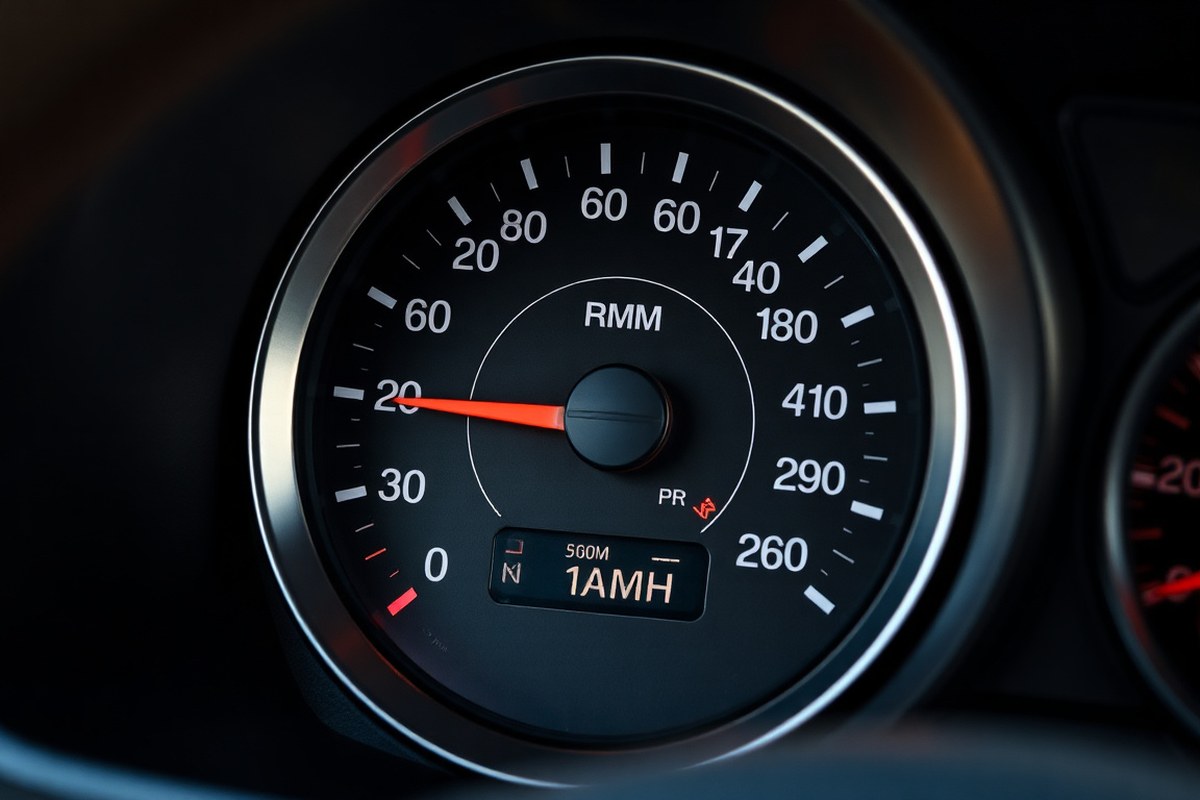
Typical RPM at Idle
Most cars idle between 700 and 1500 RPM. Smaller gasoline engines usually settle around 700 to 1000 RPM. Diesel engines often idle closer to the higher end of that range.
This idle speed keeps the engine running smoothly without stalling. A much higher or lower RPM than normal at idle often signals a problem.
RPM Range During Low-Speed Acceleration
When you accelerate gently at low speeds, expect RPM to rise between 1500 and 2500. This increase shows the engine producing more power to move the car. Sudden spikes or unusually high RPM here can mean slipping transmissions or engine issues.
RPM usually increases smoothly as you press the gas pedal. RPM that jumps sharply while your car struggles to speed up usually means transmission slip or driveline issues.
RPM Behavior While Cruising
When driving steadily at moderate speeds, the engine RPM should stabilize around 1500 to 2500. Most vehicles maintain this range to optimize fuel efficiency and engine performance. Fluctuating or climbing RPM during cruising can show transmission or torque converter problems.
RPM going unusually high on light throttle or steady cruising often points to mechanical faults. This can include issues like a failing torque converter clutch or engine misfires.
How Vehicle Type and Engine Size Affect RPM
Smaller cars and engines tend to have lower normal RPMs. Large trucks often run at higher RPMs. Performance engines do too.
This happens because they need bigger displacement and more power. Racing cars can reach 5,000 to 10,000 RPM, but that’s outside typical street driving.
Your vehicle’s transmission type also matters. Manual cars often have wider RPM swings when accelerating. Automatic transmissions try to keep RPM steady by shifting gears.
When High RPM Indicates a Problem
RPM spikes that don’t match your speed or acceleration can signal trouble. High RPM at low speeds might mean slipping clutch plates or a failing torque converter. Rough or fluctuating RPM while idling often comes from sensor issues or vacuum leaks.
Ignoring persistent high RPM can lead to engine overheating or more costly repairs. Watch out for symptoms like rough running, shuddering, or delayed acceleration.
Check your owner’s manual for idle RPM range. It varies by vehicle make. It also changes with engine type.
3. How Transmission Issues Cause High RPM at Low Speeds
A slipping clutch in a manual car makes engine RPM stay high. It can’t fully send power to the wheels. This causes poor acceleration at low speeds.
The engine spins faster while the car moves slower. You can test this by gently applying the clutch in a high gear.
RPM rising without speed matching usually means the clutch is worn out. You will probably need to replace it.
Transmission fluid plays a huge role in automatic transmissions. Low or dirty fluid reduces hydraulic pressure needed to engage gears smoothly. Low or burned transmission fluid makes the transmission slip inside.
This slipping causes RPM to jump at low speeds. You may notice slow acceleration too. Checking the fluid level and condition is simple.
Open the hood and find the transmission dipstick. Check this when the engine is warm and the car is level. Look to see if the fluid is at the right level.
Fluid should be clear reddish and have a slight sweet smell, not burnt or dark. Correcting low fluid often fixes slipping issues. But you may need a mechanic if fluid looks burnt or levels drop quickly, indicating leaks.
The torque converter bridges the engine and automatic transmission by transferring rotational power through fluid. A bad torque converter can’t move power correctly. This causes high RPM during slow acceleration.
Symptoms include rough shifting, overheating, and slipping gears. Diagnosing this involves a mechanic using a scan tool and pressure tests.
Fixing a torque converter can cost between $500 and $1,200. The price depends on your car’s make and labor cost.
4. Vacuum Leaks and Throttle System Faults Raising RPM
Vacuum leaks happen when unmetered air enters the engine through cracks or loose hoses. This extra air causes your engine to burn more fuel. Your RPM spikes without real power gain.
This happens due to the extra air entering the system. Typical places to check are cracked vacuum lines, loose intake manifold gaskets, and faulty brake boosters. Fixing these leaks means replacing the damaged parts.
It usually costs $50 to $150. The price depends on your car model and labor.
A bad throttle position sensor (TPS) gives wrong gas pedal signals. It misleads the engine about pedal position. This causes incorrect data for fuel and air control.
The engine computer may add too much fuel. It might open the throttle plate more than needed. This wastes fuel and causes RPM issues.
This causes random acceleration and high RPM even at low speeds. Test the TPS with a scan tool if your RPM jumps. This helps find if the sensor misreads pedal position.
It’s a key step for solving these issues. Replacing it can cost around $150 to $250. Often, the sensor will show error codes and cause rough idle or stalling.
The idle air control valve (IAC) adjusts airflow when you’re off the gas. It works around the throttle body to keep RPM steady. This helps maintain smooth idling.
Its job is to keep idle stable by letting in just enough air. A stuck or failed idle air control valve can cause RPM surges. Your engine RPM might drop suddenly, too.
This valve’s function is critical for stable idle speed. You might notice your idle speed fluctuates when you switch on accessories like air conditioning.
Cleaning the valve can help but full replacement might be needed, costing about $100 to $200. Watch for unstable RPM at idle and inconsistent engine response as signs of IAC trouble.
5. Fuel and Ignition System Problems Linked to High RPM
Dirty fuel injectors make your engine run unevenly and can raise RPM. When injectors are clogged, they don’t spray fuel properly, causing inconsistent combustion. This forces the engine to rev higher to maintain power during acceleration.
Fixing this starts with cleaning or replacing the injectors. Cleaning usually costs $50 to $100 at a shop and takes under an hour. You can also use fuel injector cleaners added to your gas tank.
But these work best for mild clogging. Signs of dirty injectors include rough idling and poor gas mileage.
You may also notice increased RPM when pressing the accelerator. These issues can affect your car’s performance.
A clogged air filter can also mess with your engine’s RPM. It limits the airflow your engine needs to burn fuel efficiently. A blocked air filter limits oxygen to the engine.
The engine ramps up RPM to try and get more air. This causes higher engine speeds at low acceleration.
Replace or clean your air filter between 12,000 and 15,000 miles. You might need to do this sooner if you frequently drive in dusty areas.
The process costs $15 to $40 and takes just a few minutes. A fresh filter improves fuel burning and helps keep RPM stable.
Worn or faulty spark plugs badly affect engine performance and RPM. Spark plugs ignite the air-fuel mix in the cylinder. Dirty, cracked, or worn spark plugs cause the engine to misfire.
This leads to rough idling and sudden RPM spikes. Bad spark plugs make your car run unevenly.
Check your spark plugs every 30,000 miles. Replacing them costs around $75 to $150 including labor, depending on your car. Bad spark plugs cause trouble starting your engine.
They also lead to hesitation and uneven RPM at low speeds. These signs mean you need to check or replace the plugs.
Start your checks by looking at the air filter and spark plugs. See if they are dirty or damaged. This simple step helps find the cause of high RPM.
Then use a fuel injector cleaner or have injectors professionally cleaned or replaced if needed. Watch for smoother idle and stable RPM after maintenance.
Cleaning fuel injectors and swapping out spark plugs regularly helps avoid RPM problems. Keeping up with this maintenance stops high RPM bumps during acceleration.
6. Key Engine Sensors That Influence RPM Behavior
Several engine sensors directly affect your car’s RPM during acceleration at low speed. The throttle position sensor plays a part in engine function. The oxygen sensor also affects performance.
The mass air flow and crankshaft position sensors matter too. Testing these sensors can help spot faults causing high or erratic RPM.
Throttle Position Sensor and RPM
The throttle position sensor (TPS) tracks how far your throttle valve opens. It sends this info to the engine control unit, helping adjust fuel injection and air mixture. A faulty TPS can lock the throttle open, causing high RPM even when you’re moving slowly.
To test the TPS, use a digital multimeter set to read voltage. Turn off the engine. Unplug the sensor.
Connect the meter to its signal wire and ground. Slowly open the throttle. Voltage should increase smoothly from about 0.2 volts at rest to around 4.5 volts at full throttle.
Look for gaps, sudden jumps, or no voltage change. These might mean the TPS is bad.
Replacing it costs roughly $50 to $150, plus labor. A working TPS helps keep RPM stable and smooth during acceleration.
Oxygen Sensor Effects on Engine Speed
The oxygen sensor (O2 sensor) measures the oxygen level in exhaust gases. This data helps the engine control unit set the right fuel-to-air ratio. A bad O2 sensor can cause fuel mixture problems.
This leads to unstable RPM or rough idling. You might also see high RPM at low speed.
You can test the O2 sensor with an OBD2 scanner. Check for error codes like P0130 or P0171.
You can also measure the sensor’s voltage output. It should fluctuate between 0.1 and 0.9 volts once the engine warms up.
Replacing an O2 sensor costs between $100 and $300, depending on your vehicle. Poor sensor readings often cause inconsistent RPM and wasted fuel.
Mass Air Flow Sensor and RPM Stability
The mass air flow (MAF) sensor gauges the amount of air entering your engine. The engine control unit uses this data to balance fuel injection.
The MAF sensor controls the air/fuel mixture. When it breaks, RPM can rise suddenly at low speeds.
To test the MAF sensor, disconnect it and check for physical dirt or damage. Using a scan tool, observe the airflow readings during engine idle and acceleration. Values that are unusually high, low, or steady when they should fluctuate indicate a problem.
Cleaning the MAF sensor costs around $30; replacing it can run $200 or more. Keeping this sensor working ensures smoother RPM responses at slow speeds during acceleration.
7. Testing and Diagnosing High RPM at Low Speed
Start by checking if the clutch slips. Use an OBD2 scanner. Do a close visual inspection.
These steps target the main causes of high RPM at low speeds. You’ll catch issues in the clutch, sensors, or engine parts that often cause this problem.
Performing a Clutch Slip Test on Manual Cars
Put the car in a higher gear, like third or fourth, at low speed. Gently press the accelerator while holding the clutch in, then slowly let the clutch out.
RPM rises but the car doesn’t speed up quickly. The clutch might be slipping.
Test on a flat road to avoid uneven speed effects. A good clutch holds engine power steady with speed. The engine pushes but the car lags.
This means something else could be wrong. This test takes just a few minutes and costs nothing.
Using an OBD2 Scanner to Find Trouble Codes
Plug your OBD2 scanner into the car’s diagnostic port and turn on the ignition. Follow scanner prompts to read error codes.
Watch for transmission, speed sensor, or solenoid codes. These point to why RPM rises unexpectedly.
Common codes include issues with oxygen sensors or speed sensors, often linked to high RPM. Many OBD2 scanners cost between $20 and $100. Interpreting codes can need a repair manual or online resource for your specific car model.
Visual Inspection Checklist for Engine Components
Look under the hood for torn or loose vacuum lines. Check around the throttle body and intake manifold.
Cracked hoses can cause air leaks, making RPM spike. Check the throttle plate for gunk or carbon buildup that blocks smooth airflow.
Inspect the clutch cable or hydraulic system if the car is manual. Look for leaks or damage.
Also, examine electrical connectors going to sensors for corrosion or loose wires. These steps take about 10 minutes and spot obvious faults fast.
8. Safety Precautions When Dealing with High RPM Issues
Driving with high RPM for too long can harm your engine. The tachometer’s red line marks the maximum safe RPM. Staying below 3000 RPM at 60 to 70 mph protects your engine.
It also helps save fuel. This speed range keeps your car in a safe zone. RPM spikes suddenly while accelerating?
Stop accelerating gently to protect the engine. This lowers the stress and risk of damage.
When RPM jumps beyond normal levels, pull over safely as soon as you can. Turn off the engine and check for any warning lights or unusual noises. Avoid pushing the car hard until a mechanic diagnoses the issue.
High RPM may mean transmission or engine problems. These faults can cause breakdowns. They also create unsafe driving conditions.
Keeping your engine in good shape lowers the chance of high RPM problems. Change transmission fluid regularly since bad fluid speeds damage and bad shifting. Car shakes or shudders above 30 mph?
Slow down right away. Then get your car checked by a mechanic. Downshifting at high speeds reduces engine strain.
It also helps lower sudden RPM spikes. This is useful in older or manual cars.
High RPM occurs? Ease off the gas pedal slowly. Avoid hard acceleration until you fix the problem.
9. Typical Repair Costs and Time Estimates for High RPM Fixes
Fixing a slipping clutch starts around $500 and can go over $1,000. This depends on your car model and labor rates.
Transmission fluid changes cost between $50 and $200, including fluid and labor. Fixing leaks mostly falls into this same price range.
Replacing engine sensors often costs $100 to $300 per sensor. The throttle position sensor and mass airflow sensor are common fixes.
Labor for sensor replacements usually takes one hour or less. This makes the job fairly quick and affordable.
Here’s a clear look at some typical costs and times for common high RPM repairs. A slipping clutch requires up to 8 hours of work.
Transmission fluid service is faster, often done in under an hour. Sensor replacements usually take 30 to 60 minutes.
| Repair Type | Typical Cost | Estimated Time |
|---|---|---|
| Slipping Clutch Repair | $500 – $1,200 | 6 – 8 hours |
| Transmission Fluid Change | $50 – $200 | 30 – 60 minutes |
| Transmission Fluid Leak Fix | $50 – $200 | 30 – 90 minutes |
| Engine Sensor Replacement | $100 – $300 | 30 – 60 minutes |
Timely repair keeps RPMs steady and the engine safe. Delaying clutch fixes can worsen damage and increase costs.
Transmission fluid changes protect the system and prevent slipping. Sensor problems can cause erratic RPMs, so replacing a faulty sensor improves drive quality.
You can ask your mechanic exactly what parts they use. Some sensors cost more for different brands or models.
Labor varies by region, vehicle type, and shop rates. Getting a clear estimate before repair helps prevent surprises.
Step-by-Step Action Plan for Managing High RPM at Low Speeds
Use this plan to check and fix the high RPM problem safely. Follow the steps in order to see which action helps most.
- Before you start: Park the car on level ground with the engine off. Make sure the parking brake is on and the area is safe.
- Day 1: Start the engine and listen for unusual sounds while idling. Note down the RPM if it stays above 1,000 or sounds rough.
- Day 2: Inspect the vacuum hoses around the engine for cracks or loose fittings. Fix or replace any damaged hoses and recheck RPM.
- Day 3: Check the throttle body for dirt buildup. Clean it gently with throttle cleaner and see if RPM smooths out when you accelerate slowly.
- Day 4: Use an OBD-II scanner. Check engine sensors like throttle position. Also check the MAF sensor data. Errors here can raise RPM.
- Day 5: Test ignition parts such as spark plugs and coils for wear or damage. Replace worn parts to see if RPM stabilizes.
- Day 6: Have a mechanic test your transmission if RPM still spikes during low-speed driving. Transmission slippage can cause this.
- After 1 week: Drive normally and monitor RPM again. Problems still there? Schedule a professional for deeper diagnostics.
Frequently Asked Questions
Why Does My Manual Transmission Car’s RPM Rise so High at Low Speeds?
Your engine works harder to keep speed with manual shifting, raising RPM. You notice it because your engine must spin faster before you change gears.
Can a Bad Speed Sensor Cause High RPM During Low-Speed Acceleration?
Yes, a faulty speed sensor can make your RPM spike as your car misreads speeds. This often makes gear changes feel rough or delayed.
Why Might Faulty Spark Plugs Increase RPM When I’m Accelerating Slowly?
Worn or bad spark plugs cause incomplete combustion, raising RPM and reducing power. Replacing plugs usually smooths engine performance.
How Do Valve Problems Make My RPM Unstable at Low Speeds?
Valve issues can cause uneven engine loads, causing your RPM to jump up or down. This leads to poor acceleration and engine stalling.
Can Improper Transmission Fluid Levels Cause High RPM on Acceleration?
Yes, low or old transmission fluid harms clutch engagement, making RPM rise. Checking and replacing fluid can fix slipping and rough gear shifts.
Before You Go
High RPM at low speeds usually points to air, fuel, or transmission issues. Start with simple checks like vacuum leaks and throttle cleaning. Getting a scan or mechanic’s help is a smart next step to fix it right.