What Is a Tandem Axle? A Complete Guide to Benefits and Usage
What is a tandem axle? It’s a setup with two axles placed close together under a trailer or truck. These axles share the load, helping carry heavier weights more safely than a single axle.
The tandem axle spreads the weight over a larger area. This reduces stress on the road and on the trailer’s frame. Because of this, tandem axles often handle loads up to 34,000 pounds.
Keep in mind the position of the axles matters. The equalizer’s center should sit near 40% of the trailer bed length. Measure from the trailer’s back end to find this spot exactly.
This helps balance the load better across the axles. This placement helps balance the load and improves driving stability.
Key Takeaways
- Tandem axles combine two axles close together for heavier loads.
- They allow carrying up to 34,000 pounds, more than single axles.
- Distributing weight over two axles reduces road wear and frame stress.
- Proper axle placement is about 40% of trailer length from the rear.
- This setup improves load balance and driving stability on highways.
- Check axle weight limits to avoid fines and unsafe conditions.
What Is a Tandem Axle and How Does It Work?
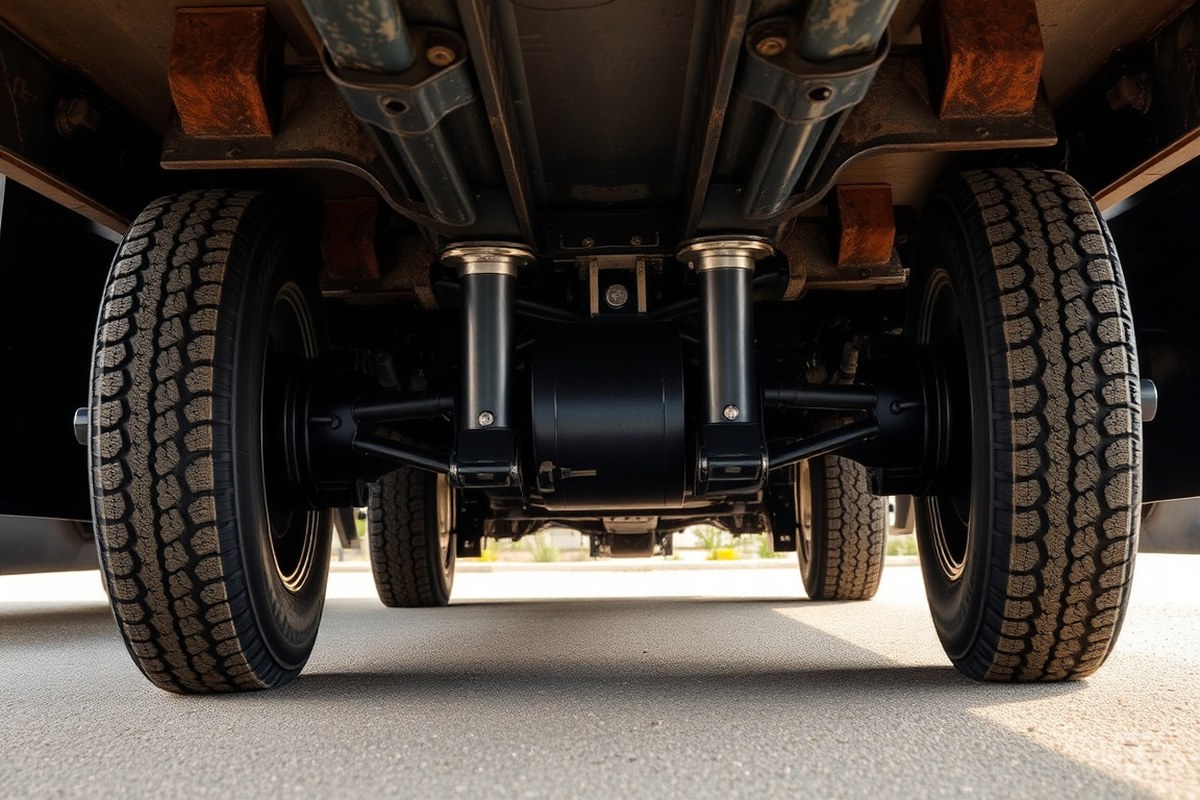
A tandem axle means two axles placed closely on trucks or trailers. They support and share the vehicle’s weight together. This setup boosts carrying capacity and helps with stability more than a single axle.
On trailers, tandem axles are usually positioned near the middle or slightly toward the rear. In a standard tandem trailer, the axles sit a few feet apart. They are often placed near 40% of the trailer’s length from the front.
This spacing helps balance the trailer. This spot aligns with the equalizer that helps balance the weight across the axles.
The main job of tandem axles is to spread the weight over more tires. This cuts down on wear and tear while allowing heavier loads. Tandem axles can carry about 34,000 pounds combined.
A strong single axle handles roughly 3,500 pounds. The tandem setup supports much heavier loads. About 60% of the weight must be in front of the axles.
This helps keep the vehicle balanced and easier to control. Proper weight distribution is key for safety.
Load distribution relies on a linkage called an equalizer beam. A flexing bar sits between the two axles. It adjusts for bumps or uneven roads.
This helps balance weight shifts for a smoother ride. This keeps both axles loaded properly and improves traction. Without this, one axle might bear too much weight, leading to tire wear and handling problems.
Trucks with tandem drive axles use a similar layout, grouping two axles closely at the rear. This doubles the drive power and handles heavy cargos better. Some trucks add a third axle with air suspension.
This spreads weight on very heavy loads or soft ground. It helps protect the vehicle and road surface.
This tandem axle design helps safely carry legal maximum weights while protecting tires and brakes. Tandem axle trailers often have brakes on both axles for better stopping power. Close axles and shared loads make tandems popular.
They are used often for carrying heavy freight and equipment. This setup improves hauling efficiency and safety.
Differences Between Tandem Axles, Single Axles, and Spread Axles
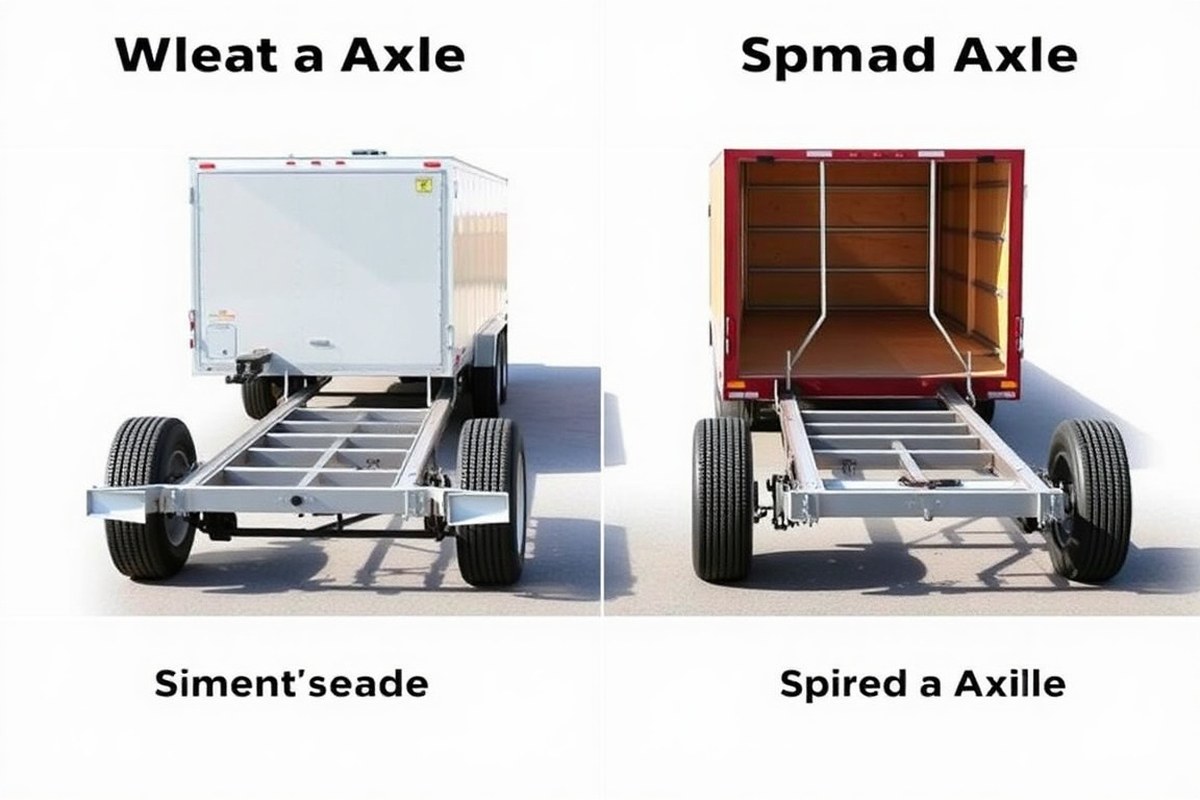
Tandem axles have two wheel sets close together. This design lets you haul heavier loads. It’s stronger than single axles.
Single axle trailers usually carry up to 20,000 pounds. Tandems can support about 34,000 pounds. Spread axles also have two axles but they’re spaced out farther.
This helps spread the load better. You can carry up to 40,000 pounds this way.
Single axle trailers cost less. They are easier to steer. They work well for lighter loads and tight spots.
Tandem axles add stability and handle rougher terrain better but cost more. Spread axles spread weight better for heavy loads. But they reduce maneuverability because the wheels are farther apart.
| Feature | Single Axle Trailer | Tandem Axle Trailer | Spread Axle Trailer |
|---|---|---|---|
| Load Capacity | Up to 20,000 lbs | Up to 34,000 lbs | Up to 40,000 lbs |
| Stability | Fair | Good | Better |
| Maneuverability | Excellent | Moderate | Limited |
| Cost | Low | Moderate | High |
| Tire Wear | Higher | Moderate | Lower |
| Towing Experience | Smooth | Stable | Improve Control |
| Terrain Suitability | Light Terrain | Varied Terrain | Heavy Terrain |
You get better control with tandem axles because the suspension shares the weight evenly. That reduces frame stress and tire wear. Spread axles excel for heavy haul jobs.
But their wider spacing can make tight turns tricky. Choose the axle based on load weight, where you’ll drive, and your budget.
Keep trailer tongue weight balanced near 40% of bed length. This is important for all axle types. It maintains proper trailer stability.
Single axles suit smaller hauls and tight turns due to their light weight and simple setup. Tandem axles suit mid-range loads and offer durability for mixed routes. Spread axles work best hauling near maximum legal weight.
They provide extra stability on heavy terrain. This is better than tight maneuvering.
Legal Weight Limits and Regulations for Tandem Axles
Federal Axle Weight Limits
The maximum legal weight for a tandem axle group is 34,000 pounds. The Federal Bridge Formula sets rules for axle weights. These rules protect highways and bridges from damage.
They limit how much weight each axle can carry. It applies to trucks and trailers on interstate highways across all states.
The formula balances axle spacing and total axle weight to prevent road damage. For tandem axles 40 inches apart, the limit is 34,000 pounds. This limit applies to both axles combined.
You cannot exceed this total weight. You must measure carefully to meet this standard.
State Weight Limits and Variations
States can set their own limits, sometimes lower than federal rules. Some states require weight distribution adjustments when entering or leaving special zones. Checking your state’s Department of Transportation rules before hauling loads is critical.
Certain states also have rules about tandem axle spacing and gross vehicle weight. Sliding your adjustable tandem axles helps meet state rules. You can move axles forward or backward.
This keeps axle weight within legal limits. That way, you avoid fines and keep your truck legal everywhere you go.
Load Distribution Requirements
Weight must be spread evenly across tandem axles to meet the law. Excess weight on one axle causes violations, even if total weight is okay. Weight must be balanced across both tandem axles.
This prevents damage and fines. This is why properly loading and adjusting tandem axles matters a lot.
Sliding the tandem axles helps balance the load between front and rear axles. Proper distribution reduces wear on tires and suspension parts. It also improves handling and keeps the truck safe on the road.
How to Comply with Weight Limits
Weigh your truck with the fully loaded trailer on certified scales. Check the weight on each axle group, including tandems. Slide or adjust your tandem axle if it exceeds 34,000 pounds.
Doing this distributes the load more evenly. This keeps the tandem legal.
Reweigh after adjustments to confirm compliance. Keep weight tickets with you in case of inspections. Failure to comply can cause fines, delay, or force off-loading at your expense.
Consequences of Axle Weight Violations
Exceeding tandem axle weight limits can lead to citations and penalties. These fines vary by state but often run hundreds to thousands of dollars. Repeat violations raise costs and may cause restrictions on your trucking permits.
Heavy overloads wear out tires, brakes, and suspension faster. This raises your maintenance bills and risk of accidents. It also damages public roads, which can lead to legal liability for the truck operator.
Types of Tandem Axle Trucks and Trailers
Tandem axles are common on many commercial trucks, especially dump trucks, flatbed trucks, and refrigerated trucks. Dump trucks use tandem axles to carry heavy loads. These loads can be gravel or dirt.
They are often rated for 40,000 to 52,000 pounds. Flatbed trucks need tandem axles for stability.
They haul construction materials. Tires often have an 11R22 setup.5 tires for better load distribution and durability.
Refrigerated trucks use tandem axles to support the extra weight of cooling equipment and insulated walls. These axles often have specialized suspensions to reduce vibration, protecting the cargo inside. Tandem axles show up on car haulers and utility trailers.
Two axles give better control. They also increase weight capacity.
Some trailers have sliding tandem axles that can move forward or backward along rail tracks. This lets the driver adjust weight distribution for safer handling and legal compliance. Specialty suspensions like walking beam help off-road trailers.
They keep all wheels on the ground. This improves traction and ride on rough terrain.
Tandem axles can vary in design to match their task. A dump truck’s tandem axles have heavier-duty leaf springs. They also have higher-rated brakes.
Flatbeds usually have lighter specs. Tire configurations also change; flatbeds might use dual tires per axle for high-load stability. Some refrigerated trucks use single wide-base tires to reduce rolling resistance.
Power dividers send torque evenly between truck tandem axles. This setup helps traction on slippery roads. It improves driving control.
These differentials let one axle turn slightly faster than the other without losing power. Tandem axle trucks and trailers match your use and load.
They also fit the road conditions you expect. This reflects how you work with them.
Why Are Tandem Axles Preferred for Heavy Loads?
Tandem axles help carry heavier loads safely. They spread weight over two axles, not one. This keeps your trailer stable on the road.
This raises the Gross Vehicle Weight Rating (GVWR). You can haul more without risking damage. It also helps you avoid breaking laws.
Two axles share the load evenly. This cuts stress on tires and suspension parts. It makes them last longer and keeps you safer.
Besides higher capacity, tandem axles provide greater stability and control when towing. Tandem axles lower the center of gravity. They spread weight evenly across the trailer.
This cuts down sway and bounce on rough roads. A smoother ride helps you keep control at higher speeds.
This is important for heavy loads and long trips. It makes driving less tiring too.
On the flip side, tandem axle trailers are less nimble than single axle options. They require wider turns and more space to maneuver, which can be tricky in tight spots. Also, you’ll have more components to inspect and maintain, raising your servicing costs and time.
Some drivers notice a slight drop in fuel efficiency in city driving. The added weight causes this effect sometimes. However, fuel efficiency may improve on highways.
Check your tire pressure regularly on tandem axles. Uneven inflation can cause load imbalance and unsafe handling.
How to Correctly Position and Slide Tandem Axles
Sliding tandem axles means moving the set of wheels along the trailer’s frame. This adjusts how weight spreads between the trailer and tractor axles. Proper positioning boosts stability and helps you stay under legal weight limits.
Tools and Safety Preparations
First, park your trailer on level, firm ground to prevent shifting. Engage the trailer brakes and use wheel chocks to keep it from rolling.
You’ll need a tool or handle to retract the locking pins on the sliding mechanism. Always wear gloves to protect your hands from pinches or sharp edges.
Sliding Steps and Locking Mechanisms
Follow these steps carefully to slide and lock your tandem axles in the right place.
- Apply the trailer brakes and block the wheels securely.
- Locate and retract the locking pins or pins that hold the tandems in place.
- Push or pull the tandem axles forward or backward along the slider beam.
- Slide the tandems to the position that balances the trailer’s load evenly.
- Release the axles slowly and ensure they align with the locking holes.
- Engage the locking pins to secure the tandems firmly.
- Double-check that the pins have fully locked to prevent movement.
Verifying Proper Locking and Weight Balance
After sliding and locking, test for tightness by shaking the tandems slightly. They must not move or wiggle.
Check your trailer’s load distribution by weighing the tractor and trailer axles. Slide the tandems again if the front axles carry too much weight.
Maintenance and Inspection Tips for Tandem Axle Trailers
Regular maintenance and inspection keep tandem axle trailers safe and reliable. Check brakes, tires, suspension, and bearings before trips. Catch problems early to avoid costly repairs and downtime.
Brake System Checks
Each axle usually has its own brake system, so inspect all brakes carefully. Look for worn brake pads, leaking fluid, and damaged brake lines. Test the brakes to confirm they engage evenly on both axles.
Check drum or disc brakes for cracks, scoring, or uneven wear. Make sure the brake shoes or pads have at least 1/8 inch of material left. Adjust brakes as needed to avoid uneven stopping that stresses the axles.
Air brake systems need air pressure tested. Listen for air leaks when the system is pressurized. Replace worn or cracked hoses right away.
Check the compressor often. This helps stop brake failure on the road.
Tire and Wheel Inspections
Tandem axles double the number of tires to check, so pay extra attention. Look for uneven tread wear, sidewall cracks, bald spots, or bulges. A slow leak in one tire can quickly escalate into a blowout risk.
Proper tire pressure is important to avoid excessive wear and tire scrub during turns. Use a reliable gauge to check pressure before every trip. Rotate tires every 6,000 to 8,000 miles to extend their life.
Examine wheels for bent rims, missing lug nuts, or rust around the hub. Clean lug nuts and re-torque them after driving 50 miles post-maintenance. Proper wheel condition prevents vibrations and costly breakdowns.
- Inspect tread depth, aiming for at least 4/32 inch on drive tires
- Check tire sidewalls for cracks or bulges
- Maintain tire pressure recommended by the trailer manufacturer
- Look for uneven wear patterns indicating alignment issues
- Confirm lug nuts are tight and wheels are not bent
- Rotate tires regularly to prevent premature wear
- Replace any tire showing rapid air loss or damage
Suspension and Bearing Maintenance
Suspension parts bear the vehicle’s load and smooth the ride. Check leaf springs, hangers, and shackles for cracks, rust, or sagging. Lubricate suspension components frequently to prevent wear.
Wheel bearings need regular greasing to avoid overheating and failure. Grease bearings every 12,000 miles or at least once a year if less driven. Use high-quality wheel bearing grease and inspect seals for leaks.
Listen for grinding or rumbling noises in the bearings during a spin test. Replace bearings if worn or damaged to prevent wheel lock-ups or axle damage. Proper bearing care reduces costly breakdowns and keeps your trailer rolling.
Common Mistakes and Myths About Tandem Axle Trailers
New drivers often forget to adjust their driving for tandem axle trailers. They try tight turns or quick stops the same way as with single axle trailers. This can cause tire scrubbing, uneven wear, and difficulty backing up.
Many believe tandem axle trailers are harder to handle overall. Maneuvering, especially in cramped spots, is indeed trickier with tandem axles. The extra axle adds length and reduces the trailer’s turning radius.
Converting a single axle trailer to tandem axles sounds useful but is rarely quick or cheap. You need a proper frame extension or replacement to support the extra axle and tires safely. This can cost several thousand dollars and often requires professional welding and alignment.
- Failing to lock or properly release the tandem axle’s locking mechanism
- Ignoring tire pressure differences between axles, causing uneven load distribution
- Backing up without coordinating steering and axle position, risking jackknife
- Attempting tight turns without sliding axles forward, leading to tire wear
- Assuming single axle driving skills fully translate to tandem axle trailers
- Trying to convert without checking the trailer’s frame strength and legality
- Skipping regular inspection of locking pins and axle alignment
Use locking handles or hydraulic switches to slide tandem axles. Slide the axles only when turning your trailer. This helps fix issues with axle movement during turns.
Check tire pressure on all axles before each trip. Practice backing slowly while steering smoothly to avoid sudden moves. Consider converting your trailer?
Get a frame inspection at a licensed trailer shop. They’ll tell you if the cost and effort match your needs.
Always operate the axle’s locking mechanism fully before driving to prevent axle damage and tire wear.
Mistakes mostly come from underestimating how tandem axle trailers differ from single axle models. They need more attention to axle positioning and slower, wider turns. With care, tandem axle trailers offer better stability and can carry much heavier loads safely.
Choosing the Right Tandem Axle Trailer for Your Needs
Load capacity shapes your tandem axle choice. You haul light to moderate loads under 7,000 pounds.
A single axle can save you money. Heavier payloads above 7,000 pounds benefit from tandem axles, which spread weight better and improve stability.
Terrain also matters. Rough or uneven roads require suspension systems that absorb shocks well.
Multi-leaf spring suspensions suit rugged terrain by offering durable, low-maintenance support. Air-ride suspensions provide a smoother ride on highways but cost more upfront and need extra upkeep.
Cost and maintenance influence long-term value. Tandem axle trailers generally cost more to buy and maintain than single axle models. Tandem axles cost 20% to 30% more.
They need more tire replacements too. Tires usually wear out every 30,000 to 40,000 miles.
Regular inspections and lubrication minimize wear. Budget extra for brake repairs, since tandem setups use more components.
Frequency of use guides your decision. For occasional hauling under 10,000 miles yearly, a single axle trailer limits costs and upkeep.
Frequent towing over longer distances demands the toughness and balance of tandem axles. You avoid axle overloading and reduce tire blowouts on heavy hauls.
Choosing suspension depends on your cargo and driving conditions. For heavy equipment or uneven terrain, multi-leaf springs hold up well and handle load shifts.
For delicate goods and smoother rides, air suspensions reduce jolts but require higher maintenance. Consider your towing truck’s compatibility with the suspension type.
Look for tandem axles that allow sliding or repositioning for better load distribution. Sliding axles help meet legal weight limits and improve handling.
Make sure the axle locks securely so wheels don’t roll during adjustment. This feature adds versatility but may raise the price.
Summing up, check your typical load size and terrain first to narrow your tandem axle choices. Then factor in your budget and maintenance willingness.
Heavy loads and rough roads usually call for tandem axles with multi-leaf springs. Smaller loads or less frequent use may do fine with single axles or less complex suspensions.
Step-by-Step Action Plan for Using and Maintaining Your Tandem Axle Trailer
Follow these steps to safely operate and care for your tandem axle trailer. Each step helps you avoid problems and keep your trailer road-ready.
- Before your first trip: Check tire pressure on both axles. Proper pressure means your tires wear evenly and you save fuel.
- Day 1 after loading: Position the trailer’s tandem axles for balanced weight. You’ll know it’s right when the trailer rides steadily without swaying.
- After every 100 miles: Stop to inspect the axles and brakes. Look for any loose parts or unusual wear to catch problems early.
- Weekly: Grease the axle hubs and check the suspension. Well-lubricated parts last longer and keep your ride smooth.
- Monthly: Review your load distribution. Make sure axle weights don’t exceed state limits to avoid fines and unsafe driving.
- Before long hauls: Inspect the sliding mechanism on your tandem axles. It should move freely to adjust for the load’s weight.
- Quarterly: Schedule a professional brake inspection. Properly working brakes on tandem axles improve your trailer’s stopping power.
- After any rough trip: Check the frame and axles for cracks or bends. Damage here could cause costly repairs or accidents.
Frequently Asked Questions
What Is the Maximum Weight a Tandem Axle Can Legally Carry?
Tandem axles can legally carry up to 34,000 pounds together in most cases. This limit is set to avoid damage to roads and bridges.
Can a Tandem Axle Be Adjusted on a Trailer?
Yes, tandem axles on trailers can slide forward or backward. This helps balance the load and adjusts weight distribution on each axle.
Why Do Tandem Axles Improve Stability for Heavy Loads?
Tandem axles spread weight over two axles, reducing load per tire. This gives better balance and less wear on roads compared to single axles.
Are Tandem Axle Trucks More Expensive to Maintain?
Tandem axle trucks usually cost more to maintain than single axle ones. They have more parts like extra tires and suspension components to check.
How Does Axle Placement Affect a Trailer’s Performance?
Proper position of tandem axles affects weight balance and ride quality. It is best at about 40% from the trailer’s rear for good load support.
Key Points to Remember
Tandem axles spread weight for safer, smoother hauling and better compliance with the law. Start by checking your tire pressure and axle settings today. These small steps make a big difference for your trailer’s performance and safety.