Does Acura MDX Take Premium Gas? Complete Fuel Guide for Optimal Performance
Does Acura MDX take premium gas? The short answer is no. Most Acura MDX models do not require premium fuel to run properly.
However, Acura recommends using premium or higher-octane gas for the best engine performance. Premium gas with 91 octane can provide more complete combustion. This often results in smoother acceleration and improved fuel efficiency under some driving conditions.
You can use regular 87 octane gas if you mostly drive in city traffic or on highways. Pay attention to engine knocking or reduced power while accelerating. These signs usually mean using premium gas might improve your MDX’s response and longevity.
Keep in mind that premium gas costs more. So sticking with regular fuel saves money if you don’t notice problems. Following Acura’s owner’s manual advice ensures you get the right balance of performance and cost.
Key Takeaways
- Most Acura MDX models can run on regular 87 octane gasoline without damage.
- Premium 91 octane gas is recommended for better performance and fuel economy.
- MDX Type S requires premium 93 octane gas for peak engine operation.
- Lower octane fuel may reduce power and cause engine knocking in some conditions.
- Fuel door labels provide the official recommended octane rating for your MDX.
- Premium fuel tends to cost between 20 and 30 cents more per gallon than regular.
Does the Acura MDX Require Premium Gas?

Most Acura MDX trims run fine on regular gas with 87 octane. Premium gas, 91 octane or higher, helps boost performance but isn’t needed for all trims. Only some trims might benefit from higher octane fuel.
The MDX Type S trim is different. It requires gas with at least 93 octane. Using regular gas won’t work well for this model.
This high-performance model’s engine is tuned to take advantage of higher-octane fuel. Using regular gas in the Type S can cause reduced power and efficiency.
Older MDX models before 2001 can run on regular gas without issues. Models built from 2001 onward are designed to perform better with 91 octane or above.
But they still operate safely on regular 87 octane. Acura suggests premium gas to keep performance optimal and the engine running well over time.
Keep a note in your glove box about the fuel your MDX needs. This helps anyone filling the tank. It avoids confusion about the right gas.
It’s good to remind yourself and other drivers which fuel grade suits your specific MDX. This note stops people from putting in the wrong fuel.
The Type S trim really needs premium gas. Using the right fuel keeps the engine healthy.
You won’t see a big problem if you use regular gas in non-Type S MDX models. The engine control adjusts to prevent knocking.
However, expect a slight drop in power and fuel economy. The difference might be noticeable if you usually drive aggressively or haul heavy loads.
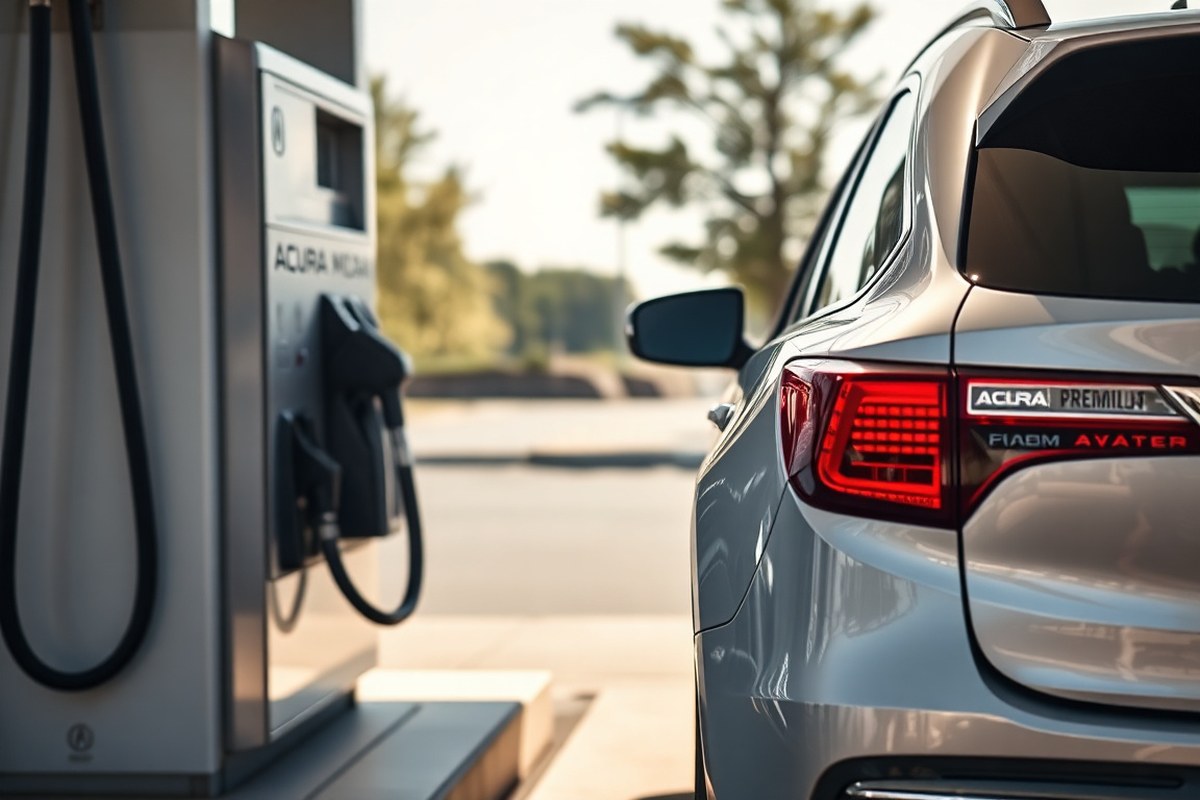
Check inside your fuel door or your owner’s manual for fuel grade labels and recommendations. The 2025 MDX models from Acura all have stickers telling you what gas to use. Always check the labels on your MDX for fuel advice.
This helps you choose the right gas for your specific trim. Following labels is the simplest way to avoid mistakes.
How Octane Rating Impacts Acura MDX Engine Performance
The octane rating measures gasoline’s ability to resist knocking. In the Acura MDX, higher octane fuel prevents early combustion that could harm the engine. Choosing the right octane keeps your MDX running smoothly and at peak power.
What Octane Rating Means
Octane rating shows how well gasoline resists premature ignition under pressure. Higher octane numbers, like 91 or 93, stop fuel from burning early. This means fuel waits until the spark plug fires first.
It helps the engine run smoothly. This helps engines with high compression avoid knocking sounds and damage.
In simple terms, octane rating is a gasoline quality number. It indicates gas’s resistance to “pinging” or “knock” inside your MDX engine.
Why Octane Matters for Acura MDX Engines
The Acura MDX engine works best with premium fuel. This fuel usually has an octane rating of 91 or higher. Using the right fuel keeps the engine running well.
Using the right octane helps the engine deliver full power and better fuel efficiency. Lower octane fuel can make the engine struggle, especially under heavy load or quick acceleration.
The MDX Type S needs 93 octane fuel. This fuel helps the turbocharged V6 run at its best.
Using lower octane can reduce performance. Regular gas or lower octane could trigger the knock sensor and drop engine output.
How Octane Prevents Knocking in the MDX
Knocking happens when the air-fuel mix ignites too early or unevenly inside the cylinder. This creates pressure spikes that sound like knocking or pinging noises. Premium fuel resists this premature ignition by burning more steadily at higher temperatures and pressures.
Your MDX’s engine control unit adjusts timing to reduce knock when needed. But high octane gas means less knocking risk and smoother combustion. So the engine doesn’t have to compensate as much.
Consequences of Using Too Low Octane Fuel
Running your Acura MDX on fuel below its recommended octane can reduce power and efficiency. The engine’s computer may delay ignition to stop knock, which lowers output. Over time, persistent knocking can damage pistons and valves, risking costly repairs.
Using lower octane fuel sometimes is okay for short trips. It helps if no higher octane fuel is available nearby.
Don’t use it often to avoid issues. Still, avoid making this a habit to protect your engine and maintain performance.
Always check the fuel door on your Acura MDX. It tells you the right octane to use. Following this keeps your engine safe and running well.
MDX Model Year and Trim Fuel Recommendations Table
The fuel grade and ethanol content for Acura MDX models vary by year and trim. Most of them recommend premium unleaded gasoline with 91 octane. Ethanol content generally should not exceed 15%, which is common for newer models.
| Model Year | Trim/Variant | Recommended Fuel Grade | Maximum Ethanol % Allowed |
|---|---|---|---|
| 2017 and newer | All trims including Type S | Premium 91 octane (recommended) | 15% |
| 2014 – 2016 | All trims | Premium 91 octane (recommended) | 15% |
| 2007 – 2013 | All trims | Premium 91 octane (recommended) | 15% |
| Older than 2007 | All trims | Regular or Premium (can use regular but premium preferred) | Likely up to 10% (check owner’s manual) |
Using premium 91 octane fuel helps keep your MDX’s engine running efficiently. Newer models, especially the Type S, rely on higher octane to deliver full performance.
You can put regular gas in older MDXs. But expect lower fuel economy and power output.
Most recent Acura MDX models handle up to 15% ethanol blends (E15) without issues. This is typical for many vehicles made after 2007. Ethanol blends above 15% are not recommended since they can damage fuel system components over time.
Performance and Fuel Economy Differences Between Premium and Regular Gasoline
Using premium gas in your Acura MDX can boost power. It helps increase both horsepower and torque. That makes your driving feel stronger and smoother.
You’ll also see a slight improvement in fuel economy compared to regular gas. Certain driving situations highlight these benefits more clearly than others.
How Premium Gas Boosts Horsepower and Torque
The Acura MDX’s engine makes up to 275 horsepower. It also generates 253 lb-ft of torque. This happens when you use premium gasoline.
This is higher than what you get with regular gas, which delivers less peak power. The extra octane in premium fuel allows the engine to run more efficiently without knocking. So it can operate at higher compression and timing settings.
This means your MDX feels more responsive with quicker acceleration. You may notice a smoother start or more power uphill. Premium gas helps your engine reach its full strength.
It improves overall engine performance. That sharper throttle response is especially useful when merging onto highways or going uphill.
Fuel Economy Differences with Premium and Regular Gas
The Acura MDX achieves near 16 mpg in city driving and 22 mpg on highways with regular gasoline. Using premium fuel may slightly increase these numbers. This type of gas aids the engine’s efficiency, often raising mileage by up to 2 mpg depending on how you drive.
This mileage increase might seem small at first. But it adds up if you drive a lot. Over time, those extra miles can save money.
Premium fuel usually costs 20 to 30 cents more per gallon. Compare this extra cost to the potential fuel savings. Doing the math helps decide if it’s worth it.
Spending more on premium gas makes sense when you drive enough to save fuel costs. It may also be worth it if you want smoother engine performance. Otherwise, regular gas might be better.
Driving Scenarios Where Premium Gas Helps Most
Premium gas shows the biggest benefits during hard acceleration and towing. The added octane prevents engine knocking when the motor is under stress. That means better throttle response and sustained power when you need it.
You carry heavy loads or drive in the mountains often. Premium gas helps your MDX run smoother and stronger in these cases. It supports tougher driving conditions.
For casual city driving with light loads, the difference between fuels is less noticeable. Regular gas works fine when you’re cruising or stuck in light traffic.
But it might not perform well when you push the engine harder. Premium helps in those tougher driving situations.
Effects of Using Regular Gas in MDX When Premium Is Recommended
Using regular gas in an Acura MDX that recommends premium can lead to engine knocking. Knocking happens when the fuel ignites too early in the cylinder. It sounds like a pinging noise and can damage engine parts over time.
Modern Acura MDX engines have sensors to detect knocking and adjust timing. This helps prevent immediate damage but may reduce performance and fuel efficiency. Using regular gas in a premium model may lower power.
You could also see worse gas mileage. This is common with consistent use.
One tank of regular fuel in a premium MDX usually won’t cause serious harm. The engine’s knock sensor will help avoid damage during that single fill-up. However, regularly running lower octane than recommended increases wear and can lead to costly repairs.
The warranty generally covers defects and normal use but not damage from using the wrong fuel. Repeated use of regular gas can damage your engine.
Warranty might not cover this damage. Always follow fuel recommendations to avoid affecting your warranty.
Premium gas costs more, usually 15 to 30 cents extra. Prices depend on your location and station.
It’s worth it for the MDX models that require premium to keep the engine running smoothly. Avoiding engine knocking also prevents long-term repair bills and maintains resale value.
Never ignore engine knocking sounds. Switch to the correct fuel immediately to protect your Acura MDX.
Mixing Regular and Premium Gasoline in the Acura MDX: Risks and Best Practices
You can mix regular and premium gasoline in the Acura MDX without causing chemical problems. The octane levels blend, producing a combined octane between 87 and 93. This won’t damage your engine instantly or cause fuel system issues.
Mixing fuels doesn’t change their basic makeup. So no odd reactions happen inside the tank.
The problem only arises if the octane gets too low for your MDX engine. Running on fuel with too low octane risks knocking, which can harm engine parts over time.
You should keep lower octane fuel under 25% when mixing. That ratio usually keeps your mix close enough to premium’s 91 to 93 octane. It avoids early combustion that creates engine knock.
- Top off your tank mostly with premium to keep octane high.
- Add no more than one-quarter regular fuel if topping off fuel.
- Fill up with premium at the next station to restore optimum octane.
- Avoid frequent mixing; stick to recommended fuel grade for long runs.
- Listen for knocking sounds; stop if you hear any and use premium next fill.
- Use premium fuel for engine protection when possible to ensure smooth runs.
- Keep your fuel system clean to support proper combustion with mixed fuels.
Mixing regular and premium gases changes overall octane by volume. Your tank holds 18 gallons. Four gallons are regular 87 octane.
The other 14 gallons are 93 octane, making a mix about 91 octane. This small drop usually won’t harm a vehicle designed for premium fuel.
Protect your MDX engine by avoiding prolonged use of mixed or lower octane fuel. Knock from too low octane means the fuel ignites early under cylinder pressure. This can cause harsh noises and may eventually damage pistons or valves.
The Acura MDX’s engine sensors often detect knocking and adjust timing. But this lowers power and efficiency.
Keeping a steady supply of premium gas is best. But occasional mixing at safe ratios is okay.
Watch your fuel choices closely and refill with premium as soon as you can. This helps preserve engine life and maintain your MDX’s smooth performance.
When Premium Gas Is Worth the Extra Cost for Acura MDX Owners
Paying extra for premium gas makes many people wonder if it’s worth it. You might ask this for your Acura MDX. Here’s what you should know.
Your MDX needs premium fuel. Using it helps the engine run well. This higher-octane gas stops engine knock.
It protects engine parts. It helps keep power steady without delays.
For city driving, premium gas can make a noticeable difference. Your MDX gets about 17 mpg in town with premium gas. This is normal.
City driving has many stops and starts. Using regular gas might cause slight knocking.
This lowers efficiency. It could also wear out engine parts faster.
Highway driving at steady speeds tends to be easier on the engine. Here, your MDX can reach around 23 mpg with premium fuel. You might save a bit by using regular gas occasionally.
But it risks rougher performance and lower mileage over time. The small boost in mileage with premium helps cover the price. This matters more on long highway drives.
The engine design uses a higher compression ratio, pushing power and efficiency. Premium gas handles this higher pressure better than regular fuel. For instance, in stop-and-go traffic, premium keeps knock in check, preventing damage and preserving engine health.
Think about your typical driving scene before choosing fuel. You mostly drive short trips in the city.
Premium gas still helps protect your engine and keep performance smooth. For long highway trips, premium gas improves mileage and power, which can offset its cost.
The manual says premium fuel is required. Using it keeps your warranty valid.
Saving a few cents per gallon by using regular fuel risks costly engine repairs later. The best choice balances fuel cost, your driving patterns, and long-term engine care.
Acura MDX Type S Fuel Requirements and Their Differences
The Acura MDX Type S requires premium gas with an octane rating of 91 or higher. This higher octane fuel resists engine knock better than regular 87 octane. The Type S uses a turbocharged V6 engine.
It runs at higher compression and boost levels. This setup delivers more power overall.
Using premium gas in the Type S helps it maintain peak performance and fuel efficiency. The engine timing and turbo boost settings adjust with the fuel quality to avoid knocking. Premium gas helps the engine run with more aggressive timing.
It produces about 355 horsepower. Premium also gives you sharper throttle response.
Running the Type S on regular 87 octane fuel is not recommended. Knock sensors detect early signs of engine knock. Then they lower engine timing to protect it.
This prevents serious damage. This results in lower power and worse fuel economy. Prolonged use of regular gas can stress the engine and damage turbo components.
Filling the Type S’s 17.2-gallon fuel tank with premium gas costs roughly 15% more per gallon compared to regular. The tradeoff is smoother acceleration and full use of the engine’s capabilities. You can use 89 octane mid-grade gas if premium is very costly or unavailable.
Use this only as a temporary fix. Plan to refill with premium gas soon.
You’ll notice Type S performs best on premium during spirited driving or highway cruising. Without premium fuel, power feels muted and fuel consumption rises up to 10%. Acura tunes the Type S turbo engine for high-octane fuel.
Standard MDX models run on 87 octane. The Type S gets better performance from premium fuel.
Never use regular gas regularly in the MDX Type S. It risks engine damage and lowers performance.
Practical Fueling Tips for Acura MDX Owners
Use the right fuel grade for your Acura MDX. Check the manual. Also check the sticker inside the fuel door.
Switch fuel types only if recommended and based on your driving or engine needs. Weather and altitude can also change which fuel works best to keep the engine running smooth.
How to Identify Your MDX’s Fuel Grade
Look inside the fuel door for the needed octane rating. Check the owner’s manual too. It tells the specific fuel grade.
Most Acura MDX models recommend premium gas, especially Type S trims. Regular fuel options appear on standard fuel pumps with 87 octane. Premium starts at 91 octane.
Check labels under the hood or in the glove box for fuel advice. When in doubt, choose the higher octane to avoid engine knocking and loss of power. For example, the MDX Type S needs premium fuel.
Using regular fuel causes engine noise. It also reduces combustion efficiency.
Handling Fuel Mistakes and Emergencies
Accidentally filling your MDX with the wrong gas happens. Stop aggressive driving if you notice engine knocking or sluggishness with regular gas. Switch back to premium at your next fill-up without delay.
Keep this checklist handy if you make a mistake:
- Do not push the engine hard; drive gently at low RPM.
- Refuel with the correct octane as soon as possible.
- Listen for knocking sounds or rough running.
- Keep an eye on any issues. Get a mechanic to check the engine if problems persist.
- Keep a portable fuel container with proper octane for emergencies.
Using the wrong fuel doesn’t always cause damage if corrected quickly. Problems arise with prolonged use or repeated errors. A quick fuel grade fix can protect your engine investment.
Adapting Fuel Choice by Weather and Location
Cold weather or high altitude affects how your MDX burns fuel. Higher altitudes reduce air density, lowering engine requirements for premium fuel octane. Some drivers switch to regular fuel in mountainous areas without issues if the vehicle runs smoothly.
Hot, humid climates increase the risk of engine knocking. So sticking with premium fuel helps maintain performance. Watch your MDX’s response during seasonal changes.
Change fuel grade if knocking or rough idling occurs. Take these actions in mind before switching fuel:
- Check local pumps for octane availability and prices.
- Note changes in engine sound or power when changing locations.
- Use premium fuel in hot or low-altitude regions to prevent knocking.
- Consider mileage and driving style when choosing fuel in different climates.
Some MDX owners use regular fuel for easy driving. They switch to premium for heavy loads or fast driving. Regularly monitor your engine to decide if switching makes sense.
Maintaining Engine Health Through Proper Fuel Use
Fuel quality impacts engine longevity and emissions. Sticking with the recommended fuel keeps combustion clean and parts working well. Using lower octane than required can cause knocking that damages spark plugs and valves over time.
Regularly inspect your MDX’s engine for signs of fuel-related issues, like rough idle or reduced acceleration. Use top-tier gasoline brands when possible for more additives that protect engine parts. Simple care steps include:
- Follow the fuel grade exactly listed in the manual or door sticker.
- Monitor your fuel economy and engine sound for irregularities.
- Use fuel injector cleaner during service visits for deposits.
- Avoid running tank close to empty to keep fuel system clean.
Using proper fuel helps your MDX run smoothly and last longer. It’s a small but important effort.
Your First Week: A Quick-Start Fuel Plan for Acura MDX Owners
Follow these steps to fuel your Acura MDX properly and keep its engine running smooth.
- Before your first fill-up: Check your owner’s manual for the recommended fuel octane. This sets the right baseline for your MDX model and trim.
- Day 1: Use premium gas at the pump. This is especially needed for Type S trims. Follow what your model specifies. You’ll notice smoother acceleration and no engine knocking.
- After 3 days: Keep an eye on your fuel gauge and how your MDX drives. The engine runs smoothly when your fuel choice is right.
- Week 1: Using regular gas but manual says premium? Stop using regular gas. Switch back fully to premium gas. This prevents engine damage or efficiency loss.
- At the next fuel stop: Avoid mixing regular and premium. Stick to premium exclusively if your model demands it to protect engine health.
- After 1 week of consistent premium use: Track your mileage and note any fuel economy changes. Premium usually helps the Type S model perform as it should.
- Ongoing: Store receipts or log fuel type for maintenance checks. This info helps mechanics understand your fueling history and engine care.
Frequently Asked Questions
Does the Acura MDX Take Premium Gas?
The Acura MDX runs well on regular gas but can perform better with premium. Using premium gas may help improve power and fuel efficiency slightly. Many MDX drivers use regular gas without issues.
Can I Use Regular Gas If Premium Is Recommended for My MDX?
Yes, most Acura MDX models can use regular gas without damage, but performance may drop. Using regular might reduce power and fuel economy if your model recommends premium.
What Year Acura MDX Models Require Premium Gas?
The MDX Type S from recent years requires premium gas. Other MDX trims generally run well on regular, though premium is recommended sometimes. Check the fuel door label for your model’s guide.
Why Does Acura Recommend Premium Gas for Some MDX Engines?
Acura engines designed for premium fuel have higher compression ratios to boost power. Using premium helps these engines run smoothly and prevents knocking or pinging sounds.
Is It Safe to Mix Regular and Premium Gas in an Acura MDX?
Mixing regular and premium gas occasionally is safe, but not ideal for engine performance. Sticking to the recommended fuel keeps your engine healthy and consistent over time.
Key Points to Remember
Your Acura MDX does best with the fuel type your manual recommends. Using premium gas when suggested keeps the engine healthy and efficient. Start using the right fuel now to protect your vehicle long-term.