How Many Wheels on a 18 Wheeler: A Complete Guide to Axles and Configurations
Wondering how many wheels on a 18 wheeler make it roll so smoothly? A standard 18 wheeler has exactly 18 wheels spread over five axles. These wheels handle heavy loads and keep the truck stable on highways.
Most of the weight a tractor-trailer carries can reach up to 80,000 pounds legally. The 18 wheels spread this weight evenly to protect the road and improve safety. You’ll usually see dual wheels clustered on some axles to share the load better.
Every wheel matters when the truck brakes or turns. The design with 18 wheels helps with long stopping distances and balance while carrying heavy freight. Checking the wheel count can help ensure the truck meets safety and legal rules.
Key Takeaways
- A standard 18 wheeler has 18 wheels on five axles.
- Dual wheels on some axles spread the heavy load evenly.
- 18 wheels support legal truck weights up to 80,000 pounds.
- Proper wheel count helps maintain stability and braking safety.
- Checking wheels ensures compliance with road safety and laws.
- Most wheels on 18 wheelers weigh more than typical car tires.
How Many Wheels Does a Standard 18-Wheeler Have?
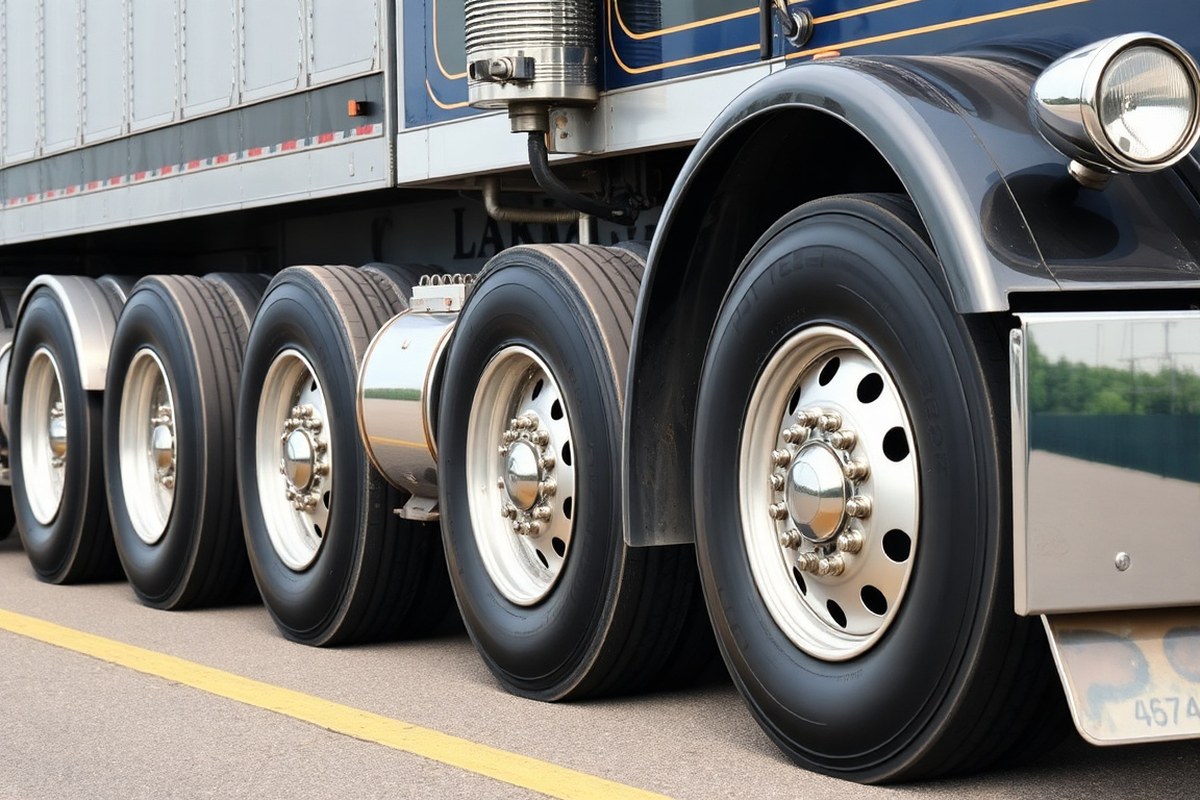
An 18-wheeler has exactly 18 wheels total. Ten of these wheels are on the tractor, and eight are on the trailer.
This split is important because both parts form the full vehicle. They work together to roll down the highway.
The tractor has one front steering axle with two single wheels. It also has two rear axles with dual wheels, making eight wheels there.
Adding the front axle wheels gives the tractor ten wheels total. This count is when it’s detached from the trailer.
The trailer usually carries eight wheels on two axles, each with dual wheels on each side. These wheels help support the heavy loads the trailer carries.
Counting wheels this way shows how tractor and trailer add up. Together, they make the 18-wheeler’s full wheel count.
How Wheels Are Distributed Across Axles and Units
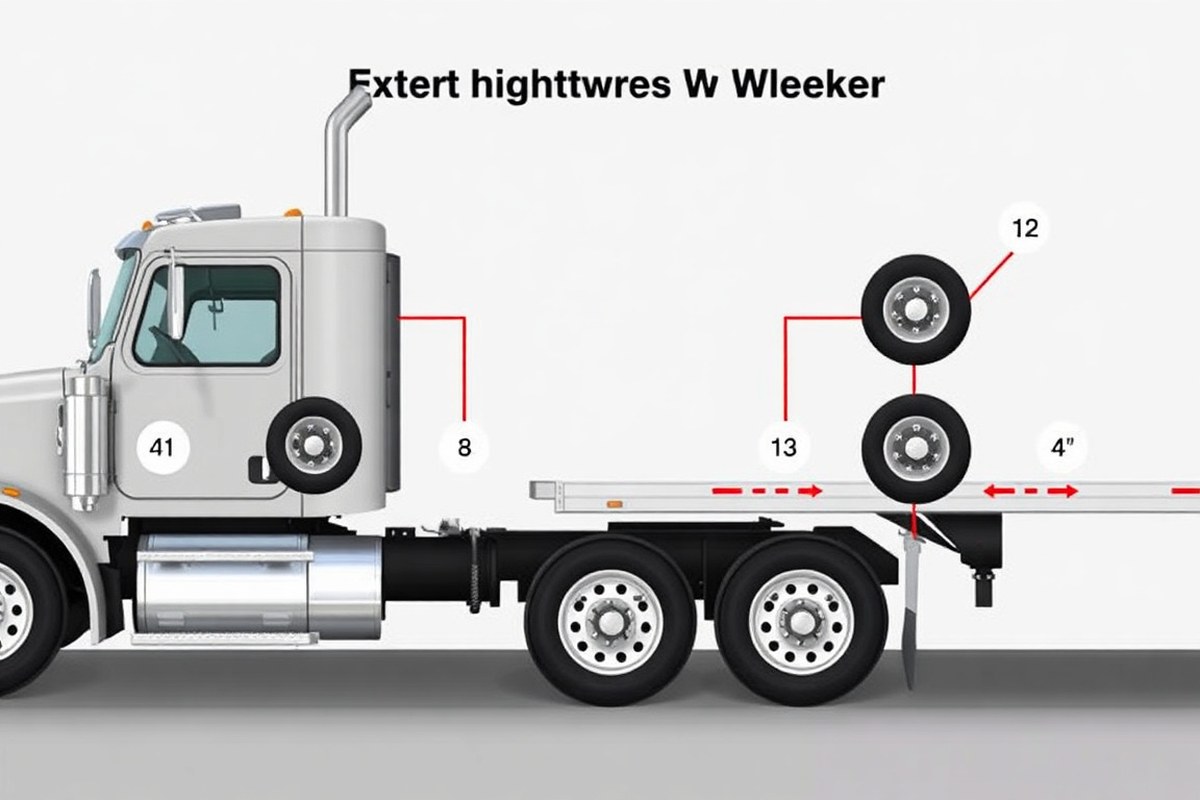
A standard 18-wheeler has three axles on the tractor. The trailer has two or three axles. These axles support the whole truck’s weight.
The tractor’s axles include one front steering axle and two rear drive axles. Wheels have single tires on the steering axle.
Dual tires go on the drive axles. The trailer axles also have dual tires.
Steering Axle Wheel Setup
The front steering axle usually has two single wheels, one on each side. These wheels control the truck’s direction and must be precise for safe handling. Each tire on this axle often supports up to 12,000 pounds, depending on state regulations.
These wheels are narrower and lighter than the drive wheels to favor steering response. You’ll only find single tires here, not duals. This setup keeps the steering axle lighter and more manageable.
Drive Axle Array and Dual Wheels
Behind the steering axle are two rear drive axles that give the truck power and traction. Each drive axle has dual wheels on both ends, totaling eight wheels across the two axles. These dual tires boost traction and support a combined weight of about 34,000 pounds.
The dual tires, mounted side by side, help spread the load and improve grip. This setup protects the road and the tires from wear. The drive axles hold most of the truck’s weight.
They also provide the driving force. This is because they have extra wheels.
Trailer Axle Configurations
The trailer usually has two or three axles, each with dual wheels on both ends. With dual wheels on each axle side, the trailer often has eight or twelve wheels total. These wheels carry the trailer’s cargo and balance the rig’s load.
Most trailers have four axles with dual tires. But configurations can vary with heavy or specialized loads.
More axles spread the weight over a larger area to avoid overloading any single point. This helps trucks meet legal limits and stay safe on the road.
| Axle Type | Number of Axles | Wheels per Axle | Total Wheels | Wheel Configuration | Function |
|---|---|---|---|---|---|
| Steering Axle | 1 | 2 | 2 | Single tires (one per side) | Steering control |
| Drive Axles | 2 | 8 | 8 | Dual tires (two per side) | Power and traction |
| Trailer Axles | 2 or 3 | 8 to 12 | 8 to 12 | Dual tires (two per side) | Load support and balance |
This wheel layout balances handling, power, and cargo support. Single wheels on the steering axle help keep steering light. Dual wheels on drive and trailer axles distribute heavy loads and improve traction for better control.
Never exceed the legal weight limits on any axle to avoid fines and safety risks.
Why Are 18-Wheelers Called That? Origins of the Name
The name “18-wheeler” comes from the total number of wheels on a common tractor-trailer setup. This rig has 10 wheels on the truck itself. The trailer has 8 wheels.
Together, they add up to 18 wheels. Drivers and others use this term to show the vehicle’s size.
It clearly shows the number of wheels. This makes it easier to identify the truck type.
Not every semi truck has exactly 18 wheels, though. Some variations exist depending on the type of trailer or use.
For example, some rigs use fewer wheels if they haul lighter loads or run shorter distances. Others have more wheels on larger trailers designed for heavy cargo.
People sometimes get confused by the term “18-wheeler.” It’s used for big rigs of all wheel counts. Some trucks have more or fewer wheels than 18.
In trucking, the phrase usually refers to a semi-trailer truck with that exact wheel count. However, other names like “semi,” “tractor-trailer,” or “big rig” are often used. Knowing this helps you understand the differences and avoid mix-ups when talking about trucks.
What Are Dual Wheels and Why Do Semis Use Them?
Dual wheels refer to pairs of tires mounted side-by-side on a single axle position. Semis use them to better support heavy loads and improve stability. These pairs are counted as two wheels because each tire carries part of the truck’s weight.
Definition of Dual Wheels
Dual wheels, or “duallies,” mean two tires on one axle side. They sit side by side, sharing the load of the vehicle. This setup offers more stability and support.
They are common on the rear axles of semis instead of single wide tires. This setup spreads the load over a wider area, reducing pressure on each tire.
Some trucks now use wide single tires called “super singles.” These replace two tires with one, holding the same load. This change cuts the number of wheels but may change costs and how the weight spreads.
Benefits of Dual Wheels for Load Support
Dual wheels help semis carry heavy loads safely by spreading weight evenly across tires. This lowers the risk of tire blowouts and tire wear. It helps trucks maintain traction on rough or uneven roads.
They also improve vehicle stability when hauling oversized or heavy cargo. The load stays balanced, which makes steering and braking more predictable. Without dual wheels, the truck could dig into the ground or slide more easily.
- Reduces ground pressure from heavy loads
- Improves vehicle stability and traction
- Limits tire wear by sharing weight
- Helps prevent tire blowouts
- Allows safer braking on slippery surfaces
- Adapts well to different road conditions
- Supports legal weight limits per axle
Some haulers switch to super singles to cut maintenance costs but lose some of these benefits. Choosing between dual wheels or super singles depends on hauling needs and expenses.
Counting Dual Wheels in Total Wheel Count
Each tire in a dual wheel setup counts as one wheel toward the total wheel number. An 18-wheeler usually uses dual wheels on four axles. The steering axle has single wheels for easier turning.
This mix balances strength and maneuverability. The total sums to 18 tires.
When counting wheels, the spare tires usually don’t count toward the 18 total. It’s only the wheels mounted on the axles that matter. This distinction helps with vehicle regulations and understanding load distribution.
Can an 18-Wheeler Have More or Fewer Than 18 Wheels?
Most 18-wheelers have exactly 18 wheels in their standard setup. However, some trucks have more or fewer wheels depending on their design and purpose. Variations happen mainly because of different trailer types and axle configurations.
For example, some heavy-duty trucks use extra axles to carry heavier loads. These additional axles add more wheels, sometimes pushing totals over 18. Specialized trailers carrying oversized or heavy equipment often use more wheels.
They need extra support, so they use more than 18 wheels. This helps them carry heavy loads safely.
Conversely, smaller trucks or certain trailers might have fewer than 18 wheels. Not all semis have 18 wheels. Some use fewer axles or single tires instead of duals.
This lowers the total wheel count on those trucks. It depends on the cargo’s weight and legal road limits.
Changing wheel counts affects cost and fuel economy. More wheels mean more tires to maintain and replace, raising operating costs.
Trucks with more wheels may also use more fuel. So operators balance these factors when choosing setups.
In daily trucking, drivers check axle and wheel counts during inspections. Knowing the wheel setup helps ensure they don’t exceed weight limits on roads. Proper wheel distribution keeps the truck stable and safe, especially on tight turns or uneven surfaces.
Always verify your truck’s wheel count matches its registered configuration to avoid fines and safety risks.
How Much Weight Does Each Tire Typically Support on an 18-Wheeler?
Each tire on an 18-wheeler usually supports around 6,000 to 7,000 pounds. The truck’s total allowable weight, including cargo, generally tops out at 80,000 pounds under U.S. Federal rules. This weight spreads evenly across tires and axles to prevent road damage and ensure safe handling.
Federal and state agencies set strict limits on how much weight each axle can carry. For example, a typical tandem axle can carry up to 34,000 pounds. These rules help keep roads from cracking and trucks from tipping over or losing control.
Tire strength and design must match these weight limits. If tires carry too much weight, they wear out faster or risk blowouts.
Truck designers pick tire and axle setups that balance load capacity with safety and durability. Overloading any one tire or axle can cause costly penalties and raise accident risks.
How Do Steering, Drive, and Trailer Axles Differ Functionally?
The front wheels on an 18-wheeler are part of the steering axle. This axle has two wheels, one on each side. It helps the driver turn.
It also controls the truck’s direction. Steering wheels must be precise and responsive because they handle the truck’s movement on the road.
The drive axles come next, usually two at the back of the tractor unit. Each drive axle holds four wheels, two dual wheels on each side. These eight wheels give the truck its grip.
They power the truck forward. They help on hills and slippery surfaces.
The trailer axles are at the rear, supporting the semi-trailer. Trailers commonly have two axles, each with dual wheels on both sides. This setup includes eight wheels in total.
They carry the cargo weight. They also keep the trailer stable while moving.
Steering axles only have two wheels because their main job is to turn. Drive axles have more wheels, totaling eight, for better traction and load support. Trailer axles have eight or more wheels.
The number depends on the trailer type. These wheels safely balance heavy loads.
Different trailers like flatbeds or reefers might slightly change the wheel setups. The main jobs are still simple. Steering axles control direction.
Drive axles give power and traction. Trailer axles carry the load. Each axle type plays a unique role to keep the truck moving smoothly and safely.
Step-by-Step Verification of Wheel and Axle Count on an 18-Wheeler
You can check an 18-wheeler’s wheels by counting them on the tractor and trailer separately. Include any spare tires in your count. Check your axles and wheel types when totals don’t equal 18.
Counting Wheels on the Tractor Unit
The tractor unit is the front part where the driver sits. It normally has 10 wheels, spread over several axles.
Start by counting wheels on each axle, looking closely at both sides. Don’t forget the single front tires and dual rear wheels.
- Locate the front axle and count its two single wheels.
- Move to each rear axle, count the pairs of dual wheels on both sides.
- Confirm you have 10 wheels total on the tractor.
- Note any unusual tire setups or missing wheels.
Check wheel condition while counting to catch flat or damaged tires early.
Counting Wheels on the Trailer Unit
The trailer connects behind the tractor and usually has 8 wheels. These wheels support the cargo space.
Count wheels on each trailer axle just like with the tractor unit. Each axle typically has dual wheels on both sides.
- Find the first trailer axle, count dual wheels on both sides.
- Do this for each axle until all wheels are counted.
- Verify you have 8 wheels total on the trailer.
- Observe if any wheels are missing or look different.
Trailers with more than two axles may have more wheels, check all axles carefully.
Including Spares and Non-Standard Axles
Spare tires usually sit on the tractor or trailer. They don’t count as normal wheels. Include them separately to know your total wheels on board.
Non-standard axles or extra wheels can change the count. Some trailers have extra axles for heavier loads, raising wheel numbers.
- Locate spare tires, often mounted under or on the side of either unit.
- Count each spare tire as one wheel but keep them separate from active wheels.
- Check for extra axles with wheels beyond the usual setup.
- Add spare and extra wheels separately to your overall total.
Not counting spares in the main wheel total avoids confusion in legal or safety reports.
Safety and Legal Considerations for Wheel and Axle Configurations
The Federal Motor Carrier Safety Administration limits the gross weight for trucks to 80,000 pounds. These limits depend on axle count.
Each axle can only carry a certain maximum weight. So trucks need enough axles to spread the load properly.
More wheels mean better weight distribution on the road. Dual wheels on each axle share the load, reducing wear on the pavement. This setup helps the truck handle better.
It lowers the risk of tire blowouts. Overloading tires is less likely with it.
Truck operators must inspect wheels and axles regularly. Checking tire pressure helps avoid uneven wear or blowouts. Inspectors also look for cracks, loose lug nuts, or damaged hubs to ensure safe operation.
Maintenance typically involves daily visual checks and weekly air pressure monitoring. Replacing worn tires costs around $400-$600 each, but it prevents breakdowns and costly fines. Good upkeep keeps trucks safe, road-friendly, and legally compliant.
Weight limits can differ for local versus interstate travel. For example, some states allow heavier axle loads on non-interstate roads. Drivers must know these rules to avoid penalties and keep the truck stable.
Adding extra axles and wheels may increase upfront costs. However, they improve fuel efficiency by reducing engine strain. Trucks with more axles can carry larger loads.
They do this legally, saving trips. This helps save time in the long run.
Step-by-Step Action Plan to Count and Understand 18-Wheeler Wheels
Follow these steps to check wheels and axles on any 18-wheeler truck. It helps you confirm the setup and learn how it works.
- Before you start: Find a parked 18-wheeler with clear access to both sides. Make sure the truck is off and safe to approach.
- Step 1: Count all visible wheels on the tractor unit. Note that most wheels are dual, so count pairs as two separate wheels.
- Step 2: Count all wheels on the trailer unit in the same way. Note the number of axles and dual wheels on each.
- Step 3: Add the wheels from tractor and trailer. The total should be close to 18 but might vary for some trucks.
- After counting: Identify which axles steer, which drive, and which simply support the weight. Steering axles have single wheels; drive axles are dual.
- Next day: Check tire markings or sidewalls for load ratings. This shows how much weight each tire supports safely.
- Within one week: Review local trucking laws or regulations for wheel and axle limits. This keeps your findings compliant with rules.
Frequently Asked Questions
How Many Wheels Does a Standard 18-wheeler Have?
A standard 18-wheeler has 18 wheels in total. The number counts both tractor and trailer wheels together.
These wheels spread the truck’s heavy load on the road. This helps protect the road surface.
What Truck Type Is Called a 6-wheel Truck?
A 6-wheel truck usually refers to a medium-duty truck with three axles. This count includes the front steering axle.
It also counts two rear axles. These are common on smaller delivery or utility trucks.
Do All Semis Have Exactly 18 Wheels?
Not all semis have exactly 18 wheels. Some semis have more or fewer wheels.
The number depends on cargo, size, and axle layout. This meets weight rules or hauling needs.
Why Do 18-wheelers Need so Many Wheels?
18-wheelers need many wheels to spread out the heavy cargo’s weight. The wheels keep the truck steady on the road.
They also lower the weight each tire carries. This helps avoid road damage.
What Is the Purpose of the Fifth Wheel on an 18-wheeler?
The fifth wheel connects the trailer to the tractor and allows it to pivot. This joint helps the truck turn and maneuver while hauling heavy loads safely.
Key Points to Remember
A standard 18-wheeler has around 18 wheels in total. These wheels come mainly in dual pairs on the drive and trailer axles.
Knowing the wheel count helps understand truck stability and legal limits. Now, try counting the wheels on a nearby truck to see this in action.