How Fast Does an F 16 Fly? A Complete Guide to Its Speed and Performance
Wondering how fast does an F-16 fly? This fighter jet hits about 1,353 miles per hour at 40,000 feet.
That’s nearly twice the speed of sound, making it a supersonic aircraft. It usually reaches this speed when flying high above 40,000 feet.
The F-16’s speed comes from its powerful engine and lightweight design. It uses advanced aerodynamics to slice through the sky efficiently. Getting close to Mach 2 means it’s faster than commercial planes by a wide margin.
Altitude plays a big role in achieving maximum speed. At higher altitudes, thinner air reduces drag, which helps the jet go faster. The jet’s turbojet engine delivers more thrust where the air pressure is lower.
External factors also affect speed performance. Carrying heavy weapons or fuel drops speed, as does flying through bad weather. Pilots balance these elements to keep the jet flying as fast as possible when needed.
Key Takeaways
- The F-16 typically reaches top speed above 40,000 feet altitude.
- Its engines generate around 29,000 pounds of thrust for acceleration.
- Lightweight design improves thrust-to-weight ratio and climbing speed.
- Supersonic speed means flying faster than 767 mph, the sound barrier.
- External factors like weapons or fuel tanks reduce top speed.
- Altitude changes air density, affecting maximum achievable speed.
What Is the Maximum Speed of an F-16?
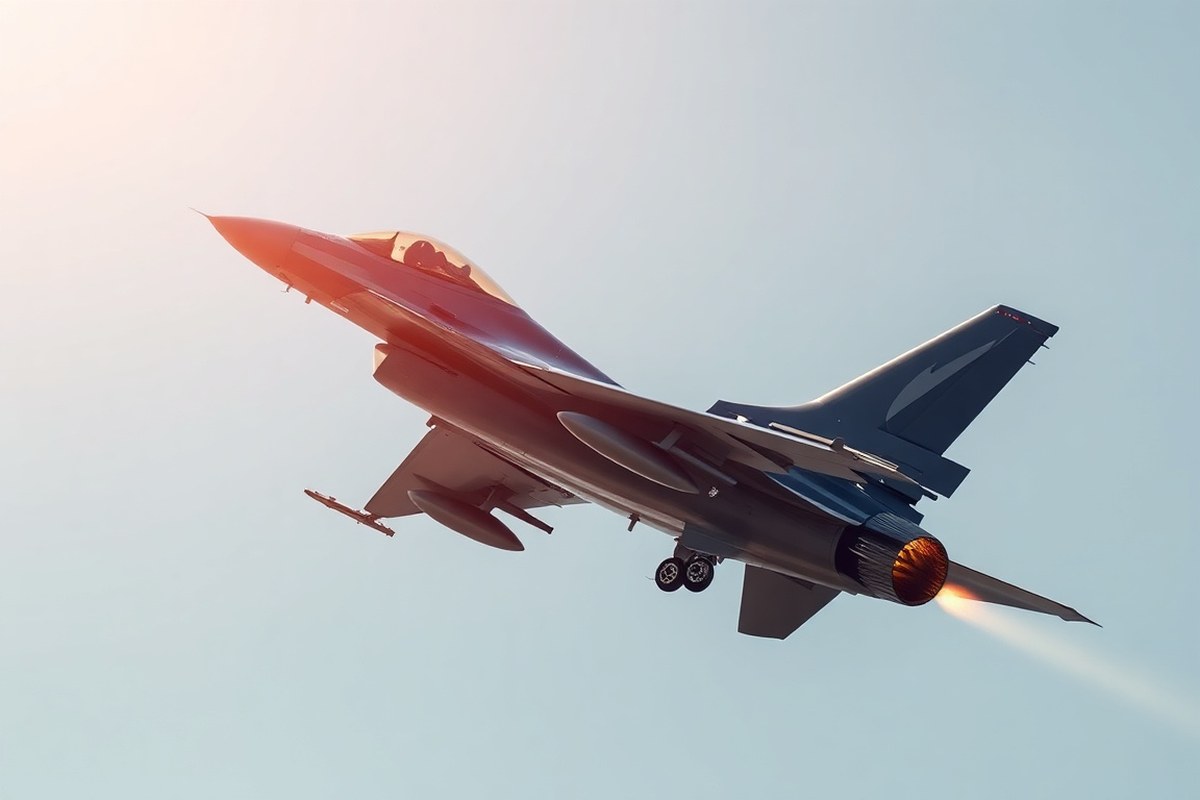
The F-16 Fighting Falcon reaches a maximum speed of about Mach 2. This equals roughly 1,500 miles per hour or 2,414 kilometers per hour. The top speed usually happens at high altitudes where air resistance is lower.
The F-16 can fly about 1,353 miles per hour at 40,000 feet. This speed equals 2,178 kilometers per hour.
At this altitude, thinner air lets the jet push through faster with less drag. That helps it hit maximum speed without using excessive fuel or engine power.
This peak speed requires clear conditions and limited external load. Carrying extra fuel tanks or weapons slows the jet down because of added weight and drag. Pilots climb above 40,000 feet before going full engine thrust.
They then reach Mach 2. This balances speed with control and safety.
How Does the F-16 Break the Sound Barrier?
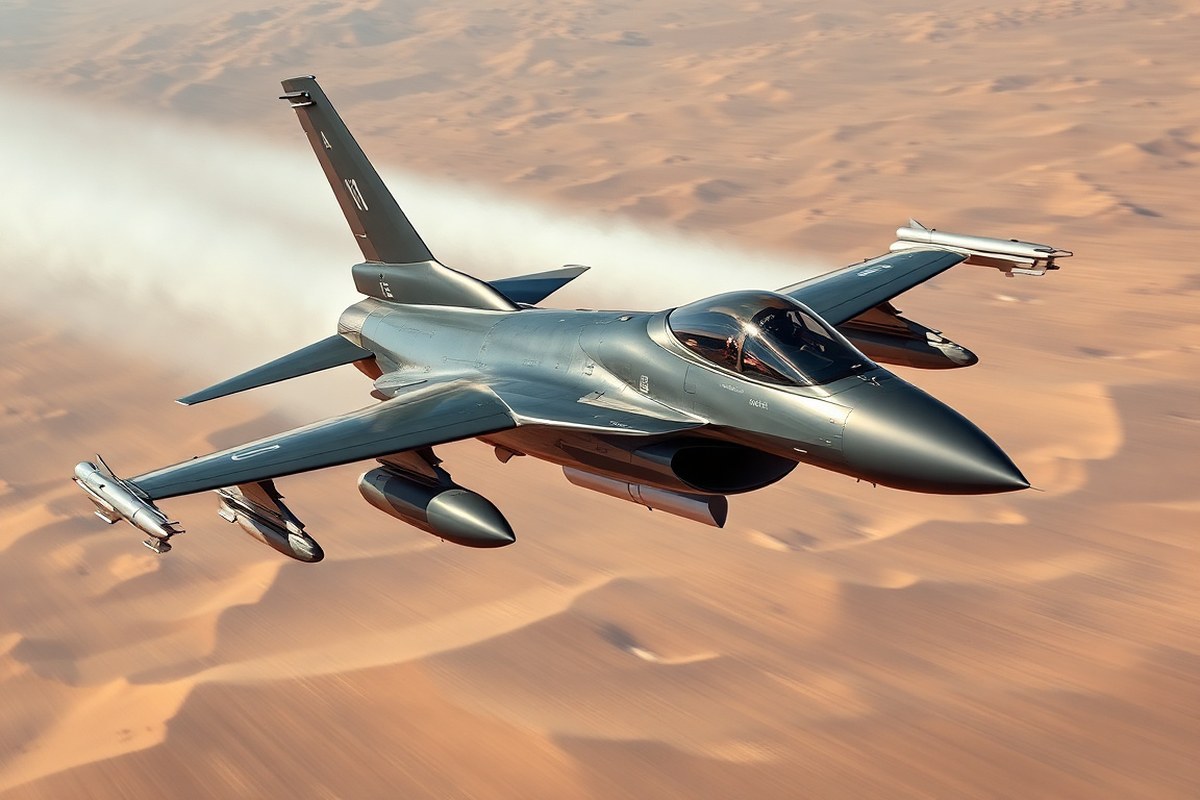
The sound barrier is when a plane hits the speed of sound. This speed is about 767 miles per hour at sea level. It marks a major limit for aircraft speed.
When an F-16 breaks this barrier, it passes through intense changes in air pressure and shockwaves. Its design helps manage these forces to fly fast without losing control.
What Happens at the Sound Barrier
The sound barrier forms because air molecules can’t move quickly enough. As speed nears sound, they get compressed. This buildup creates resistance against the aircraft.
This causes a buildup of pressure waves, creating shockwaves that push back against the jet. Breaking through means overcoming this resistance, which sharply increases drag and stress on the airframe.
Pilots feel a buzz when shockwaves go over the plane. The sonic boom happens on the ground below. This is caused by pressure waves breaking free.
Flight systems must handle sudden changes in airflow and pressure. Without the right design, the plane can become unstable or inefficient at these speeds.
Powerful Engines Push Through Drag
The F-16 uses a high-thrust turbofan engine like the GE F110. It can produce up to 29,000 pounds of thrust with its afterburner. This power helps the jet reach high speeds.
This extra thrust is essential to push the jet past the sound barrier. The afterburner adds fuel directly into the exhaust stream.
This creates a hot jet of gas inside the engine. It quickly boosts the plane’s speed.
Variable exhaust nozzles adjust to optimize thrust and fuel efficiency at different speeds. This flexibility helps the F-16 sustain supersonic flight longer without wasting fuel. The engine’s power and these nozzle changes work together to overcome the sudden drag from shockwaves.
Aerodynamic Shape Minimizes Shockwave Effects
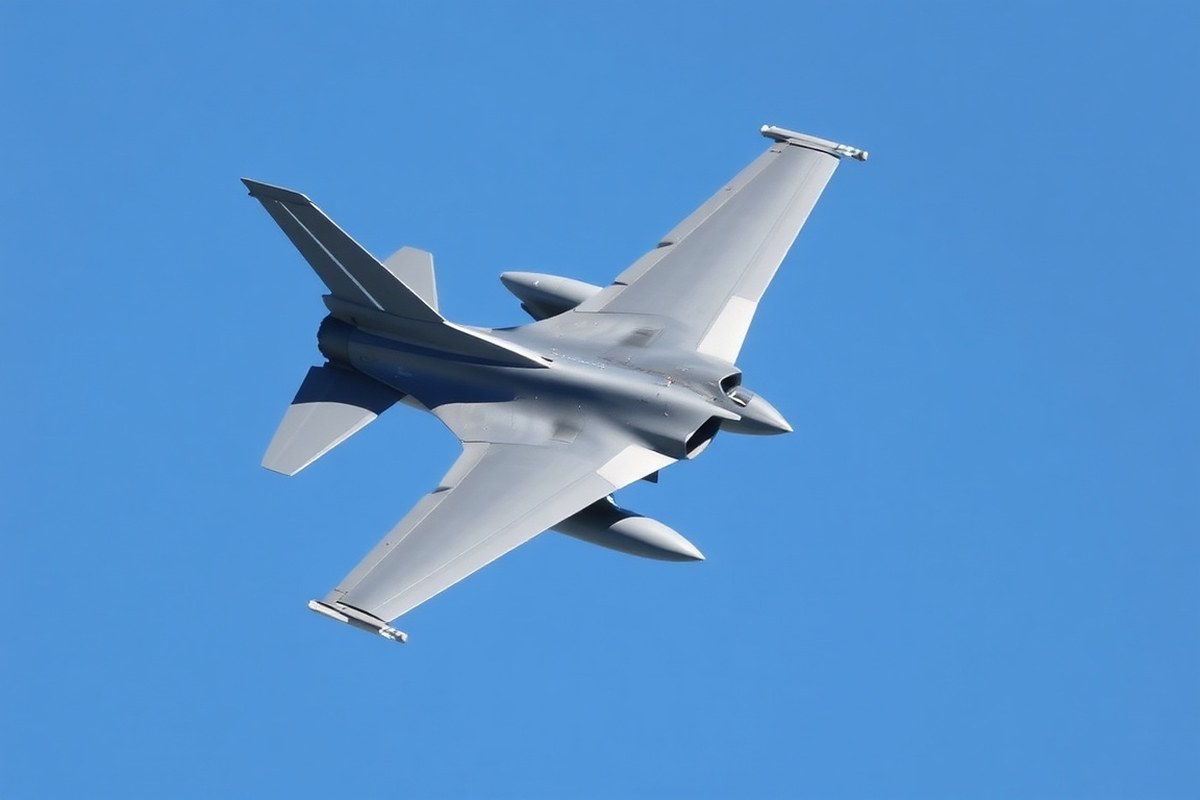
The F-16 has a sleek body and cropped-delta wings with 40-degree edges. These shapes cut down drag on the jet. They help keep airflow smooth during flight.
Its shape delays and softens the shockwave formation as speed climbs. The slim profile also cuts weight, helping the jet accelerate faster.
Strakes create vortex lift to improve handling at high speeds. Variable-camber wings adjust wing shape to maintain control without adding drag. Together, these features help the F-16 stay agile while zooming past the sound barrier.
Fly-By-Wire Controls Maintain Stability
At supersonic speeds, small control inputs can cause big reactions. The F-16 uses an advanced fly-by-wire system that replaces manual controls with electronic ones. A control system constantly moves wing surfaces to keep the jet steady.
It works especially well against bumpy airflow near the sound barrier. This stops the plane from shaking too much.
Fly-by-wire enables rapid, precise responses without overcorrection. It keeps the aircraft balanced through shockwaves and changing pressures. This technology allows pilots to maneuver confidently even near or above Mach 1.
Watch the engine temperature and fuel levels during supersonic flight. This avoids overheating the engine or running out of fuel. Careful monitoring keeps the plane safe and efficient.
What Engine Variants Power the F-16 and Their Impact on Speed?
The F-16 uses either Pratt & Whitney or General Electric engines. Both provide high thrust, important for the jet’s top speed. The engine model affects the fighter’s power and speed capabilities.
Pratt & Whitney Engines
The Pratt & Whitney F100 engine powers many early and mid-production F-16s. It offers reliable performance with a maximum thrust of about 29,000 pounds-force (lbf). This thrust helps the jet accelerate and reach supersonic speeds quickly.
Different versions of the F100 improve fuel efficiency and thrust over time. They support both air-to-air combat and ground attack missions. The engine’s design focuses on balancing power with long flight endurance.
General Electric Engines
General Electric’s F110 engine features in later F-16 blocks and upgrades. It matches the F100 in thrust with a top rating of around 29,000 lbf. This power level boosts acceleration and climb rates for quick response in combat.
Some pilots prefer the F110 for slightly better thrust-to-weight ratios. This edge increases the jet’s agility and allows faster speed gains in short bursts. Both engines maintain strong reliability under demanding flying conditions.
Here’s a quick comparison of engine thrust ratings across F-16 variants:
| Engine Model | Max Thrust (lbf) | Common F-16 Blocks |
|---|---|---|
| Pratt & Whitney F100-PW-200 | 23,770 | Early F-16A/B |
| Pratt & Whitney F100-PW-220 | 23,830 | Mid F-16C/D |
| General Electric F110-GE-100 | 28,984 | Later F-16C/D Upgrades |
| General Electric F110-GE-129 | 29,000 | Advanced F-16C/D Blocks |
This table shows how engine choice varies with F-16 upgrades. More powerful engines allow higher speeds and better overall flight performance. Thrust levels shape top speed but other factors also matter.
Afterburner Technology
The afterburner boosts thrust by injecting fuel directly into the engine’s exhaust. It can increase thrust by up to 50 percent for short bursts. This extra power is key for breaking the sound barrier or quick dashes.
Using afterburners consumes fuel rapidly, so pilots only use them briefly. They help the F-16 accelerate faster and climb more steeply. When the afterburner kicks in, speed jumps closer to the jet’s maximum limit.
How Do Altitude and Atmospheric Conditions Affect F-16 Speed?
The F-16 reaches its top speed at high altitudes because the air is thinner there. Thinner air means less drag, so the jet flies faster with less resistance. Temperature also affects the speed of sound, which in turn influences the F-16’s performance.
Thinner Air Reduces Drag
At high altitudes, the air density drops significantly. Less air means fewer air molecules push against the jet’s surfaces. This reduction in aerodynamic drag lets the F-16 accelerate more easily and reach higher speeds.
By climbing quickly to its optimal altitude, the F-16 takes advantage of this effect. The jet can then sustain higher speeds while using less engine power compared to flying low. That’s why pilots climb fast during combat or high-speed runs.
Altitude and Engine Performance
The F-16’s engine works better at high altitude. Cool, thin air helps it run efficiently. This improves overall engine performance.
Thin air cools engine parts during operation, preventing overheating at high throttle. This allows the engine to maintain thrust needed for supersonic speed.
However, too thin air means less oxygen, which can limit thrust. The F-16 balances this by operating where oxygen is still sufficient for full engine power. That optimum range is about 30,000 to 40,000 feet, where speed benefits peak.
Temperature’s Role in the Speed of Sound
The speed of sound changes with temperature. Warm air has a faster sound speed than cold air. At higher altitudes, air temperature drops, lowering the speed of sound.
The F-16 can reach Mach 2 at slower true airspeed high up. At sea level, it needs more speed. Air density affects this.
Lower sound speed at altitude means the jet breaks the sound barrier sooner when accelerating. Pilots use Mach numbers to measure speed relative to sound. Instruments also show this metric.
Mach tells how close speed is to sound. This changing speed of sound affects how speed is reported and perceived.
How Altitude Shapes Flight Strategy
Pilots use altitude to manage speed and performance. Climbing high allows the F-16 to cruise faster with less engine strain. This helps keep fuel use low on long trips.
The jet stays ready to speed up quickly. Fuel efficiency and combat readiness balance out.
Choosing the right altitude depends on mission goals. Lower altitude flying may be needed for stealth or ground attack. But it limits top speed.
Flying high increases speed but risks radar and interceptors. The jet faces more threats up there. Pilots must decide the best altitude.
How Does Aerodynamics Influence the F-16’s Speed and Maneuverability?
The F-16 uses its wing shape to cut down drag and boost speed. Its wings are relatively small with a cropped delta design. This means less surface area pushing air, which reduces drag as the jet flies fast.
The wing’s thin profile helps air flow smoothly around the jet’s body. That cuts resistance and lets the aircraft reach high speeds without wasting fuel. The wing gives enough lift for stability at low speeds.
It keeps the jet stable at high speeds too. This helps the jet fly smoothly in different conditions.
The F-16 was the first fighter with a fly-by-wire system. Instead of traditional mechanical controls, it uses computers to adjust the flight surfaces constantly. This system fixes tiny instabilities that would usually cause the jet to wobble or lose control.
Because the F-16 is naturally unstable, it can turn and roll faster than many other jets. The fly-by-wire system balances this instability and keeps the jet from crashing. Pilots get more precise control, letting them pull tight turns or quick maneuvers without losing speed.
This unstable design improves agility but needs the onboard computer to manage it. The computer makes thousands of adjustments every second. This lets the jet maintain control even during rapid climbs and sudden direction changes.
Drag grows sharply as the F-16 nears supersonic speeds. It uses its shape and smooth surfaces to limit this extra drag. The jet goes fast but faces stronger aerodynamic forces.
It must push the engine harder to overcome these forces. This effort keeps the speed steady during flight.
The F-16 is easy to handle thanks to fly-by-wire. This system depends heavily on computer controls. If it fails, the jet’s control can drop sharply.
What Are the Differences in Speed Among F-16 Variants?
Newer F-16 variants do not fly dramatically faster than older ones. Most F-16 models share a similar top speed of around Mach 2 (about 1,500 mph). Engine power and electronics got better in later versions.
These improvements let them accelerate faster. They also run more efficiently at high speeds.
Engine upgrades mainly affect how quickly the F-16 reaches its top speed. Earlier models used the Pratt & Whitney F100-PW-200 or the General Electric F110-GE-100. Later blocks switched to more powerful and reliable engines like the F100-PW-229 or F110-GE-129.
These upgrades boost thrust and keep speed during fights. They also cut down maintenance time. This is key for actual missions.
- F-16 Block 15 introduced improved avionics but similar engines to earlier blocks
- Block 40/42 added better radar and targeting, plus updated engines for smoother thrust
- Block 50/52 models got the F110-GE-129 or F100-PW-229 engines, boosting acceleration
- Block 60 variants, mainly for export, included more engine thrust and cooling upgrades
- The F-16V Viper features modern avionics, AESA radar, and cockpit displays without major speed changes
The F-16V Viper flies about as fast as older types. Its real gain is in how quickly it reacts. That speed of response matters a lot.
Its radar and cockpit tech let pilots track threats sooner and fire weapons more accurately. The engine stays powerful and reliable to support sustained speeds during mission maneuvers. These updates improve combat effectiveness more than outright top speed.
Engine upgrades require months of work and heavy testing. Testing can take thousands of hours. Only then can the jets go to the flight line.
These improvements cost millions of dollars but extend the jet’s service life and mission capability. Pilots often notice quicker acceleration and better handling near top speed after engine upgrades. Still, carrying weapons and fuel tanks cuts top speed no matter the variant.
How Does Speed Affect the F-16’s Combat Performance and Maneuverability?
Flying fast helps the F-16 intercept enemy aircraft quickly. High speed closes the distance in less time, giving pilots a chance to engage or escape. This speed advantage often proves essential in surprise attacks or chasing down targets.
Speed does not always limit maneuverability in the F-16. The jet uses a fly-by-wire system to keep control tight even at high speeds. This system adjusts control surfaces instantly, allowing sharp turns and rapid altitude changes without losing stability.
The fly-by-wire system is key for balancing speed with agility. It prevents pilot overload by automatically smoothing out inputs. Without this, sharp maneuvers at high speed could risk the jet stalling or over-stressing its airframe.
In combat, pilots may drop external stores to boost speed and agility. Jettisoning fuel tanks or bombs removes extra weight and drag. This helps the F-16 turn faster and maintain higher speeds during dogfights or quick escapes.
However, flying very fast can increase the risk of overheating and structural stress. Pilots must manage throttle and maneuver gently when pushing the limits. Modern F-16 variants include cooling features and stronger materials to handle this better.
Good results show in quick responses, tight turns, and maintaining speed during attacks. Poor control at high speed can cost separation from targets or lead to dangerous maneuvers. The pilot’s skill combined with the jet’s systems make fast, precise combat possible.
What Operational Factors Limit the F-16 from Sustaining Maximum Speed?
The F-16 can reach speeds close to Mach 2. But it cannot keep that speed long. The main reason is that flying that fast burns a lot of fuel very quickly.
Besides fuel, the engine heats up a lot. The airframe also gets very hot. This heat can cause damage if it lasts too long.
Engines running at maximum afterburner push fuel use sky-high, cutting flight time. Plus, the extra heat stresses engine parts and aircraft skin. Pilots usually fly slower to save fuel.
They do this to keep the plane safe. It helps for longer missions.
Weapons and extra fuel tanks add drag and weight. This slows the jet and makes it use even more fuel, so top speed drops.
Most combat missions carry some weapons or external tanks. So pilots rarely hit that Mach 2 mark in real life.
- Maximum speed causes extreme fuel consumption, limiting range.
- Engines produce excessive heat near Mach 2, risking damage.
- Aircraft skin heats up, potentially weakening materials.
- External weapons and fuel tanks add drag, reducing speed.
- Balance needed between speed and fuel efficiency for missions.
- Pilots avoid prolonged max speed to preserve engine health.
The F-16’s design supports short bursts of extreme speed, not steady high-speed cruises. Pilots choose a speed that keeps fuel use reasonable and avoids overheating. They also factor in mission type and load to adjust their speed accordingly.
Burning full afterburner to reach max speed quickly uses fuel fast and heats the engine. Limit these bursts to protect your jet.
How Do Payload and External Factors Influence the F-16’s Top Speed?
Carrying external fuel tanks slows the F-16 by adding drag and weight. Each tank can cut top speed by about 50 to 100 mph. The exact amount depends on the tank’s size.
The number of tanks also matters. Drag hurts acceleration and the ability to reach maximum speed fast.
Heavy weapon loads cut speed even more. Weapons increase the plane’s weight and cause extra drag. A loaded F-16 with bombs and missiles is much slower.
It may lose several hundred mph. This happens compared to a clean, air-superiority setup.
Mission needs shape how the plane is configured. A fighter set for air combat may ditch tanks and carry fewer weapons to go faster. Ground attack missions usually add more stores, lowering speed to meet mission goals.
- External fuel tanks add drag, lowering speed by 50, 100 mph per tank
- Heavy weapons and bombs increase weight and drag, cutting top speed significantly
- Fewer external stores mean less drag and higher speeds for air superiority roles
- Adding pylons or sensor pods also slows the jet due to more drag
- Mission priorities dictate loadout: speed or endurance over armament for each flight
Pilots balance loadouts to keep the plane fast enough for the mission. For example, removing tanks before dogfights lets the F-16 reach higher speeds quickly. Too much weight means slower acceleration and a lower speed ceiling.
The F-16’s power means it handles some weight well, but drag always beats thrust. Lightweight missions can hit or approach the top speed.
Heavy strike roles sacrifice speed for carrying more gear. Knowing how much speed you lose helps pick the best setup for what you need.
How to Understand and Appreciate the F-16’s Speed
Getting the most from your interest in the F-16’s speed means focusing on facts. Use practical ideas to understand its performance better.
Keep your attention on key details about the jet. Follow this simple plan to deepen your understanding and enjoy every detail.
- Today: Look up the F-16’s maximum speed and how it compares to other jets. Notice how fast it really flies.
- This week: Study how altitude and weather affect its speed. Use flight tracking apps or articles to see real conditions in action.
- Next 3 days: Learn about the engine types powering the F-16. Recognize which variant has which engine and why that matters for speed.
- This weekend: Watch videos of the F-16 breaking the sound barrier. Look for clips showing its high-speed moves. Simulations can also help you see it in action.
- After 1 week: Observe the impact of different payloads on speed. Read pilot reports or technical summaries that mention how weapons or fuel tanks slow the jet.
- Following week: Learn how aerodynamics affect the F-16’s speed and agility. Explore what helps it turn fast and fly smoothly. Sketch or note basic design elements that reduce drag.
- Two weeks in: Compare speeds among F-16 variants, noticing why performance changes with each update.
- After 3 weeks: Explore real combat scenarios showing how pilots manage speed for tactical advantage.
Frequently Asked Questions
How Fast Does an F-16 Accelerate?
The F-16 can accelerate from zero to supersonic speed in just seconds. Its powerful engine and light frame let it speed up fast. This helps in dogfights and quick emergency moves.
Can an F-16 Maintain Supersonic Speed Without Afterburners?
No, the F-16 needs afterburners to sustain supersonic speed. Afterburners inject extra fuel, dramatically increasing thrust but using more fuel. Pilots usually use them for short bursts due to high fuel consumption.
What Is the Cruising Speed of an F-16?
The F-16 cruises at about 500-600 mph during normal operations. This speed balances fuel efficiency and preparedness for combat or interception missions. It’s slower than top speed but practical for longer flights.
How Does the F-16’s Speed Compare to Other Fighter Jets?
The F-16’s top speed is around Mach 2, similar to many modern fighters. It’s not the fastest. But it balances speed with agility and advanced avionics for overall effectiveness.
Does Flying Faster Reduce an F-16 Pilot’s Reaction Time?
Yes, higher speed reduces reaction time during combat or evasive maneuvers. Pilots need training to manage fast decision-making at supersonic speeds to maintain control and safety.
Before You Go
The F-16 flies incredibly fast but depends on many factors like altitude and payload. Knowing these details helps you understand fighter jet performance better. Start by studying one feature of the F-16.
See how that part affects its flight. Notice what changes in its speed or control.