How Long to Bike 10 Miles: A Complete Guide to Average Times and Tips
How long to bike 10 miles depends on your speed, fitness, and bike type. Casual riders usually take about 40 to 60 minutes for 10 miles. Road bikes generally make for a faster ride than heavy mountain bikes.
The time varies with the road, weather, and stops during your ride. Hills and rough pavement add time, while tailwinds help you go faster. Better fitness and faster bikes can cut your time by 10 to 20 minutes.
Your average speed on flat ground helps estimate your total time. Riding at 12 to 15 miles per hour is common for many riders on easy terrain. Watch out for stops and wind because those slow you down more than you expect.
Key Takeaways
- Average riders bike 10 miles in 40 to 60 minutes on flat terrain.
- Good fitness can improve your time by 10 to 20 minutes.
- Road and weather conditions add extra time to your ride.
- Stop time and traffic can slow you down significantly.
- A road bike usually lets you bike 10 miles faster than a hybrid.
- Tracking your speed on a flat stretch helps estimate your time.
How Long Does It Take to Bike 10 Miles on Average?
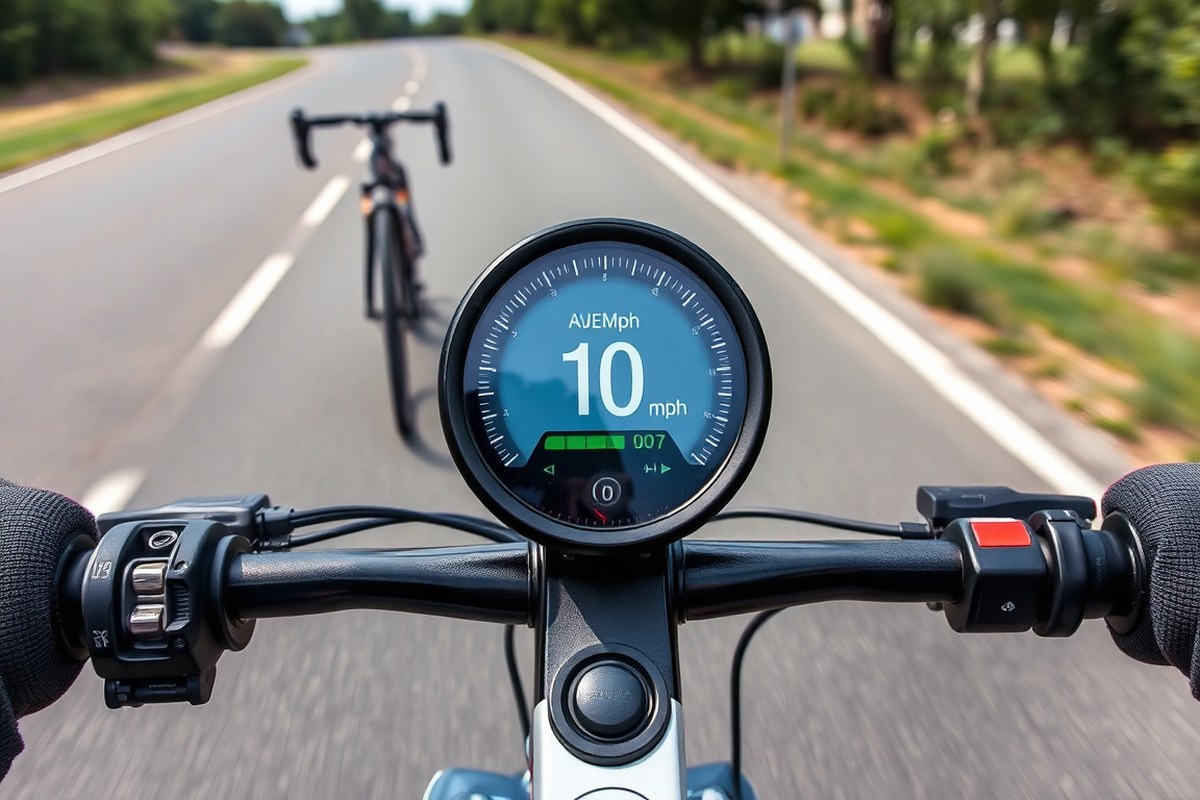
Biking 10 miles usually takes between 30 and 75 minutes. Your fitness level and bike type matter a lot. Casual riders on flat terrain often finish in about 50 to 60 minutes.
A beginner might average around 8 mph, taking roughly 75 minutes for 10 miles. More experienced cyclists often go 18 to 20 mph. This cuts the time to about 30 to 33 minutes.
They ride faster than beginners and intermediates. Hitting 30 minutes for 10 miles means you cycle near 20 mph.
That speed is considered fast. It shows strong cycling ability.
| Skill Level | Average Speed (mph) | Time to Bike 10 Miles |
|---|---|---|
| Beginner | 8 | ~75 minutes |
| Casual | 10 | ~60 minutes |
| Steady | 12 | ~50 minutes |
| Intermediate | 15 | ~40 minutes |
| Advanced | 18 | ~33 minutes |
| Experienced | 20 | ~30 minutes |
| Race Pace | 23, 28 | ~21, 26 minutes |
The table shows typical averages for different riders. To find your time, divide 600 by your average speed in mph.
For example, at 12 mph, 600 ÷ 12 = 50 minutes. That helps you plan and track your rides well.
Many factors change your actual time. Hills, wind, and weather all slow you down.
Beginner riders often take an hour or more. Stronger cyclists typically finish in 30 to 40 minutes on flat roads.
How Fitness and Experience Influence Your 10-Mile Time
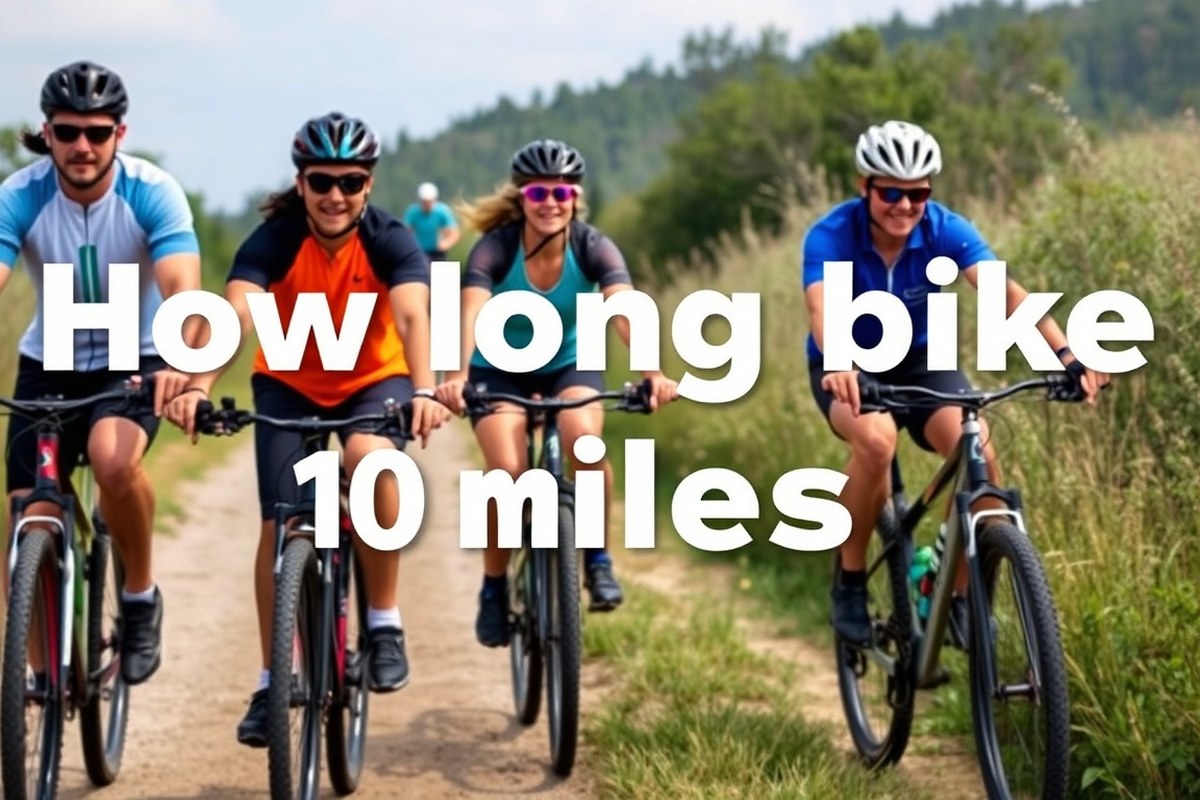
Your fitness and cycling experience strongly shape how fast you bike 10 miles. Beginners often range from 47 to 55 minutes.
Experienced riders tighten that time to 26 to 30 minutes or less. Tracking your progress depends on understanding your current pace and how much effort you put in.
Beginner vs. Experienced Rider Differences
Beginners usually ride slower and take breaks more often. Their speeds average about 10 to 12 mph. A 10-mile ride takes around 50 to 60 minutes.
Experienced cyclists keep speeds between 15 and 18 mph. They finish 10 miles in 33 to 40 minutes.
Experienced riders pedal more smoothly and know how to handle hills and traffic. They build endurance through consistent training, lowering their heart rate and increasing power.
Beginners often tire quickly and find pacing harder. So their ride times are naturally longer.
How to Assess Your Current Fitness Level
Knowing your fitness level starts with timing your current 10-mile ride. Ride at a steady pace on a familiar, mostly flat route. Record how long it takes without pushing too hard or stopping often.
Next, rate how hard you are working. Use a scale from 1 to 10. Ten means maximum effort.
This helps connect your time with your real cycling effort. Track this over several rides to see if and how your pace improves.
- Choose a 10-mile route with minimal stops and consistent terrain.
- Set a stopwatch or use a cycling app to time your ride.
- Ride at a steady, comfortable pace without sprinting or excessive breaks.
- Note your total time and rate your effort on a 1-10 scale during the ride.
- Repeat every week or two to track improvements.
- Compare times to average beginner, recreational, or advanced pace ranges.
- Adjust your training or rest based on your progress.
Don’t rely on a single ride time; track times and effort levels over weeks.
Using Effort Levels to Estimate Times
The CDC says biking under 10 mph is moderate. Biking faster than 10 mph is vigorous. Beginners often stay near moderate effort, explaining longer ride times.
Experienced cyclists can push speeds above 15 mph. This effort cuts minutes off their rides.
Use your perceived effort to estimate realistic ride times. For example, effort at 6 or 7 out of 10.
Your 10-mile time will be about 40 to 50 minutes. Higher effort levels usually push times down to 30 minutes or less.
Bike Types Compared: What’s Faster for 10 Miles?
The type of bike you choose changes your 10-mile ride time noticeably. Road bikes usually cut down your time by 15-30% compared to hybrids or mountain bikes. They have thin tires and light frames that help you go faster on smooth pavement.
Hybrid bikes offer a comfortable, more upright riding position. They don’t match road bikes for speed. But they’re quicker than mountain bikes on flat surfaces.
Mountain bikes work well off-road but are slower on pavement. Their wide tires and heavier frames add drag that slows you down.
E-bikes have a motor to help you pedal. This means you can maintain higher speeds without sweating too much.
For 10 miles, an e-bike often gets you there faster than a mountain or hybrid bike. The motor gives you extra power, especially on hills or wind.
| Bike Type | Approximate Speed (mph) | 10-Mile Time | Notes |
|---|---|---|---|
| Road Bike | 20, 24 | 25, 30 minutes | Lightweight, narrow tires, fastest on pavement |
| Hybrid Bike | 15, 18 | 33, 40 minutes | More upright, versatile for streets and trails |
| Mountain Bike | 6, 10 | 60, 90 minutes | Heavy, wide tires, slower on roads and trails |
| E-Bike | 18, 22 | 27, 33 minutes | Motor assist helps maintain faster pace |
The terrain also influences these numbers. Mountain bikes slow down a lot on trails. Ten miles can take an hour and a half or longer.
Road bikes shine on flat, smooth streets where their speed advantage is clear. Hybrids fit in between, handling short hills and uneven roads better than road bikes.
Choosing an e-bike adds extra cost, often $1,000 or more, plus charging and maintenance. They can keep you near road bike speeds with less effort.
That’s useful for beginners or riders tackling tough routes. But e-bikes weigh more and require some extra care compared to regular bikes.
Terrain and Weather: Their Impact on 10-Mile Ride Times
Hills and rough surfaces extend how long it takes to bike 10 miles. Riding uphill slows your speed significantly, sometimes cutting it in half, depending on the grade. Gravel or dirt trails add rolling resistance, making you work harder than on smooth pavement.
Flat, paved roads help you maintain a steady pace and finish faster. On such terrain, casual riders usually spend 45 to 75 minutes on a 10-mile ride. Expect to add 10 to 20 minutes if your route has climbs.
Rough patches can also slow you down. Plan for extra time on tough roads.
Wind plays a big role too. A strong headwind can slow you down by 10 to 20 percent. It depends on how strong the wind is.
Winds like that can really affect your speed. Tailwinds help, so choose directions wisely for your ride. Riding into a 15 mph wind can add 5 to 10 minutes.
This is over a 10-mile ride. The wind slows you more than you might think.
Hot weather drains your energy faster and slows your pace. Temperatures above 85°F can wear out many cyclists sooner than cooler days do.
Drink plenty of water. Consider riding in the early morning or late evening to avoid the heat.
Rain affects traction and comfort. Wet roads require slower speeds for safety, especially on turns and descents.
Plan for 5 to 10 minutes extra riding time in light rain. Much more if the rain is heavy or the roads are slick.
When hills or wind slow you down, focus on pacing yourself. Use lower gears going uphill and keep your cadence steady to avoid burning out. Wind hitting hard means you should tuck your body in.
This helps squeeze through the air easier. Also, pedal smoothly to save energy.
To handle heat, carry water bottles and wear light, breathable clothing. Start your ride earlier in the morning or later at night. Cooler temperatures help you perform better.
Avoid the heat to keep your energy up. On rainy days, wear water-resistant gear to stay dry.
Check that your bike’s brakes work well. Good brakes keep you safe when roads are slick.
How to Estimate Your Personal 10-Mile Biking Time
To estimate how long you’ll take to bike 10 miles, use your average speed. Divide the distance (10 miles) by that speed, and you get your time. That way, your estimate fits your pace and situation.
Measuring Your Average Speed
Use a phone app or bike computer to track your ride. Find your average speed from the data.
Make sure you record distance and total time without stops for accuracy. You can also do this on a flat route to keep things steady.
Your average speed is the key metric. It tells you how many miles you cover each hour. For example, riding at 12 mph means you go 12 miles in one hour.
Using the Time = Distance / Speed Formula
Use this simple formula: time equals distance divided by speed. Plug in 10 miles for distance and your average speed in miles per hour. This calculation gives your cycling time in hours.
You can follow these steps to find your time:
- Note your average speed from your last ride or a known pace.
- Use the formula: time = distance ÷ speed.
- Put 10 miles in for distance.
- Calculate the time in hours. For example, if you ride 12 mph, time = 10 ÷ 12 = 0.83 hours.
- Convert hours to minutes by multiplying by 60. In this example, 0.83 × 60 = 50 minutes.
Remember, the formula gives ride time without stops or delays. So add extra minutes if you pause.
Adjusting Time Estimates for Stops and Terrain
Real rides often include stops or hills, so your time will vary. Add 5 to 15 minutes for rest breaks or traffic lights depending on your pace. Slower or steeper climbs may add more time.
Your average speed will drop on hilly routes. Hills slow you down. At slower speeds, calculate time again with your adjusted pace.
Suppose your average speed drops to 10 mph. Divide 10 miles by 10 mph. That equals 1 hour, not 50 minutes.
Common Mistakes That Add Time to Your 10-Mile Ride
Stopping too often or for too long adds several minutes to your 10-mile ride. Many cyclists pause to check maps, adjust gear, or rest without timing themselves. Keep breaks short, like 30 seconds to one minute, to avoid losing your rhythm.
Poor gear shifting wastes energy and slows you down. Hesitating between gears or staying in a hard gear uphill tires you quickly. Practice smooth, early shifting to keep your cadence steady and preserve strength.
- Start with a fully inflated tire to avoid slow rolling resistance.
- Check your seat and handlebar position for comfort and power.
- Use a simple pre-ride checklist to prevent last-minute stops.
- Wear appropriate clothing to reduce wind drag and overheating.
- Plan your route to skip unnecessary traffic stops or detours.
- Avoid carrying extra weight that’s not needed for the ride.
- Hydrate properly before and during the ride to maintain energy.
Stopping at traffic lights is unavoidable, but you can plan routes with fewer stops. Look for green-wave corridors or side streets with less traffic. This limits time spent waiting and lets you keep a steady pace.
Wearing the wrong clothes you feel hot or cold. Sweat slows you down because your body works harder to cool off. Dress in layers or moisture-wicking fabric to stay comfortable and focused on pedaling.
Not warming up before starting hurts your initial speed. Spinning slowly for 5 minutes loosens muscles and boosts circulation. This little effort helps you avoid early fatigue and saves several minutes off your time.
Tips to Safely Bike 10 Miles Faster and Improve Speed
You can safely bike 10 miles faster by training smart. Focus on interval workouts, pedaling technique, and steady endurance growth. These methods cut time without risking injury.
Incorporating Interval Training
Intervals boost your speed by challenging your body to work harder in short bursts. This trains your muscles and lungs to recover quicker.
It helps you keep a faster pace over 10 miles. Start with simple sessions and build up intensity gradually.
Try this 5-step beginner interval workout to get started:
- Warm up by cycling easy for 5 to 10 minutes.
- Sprint at a hard pace for 30 seconds, pushing your speed.
- Slow down to an easy pace for 1 to 2 minutes to recover.
- Repeat sprint and recovery 5 to 8 times, depending on fitness.
- Cool down with 5 minutes of gentle cycling.
Do intervals twice a week. Watch for any soreness or fatigue, and rest if needed. Over weeks, increase sprint time or repeats to improve.
Optimizing Pedaling Technique
Your pedaling cadence affects how efficiently you use energy. Aim to pedal between 80 and 100 revolutions per minute (RPM) for most 10-mile rides. It helps reduce muscle fatigue compared to slow, hard pedal strokes.
Practice smooth circles with your feet rather than just pushing down hard. Focus on an even pedal stroke that pulls and pushes through the pedal cycle. Using clip-in pedals can assist your form but isn’t required.
Try these steps to improve pedaling technique:
- Count your pedal revolutions per minute using a bike computer or app.
- Adjust your gear so you can maintain 80 to 100 RPM comfortably.
- Focus on making your pedal stroke as circular and smooth as possible.
- Practice one-legged pedaling drills to balance force distribution.
- Use clip-in pedals if you want to engage muscles evenly up and down.
Building Endurance Gradually
Steady endurance helps you maintain speed over the entire 10 miles without burning out. Increase your weekly mileage slowly by about 10% each week to avoid injury. Consistency beats sudden intense efforts when building stamina.
Add one ride each week that’s slightly longer than 10 miles. This helps build muscle and cardiovascular endurance. Keep these rides at a comfortable pace where you can talk easily.
Follow this plan to build endurance safely:
- Track your current weekly mileage on a bike or fitness app.
- Add about 1 mile to your longest ride every week or two.
- Include 2 to 3 rides per week, mixing easy and moderate intensity.
- Take at least one full rest day to recover every week.
- Eat and hydrate well before and after rides to support recovery.
Planning Your 10-Mile Route for Speed and Safety
Pick a route that matches your skill level and goals. Avoid high-traffic streets and tough hills if you’re new or aiming for speed.
Use bike lanes, trails, or quiet roads to enjoy the ride without stopping at many lights. Check your route on apps or maps for bike paths and road quality.
Planning safety into your ride is key. Wear a helmet and bright clothes. Use lights if you’ll ride near dawn or dusk.
Let someone know your plan or carry your phone in case of emergencies. Choose routes with good visibility and smooth pavement to lower crash risks.
- Map out 10 miles using cycling apps or Google Maps in bike mode.
- Time your ride for low-traffic hours, like early mornings or weekends.
- Scan the route for intersections and tough spots to avoid stops.
- Include water stops or places to rest if you need breaks.
- Check weather forecasts to skip rides in heavy rain or extreme heat.
- Test short sections to spot potential hazards before your ride.
- Adjust your route if construction or road damage shows up on maps.
Tracking your route before you start saves time and keeps you calm. It helps you pace yourself and spot safer shortcuts. Replace tricky spots with smoother options to keep rolling steadily and avoid sudden braking.
Wear reflective gear even on sunny days, drivers often miss cyclists in bright conditions.
A well-planned 10-mile ride balances speed with safety and fun. Every extra minute spent planning cuts down surprises on the road. Pay attention to the route type, traffic, and weather.
This helps you spend more time cycling. You face fewer problems along the way.
What to Expect: Typical 10-Mile Times by Age and Gender
Expect your 10-mile bike ride time to vary by age, skill, and gender. Younger riders and men usually post faster times, but individual fitness matters most. Your time can also depend on your experience level.
| Age | Beginner (men) | Novice (men) | Intermediate (men) | Advanced (men) | Elite (men) |
|---|---|---|---|---|---|
| 10 | 1:01:01 | 49:20 | 40:52 | 34:44 | 30:17 |
| 15 | 49:30 | 40:02 | 33:09 | 28:10 | 24:34 |
| 20-45 | 48:10 | 38:56 | 32:15 | 27:25 | 23:54 |
| 50 | 48:06 | 38:53 | 32:13 | 27:22 | 23:52 |
Women’s times generally lag behind men’s by 5 to 10 percent. So, a beginner woman might take closer to 55 to 65 minutes for 10 miles. Your time is good if it matches the intermediate column.
It is also good if it reaches the advanced column. This depends on your age.
Compare your ride time against this chart to find your skill range. Tracking your progress here helps you set goals and spot improvements.
Older riders might lean into steady training to stay near intermediate times. Younger riders often improve faster with practice.
Your First 3 Weeks: A Quick-Start Plan to Bike 10 Miles Faster
This plan helps you boost your speed and confidence on 10-mile rides. Follow each step and track your progress to see real change.
- Day 1: Time your 10-mile ride at a comfortable pace. Note your total time as a baseline.
- Week 1: Add interval training. Alternate fast pedaling for 1 minute with slower pedaling for 2 minutes. Check if your average speed improves during intervals.
- Week 2: Focus on bike fit and posture. Adjust saddle height and handlebar position. Feel less strain and notice smoother pedaling.
- After 2 Weeks: Try a new cycling route with less traffic and smoother pavement. See if your 10-mile time decreases compared to your baseline.
- Week 3: Include strength exercises off the bike, like squats and lunges twice a week. Track if you feel stronger on hills or during sprints.
- End of Week 3: Do another timed 10-mile ride. Compare your time to Day 1 for improvement.
Frequently Asked Questions
How Long Should a 10 Mile Cycle Take?
Biking 10 miles tends to take between 40 and 60 minutes. Your speed relies on fitness level, bike type, and weather conditions such as wind or stop frequency.
What Is the 80% Rule in Cycling?
The 80% rule means cycling at about 80% of your max effort for endurance building. It helps improve speed without overtraining or causing burnout.
Is Biking 10 Miles in 30 Minutes Good?
Yes, biking 10 miles in 30 minutes means you’re averaging 20 mph, which is quite fast. This pace mostly suits experienced riders on road bikes.
Does Cycling 30 Minutes Burn Fat?
Cycling for 30 minutes can help burn fat if you keep a moderate pace. Consistency and combining with good nutrition increases fat loss over time.
How Many Calories Do You Burn Biking 10 Miles?
You burn about 300 to 600 calories biking 10 miles, depending on speed and your weight. Faster paces and hills burn more energy.
The Bottom Line
Biking 10 miles takes about 30 to 60 minutes, depending on your speed and conditions. Trying the quick-start plan can shave minutes off your time. Grab your bike and time your next 10-mile ride today.