How Much Does 100 LL Aviation Fuel Weight | a Complete Guide with Examples
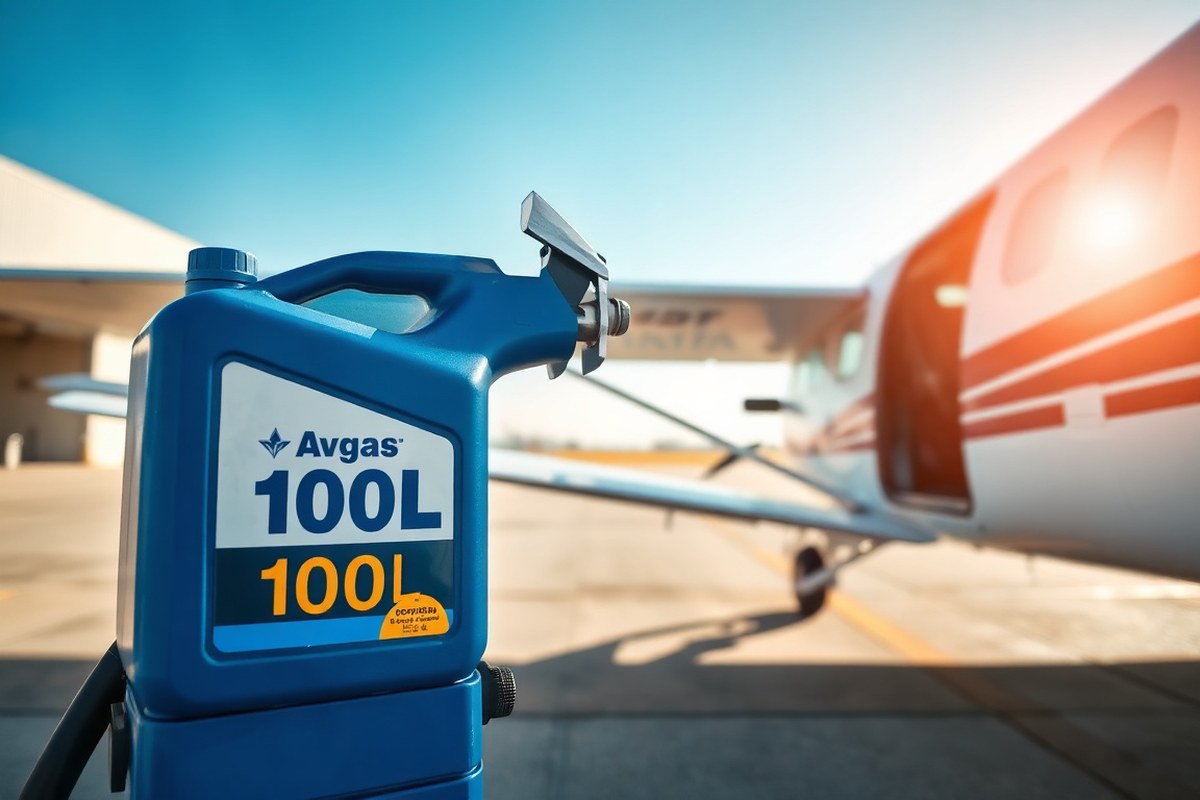
How much does 100 LL aviation fuel weigh? It weighs about 6 pounds per US gallon.
This figure can vary slightly depending on temperature and the volume unit used. So it’s not always exact.
The weight changes because warm fuel becomes lighter, while cold fuel gets denser. Also, a UK gallon holds about 20% more volume than a US gallon, which affects total weight calculations.
The fuel’s specific gravity also affects its weight. At 60°F, the specific gravity ranges from roughly 0.72 to 0.75, which changes the exact pounds per gallon value you should expect.
Knowing how much your 100 LL fuel weighs helps you load your piston-engine aircraft safely. Always check the current fuel density with your local FBO to avoid errors when planning your flight.
Key Takeaways
- 100LL fuel weighs approximately 6 pounds per US gallon at standard temperature.
- Fuel weight decreases as temperature rises due to lower density.
- UK gallons are larger. So 100LL weight per gallon will be higher than US gallons.
- Use proper weight figures to calculate fuel load for piston-engine aircraft.
- Check with your FBO for the exact weight and pricing before fueling.
- Plan for a 5% fuel contingency to cover unexpected conditions.
How Much Does 100LL Aviation Fuel Weigh per Gallon?

100LL aviation fuel weighs about 6.0 pounds per US gallon at 15°C, the standard reference temperature. This weight comes from its typical specific gravity of 0.72, meaning the fuel is 72% as dense as pure water at the same temperature. Knowing this helps you convert fuel volume into weight correctly for flight planning and loading.
Imperial gallons are about 20% larger than US gallons. So the weight of 100LL per Imperial gallon is higher. Since an Imperial gallon is roughly 4.546 liters compared to the US gallon’s 3.785 liters, the 100LL fuel weighs approximately 7.2 pounds per Imperial gallon.
Mixing these two gallon types can cause serious fuel miscalculations. You must adjust for the volume difference to get accurate fuel weight. Failing to do so leads to errors in planning and flying.
| Fuel | Specific Gravity at 15°C | Pounds per US Gallon | Pounds per Imperial Gallon |
|---|---|---|---|
| Avgas 100LL | 0.72 | 6.0 | 7.2 |
| Mogas / UL91 | ~0.74 | ~6.2 | ~7.4 |
| Jet A-1 / Jet A | 0.80 | 6.7 | 8.0 |
The 6.The FAA uses 0 pounds per US gallon as a standard weight. This figure helps with accurate weight and balance calculations. It ensures flight safety and performance stay reliable.
This standard simplifies load sheet creation without needing onsite density measurements. Temperature changes can affect fuel density, but 15°C is the baseline for planning.
Keep the gallon type clear when converting volume to weight. Use the specific gravity of about 0.72 at 15°C for 100LL to calculate weight precisely.
Multiplying gallons by 6.0 gives pounds for US gallons. Multiply Imperial gallons by about 7.2 pounds for accurate mass in Imperial units.
How Temperature and Volume Units Affect 100LL Fuel Weight
Temperature Impact on Fuel Density
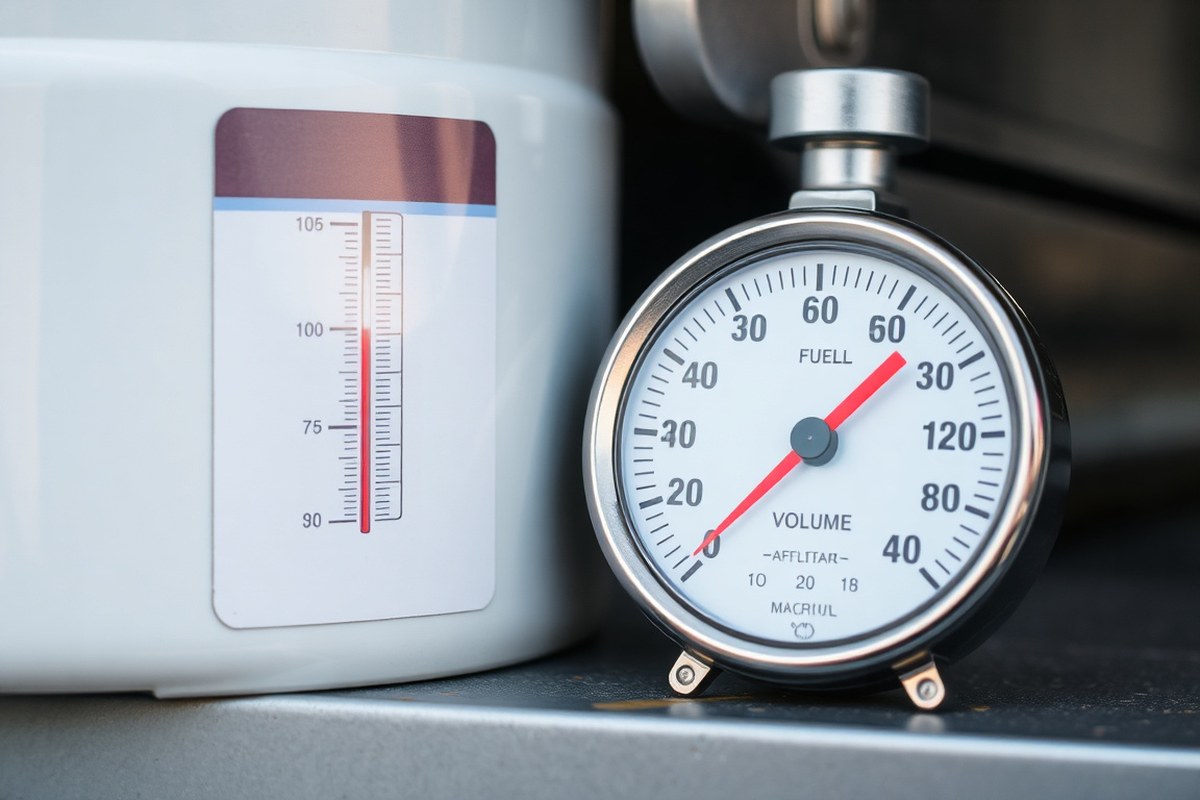
Fuel weight changes with temperature because fuel density responds to heat shifts. Cold 100LL fuel packs more weight per gallon than warm fuel does. As fuel warms, it expands a bit, which reduces density and weight per gallon.
Since density fluctuates around ±2%, pilots must check fuel temperature. Use the supplier’s density figure at actual temperature to get precise weight. This care helps prevent loading errors affecting flying safety and performance.
Differences Between US and Imperial Gallons
US and Imperial gallons do not hold the same volume, affecting weight calculations. One US gallon equals about 3.785 liters, while one Imperial gallon holds 4.546 liters. For 100 gallons, US gallons total 378.54 liters, and Imperial gallons total 454.61 liters.
Using the wrong gallon type can mislead your fuel weight estimates. Always confirm which gallon standard your fuel volume uses before weighting it. Pick units matching your fuel supplier’s data to keep calculations consistent.
Applying Corrections in Fuel Weight Calculations
Adjusting fuel weight for temperature means using a correction formula on the density. Here is a step-by-step way to adjust 100LL fuel weight for temperature changes:
- Obtain fuel density at a standard temperature, usually 15°C, from your fuel supplier.
- Record the actual fuel temperature during fueling in degrees Celsius.
- Calculate the temperature difference by subtracting 15°C from the actual temperature.
- Apply a correction factor for density change, typically around 0.001 per °C.
- Multiply this factor by the temperature difference to find the density adjustment.
- Add or subtract this adjustment to the standard density to get corrected density.
- Multiply the corrected density by the fuel volume in gallons to find the adjusted weight.
Always check that your supplier’s density matches your chosen temperature to avoid costly errors.
Why Fuel Weight Matters for Flight Planning and Safety
Fuel weight directly affects how your aircraft performs in the air. Too much weight can reduce climb rate and increase stall speed. It also affects how your plane handles.
It changes how much runway you need. This matters for takeoff and landing safety.
Getting fuel weight wrong throws off your entire weight and balance calculation. Pilots plan with usable fuel, which excludes unusable fuel already in the aircraft’s empty weight. Misjudging fuel weight can exceed your plane’s limits.
It may also shift your center of gravity. Both can cause safety problems.
An off balance plane may nose down or tail up, affecting control. It could also increase stress on the structure and affect fuel efficiency. Safety margins in your pilot’s operating handbook matter.
Small errors in calculations can quickly add up. That’s why those rules exist.
- Reduced climb performance and longer takeoff distances
- Higher stall speed and less maneuverability
- Incorrect center of gravity causing control difficulties
- Potential overloads risking aircraft structure damage
- Less fuel reserve than planned, affecting flight endurance
- Increased pilot workload due to constant handling corrections
- Complications in emergency situations due to unexpected weight
Weight and balance calculations require you to use confirmed fuel density values, typically around 6.0 pounds per gallon for 100LL at 15 °C. Measure fuel volume accurately during fueling, then convert to weight using this density. Always include usable fuel only when calculating loading to avoid errors.
Double-check your numbers with a weight and balance calculator before departure. You can call your fixed base operator (FBO). They can confirm fuel density for you.
They may provide data for your aircraft model. Planning fuel weight well helps reduce your worries.
You can concentrate on flying safely. It lowers risks of performance problems.
How to Calculate 100LL Fuel Weight from Volume and Vice Versa
The key to converting 100LL fuel volume to weight is density. This helps you switch between volume and weight easily. Using the fuel’s density is what makes the conversion work.
For 100LL aviation fuel, the common planning density is 6.0 pounds per US gallon. Know the volume in gallons?
Multiply that number by 6. This gives you the weight in pounds quickly.0 to get the weight in pounds.
To convert pounds back to gallons, divide by 6.0. When working in metric units, convert pounds to kilograms by multiplying by 0.453592.
The density can slightly change with temperature. So the weight varies depending on how cold or warm the fuel is.
You can also calculate the weight from volume in liters. Since 1 US gallon equals 3.785411784 liters, multiply gallons by 3.785411784 to get liters. Then multiply liters by the density in kilograms per liter (around 0.72 kg/L for 100LL) to get the fuel weight in kilograms.
Many pilots and flight planners use online fuel calculators or smartphone apps to simplify this process. These tools apply the correct density and convert units instantly.
Some fuel calculators require a purchase or subscription. So check if the cost fits your needs.
Follow these steps to convert 100LL fuel volume to weight and vice versa accurately:
- Identify the fuel volume in US gallons or liters.
- Use the density of 100LL (6.0 lbs/gallon or about 0.72 kg/liter).
- Multiply gallons by 6.0 to get weight in pounds.
- To convert pounds to kilograms, multiply pounds by 0.453592.
- Convert gallons to liters by multiplying by 3.785411784 if needed.
- Multiply liters by 0.72 to calculate kilograms directly from liters.
- To get volume from weight, divide weight in pounds by 6.0 or kilograms by 0.72.
- Consider using an online flight fuel calculator to save time and avoid errors.
For example, 100 gallons of 100LL at 15°C weighs about 600 pounds (100 × 6.0). Converting this to kilograms gives roughly 272 kilograms (600 × 0.453592). This method helps you quickly find fuel weight for accurate flight planning.
Common Mistakes and How to Avoid Errors in Fuel Weight Calculation
Mixing up gallons types or temperature scales is a common mistake in fuel weight calculations. Some confuse US gallons with Imperial gallons, which differ by about 20%.
Ignoring the fuel’s temperature can also lead to wrong weight figures. 100LL aviation fuel expands or contracts with temperature, shifting its density.
Checking your units is critical before doing any math. Treat every volume number as suspect until you confirm the gallon type. Convert everything to the same unit system first, usually US gallons for US-based operations.
Also, identify if the fuel volume is reported at 15°C, 60°F, or another standard. That affects how you apply specific gravity to find fuel weight.
- Verify gallon type (US vs Imperial) on fuel receipts or specs.
- Confirm temperature basis for reported fuel volume.
- Use specific gravity corrected for actual fuel temperature.
- Avoid mixing mass units like pounds with kilograms without conversion.
- Don’t skip density checks even for the same fuel grade.
- Compare offers by converting both volume and price to standard units.
- Validate all input data before calculating fuel weight or cost.
Always double-check if volume units and temperatures match your calculation basis.
Failing to match units causes errors of 5% or more. Fuel weight can be wrong if temperature is not right. Always check units and temperature reference carefully.
You might carry too little or too much fuel. This affects the aircraft’s balance and its safety. Fuel planning needs precision to avoid problems.
Using industry-standard specific gravity values for 100LL fuel helps adjust for temperature. Multiply your volume by this adjusted density to get accurate weight.
Reliable fuel data comes from trusted sources like FBOs or certified fuel providers. Confirm their measurement methods and conditions. Ask about temperature correction practices when documentation is not clear.
Make sure you understand how they adjust fuel weight. Don’t rely on incomplete fuel documents.
When comparing prices or quantities, convert both to your common benchmark first. This avoids hidden errors in your flight planning fuel calculations.
Understanding Fuel Density Variations and Specification Standards
Fuel density for 100LL changes with standards, batches, and temperature. ASTM D910 and DEF STAN 91-090 set the main specs pilots follow. Measuring density at 15°C helps keep fuel weight consistent for flight planning.
ASTM D910 and DEF STAN 91-90 Overview
ASTM D910 defines the properties for aviation gasoline like 100LL. It covers fuel quality, including density ranges and additives. DEF STAN 91-090 is the UK’s equivalent standard for 100LL fuel.
Both standards ensure the fuel meets safety and performance needs. Pilots and operators rely on these specs for consistent fuel behavior. These specs cover aspects like volatility, lead content, and density ranges.
Nominal Versus Actual Fuel Density Range
Fuel density for 100LL typically falls between about 0.68 and 0.72 kilograms per liter. Actual density depends on the specific fuel batch and how it’s stored or measured. This means the listed or nominal density is a guide, not an exact number.
Changes in fuel makeup or contamination can shift density slightly. Using the fuel density range helps pilots calculate weight more accurately for safe loading. Variations beyond the spec limits could indicate fuel problems.
| Specification | Fuel Type | Density Range (kg/L) |
|---|---|---|
| ASTM D910 | Avgas 100LL | 0.680, 0.720 |
| DEF STAN 91-090 | Avgas 100LL (UK) | Similar to ASTM D910 |
| ICAO Standard | Jet Fuel (Jet A) | Approx. 0.804 at 15°C |
Understanding this density range helps avoid errors in fuel weight guesses. It also flags batches that might not meet required specs. Comparing a batch’s measured density to nominal values verifies fuel consistency.
Importance of Standard Temperature (15°C) Measurement
Density varies strongly with temperature. Fuel expands when warm and shrinks when cold, changing how much it weighs per volume. Measuring at 15°C provides a consistent reference point.
Without this standard, fuel weight calculations can be off by several pounds per gallon. The 15°C benchmark aligns with ICAO guidelines and aviation industry norms. You can convert volume to weight accurately only when density is known at that temperature.
Practical Worked Examples Converting 100LL Fuel Volume to Weight
One hundred US gallons of 100LL aviation fuel weigh about 671 pounds at 15°C. Temperature affects weight because fuel expands and contracts. You can convert liters to kilograms using the fuel’s density, accounting for volume changes.
Converting 100 US Gallons at Standard Temperature
To find the weight of 100 gallons of 100LL, start with volume. Multiply that by the fuel density at standard temperature.
This gives you the weight at 15°C. The standard figure for 100LL at 15°C is roughly 6.7 pounds per gallon. That means 100 gallons weigh about 670.97 pounds or 304.35 kilograms.
- Identify the volume of fuel you have, in gallons (100 gallons here).
- Use the known standard weight per gallon: about 6.71 pounds at 15°C.
- Multiply volume by unit weight: 100 gallons × 6.71 pounds/gallon.
- Convert pounds to kilograms by dividing by 2.2046.
This way, 100 gallons × 6.71 equates to about 671 pounds. Dividing 671 by 2.2046 gives 304.35 kilograms. This is your standard weight without adjustments.
Adjusting Weight for Colder or Warmer Fuel
Fuel density changes with temperature. Colder fuel is denser and weighs more per gallon. Warmer fuel expands and weighs less per gallon.
For example, 100 gallons of 100LL at 5°C can weigh slightly more than 671 pounds. At 25°C, expect slightly less.
Adjust the weight using a temperature correction factor. This factor changes based on temperature differences from 15°C. It reflects how fuel weight shifts with temperature.
- Determine the fuel temperature.
- Find the correction factor for that temperature (provided by your fueling manual or density charts).
- Multiply the standard weight by the correction factor. Use a factor greater than 1 when it’s colder. Use less than 1 if the temperature is warmer.
- Calculate adjusted weight accordingly.
For colder fuel, multiply 671 pounds by about 1.02, giving 684 pounds. For warmer fuel, multiply by 0.98, giving about 657 pounds. This adjustment helps improve flight planning accuracy.
Calculating Weight from Liters to Kilograms
Fuel is often measured by liters internationally. To convert liters of 100LL to kilograms, multiply volume by the density in kg per liter. The standard density near 15°C is about 0.804 kg/L for 100LL.
For example, 378.54 liters (which equals 100 US gallons) multiplied by 0.804 kg/L gives approximately 304.35 kilograms. This matches the weight conversion from gallons.
- Measure the volume of fuel in liters.
- Use the fuel density: about 0.804 kilograms per liter at 15°C.
- Multiply liters by density to get kilograms.
- To convert kilograms to pounds, multiply by 2.2046 if needed.
This direct conversion avoids going through gallons when only metric units are available. It also works with temperature corrections by adjusting the density number.
When to Consult Professionals or FBOs About Fuel Weight
You should call the FBO when fuel weight or price seems unclear. Double-check if the fuel density data from your supplier doesn’t match typical values. Call them if the price suddenly jumps.
Check for unusual fuel units. For example, liters instead of gallons.
Always confirm the exact fuel density used for weight calculations. This helps avoid errors in your weight and balance paperwork.
Ask the supplier about the temperature used to check density. It is usually 60°F. Also, confirm if the fuel fits ASTM standards.
Check fuel quality before loading. Look for water or debris in sample tests.
Smell the fuel to detect strong odors that could indicate contamination. These steps prevent engine damage and flight delays.
- Ask the FBO or supplier: What is the measured density (kg/L or lb/gal)?
- Confirm the units: gallons or liters, pounds or kilograms.
- Check when and where the density was measured (temperature and location).
- Inquire about fuel quality certifications or lab reports.
- Request a fuel sample and inspect for clarity and smell.
- Verify current fuel prices and ask about volume discounts or affiliations.
- Find out if fuel prices include taxes or delivery fees.
Fuel truck meters at most US FBOs record in US gallons. Use this to verify delivered fuel volume.
Combine volume with confirmed density for accurate fuel weight calculations. This keeps your weight and balance precise and your flight legal.
Always inspect a fuel sample visually and by smell before fueling to avoid contamination risks.
Fuel price changes can affect your budgeting. AOPA members save $50 to $150 yearly on fuel costs at participating FBOs.
That can matter if you fly often. Confirm prices ahead to avoid surprises on fuel bills after your flight.
How 100LL Fuel Weight Changes Impact Flight Operations and Planning
Variations in 100LL fuel weight directly affect your aircraft’s fuel calculations. Accurate fuel weight helps you know how much weight you are actually adding. This impacts your payload, flight range, and safety margins.
Underestimating fuel weight can make your trip fuel come up short. That reduces reserves and can force early landings or diversions. Overestimating fuel weight lowers your available payload, limiting passengers or cargo you can carry.
When planning contingency fuel, use the right fuel weight. Add 5% extra fuel or five minutes of cruise fuel.
For example, if trip fuel is 50 gallons at 6 lb/gallon, trip weight is 300 lb. Contingency fuel is 5% of 300 lb, or 15 lb, roughly 2.5 gallons extra.
- Incorrect fuel weight means wrong total fuel planning and potential safety risks
- Contingency fuel should be based on accurate weighted trip fuel, not volume alone
- Payload limits change with fuel weight, affecting takeoff performance
- Flight time and range may reduce if actual fuel weight is higher than planned
- You might face unplanned alternate or reserve fuel shortages
Always convert 100LL volume to weight for safer operations. Use the current density each time. This is very important when temperatures change.
Include contingency and alternate fuel weights in your total. Use your aircraft’s performance charts to confirm payload and fuel loads meet limits.
Planning fuel with precise weight lets you budget trip fuel costs better. Accurate totals help with flight planning software and logging.
They prevent surprises at preflight by checking fuel weight. Adjust passenger loads if fuel weighs more than expected.
Step-by-Step Action Plan to Manage 100LL Fuel Weight
Follow these steps to calculate and apply 100LL fuel weight for safe flight planning.
- Before Flight Preparation: Check the latest 100LL fuel density from your supplier or FBO. Confirm it matches standard specs and note any pressure or temperature factors.
- Fuel Volume Measurement: Measure your fuel tanks in gallons using calibrated tools. Ensure readings account for temperature differences to avoid volume errors.
- Calculate Fuel Weight: Multiply your fuel volume by its density. Density is about 6 pounds per gallon at 60°F. Use this to find the total weight. Adjust for real conditions to find a precise weight.
- Cross-Check Against Aircraft Limits: Compare calculated fuel weight to aircraft load charts. Confirm total weight stays within safe operating limits.
- Record Data: Write down volume, density, and weight details for your flight log. This record aids accurate weight and balance checks.
- Review Weather Conditions: Note temperature changes that might alter fuel density during flight. Adjust calculations if significant variations are expected.
- Consult Your FBO or Mechanic: Ask them for help if you are unsure. They know about fuel weight and handling. Their advice keeps your flight safe. Confirm your numbers before departure.
- After Flight Reflection: Review fuel consumption against your calculations. Use this insight to improve future fuel weight accuracy.
Frequently Asked Questions
How Much Does 100LL Aviation Fuel Weigh for 100 Gallons?
100 gallons of 100LL aviation fuel weighs about 600 pounds. This uses the standard 6 pounds per gallon weight for 100LL fuel under normal conditions.
Does the Weight of 100LL Fuel Change with Altitude?
No, altitude does not change the fuel’s weight directly. Weight depends on the volume and density at the time of measurement on the ground.
Can the Fuel Weight of 100LL Affect Aircraft Balance?
Yes, fuel weight impacts your plane’s center of gravity. Accurately tracking fuel weight helps maintain safe flight balance.
Is 100LL Fuel Weight Affected by Impurities or Additives?
Fuel additives might slightly change density, but weight differences are minimal. Always use fuel that meets the proper specifications for reliable weight estimates.
How Do Pilots Verify the Actual Weight of 100LL Fuel Loaded?
They use calibrated fuel dipsticks or weigh fuel trucks with built-in scales. This ensures the measured weight matches the volume for accurate load planning.
Before You Go
100LL aviation fuel weighs roughly 6 pounds per gallon but varies with conditions. Always use current density values for accurate calculation.
Start by measuring your fuel volume precisely before each flight. This helps keep your flight safe and efficient.