Do You Stop Aging at Speed of Light? What Happens to Your Time and Body
Do you stop aging at speed of light? The short answer is no.
You can never reach the speed of light if you have mass. But time would nearly stop for you as you approach light speed.
At speeds near light, your body’s biological clock slows down. This happens compared to people who stay on Earth.
The effect is due to high velocity slowing time inside your body. This is called time dilation, making you age much slower from an outside view.
You age at the same rate in your own view. Moving closer to light speed makes others see your time slow. Time outside your frame appears to pass more quickly.
Remember, traveling near light speed is extreme and currently impossible for humans. It’s not that you stop aging, but your time moves differently than Earth’s.
Key Takeaways
- Massive objects cannot reach the speed of light due to infinite energy needs.
- Time dilation grows stronger as your speed nears light speed.
- At 99.99% light speed, 10 traveler years equal over 700 Earth years.
- You age normally in your own frame, but less compared to Earth.
- Traveling near light speed drastically changes how you perceive time elapsed.
- Even tiny particles become dangerous radiation hitting your body near light speed.
Do You Stop Aging at the Speed of Light?

You don’t stop aging at light speed. No object with mass can reach it. So, you keep aging.
When your speed nears light speed, time slows down a lot. This happens compared to someone standing still. This effect is called time dilation, a key part of Einstein’s special relativity.
Time dilation means time moves slower for you. It depends on your speed compared to others. At 90% of light speed, 10 years pass for people on Earth.
But you would experience only around 4.2 years. As your velocity approaches the speed of light, this difference grows larger and larger.
At light speed, time would seem to stop for you. That means your aging would pause.
But no mass object can reach light speed. Aging slows but never stops.
From your point of view as the traveler, your clock and bodily processes run normally. You don’t feel time slowing down or your body aging slower. Instead, it’s the outside world’s time that looks sped up or compressed.
You might notice Earth clocks and people move very fast. Your own time feels normal.
You travel at 99% of light speed, time passes differently.9% of the speed of light, a trip to Alpha Centauri 4.37 light years away would feel much shorter for you. You’d experience around 1.24 years of travel time.
Earth would see about 4.37 years pass. This shows how strong time dilation becomes near light speed.
So, age slows significantly as you move near light speed. But it doesn’t stop outright unless you hit the impossible speed of light. Your experience of time remains normal.
But much more time elapses for others not moving with you. That difference explains why you would effectively age less on such near-light-speed journeys.
How Time Dilation Affects Aging at Near-Light Speeds
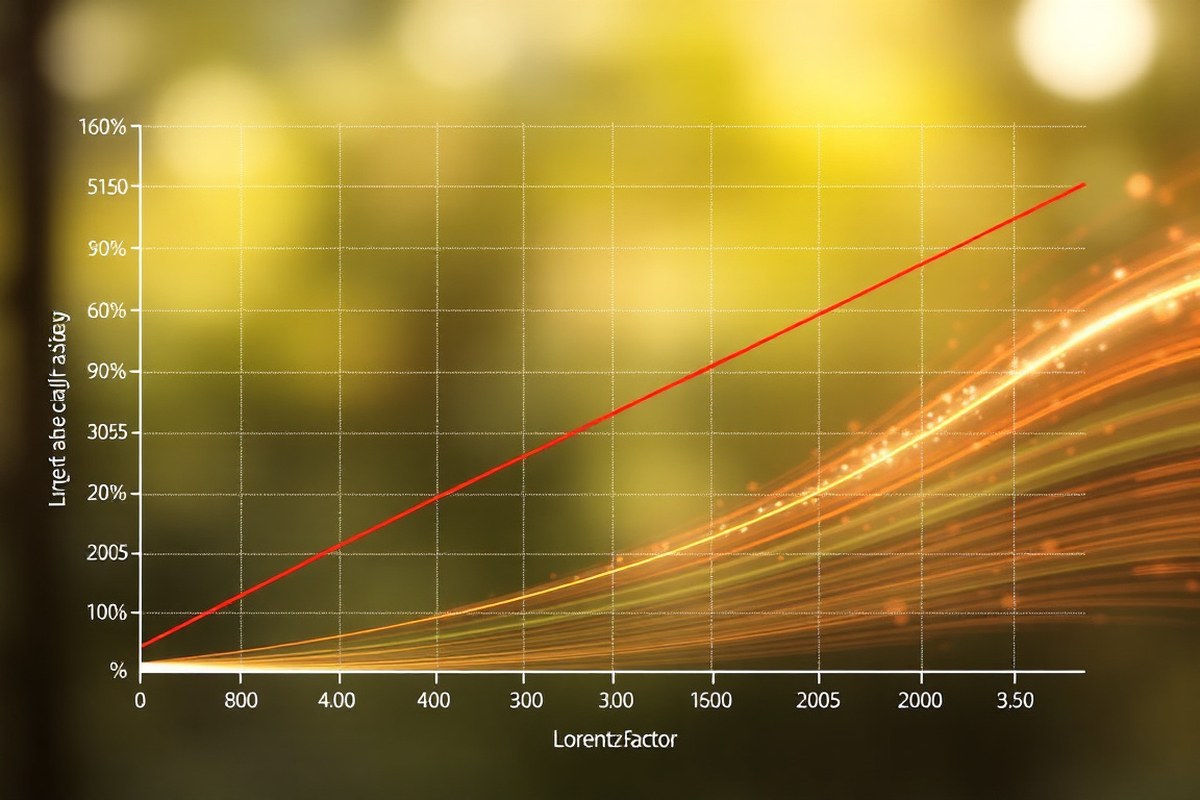
Time dilation grows stronger as you approach light speed. This happens because of the Lorentz factor, a number that shows how much time slows down. The factor also affects length and mass when moving close to light speed.
The Lorentz factor is calculated using your speed compared to light speed. It tells you how much slower you age compared to someone stationary on Earth. For example, if the factor is 7, you age seven times slower than someone standing still.
| Speed (% of light) | Lorentz Factor | Earth Time per 1 Traveler Year |
|---|---|---|
| 10% | 1.005 | ~1.005 years |
| 90% | 2.294 | ~2.3 years |
| 99% | 7.089 | ~7.1 years |
| 99.9% | 22.37 | ~22.4 years |
| 99.99% | 70.71 | ~70.7 years |
| 99.9999% | 707.1 | ~707 years |
| 100% (light speed) | Infinite | Infinite (time stops) |
At 90% speed of light, you age 2.3 times slower than on Earth. At 99%, aging slows to about one-seventh the normal rate.
Near 99.9%, you age twenty times slower or more than a stationary observer. This shows how time dilation can greatly extend perceived lifespan.
Aging slows down but never reverses because time itself moves forward. Your cells still undergo changes and biological processes. Time dilation just stretches your experience, so you see less time pass than others.
Traveling near light speed uses huge amounts of energy. It also has possible health risks. Talk to experts before trying advanced experiments.
Why Nobody with Mass Can Reach the Speed of Light
No object with mass can reach light speed. It would need infinite energy. This is why it can’t happen.
As an object moves faster, its effective mass grows, making it harder to speed up. This mass and energy increase comes from physics laws.
Einstein’s relativity explains it. It is a key rule of nature.
Relativistic Mass Increase Near Light Speed
Fast objects don’t physically gain mass. They behave like they have more mass. This changes their energy requirement.
At 10% of light speed, an object’s mass increases by about 0.5% over its usual rest mass. This change grows quickly. At 90% of light speed, the object’s mass more than doubles.
Approaching the speed of light, the mass seems to grow without limit. This “relativistic mass” increase slows acceleration since more force is needed. At light speed, mass would become infinite.
Infinite mass cannot be reached by any energy amount. This makes light speed impossible for mass.
Energy Requirements to Reach Light Speed
The faster you want to go, the more energy you need. To push 1 kilogram to 99% of light speed, it takes about 5.4 x 10¹⁷ joules. This energy need is about 150 billion kilowatt-hours.
That equals around four percent of the US’s yearly electricity use. It’s a huge energy demand.S. In 2023.
Energy needs grow huge near light speed. Rockets or engines can’t provide enough thrust. This stops us from reaching light speed.
Even perfect fuel like antimatter won’t help. Carrying its huge fuel amount is impossible.
Fuel weight becomes unmanageable for fast travel. The amount of propellant required would far exceed any known spacecraft’s capacity.
The Role of Physics Laws in Limiting Speed
Special relativity sets firm limits on how fast objects with mass can move. Physics won’t allow mass to reach light speed. Doing so would break physical rules and causality.
These laws protect the universe’s order. The energy and mass relationship explained by Einstein shows why acceleration to light speed is impossible.
Ideas like “chronology protection” say physics blocks light speed travel. They prevent scenarios that would break cause and effect. Laws keep time consistent.
These mechanisms stop time travel or faster-than-light phenomena, maintaining consistent cause and effect in the universe. This keeps the speed of light as an unbreakable speed limit.
What Happens If You Try to Approach Light Speed?
As velocity nears light speed, particles become extremely energetic and mass-heavy. At 99% light speed, hydrogen atoms hit hard. They deliver energy like in particle physics labs.
This causes serious damage risk. Travel at these speeds is risky and hard.
Radiation and collisions hit spacecraft intensely. Protection against this is a major challenge.
In experiments, particles like muons near light speed live longer because of time dilation. Reaching or keeping these speeds needs vast energy. No current or known future technology can provide it.
This limits massive object travel speed. So, no material object will ever hit the exact speed of light.
How a Near-Light-Speed Journey Changes Your Perception of Time
Traveling close to light speed changes how you feel time. Time moves differently for you compared to people on Earth. It feels faster or slower depending on your speed.
For example, a round trip to Alpha Centauri at 99.99% light speed would take about eight years and eight months for those on Earth. Yet, you would only age about 22.6 days during that entire journey.
This happens because of time dilation, a key concept in relativity. From your perspective inside the spaceship, time moves slower relative to Earth. Your trip feels short but many years pass on Earth.
Decades or hundreds of years may go by at home. This happens because time flows differently for each observer.
To see this in detail, imagine traveling to a star 10 light-years away at different speeds. At 10% of light speed, your 10-year trip feels nearly the same as the 10.05 years passing on Earth. Increasing your speed to 90% of light speed means Earth ages 22.9 years while you still age 10.
At 99.9%, Earth’s clock jumps to 223.7 years for your same 10 years of travel. This gap grows with more speed.
Now think about crossing vast distances at 99.99% of light speed. Earth sees about 4.37 years pass for a one-way trip. But you only experience 22.6 days.
You age very little during travel at near light speed. People on Earth experience many more years while you travel. This difference happens because of time dilation in relativity.
Light behaves oddly too. When you zoom back, Earth observers see your light waves shift. The waves compress, making you look blue-shifted from their view.
This effect is called the Doppler shift. This illustrates how space and time distort at near-light speeds.
So if you journey 99.Traveling at 9% of light speed for 10 years means Earth ages more. You return home to find over 200 years passed there. This shows how even slower speeds affect time differently.
This difference means your perception of time changes sharply with speed. Timelines that seem short to you stretch out for everyone else.
Near-light travel requires enormous energy and advanced technology. Instant acceleration and deceleration are not physically realistic.
But these help highlight the time differences. Real missions would take longer, affecting how much time actually passes for travelers and Earthlings.
The Twin Paradox: What It Reveals About Aging and Speed
The twin paradox describes a situation where one twin travels near light speed. The other stays on Earth.
When the traveling twin returns, she is biologically younger than the Earth-bound twin. This happens due to differences in how time passes for each twin during the journey.
The Paradox Explained Step-By-Step
Two twins start at the same age on Earth. One twin climbs aboard a spacecraft and speeds toward a distant star at 99.9% of light speed.
The traveling twin experiences time more slowly. So her clock runs less than her sibling’s.
After one year of travel, the traveler turns around. She heads back at the same high speed. The whole trip feels like two years to her.
Meanwhile, the Earth twin ages normally, experiencing about seven years during that same trip. Upon return, their biological ages differ significantly, with the traveling twin younger.
Role of Acceleration Phases
The key difference is acceleration. The traveling twin changes velocity to leave Earth, turn around, and come back. These acceleration phases break the symmetry and make her situation physically different.
Without acceleration, each twin sees the other’s clock run slow. This means neither would age differently. Both would stay the same age.
The acceleration shows when the traveler changes reference frames. This change solves the paradox. It causes the real aging difference.
Consequences for Time and Aging Differences
Time dilation produces genuine, lasting aging differences for the twins. The effects aren’t just theoretical; they match precise physics measurements. The twin who journeys at near-light speed ends up biologically younger by decades in some scenarios.
The difference matters because their biological clocks run at different rates during high-speed travel. You won’t notice this slowing in everyday life. But near-light speeds cause time to stretch enough to see clear age gaps between the twins.
Remember that real acceleration and deceleration phases are required for aging differences to appear.
Biological Effects of Traveling Near Light Speed
When you travel near the speed of light, your body’s cells still age. But time dilation makes it seem slower. Your body’s cells keep dividing and repairing DNA at normal speed.
This happens inside your frame of reference. Biological processes carry on as usual.
The body doesn’t truly stop aging. It only appears to age more slowly compared to someone staying on Earth.
Radiation exposure becomes a serious threat during relativistic travel. At normal speeds, space radiation is mostly harmless in small doses. At 99% of light speed, tiny particles hit you with higher energy.
These turn into radiation that can harm cells and DNA. The radiation is deadly.
This high-energy radiation comes from interstellar gas and cosmic rays. They act like a strong stream of particles blasting your spacecraft and body. Without strong shielding, radiation causes higher cancer risks and mutations.
It can kill cells and might be fatal on long trips. Protecting yourself is critical.
Protecting yourself involves thick radiation shields made of dense materials like lead or hydrogen-rich plastics. Your spacecraft needs systems to monitor radiation levels constantly.
Advanced medical treatments might help repair some damage. But none can stop radiation from harming cells completely while traveling at these speeds.
There’s no natural way to fully stop or reverse aging during fast travel. Biological aging never completely pauses under relativistic speeds. You will still age.
The real effect is that time outside your frame moves faster than inside you. So, from your view, aging slows, but inside your body, cells still wear down. This means managing radiation exposure becomes the main survival challenge in long, near-light-speed missions.
Comparing Velocity Time Dilation and Gravitational Time Dilation
Velocity time dilation happens when an object moves close to the speed of light. Its clock runs slower compared to an observer at rest.
Gravitational time dilation depends on how strong gravity is at a location. Clocks tick slower near massive objects like black holes, regardless of motion.
On Earth, gravity’s time dilation effect is quite small. Velocity effects can be stronger for fast-moving satellites.
Near black holes, gravity dominates and slows time drastically. The difference matters in space travel because both effects can combine.
Below is a comparison table of velocity and gravitational time dilation effects in different settings:
| Situation | Velocity (km/h) | Gravitational Field Strength | Time Dilation Effect |
|---|---|---|---|
| GPS Satellite Orbit | 28,163 | Earth’s orbit (weak) | Clocks slow by 7 µs/day (velocity), 45 µs/day (gravity) |
| Near Earth Surface | 0 (stationary) | Earth’s surface (moderate) | Gravity slows time slightly |
| Near Supermassive Black Hole | Varies (often low) | Extremely strong | 1 hour near black hole ≈ 7 years far away |
| Near-Light-Speed Spacecraft | Close to 1 billion km/h (near c) | Far from large masses | Significant velocity time dilation, minimal gravity effect |
Notice gravity acts independently from velocity. This means a clock in strong gravity runs slow no matter its speed. Velocity-based time dilation happens even in weak gravity but requires near-light speeds.
When astronauts travel at high speed far from gravity wells, velocity dilation is the main factor. Near massive bodies, like black holes or planets, gravity affects time far more. Both effects together can add up or offset each other depending on the travel route.
Experimental Proofs of Time Dilation in Physics
Time dilation has been proven experimentally through multiple methods. Atomic clocks flown on planes, particle accelerators, and GPS satellites all show measurable differences. These tests confirm that moving clocks run slower, matching Einstein’s prediction.
Hafele-Keating Atomic Clock Flights
In 1971, Hafele and Keating flew cesium atomic clocks on commercial jets circling Earth. They compared these flying clocks with stationary ground clocks.
Clocks on planes moving eastward lost time. Westward ones gained time, matching relativistic predictions.
This experiment directly measured how motion affects clock rates on a human scale. It proved clocks in motion tick slower, confirming time dilation beyond theory. Such tests require extremely precise atomic clocks and carefully tracked flight paths.
Particle Accelerator Timing Measurements
Particle accelerators like those at Fermilab and CERN confirm time dilation continuously. They accelerate particles close to light speed. Then, they measure the particles’ lifetime.
Their lifetime stretches because of time dilation. Experiments match special relativity predictions with extraordinary precision.
These accelerators rely on timing adjustments for particles’ faster decay rates in their rest frame. This allows scientists to predict collisions and particle behavior accurately. Without accounting for time dilation, particle physics data would be unreliable.
GPS Satellite Clock Adjustments
GPS satellites orbit roughly 12,550 miles above Earth, moving fast relative to the surface. Their atomic clocks tick faster than Earth clocks because of less gravity.
But they also tick slower because of their high speed. Engineers combine both effects using relativity formulas.
Navigation apps on smartphones depend on these relativistic corrections to provide precise location data. Without them, GPS errors would accumulate by about 10 kilometers daily. This shows time dilation’s everyday impact beyond physics labs.
Always use atomic clock data carefully and account for relativistic effects in high-speed systems.
Practical Challenges and Realities of Near-Light-Speed Travel
The energy needed to accelerate a spacecraft close to the speed of light is unimaginably high. It takes more energy than the US uses yearly to push a small object near light speed. This is an enormous amount.
It makes traveling close to light speed very difficult. Einstein’s special relativity explains this huge energy need.
Mass gets heavier as you speed up. So, you need more fuel for acceleration.
At speeds close to light, cosmic rays become a serious threat. High-energy space particles hit the spacecraft very hard. This impact damages materials and electronics.
It creates a serious hazard for space travel. Without advanced shielding, these rays would harm astronauts’ health.
Radiation exposure increases well beyond Earth’s protective atmosphere. This risk is very dangerous.
The technical challenges add up quickly. A spacecraft must carry enormous fuel stores or find an efficient way to refuel during travel.
It also needs strong protection against cosmic rays and micrometeoroids traveling at extreme velocities. Current materials and power sources fall short, making such missions impractical for now.
Building a near-light-speed ship requires breakthroughs in energy generation and propulsion. You would likely need technologies beyond today’s rockets. Antimatter engines or light sails pushed by huge lasers could work.
Current nuclear or chemical rockets aren’t enough. Each approach faces massive engineering hurdles and cost.
Traveling near light speed also means careful planning of acceleration and deceleration. You can’t speed up instantly without risking damage. Smooth, long-duration thrust phases would take months or years, needing durable life support systems and supplies.
Right now, such travel remains theoretical and decades or centuries away at best. No current spacecraft can come close to these speeds safely.
The costs and risks are huge. Researchers focus on exploring closer destinations at slower speeds.
You would have to meet many requirements for near-light-speed travel. You need extreme energy sources, advanced radiation shielding, and new engines. Long-lasting life support is also necessary.
Plus, a plan for gradual acceleration and deceleration. Without these, humans can’t handle the journey or survive its conditions safely.
How to Explore Time Dilation and Aging Effects Yourself
You can begin understanding aging and time dilation with simple, clear steps. This plan will guide you through learning and exploring these concepts at your own pace.
- Day 1: Read about time dilation basics in relativity books or articles. Check if you can explain why time slows near light speed.
- Week 1: Watch documentaries or lectures that show real experiments on time dilation. Notice examples with clocks on planes or satellites.
- Week 2: Explore the twin paradox story and try to write down its steps yourself. Verify your version matches what physics says about aging differences.
- Week 3: Learn about biological effects on astronauts and see how their aging compares on Earth. Spot any signs of slower aging or no difference.
- Week 4: Compare velocity time dilation and gravitational time dilation through graphs or simple experiments online. Confirm you see how speed and gravity affect time differently.
- After 1 month: Try to calculate time dilation near light speed. Use special relativity formulas for the math. Work step by step to see how time slows down. Check your answer with online calculators.
- After 6 weeks: Join an online forum or discussion group about space travel and relativity. Share what you learned and ask questions to deepen understanding.
Frequently Asked Questions
How Long Does Aging Slow Down at Near-Light Speeds?
Aging slows down significantly but doesn’t stop completely at near-light speeds. For example, at 99.Moving at 99% of light speed, you might age about 10 years.
Meanwhile, Earth ages over 700 years during your trip. The time difference is huge.
Can You Truly Reach the Speed of Light in Space Travel?
No, you can’t reach the speed of light if you have mass. The energy needed to reach light speed grows without limit.
This makes reaching light speed impossible with what we know now. Physics stops us from getting that fast.
What Happens to Biological Processes When You Travel Near Light Speed?
Biological processes slow down, but cells still age at a reduced rate. Traveling near light speed slows metabolism but doesn’t freeze aging entirely.
How Does Traveling Near Light Speed Affect Your Time Perception?
Time feels normal to you but moves slower compared to someone on Earth. You could experience 10 years while Earth ages hundreds.
Why Does the Twin Paradox Show Different Aging for Twins?
One twin traveling near light speed ages slower than the one on Earth. When the travelers reunite, the space twin is younger because time passed slower for them.
Wrapping Up
You don’t stop aging at light speed. Objects with mass can’t reach light speed anyway. So, aging always continues, just slower when near light speed.
Traveling near light speed slows down your biological clock relative to others, but aging still happens. Begin with basic relativity lessons today.
They show how time dilation changes your experience. Learn how it affects you and the whole universe.