How Fast Can a Raptor Run? Detailed Speeds and Scientific Insights
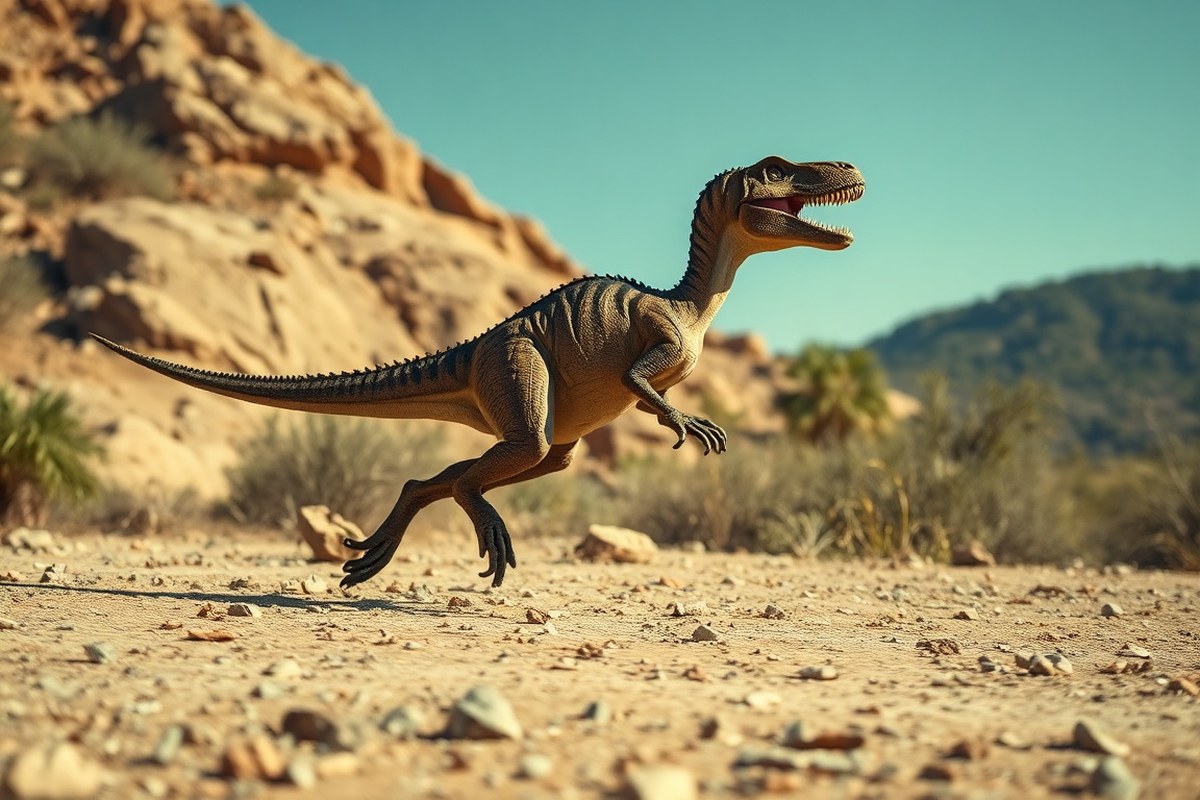
How fast can a raptor run depends on its species and size. Small raptors likely reached speeds around 25 to 30 miles per hour.
Larger ones moved slower but with power. Estimates come from studying their bones and comparing them to modern animals.
Small raptors from Early Cretaceous China weighed just over 2 pounds. They were light and built for speed. Their bodies helped them run fast and catch prey.
Their light frames and long legs helped them dash quickly. Larger raptors like Utahraptor were heavier and bulkier.
They probably ran slower than smaller raptors. But they were still fast enough to catch prey.
Scientists use fossil footprints and bone structures to guess speed. They also look at living animals with similar shapes for clues. These approaches give a good idea, even if it’s tough to be exact.
Key Takeaways
- Small raptors could likely run 25 to 30 miles per hour at top speed.
- Larger raptors moved slower but had greater strength for hunting.
- Long, slender leg bones indicate adaptations for quick running.
- Footprints help scientists estimate how fast raptors moved on land.
- Comparing raptors to modern birds and reptiles reveals running styles.
- Raptor body size strongly influenced their maximum running speed.
How Fast Could Raptors Run in Miles per Hour?
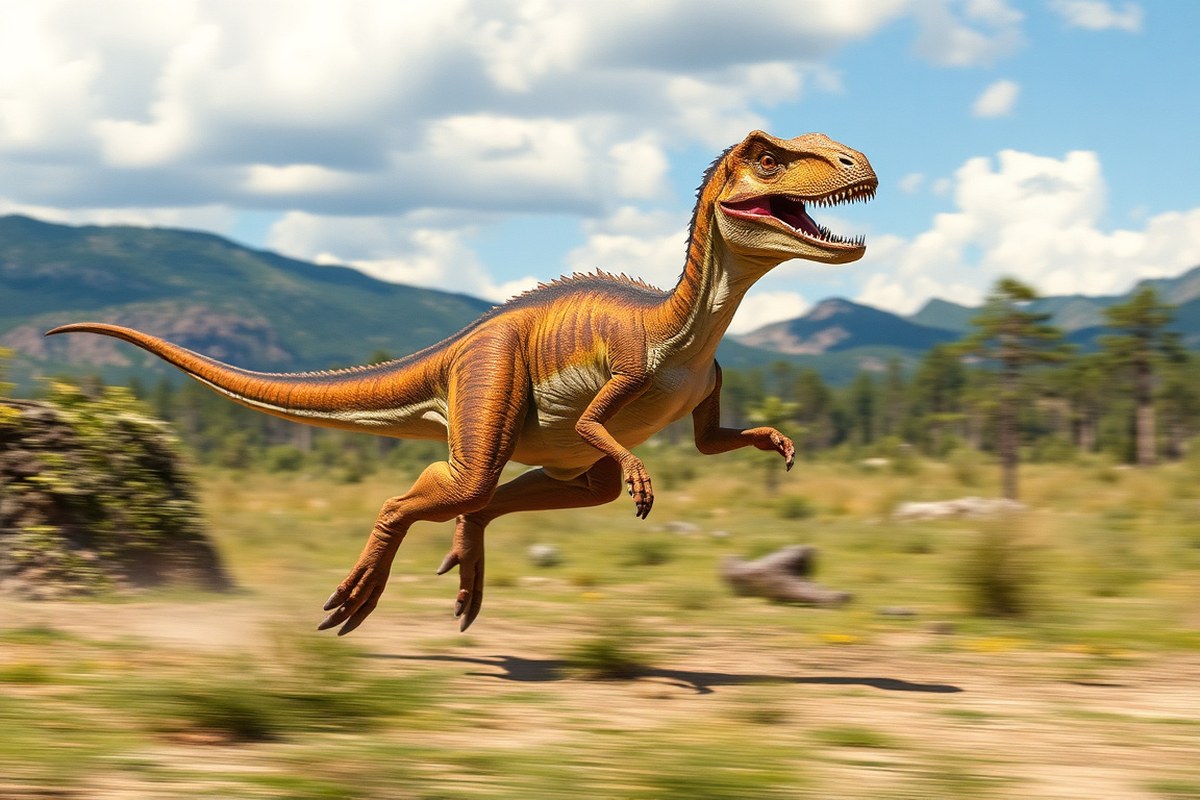
Velociraptors could run about 20 to 25 miles per hour (32 to 40 km/h). Their speed got close to top human sprinters. These sprinters reach peaks near 23 mph (37 km/h).
Raptors nearly matched that top speed. Velociraptors might run faster than most humans.
But their peak matched only top sprinters. They maintained this speed only for short bursts.
Deinonychus, a larger raptor, likely ran up to 35 miles per hour (56 km/h). This speed surpassed Usain Bolt’s top and rivaled some fast land animals today. Achillobator, a big raptor, could sprint from 25 to 35 mph (40 to 56 km/h).
This speed was reached in short bursts. It likely couldn’t keep it long. These speeds show how raptors varied with size and build.
While they weren’t as fast as cheetahs, raptors had remarkable agility. Some medium raptors ran similarly to wolves, which reach 35 to 40 mph. The fastest raptors possibly matched ostriches, which can sprint at 45 mph (72 km/h) briefly.
Microraptor flew and glided differently. It hit speeds of 25 to 30 mph (40 to 48 km/h) while descending. Its motion varied from running raptors.
| Species | Top Speed (mph) | Top Speed (km/h) |
|---|---|---|
| Velociraptor | 20, 25 | 32, 40 |
| Deinonychus | 35 | 56 |
| Achillobator | 25, 35 | 40, 56 |
| Microraptor (glide speed) | 25, 30 | 40, 48 |
| Human sprinter (Usain Bolt peak) | 23.35 | 37.7 |
Methods Scientists Use to Estimate Raptor Speeds

Scientists estimate raptor speeds by combining fossil evidence with biomechanical methods. They analyze bones, footprints, and use computer models to guess how fast raptors could run. Each approach adds details to understand these extinct predators better.
Analyzing Skeletal Proportions and Muscle Attachments
Examining a raptor’s bones helps find its running potential. Scientists study leg bone length and joint shape to understand muscle. They also check muscle scars to rebuild limb movement accurately.
This helps recreate how raptors moved in real life. These details show how fast muscles could contract and how efficiently limbs moved.
Researchers compare muscle structures to close living relatives like birds and crocodiles. This comparison provides clues about muscle strength and speed limits. By measuring bone robustness and joint range, they estimate maximum stride length and frequency.
The process involves steps such as:
- Measure leg bone lengths and diameters from fossil specimens.
- Identify muscle attachment points and estimate muscle mass.
- Analyze joint articulation to confirm limb movement range.
- Compare findings with modern animals’ muscle and bone data.
- Calculate potential stride length and speed limits from muscle power.
Bone condition impacts accuracy, damaged fossils lead to weaker estimates.
Studying Fossil Footprints and Trackways
Fossilized footprints provide direct clues about raptor speed. Trackways show stride length and foot placement, revealing running style and pace. Scientists measure the distance between prints and footprint size to estimate speed.
Interpreting trackways involves considering terrain and animal behavior. Surface type affects footprint depth and shape, which complicates speed calculations. Researchers also use modern animal footprints for reference to reduce guesswork.
This method has limits. Raptor speed in footprints may not be top speed, as animals don’t always sprint. Researchers follow these steps to analyze trackways effectively:
- Locate well-preserved fossil trackways with clear footprints.
- Measure stride length and footprint dimensions carefully.
- Assess terrain conditions to correct for footprint distortion.
- Compare with modern animal track data for speed estimation.
- Calculate speed using stride length and estimated leg length.
Trackways often underestimate top speed due to variable animal pacing.
Biomechanical Computer Modeling and Simulations
Scientists use computer programs to simulate running forces on raptor limbs. Finite element analysis tests stress and strain on bones during running scenarios. This reveals biomechanical limits, like how fast a raptor could safely run.
Muscle properties and skeletal data create virtual models. These models help calculate possible speeds under different conditions. They simulate stresses from acceleration, turns, and body weight, showing real-world running capability.
Modelers follow these steps:
- Input 3D scans of leg bones and estimate muscle size.
- Set mechanical properties of bones like strength and flexibility.
- Run stress simulations under different running speeds and gaits.
- Identify speed limits where bone strain becomes too high.
- Cross-check results with fossil trackway and skeletal data.
Computational models require careful input; inaccurate data skews speed results.
Anatomical Features That Enabled Raptors to Run Fast
Leg Bone Structure and Proportions
Raptors had long, slender lower legs with shorter upper legs. This combination helped them take longer strides and move quickly. Their femur, or thigh bone, was strong and built for speed.
The tibia, also called the shin bone, helped with running fast. Metatarsals, the foot bones, were shaped to support quick movement.
Scientists measure the ratios of these bones to guess running ability. A longer tibia compared to the femur usually means better speed. Slim, light bones reduced weight, making quick moves easier.
Muscle Attachment and Leg Power
Marks on raptor fossils show where strong muscles attached. Powerful leg muscles gave them quick acceleration to catch prey or escape danger. Muscle strength also helped sustain long runs without tiring fast.
These muscles connected mainly around the femur and tibia. The force they generated controlled stride length and how fast each step hit the ground. Stronger muscles meant faster, more energy-efficient running.
Claws and Their Role in Running
Raptors had big, curved claws on their feet. The second toe had a special claw called the sickle claw. This claw was raised and sharp.
These claws helped grip the ground during fast turns and quick stops. They acted like traction aids for agility, not just for hunting.
Big claws also helped raptors push off the ground. This extra grip improved acceleration and balance. Without good traction, speed and quick direction changes would’ve been harder.
Feather Influence on Running
Feathers may have helped raptors run better by improving aerodynamics. Feathers could reduce drag and stabilize their bodies during fast runs. This likely made running smoother and allowed quicker turns.
Scientists think feathery limbs also helped balance when cutting sharply. Instead of weighing them down, feathers probably gave small boosts to speed. They aided more than they hindered running.
Checklist of Key Running Traits
Several physical features combined to make raptors fast and agile. The main traits affecting speed include:
- Long lower leg bones (tibia and metatarsals) compared to femur length
- Strong muscle attachment marks indicating powerful leg muscles
- Curved, sharp claws that improve traction and grip
- Lightweight but sturdy skeletons for less energy use
- Feathers aiding balance and reducing air resistance
- Compact upper legs enabling quick leg lifts and faster strides
These features worked together. Each added speed, strength, or balance needed for a fast runner. Missing one part would reduce their ability to accelerate or turn sharply.
Comparing Raptor Speeds with Modern Running Animals
Raptors ran fast. But knowing exactly how fast helps compare them to animals you know. Ostriches are the fastest two-legged runners today.
They can run as fast as 45 miles per hour (mph). This speed is faster than most raptor speed guesses. It’s quite quick for a dinosaur.
While velociraptors were quick, they were smaller than many imagine. A human sprinter can top out around 23 mph.
So a fast runner could outrun a velociraptor on foot in some cases. Raptors depended more on sharp claws and quick strikes than just running speed to catch prey.
| Species | Top Speed (mph) | Notes |
|---|---|---|
| Ostrich | 45 | Fastest bipedal runner today, uses strong legs for endurance and bursts |
| Cheetah | 60-70 | Fastest land animal; built for very short sprint bursts |
| Human Sprinter | 23 | Top athletes hold this speed, not sustained over long distances |
| Velociraptor | 24-40 (estimates vary) | Smaller size like a turkey; likely quick but not long-distance runners |
| Achillobator | Estimated lower than cheetah, fast ambush predator | Massive legs for bursts; more like tiger hunting style than cheetah speed |
Comparing raptor speeds to modern animals shows they were quick but not the fastest predators. Cheetahs top their speed by a wide margin, with 60 to 70 mph in short sprints. Raptors probably relied on sudden bursts and claws rather than chasing prey down for long distances.
This comparison also shows why raptors might have struggled to keep up with larger, faster prey. Yet, their size and agility helped them in hunting tactics like ambush. Humans run slower than raptors in short bursts.
But they use endurance or bikes to go farther or faster. This helps them outrun raptors easily.
Did Feathers Help or Hinder Raptor Running Speeds?
Feathers on raptors were not just for flying but affected running too. Scientists think feathers might have improved agility by helping balance and quick turns during chases. But those same feathers could cause drag, slowing a raptor down on straight sprints.
Not all raptors had full feather coverage. Smaller, earlier species likely had lots of feathers.
Larger ones might have had fewer on their legs and tail. This mix means feathers’ effects on speed varied by species and size.
Advantages of feathers include better balance and stability when changing direction. These traits helped raptors avoid obstacles and capture prey. However, feathers raised air resistance which may reduce top running speed, especially on open ground.
When studying fossil feathers, look for the feather impressions near limb bones. They show where feathers grew and their possible role in movement.
Keep in mind fossil conditions can hide or distort feathers. So interpretation requires care and comparison with living birds.
Be cautious using feather impressions alone to guess raptor speed. They only tell part of the story.
Feathers likely helped raptors rely more on agility than raw speed. They combined moderate speed with deadly claws and sharp senses. This was a better hunting strategy than just running fast in a straight line.
Raptor Size and Its Impact on Running Ability
Raptor size strongly influenced their running speeds. Larger raptors tended to have slower top speeds than smaller ones. Size affects stride length and the energy needed for fast movement.
Smaller raptors like Velociraptor could run faster despite their short legs. Their lightweight bodies allowed quicker foot turnover and easier acceleration. However, their stride length was shorter, limiting how far each step covered compared to bigger species.
Giant raptors such as Utahraptor probably ran slower than smaller relatives. Estimates suggest Utahraptor used bursts of speed for surprise attacks rather than long chases. Their massive weight made sustained fast running energy expensive and less practical.
| Raptor Species | Approximate Length (feet) | Estimated Top Speed (mph) |
|---|---|---|
| Velociraptor | 6.5 | 24 – 30 |
| Deinonychus | 11 | 20 – 26 |
| Utahraptor | 20 | 15 – 20 |
The table highlights an inverse trend between raptor size and speed. Larger raptors sacrificed top speed for power and strength. They relied more on ambush tactics, using cover to get close before sprinting.
Smaller raptors depended on speed and agility. Their lighter frames allowed quick turns and faster foot rates.
Size also changes risk. Running fast is riskier for heavy animals because falling injures them more.
Trade-offs exist between size and running ability. Big raptors couldn’t run as fast but had power to take down larger prey. Small raptors could outrun threats but were less able to fight upfront.
How Raptors Used Their Speed in Hunting and Survival
Raptors used their speed mainly for short, powerful bursts during hunting. Raptors often used ambush tactics to catch prey by surprise.
They didn’t chase their targets over long distances. This quick strike allowed them to take down animals that were sometimes twice their size.
Smaller raptors like Velociraptor focused on quick maneuvering to chase smaller, swift prey in dense environments. They needed to change direction fast, so raw speed mattered less than agility. This helped them dart through bushes or rocky areas without losing momentum.
Medium-sized raptors such as Deinonychus might have worked in groups to corner and exhaust larger prey. Speed helped these packs coordinate to herd an animal into a trap.
Raptors attacked quickly to wear down their prey. This made hunting safer and more effective.
Besides hunting, speed helped raptors escape from bigger predators. Raptors spotted danger and sprinted away in quick bursts. This ability increased their chances of survival, especially in prehistoric landscapes crowded with larger carnivores.
Using speed for both offense and defense required lots of energy. Raptors had to balance quick chases with rest to recover.
When a sprint worked, the catch saved enough energy to make it worthwhile. When prey escaped, the effort sometimes wasn’t worth it.
Limitations and Uncertainties in Estimating Raptor Speeds
Estimating raptor speeds remains full of uncertainty. Fossils rarely give direct evidence of running speed. Scientists rely on bones and muscle estimates, which vary widely.
One big limit is guessing muscle strength. We can’t measure soft tissues from fossils.
Different models assume very different power outputs, changing speed predictions. Some estimates put raptors at around 25 to 40 mph, others suggest lower speeds.
Another problem comes from fossils themselves. Trackways or footprints can give clues, but these are rare and often incomplete.
Drag or terrain effects are hard to include. That leaves room for guesswork and conflicting results.
A common myth says raptors ran as fast as racehorses. Some think they matched the speed of cars on highways. This idea is not supported by real evidence.
Media and movies have exaggerated these claims. Such speeds are mechanically improbable given their anatomy.
Misreading anatomy also creates errors. For example, large claws and rigid tails supported balance but may have limited top speed. Other features, like feather arrangement, might slow or help running, but details are debated.
To avoid these pitfalls, compare multiple methods and data sources. Look for converging evidence from foot bones, muscle attachment sites, and trackways. Avoid relying on one bold claim without backup.
Speed numbers often come from models that simplify factors like surface traction or energy costs. These assumptions can drastically change results. Check whether a study accounts for these or just picks a single scenario.
Claims of very fast raptors, over 40 mph, ignore biomechanical limits shown in computer simulations. Muscle power and weight put real caps on speed. Some myths mix up different dinosaur types or confuse running with shorter bursts of motion.
Don’t trust a single fossil or study to tell the whole story about raptor speed.
Scientific uncertainty means we accept a range, not a pinpoint speed. As fossil evidence grows, estimates may improve, but for now, treat speed claims carefully. Understanding the limits helps you know which reports are reliable.
Special Cases: Flying Raptors and Their Locomotion Speeds
Flying raptors like Microraptor could glide faster than they ran. They probably moved slowly on land but achieved higher speeds when descending in flight. Comparing their running and gliding speeds shows how different locomotion styles shaped their abilities.
Terrestrial Running Speeds of Microraptor
Microraptor likely ran at speeds between 10 and 15 mph on land. Its limbs were adapted more for gliding than running, limiting ground speed. It moved slower than many ground-based raptors but was still agile enough to navigate forest floors.
Its four-winged body made fast running difficult. Unlike true ground runners, Microraptor’s body design sacrificed running power for flight control. This resulted in modest terrestrial speeds compared to non-flying raptors.
Descending Glide Speeds in Flight
Microraptor could glide at speeds roughly between 20 and 30 mph while descending. Its aerodynamic wings allowed it to travel faster through the air than on the ground. Gliding lets it cover longer distances quickly without the energy cost of running.
Its descending glide speed depends on factors like height and wind. From higher points, Microraptor could gain momentum and reach the upper range of glide speeds. These speeds helped it escape predators or capture prey from above.
Impact of Flight Adaptations on Running Ability
Flight adaptations limited Microraptor’s running speed and endurance on land. Features like feathered wings and limb structure made rapid running inefficient. Its legs were less powerful compared to ground-adapted raptors due to these tradeoffs.
Scientists use biomechanical models to balance flight and running capabilities. These models show that tradeoffs in limb design reduce peak running speeds. Thus, flying raptors like Microraptor prioritized gliding over rapid terrestrial movement.
| Movement Type | Estimated Speed (mph) |
|---|---|
| Running on land | 10-15 |
| Descending gliding flight | 20-30 |
How to Explore Raptor Speed Estimates Yourself
Try these steps to learn more about raptor speeds and their running skills.
- Day 1: Choose a raptor species to research, like Velociraptor. Check its estimated size and leg structure.
- Day 3: Look up published studies or museum resources on that raptor’s speed range. Note the key numbers.
- Week 1: Compare these speeds to fast modern animals, like ostriches or cheetahs, to get perspective.
- Week 2: Read about the raptor’s possible feather coverage and how it might affect running.
- Week 3: Find videos or animations showing raptor locomotion or reconstructions. See how speed is estimated visually.
- Week 4: Use footprint data to find stride length. Estimate the body size from prints. Then calculate speed using these measurements.
- After 1 month: Share your findings with friends. Join online dinosaur forums to learn more. Listen to others’ views and discuss ideas.
Frequently Asked Questions
Could a Human Outrun a Raptor?
No, a raptor could run faster than the fastest human sprinter. Raptors likely reached speeds around 40 mph, while humans max out near 28 mph. So, even elite runners would lose in a race against a raptor.
How Fast Could a Raptor Run Mph?
Raptors could run approximately 40 to 45 mph at their top speed. This range is based on comparisons with modern animals like ostriches. Their speed helped them catch prey over short distances.
What Is the Fastest Raptor?
The fastest raptor on land was likely similar in speed to an ostrich, around 45 mph. However, the Microraptor might have achieved 25-30 mph while gliding. So, fastest on land and fastest overall can differ.
What’s Faster, a T-Rex or a Raptor?
Raptors were faster runners than T-rexes, reaching 40-45 mph versus the T-rex’s estimated 20 mph. Raptors were smaller and lighter, which helped them sprint quickly. T-rexes relied more on power than speed.
Can Raptors Turn Quickly While Running?
Yes, raptors had strong legs and flexible joints for quick turns. This helped them chase agile prey through tight spaces. Their speed wasn’t just in a straight line but also in sharp movements.
Final Thoughts
Raptors likely ran fast but not as fast as the fastest land animals today. Their speed helped them hunt and survive in their environment. Start by focusing on one species and explore its estimated speed and anatomy more deeply.