How Fast Can Smart Cars Go: Top Speeds, Acceleration, and Key Factors Explained
Wondering how fast can Smart cars go? Most Smart cars reach a top speed of about 90 miles per hour. This speed fits both city and highway driving.
They don’t handle fast freeway trips well. Those long trips need different cars.
Smart cars hit 60 mph in about 12 seconds. That speed is average for small city cars.
It’s enough for city and highway driving. Their compact size limits their top speed but helps with parking and maneuvering in tight spaces.
Keep in mind that Smart cars can feel unstable at high speeds. So it’s best to avoid pushing them close to their limit. Regular maintenance can also help you maintain safe speed and performance over time.
Key Takeaways
- Smart cars typically top out between 80 and 90 miles per hour.
- The Smart Fortwo Eq accelerates 0-60 mph in about 12 seconds.
- Most gasoline Smart Fortwo models have a 96 mph speed limiter.
- Smart cars tend to feel unstable when driven near their top speeds.
- Electric Smart cars generally have slower acceleration than gasoline models.
- Proper maintenance can extend a Smart car’s reliable performance to 150,000 miles.
What Is the Top Speed of Smart Cars?
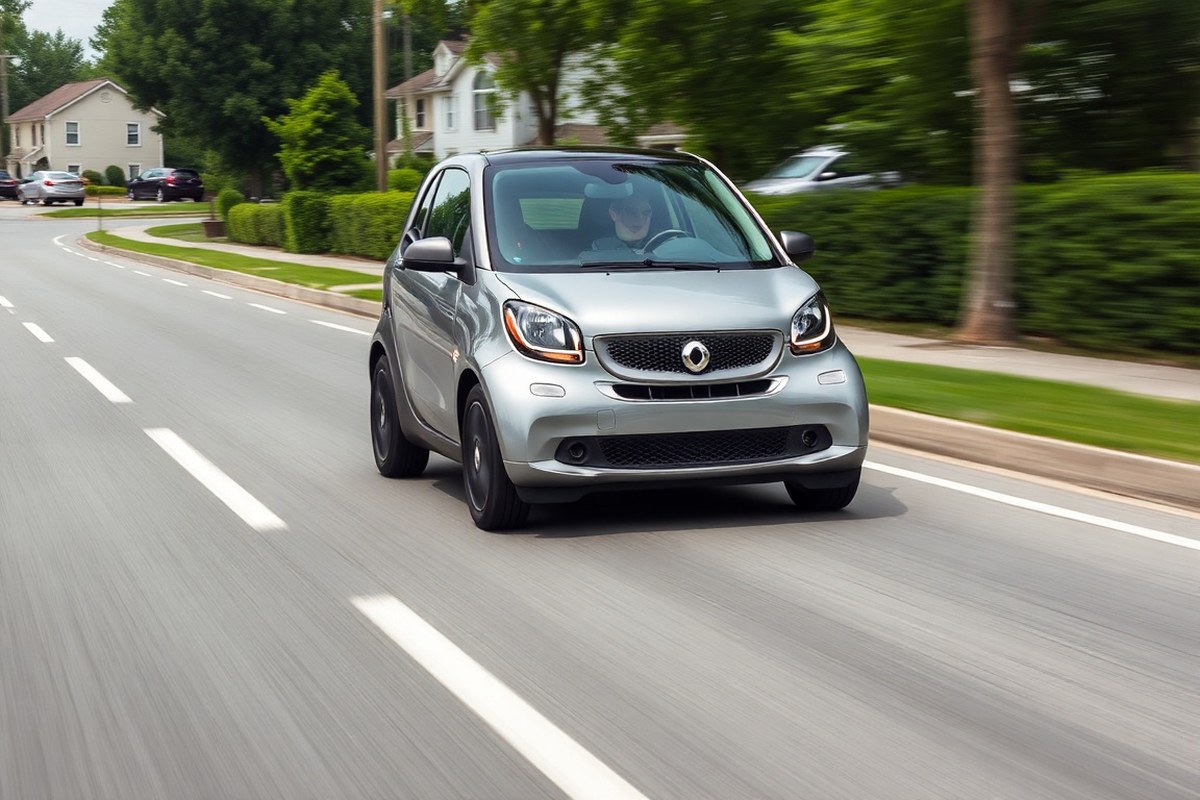
Smart cars usually top out between 80 and 96 miles per hour. This depends on the model, engine type, and year. Gasoline models often push slightly faster limits than their electric counterparts.
Electric Smart cars tend to have a top speed around 80 to 83 mph. They prioritize battery life and electrical efficiency over outright speed. Gasoline versions of the Smart Fortwo can reach close to 90 mph or slightly higher.
| Model | Powertrain | Top Speed (mph) |
|---|---|---|
| Smart Fortwo Gasoline (Second Gen W451) | Gasoline engine | 84-96 |
| Smart Fortwo Electric Drive (2015) | Electric | 83 |
| Smart Electric Drive EQ | Electric | 80-81 |
| Smart i-MiEV Electric | Electric | 83 |
| 2005-2006 Smart Forfour Brabus | Gasoline (high performance) | 137 |
The gasoline Forfour Brabus is by far the fastest in the Smart lineup. However, it’s a rare and high-performance trim not suited for typical city driving. Most Smart cars made for cities have speed limits.
These limits are usually 80 to 90 mph. This helps keep the car safe and steady.
Electric Smart cars often hit top speeds slightly below gasoline models. Their limits protect battery life and maintain range. For city driving, these speeds still provide quick and practical transportation.
How Quickly Do Smart Cars Accelerate from 0 to 60 MPH?
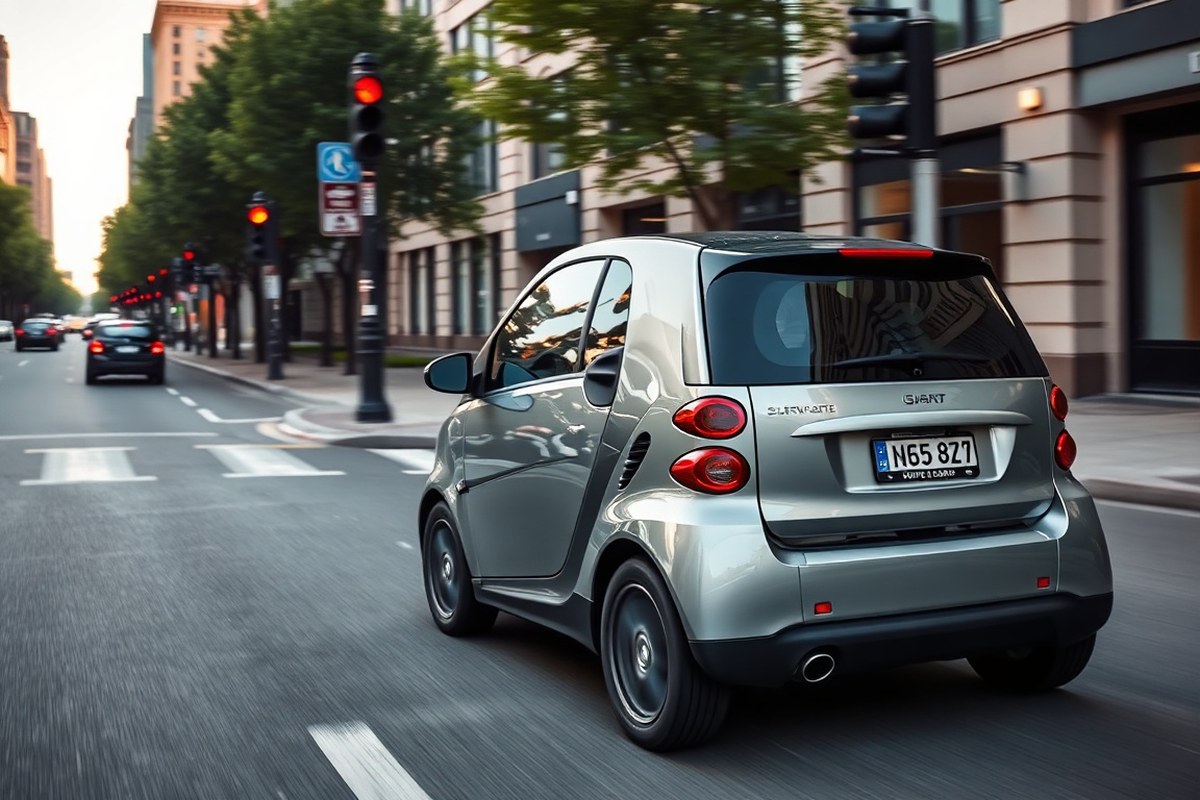
How Quickly Do Smart Cars Accelerate from 0 to 60 MPH?
Smart cars take about 10 to 13 seconds to reach 60 mph. Electric versions often speed up faster because of instant torque. This acceleration is common for small city cars, perfect for urban driving.
Acceleration Times for Gasoline Models
Gasoline Smart cars typically take between 11 and 13 seconds to reach 60 mph. The engines are small, usually 0.8 to 1.0 liters, which limits their power. This modest acceleration suits city streets but feels slow on highways or freeway entrances.
For example, the standard Smart ForTwo manages 0-60 mph in about 12 seconds. This time reflects steady but not rapid acceleration, enough to merge safely in traffic. Most owners find this fine for stop-and-go city driving.
Acceleration Times for Electric Models
Electric Smart Fortwo cars reach 60 mph in less than 10 seconds. Instant torque helps them launch fast and feel quick. They have a slightly lower top speed but better agility in city traffic.
An electric Smart Fortwo EQ typically completes 0-60 mph in around 9 to 10 seconds. The battery and motor design prioritize quick off-the-line speed at the cost of some top-end power. This balance fits urban use where smooth starts and stops matter most.
Comparison with Other Urban Vehicles
Smart cars accelerate like small economy cars. They usually take 10 to 13 seconds to hit 60 mph. This makes them comparable to other city-friendly vehicles.
Smart cars can drive on highways and at speeds over 60 mph. Neighborhood Electric Vehicles (NEVs) cannot manage these speeds. This makes smart cars more flexible for different roads.
Their acceleration works well for city driving and light highways. They are not built for sports car performance. The speed is fine but not sporty.
The following table compares typical 0-60 mph times:
| Vehicle | 0-60 mph Time (seconds) |
|---|---|
| Gasoline Smart ForTwo | 11, 13 |
| Electric Smart Fortwo EQ | 9, 10 |
| Small-engined Economy Car | 10, 13 |
| Neighborhood Electric Vehicle (NEV) | Not highway legal, <25 mph top speed |
Smart cars are neither the fastest nor the slowest among city cars. They trade top speed for maneuverability and economy. Their acceleration works well in typical urban settings.
Be cautious merging onto highways; the modest acceleration means you should build speed early.
What Factors Influence the Speed and Performance of Smart Cars?
Several key factors influence how fast a Smart car can go. Engine size, vehicle weight, and design shape its top speed and acceleration. Electronic limiters and transmission type also affect overall performance.
Engine Specifications and Power Output
The engine’s size and type directly impact a Smart car’s speed. Most models use a 1.0-liter engine producing about 80 brake horsepower (bhp). This modest power suits city driving but limits top speed to around 81-96 mph.
Turbocharged versions or newer engine updates can improve acceleration slightly. The engine’s horsepower affects how quickly the car reaches higher speeds. Lower power means slower acceleration and a lower top speed.
Key factors include:
- Engine displacement usually around 1.0 liter
- Power output of about 80 bhp
- Turbocharged engines boost acceleration
- Electric models rely on battery power (around 22 kW)
- Model year updates may improve engine tuning
Different engine types mean you get different speed performance. Fast acceleration matters most with turbo or newer engine options.
Weight, Size, and Aerodynamics
Though lightweight at about 1,800 pounds, the Smart’s weight still affects speed. Heavier loads from passengers or cargo reduce how quick it accelerates and its top speed. The small size helps with maneuverability but also means less momentum.
Aerodynamics shape air resistance, influencing the Smart’s speed on highways. Its compact design offers decent airflow but won’t beat larger, streamlined vehicles. Even small changes, like open windows or roof attachments, add drag and slow the car down.
Consider these tips to keep weight and drag low:
- Limit passengers and cargo to reduce weight
- Remove roof racks or external carriers
- Keep windows closed at high speeds
- Choose models with updated aerodynamic features
- Regularly check tire pressure for better efficiency
Keeping the car light and slick helps maintain better speed and fuel economy.
Role of Speed Limiters and Transmission
Electronic speed limiters cap the Smart’s maximum speed for safety and fuel efficiency. These limiters usually set the top speed near 90 mph. They prevent engine strain.
They also stop unsafe driving. Some models allow limited adjustments, but removing limiters often needs professional help.
The transmission transfers engine power to the wheels and affects how fast the car accelerates. Smart cars mostly use a 5-speed manual or 6-speed dual-clutch automatic. Smooth, fast gear changes improve acceleration and can raise effective top speed.
Here’s how the transmission and limiters influence driving:
- Speed limiter restricts maximum speed to ~90 mph
- Manual transmissions offer direct control of acceleration
- Dual-clutch automatics provide faster gear shifts
- Transmission tuning can improve performance slightly
- Changing or disabling speed limiters usually needs experts
Proper transmission choice and respecting speed limits keep the car efficient and reliable.
How Does Real-World Driving Affect Smart Car Speeds?
Smart cars can handle highway speeds, but they’re mainly made for city driving. Many models, like the Smart Fortwo Electric Drive, cruise comfortably up to 80 mph. That speed suits most highways, though some roads may require faster travel.
In cities, Smart cars typically go much slower, usually around 25 to 35 mph. Their small size helps you move through traffic and park easily.
Traffic lights, stop signs, and congestion often keep speeds low. So the car’s quick maneuverability matters more than raw speed.
Road conditions and weather play big roles in real-world speed. Wet or icy roads call for careful driving and slower speeds.
Tires and brakes also affect how safely you can maintain speeds, especially on highways. Regular maintenance keeps your Smart ready to handle these challenges.
Traffic flow impacts your speed too. During rush hour, even fast cars slow down.
Smart cars are good here since you can weave through tight spaces. When traffic clears, you can speed up but staying near the limit keeps things safe.
To stay safe on highways in a Smart car, drive steady. Keep your speed close to other vehicles around you. This helps you avoid sudden braking and accidents.
Avoid sudden lane changes or aggressive moves since the car is lighter than bigger vehicles. Use cruise control if available to maintain consistent speed, which also helps with fuel economy.
In cities, watch for pedestrians and cyclists. Use your small size to your advantage when parking or fitting into tight spots.
Accelerate gently and anticipate stops to save fuel and keep your ride smooth. These habits help you get the most out of your Smart car every day.
Are Smart Cars Safe When Driving at High Speeds?
Smart cars have safety features designed to keep you secure when driving fast. They include airbags, crumple zones, and a unique tridion safety cell that protects the passenger space.
This strong steel frame absorbs impacts. It helps protect you in crashes because the car is small and light.
Even with these features, driving a Smart car near its top speed takes care. The short wheelbase allows sharp turning.
However, the car can feel less stable at high speeds. Crosswinds and sudden moves can cause it to sway more than larger, heavier vehicles.
To help with stability, many Smart models use electronic stability control systems. These systems keep the car steady. They adjust engine power and brake wheels when drifting starts.
This control works best on highways or busy roads. It helps with quick responses near the speed limit.
Manufacturers often cap the top speed of Smart cars electronically around 80 to 90 mph. For example, the Smart Electric Drive model is limited to about 81 mph.
The speed limit reduces the risk of losing control. It keeps the car in its best handling range.
Driving at or near these speeds means adjusting your driving style. Stay alert for wind gusts and avoid sharp steering at high speeds.
Allow extra distance for braking. The car’s light weight changes how stopping power works.
Always respect the electronic speed limit on your Smart car. Pushing beyond it can increase the risk of instability and accidents.
How Do Electric and Gasoline Smart Models Compare in Speed?
Electric Smart cars generally accelerate faster than gasoline models. The electric versions reach the same speed in about 10 to 11 seconds. Gasoline Smart cars may hit a higher top speed but usually grow slower off the line.
Battery range limits how fast an electric Smart car can go. It also limits how long it runs at top speed. The car loses power when the battery drains.
Performance Characteristics of Gasoline Smart Models
Gasoline Smart cars offer a slightly higher top speed than electric ones. They can reach speeds above 81 mph, thanks to the petrol engine’s combustion power. Acceleration is steady but slower compared to electric models, taking more time to reach highway speeds.
The driving feel in gas-powered Smarts is familiar for most drivers. They handle short bursts well and keep steady speeds on highways. However, fuel costs and environmental impact are higher than electric models in city driving conditions.
Performance Characteristics of Electric Smart Models
Electric Smart cars reach 60 mph faster than gas cars. They usually do this in about 10 to 11 seconds. This speed difference shows their quicker acceleration.
These models hit a top speed near 81 mph. But it’s limited to protect battery life. Their instant torque gives a punchy feel right from a stop.
The range varies from 57 to 80 miles per full charge. Battery condition and model year cause this change. Your actual range depends on these factors.
This range can limit prolonged high-speed driving and requires planning for city commuters. Electric Smart cars excel in stop-and-go traffic with smooth acceleration and no engine noise.
Choosing Between Electric and Gasoline Smart Cars
Choose electric Smart cars if quick acceleration and city-friendly driving matter most to you. Their lower top speed doesn’t affect typical urban use but helps battery life. Electric models save fuel and reduce emissions.
Gasoline Smarts suit drivers who often hit highways and need higher top speeds. They offer longer range without waiting for a recharge. Gas models require more fuel and produce more emissions, though.
| Feature | Gasoline Smart | Electric Smart |
|---|---|---|
| Top Speed | Above 81 mph | About 81 mph |
| Acceleration (0-60 mph) | Slower than electric | 10-11 seconds |
| Range | Depends on fuel tank size | 57 to 80 miles per charge |
| Driving Feel | Steady, familiar acceleration | Instant torque, quiet ride |
| Fuel/Energy Cost | Higher fuel cost and emissions | Lower energy cost, zero emissions |
Look at your daily commute and driving habits. Consider the recharge infrastructure if choosing electric. Both models offer compact size and nimble city driving but differ in speed and range tradeoffs.
Can Modifications or Tuning Increase a Smart Car’s Speed?
Performance chips and ECU tuning can increase a Smart car’s speed by adjusting engine settings. They change fuel delivery, air intake, and ignition timing to boost horsepower. Expect your speed to go up about 5 to 10 mph.
This can help your car speed up faster. It may also boost the top speed a little.
Physical modifications like upgrading the exhaust, air filter, or turbocharger can also help. These changes reduce engine restrictions and improve airflow. For example, you can put in a high-flow air filter.
A sport exhaust system can add some speed too. Both can make your engine sound better.
Before tuning or modifying your Smart car, check how these changes affect safety and warranty. Some tweaks may void the warranty or impact the car’s stability and braking. It’s smart to consult a licensed mechanic familiar with Smart cars to avoid problems.
- Buy a performance chip designed for your Smart car model.
- Have a professional reprogram the ECU to improve engine mapping.
- Replace the stock air filter with a high-flow version for better breathing.
- Install a sport exhaust system to reduce back pressure.
- Consider a turbocharger upgrade only if your model supports it.
- Test the car on a safe road after modifications to check handling.
- Keep records of changes and check warranty terms before starting.
Modifications usually cost several hundred dollars, depending on parts and labor. ECU tuning runs from $300 to $700, while physical upgrades can cost more.
Results vary with the car’s model year and engine type, so expect some differences. You might notice a slight drop in fuel efficiency after tuning.
Safe modification means balancing speed gains with proper brakes and tires. Faster cars need better stopping power and solid handling on city roads. Upgrading these along with power parts keeps the car stable and safe at increased speeds.
How Does the Smart Fortwo’s Speed Compare to Other City Vehicles?
The Smart Fortwo has a modest top speed compared to other city cars. For example, the 2020 smart EQ Fortwo coupé reaches 80.8 mph.
This speed matches many electric urban vehicles. It’s slower than small cars like Mini or Fiat 500.
The Smart is slower than the Honda Civic and Ford Fiesta. Its acceleration is also lower.
The 2008 Smart Fortwo has around 60 horsepower, which limits its top speed and acceleration. This lower power suits city driving but might feel sluggish on highways or faster roads.
| Vehicle Model | Top Speed (mph) | Engine/Power | Type |
|---|---|---|---|
| 2020 smart EQ Fortwo coupé | 80.8 | Electric Motor | Electric Urban |
| 2008 Smart Fortwo (gas) | ~70 | 60 hp Gas Engine | Gasoline Urban |
| Mini Cooper (typical city model) | Up to 130 | 120-189 hp Gas Engine | Gasoline Urban |
| Fiat 500 | Up to 125 | 101 hp Gas Engine | Gasoline Urban |
| Honda Civic (compact) | 125-130 | 158-174 hp Gas Engine | Gasoline Compact |
The Smart’s strength lies in its size and maneuverability rather than speed. It has enough power to zip around traffic and park easily in tight spaces.
Many electric urban vehicles share this top speed. Some provide quicker torque for faster short-distance acceleration.
The Smart sets itself apart by focusing on city efficiency and urban practicality. Fast acceleration or highway driving may call for different cars.
Cars like the Mini or Fiat do better here. The Smart remains ideal for short trips and heavy city traffic.
Think about your main use. Urban commuting suits the Smart more than fast highway driving.
What Recent Technological Advances Impact Smart Car Speed?
Recent advances in battery technology have improved electric Smart cars’ range and speed. Newer lithium-ion batteries pack more energy into the same space.
This boosts range beyond the 70 miles offered by the 2013 Smart Electric Drive. Higher capacity batteries let you drive faster without draining power quickly.
Electronic controls also impact how Smart cars perform on city streets. Modern electronic speed controllers regulate power delivery smoothly.
They prevent sudden surges that waste energy or cause traction loss. This helps maintain steady acceleration and better handling, especially in tight urban settings.
Material improvements have trimmed weight and raised driving agility. Engineers use lighter metals and composites to cut overall car mass. This reduces energy needed to move the vehicle.
The lower weight paired with low battery placement lowers the center of gravity. It improve stability around corners, giving you more confidence in urban traffic.
Combining battery upgrades with refined electronic systems leads to a smoother, more responsive ride. The 2020 electric EQ Fortwo, for example, can hit 80.8 mph thanks to better motors and controllers.
However, its limited range requires planning for longer trips. You should check tires and maintenance regularly to keep performance consistent.
Upgrading batteries or electronic components can cost several thousand dollars. Car designers balance these costs against benefits like extended range and improved speed.
For most city driving, newer models already provide a good mix of performance and efficiency. These smart tech improvements help Smart cars stay practical and fun in tight urban spaces.
Quick-Start Action Plan for Choosing and Using Your Smart Car
Follow these steps to pick the right Smart car for city driving. You can enjoy its speed safely once you choose well. Start by knowing what fits your needs best.
- Before buying: Test drive both electric and gasoline Smart models. Notice which handles city traffic better for you.
- Day 1: Test the car’s acceleration on an open, safe road. Check its top speed too. See if it matches what you need.
- Week 1: Drive the car in normal city traffic. Note how speed and comfort change with real conditions. Use this to judge the car’s daily fit.
- Week 2: Read the owner’s manual carefully. Look for tips about driving faster in cities safely. Those tips can keep you and others safe.
- Month 1: Compare your Smart’s speed to other city cars you see daily. This helps you know if it matches your usual pace. Decide if you want to adjust.
- After 2 months: Decide if you want to explore simple, legal modifications to improve performance.
- Ongoing: Update your car’s software as updates come out. These may improve speed or make your car more efficient. Stay current for the best driving experience.
Frequently Asked Questions
What Is the Typical Top Speed Range for Most Smart Cars?
Most Smart cars have a top speed between 80 and 90 miles per hour. The exact speed depends on the model and whether it’s electric or gasoline-powered.
How Long Does It Take for a Smart Car to Accelerate from 0 to 60 Mph?
Smart cars usually take about 10 to 12 seconds to reach 60 mph. Electric models can often accelerate a bit faster due to instant torque.
Can You Drive a Smart Car Safely at Its Top Speed?
Smart cars are usually safe up to about 80 to 90 mph. They start to feel less stable when going faster than that.
You should be careful driving at high speeds. This is why manufacturers limit their top speed.
Do Electric and Gasoline Smart Cars Differ in Speed Performance?
Yes, electric Smart cars usually hit 0-60 mph faster but have a slightly lower top speed. Gasoline models often reach higher top speeds but accelerate slower.
Is It Possible to Increase a Smart Car’s Top Speed with Modifications?
You can tune a Smart car to improve performance a bit. Big speed gains are rare because of safety and stability limits.
These limits keep the car more reliable at normal speeds. It’s best to keep upgrades moderate.
The Bottom Line
Smart cars offer enough speed for city driving while keeping safety in mind. Testing how it feels on your routes helps you decide. Take a test drive to see how this compact car fits your daily needs.