How Thick Is 18 Gauge Steel? A Complete Guide to Thickness and Specs
Wondering how thick is 18 ga steel? It measures about 0.0478 inches or 1.214 millimeters thick. This thickness applies mostly to standard carbon or mild steel sheets used in metal fabrication.
Thickness can vary slightly depending on the steel type. Stainless steel at 18 gauge is often a bit thicker, closer to 0.050 inches or 1.27 millimeters. Galvanized 18 gauge steel usually falls around 0.0516 inches, adding a thin protective coating.
Even small thickness changes impact how steel handles heat and stress during welding. Bending also depends on the exact gauge, influencing the final shape and fit. Weight calculations need accurate thickness for structural and shipping estimates.
Use a reliable caliper or micrometer to check steel thickness before cutting or forming. Measuring right away helps avoid delays and extra costs in your project. Stay consistent with your gauge standards to get the best results every time.
Key Takeaways
- Standard 18 gauge steel thickness is 0.0478 inches (1.214 mm) for mild steel.
- 18 gauge stainless steel is slightly thicker at about 0.050 inches (1.27 mm).
- Galvanized 18 gauge steel measures approximately 0.0516 inches (1.31 mm).
- Thickness tolerance for 18 gauge steel usually ranges ±0.002 to ±0.005 inches.
- Always measure your steel thickness before fabrication to confirm specs.
- Thinner steel like 18 gauge weighs roughly 1.95 lbs per square foot.
How Thick Is 18 Gauge Steel in Inches and Millimeters?
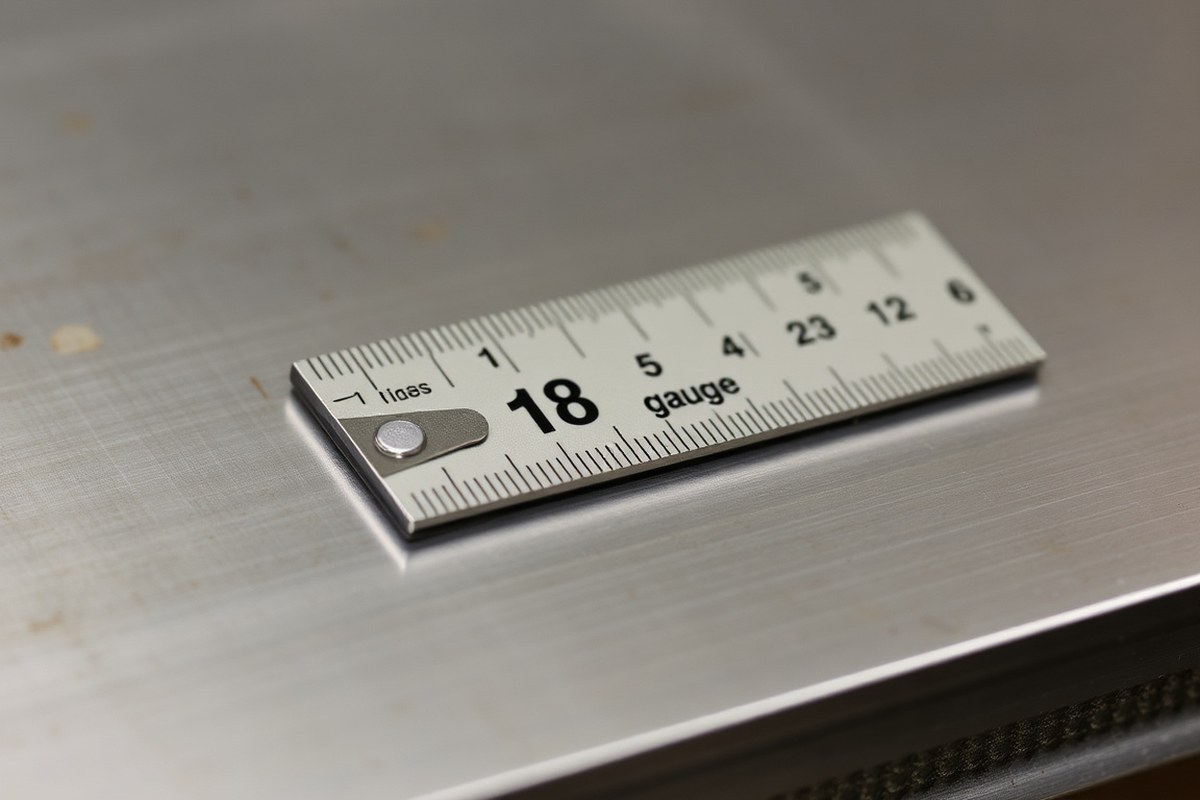
18 gauge steel has a thickness close to 0.048 inches or about 1.21 millimeters. This measure varies slightly depending on the type of steel and coatings applied. Knowing the exact thickness helps you choose the right sheet metal.
It affects your project’s strength and flexibility needs. You get better results with the right thickness.
Manufacturers follow specific tolerances when producing 18 gauge steel. These tolerances define how much thickness can deviate from the nominal value without affecting quality. Galvanized steel has a thin zinc layer.
This layer makes it thicker than regular mild steel. At 18 gauge, it measures a bit more because of zinc.
| Steel Type | Approx. Thickness (inches) | Approx. Thickness (mm) | Note |
|---|---|---|---|
| Standard/Mild Steel | 0.0478″ | 1.214 mm | Baseline measurement |
| Stainless Steel (304/316) | 0.0500″ | 1.270 mm | Slightly thicker, per stainless standards |
| Galvanized Steel (G90) | 0.0516″ – 0.0519″ | 1.310 mm – 1.319 mm | Includes zinc coating thickness |
| Aluminum (for reference) | 0.0403″ | 1.024 mm | Different gauge standard, lighter |
Expect small changes in steel thickness around the listed gauge. Zinc coating adds about 0.003 to 0.004 inches on galvanized steel. Stainless steel gauges follow different thickness rules than mild steel.
Pay attention to tolerance values when ordering or fabricating. Tolerances affect how parts fit and perform, especially in tight assemblies. To convert inches to millimeters, multiply by 25.4 after confirming the steel type and its standard thickness.
What Does Gauge Mean for Steel Thickness and Why It Varies
The gauge system measures steel thickness using numbers that go down as thickness goes up. An 18-gauge steel sheet is thinner than a 16-gauge one but thicker than 20 gauge. Steel thickness varies because each type uses different gauge standards.
Coatings add extra layers that change the thickness too. These layers mean the final thickness is not always the same.
Understanding the Steel Gauge Number System
Steel gauge numbers are inverse to thickness; lower numbers mean thicker steel. This system started long ago with old manufacturing methods. It measured how many times steel rolled to get a certain thickness.
More rolling meant thinner steel. Gauge is an old measurement, so it doesn’t equal exact thickness.
It’s not a precise number in inches or millimeters. The gauge is more of an estimate.
The gauge number acts as a shorthand for thickness instead of a strict unit. For example, 18 gauge typically means about 0.0478 inches thick for carbon steel. Think of gauge numbers as steps down in thickness, not exact.
Each step means thinner steel, but the change isn’t fixed. It’s a rough guide, not a rule.
Differences in Gauge Standards by Steel Type
Carbon steel, stainless steel, and galvanized steel each use similar but separate gauge series. An 18 gauge in stainless steel is usually 0.0500 inches thick, slightly thicker than carbon steel. Galvanized steel often measures thicker still at around 0.0516 to 0.0519 inches due to the zinc coating.
Stainless and galvanized steels have special specs or coatings. These differences affect the final thickness you get with each gauge. Coatings can make steel thicker than its gauge implies.
Always check the exact standard for your material before assuming thickness. The same gauge number can mean different thicknesses for different steels.
Don’t rely on gauge alone. That keeps your measurements accurate.
Why Material Type Influences Gauge Thickness
Gauge thickness varies by material because coatings and steel grades add measurable layers. For example, galvanized steel has zinc layers that boost overall thickness beyond base carbon steel. Stainless grades like 304 or 316 also have slightly different thickness tolerances based on alloy properties.
Historical gauge numbers came from counting how many times steel was rolled down from thick slabs. Different metals and treatments made those counts vary. Today, each type uses its own conventions to balance old standards with modern manufacturing needs.
Always ask your supplier for exact thickness specs by material type and finish before buying steel.
How 18 Gauge Steel Thickness Compares to Adjacent Gauges
Steel thickness varies a lot even between close gauge numbers. For example, 18 gauge steel is about 0.0478 inches (1.214 mm) thick. In contrast, 16 gauge steel is thicker at roughly 0.0598 inches (1.519 mm).
20 gauge steel is thinner at about 0.0359 inches (0.912 mm). This shows 18 gauge sits near the middle of common sheet steel thicknesses.
Knowing these differences helps you pick the right steel for your needs. Thicker gauges like 16 gauge give more strength and dent resistance.
Thinner options like 20 gauge make bending easier and reduce weight. 18 gauge steel balances strength, formability, and weight well, which fits many practical uses.
| Steel Gauge | Thickness (inches) | Thickness (mm) |
|---|---|---|
| 14 Gauge | 0.0747 | 1.897 |
| 16 Gauge | 0.0598 | 1.519 |
| 18 Gauge | 0.0478 | 1.214 |
| 20 Gauge | 0.0359 | 0.912 |
| 22 Gauge | 0.0299 | 0.759 |
This table clarifies where 18 gauge steel fits. It’s thicker than 20 and 22 gauge, but thinner than 14 and 16 gauge.
You should pick 18 gauge steel when you want moderate strength with good formability. This gauge is common for metal cabinetry since it offers sound dampening and resists denting.
Here’s a practical tip: choose 16 gauge or thicker steel for strength. It also provides some impact resistance. This makes it good for tougher projects.
For light parts needing easy bending and less weight, 20 gauge or thinner works better. 18 gauge steel is a middle option with decent strength.
It’s still easy to weld and cut. This gauge balances strength and workability well.
Cost usually rises with thickness, so thicker steel means more expense. However, 18 gauge strikes a middle ground in price and performance.
Its thickness also helps laser and plasma cutting speed, letting you work efficiently without sacrificing durability. This makes 18 gauge a top choice for many fabrication and construction tasks.
Thickness Variations Among Carbon, Galvanized, and Stainless Steel
18 gauge steel thickness differs slightly depending on the type of steel and coatings applied. Carbon steel has a standard thickness.
Galvanized and stainless steel variations affect the total thickness due to protective layers. These differences can impact weight, corrosion resistance, and fabrication choices.
18 Gauge Carbon (Mild) Steel Thickness
Standard 18 gauge carbon steel measures about 0.0478 inches (1.214 millimeters) in thickness. This thickness is consistent across common ASTM standards for mild steel. It weighs roughly 2.4 pounds per square foot, making it a popular choice for general fabrications requiring moderate strength.
Carbon steel can rust if left exposed to moisture or outdoor environments. That’s why it’s best used with surface treatments or paints for protection. Without coatings, the thin 18 gauge steel will corrode faster than thicker gauges.
Galvanized 18 Gauge Steel Variations
Galvanized 18 gauge steel starts with the same base thickness as carbon steel, about 0.0478 inches. The zinc coating, often specified as G90, adds roughly 0.00025 to 0.0005 inches per side. This means total thickness can increase by 0.0005 to 0.001 inch, depending on the coating weight.
The galvanized coating boosts corrosion resistance significantly, especially for outdoor or humid environments. You should specify G90 or heavier coatings for better protection. These coatings protect without changing the steel’s thickness much.
This helps keep the base steel strong and steady. This thin but durable layer protects the steel from rusting prematurely.
18 Gauge Stainless Steel Thickness Standards
18 gauge stainless steel is thicker than carbon steel slightly. It measures about 0. Thickness varies a little depending on exact steel types.050 inches (1.27 millimeters).
This slight increase comes from the need to meet corrosion-resistance standards while maintaining strength. Stainless steel weighs roughly 3.1 pounds per square foot at this thickness, heavier than carbon steel.
Stainless steel does not require extra coatings for rust protection but is pricier. For outdoor use, 316 stainless in 18 gauge is a reliable choice. Its thickness and corrosion resistance together ensure longevity without additional treatment.
Common Applications and Why 18 Gauge Steel Thickness Matters
18 gauge steel is common in many industries because it balances strength and flexibility. It measures about 0.0478 inches thick, enough for parts needing decent durability without heavy weight. This thickness works well for light structural uses and projects where some dent resistance is needed.
Automotive and HVAC industries often choose 18 gauge for its reliability and ease of forming. In cars, it fits body patch panels and brackets. These parts don’t carry heavy loads.
They must still resist daily wear. For HVAC, 18 gauge galvanized steel suits commercial duct systems well.
It offers more strength than thinner gauges. This steel bends easily at edges when needed.
- Automotive: repair panels, custom brackets, and some interior parts
- Appliances: housings for washers, dryers, ovens, and refrigerators
- Construction: light-gauge non-load-bearing studs, flashing, and trim
- Manufacturing: machine guards, conveyor parts, utility carts
- DIY & hobby: workbenches, toolboxes, metal art projects
Thickness affects not only strength but also how well steel resists dents and bends. At 18 gauge, steel stops feeling like thin foil and gains solid structural integrity. When choosing steel for a project, match thickness to the needed toughness and shaping demands.
Thin steel bends or dents more easily but saves weight. Thicker steel is tougher but harder to form.
Use a steel gauge chart when ordering sheets. This helps avoid mismatch problems. It ensures you get the right thickness for durability.
For industrial or residential projects, 18 gauge steel works well. It offers light structural support. It also provides good surface protection.
Its moderate thickness handles minor impacts better than thinner sheets. This makes it more practical for long-lasting fabrication. It performs better than 20 or 22 gauge sheets.
It costs more than thinner gauges but less than heavier steel. This offers good value for durability. It also makes the steel easier to use.
How to Measure and Verify 18 Gauge Steel Thickness Accurately
Measuring 18 gauge steel thickness needs accuracy and the right tools. A micrometer or caliper works best to get the real thickness on-site. Comparing your reading to the nominal 0.0478 inch (1.214 mm) value helps check if your material meets spec.
Recommended Tools for Thickness Measurement
A digital caliper or a micrometer gives you precise thickness readings. Look for tools with resolution down to 0.001 inch or 0.01 mm for best results. Thickness gauges made for sheet metal are useful for quick checks.
They can be less accurate than other tools. Keep in mind their readings may vary.
Micrometers cost $20 to $100 and often offer more repeatable results. Calipers are more versatile and usually cost less, around $10 to $50. Avoid tape measures or rulers; they aren’t precise enough for gauge verification.
Step-by-Step Measuring Process
Take multiple measurements across the sheet to avoid errors from uneven thickness. Always clean the steel surface first to remove dirt or rust that can impact accuracy. Use consistent pressure when closing the micrometer or caliper to prevent compressing the metal.
- Clean the steel surface with a cloth to remove dirt and rust.
- Zero your micrometer or digital caliper before measuring.
- Place the measuring tool perpendicular to the sheet surface.
- Gently close the tool’s jaws until they touch the steel without squeezing it.
- Read the thickness from the tool’s display or scale.
- Repeat at several spots across the sheet to check consistency.
- Average the readings for an accurate thickness value.
Interpreting and Recording Measurements
Compare your average measurement to the nominal 18 gauge thickness of 0.0478 inch or 1.214 mm. Slight differences occur due to manufacturing tolerance and steel type. Your reading varies by more than 0, check the tool again.
Confirm your method matches the gauge instructions carefully. Adjust as needed and retest.002 inch, question the material’s grade or the measuring process.
Record each measurement with the exact location on the sheet in your quality notes. This keeps track of thickness variation across batches.
Avoid confusing gauge numbers with thickness in decimals. Always convert gauge to inches or millimeters for clarity.
Welding and Fabrication Considerations for 18 Gauge Steel
Welding 18 gauge steel requires careful heat control to prevent burn-through. MIG welding is a solid choice, as it offers good control over heat input.
Stick welding can work. But you need to use a lower amperage to avoid blowing holes in the metal.
Keep your welding speed steady and avoid holding the torch on one spot for too long. Thin steel like this heats quickly.
So quick, smooth passes help reduce warping and defects. Using a backing bar or clamp can help support the metal and reduce burn-through risks.
Bending 18 gauge steel is easier than thicker gauges. But rapid bends can cause cracking or kinks. Use a press brake set to a moderate pressure to avoid dents.
For hand bending, score the bend line lightly. This helps you control the fold. Be careful not to damage the material.
Cutting 18 gauge steel is faster and cheaper than cutting thicker metals. Plasma cutting works well.
But many fabricators use shears or a laser cutter for cleaner edges. Avoid dull blades when using mechanical shears, or the edges will deform and require extra finishing.
Forming 18 gauge steel is straightforward. But watch out for springback, the metal bouncing back slightly after bending.
You can compensate by bending a few degrees more than needed. Heating the steel slightly before forming reduces cracking on tight radii.
Watch out for common issues like warping during welding and inconsistent bends in fabrication. Clamping the workpiece securely and letting welded parts cool slowly reduce distortion. Using filler rods matched to the steel grade also improves weld strength and appearance.
Here’s a quick checklist: use low amperage for welding, steady torch movement, and consider backing supports. For bending, moderate pressure on a press brake or scoring by hand helps control the fold. Choose sharp cutters and handle the metal gently to avoid rough edges.
Common Mistakes When Ordering or Using 18 Gauge Steel Thickness
Mixing up galvanized steel thickness with plain steel charts causes trouble. Galvanized steel includes a zinc coating, which changes the overall thickness.
The base metal before adding zinc often measures close to standard 18 gauge, about 0.0478 inches. But the coating adds to this.
Many assume all 18 gauge steel is the same thickness. Steel gauges vary by type and manufacturer.
So 18 gauge stainless steel won’t always match 18 gauge carbon steel thickness. Ordering without checking the specific product specs leads to parts that don’t fit or perform well.
You might think thickness numbers match across all products on one chart. They rarely do. Gauge standards vary between suppliers.
Some tables list minimum thickness while others give averages. Getting exact thickness requires confirming the measurement method used.
- Confusing galvanized steel thickness charts with plain steel charts
- Assuming 18 gauge steel thickness is uniform across all steel types
- Not verifying whether the gauge refers to base metal or coated thickness
- Relying on minimum gauge thickness instead of the average or nominal thickness
- Failing to ask suppliers for exact thickness measurements or tolerances
- Ordering steel without measuring test samples first, especially for tight-tolerance projects
- Ignoring different gauge standards across manufacturers and product types
Before buying, always check which gauge chart your supplier uses. Ask if thickness includes coatings like zinc. Confirm if measurements are averages, minimums, or nominal values.
When the project needs precise fits, measure a sample sheet yourself. You can also ask the seller for a micrometer reading.
Some shops avoid mistakes by keeping separate charts for galvanized and plain steel. This prevents confusing coated thickness with bare metal thickness.
Don’t guess thickness from just the gauge number. Call your supplier and get clear thickness info in inches or millimeters for your exact product.
Always check if the 18 gauge means base metal thickness. Ask if it includes any coating thickness before buying.
Checklist for Choosing the Right 18 Gauge Steel for Your Project
Start by identifying the environment where the steel will be used. Choose galvanized 18 gauge with G60 or G90 coating for outdoor or moisture-prone areas. For indoor applications or automotive repairs, bare carbon or stainless steel is often best.
Check the thickness required beyond just the gauge. 18 gauge thickness varies by steel type.
So request a mill test report (MTR) to confirm exact measurements. These reports verify the steel meets project specs and industry standards.
Think about corrosion resistance, strength, and fabrication needs. Galvanized steel suits HVAC ductwork and storage equipment that must resist rust. Stainless steel weighs slightly more but stops corrosion better and fits food or medical fabrications.
- Match steel type and coating to the project environment
- Request mill test reports to verify thickness and grade
- Confirm compliance with SMACNA or ANSI/SDI standards as needed
- Check welding and forming compatibility for your 18 gauge steel
- Consider surface finish based on appearance and maintenance
- Assess budget differences between carbon, galvanized, and stainless
- Buy from reputable suppliers offering material certification
Ask suppliers for MTRs before ordering to avoid guesswork. These documents prove gauge thickness, chemical makeup, and performance limits. Knowing this upfront saves time and costly mistakes.
Finally, balance cost, durability, and fabrication ease for your build. Galvanized 18 gauge steel usually costs slightly more but pays off in weather resistance. Stainless steel is pricier but essential if corrosion is a major risk.
Step-by-Step Action Plan for Using 18 Gauge Steel Correctly
Follow these steps to pick and work with 18 gauge steel confidently. Check each step to avoid common mistakes and ensure your project fits your needs.
- Before you start: Verify the exact thickness of your 18 gauge steel with a micrometer. It should measure about 0.0478 inches or 1.214 millimeters. Confirming this ensures you get what you expect.
- Day 1: Select the right steel type (carbon, galvanized, or stainless) for your project’s environment. Knowing this helps avoid rust or fabrication problems later.
- Week 1: Compare 18 gauge steel with 16 gauge steel. Also, check it against 20 gauge steel. This helps you decide if you need thicker or thinner steel. Look at toughness, weight, and cost tradeoffs to make a smart choice.
- When ordering: Specify gauge, steel type, and finish clearly with your supplier. Double-check the order confirmation to prevent delivery errors that delay your project.
- During fabrication: Use welding setups suited for 18 gauge steel thickness and type. Adjust heat and speed to avoid warping or burn-through.
- Before assembly: Measure each steel piece again to catch any thickness changes from processing. Correct sizing saves time and fit issues during welding or riveting.
- After installation: Inspect welds and joins for strength and clean finish. A solid weld shows you used the right thickness and welding method.
Frequently Asked Questions
What Is the Exact Thickness of 18 Gauge Steel in Inches and Millimeters?
18 gauge steel measures 0.0478 inches or 1.214 millimeters thick. This thickness applies to standard cold-rolled carbon steel sheets.
How Much Does 18 Gauge Steel Weigh per Square Foot?
It weighs approximately 1.953 pounds per square foot. This weight helps balance strength and manageability for fabrication projects.
Is 18 Gauge Steel Suitable for Welding and Fabrication?
Yes, 18 gauge steel is suitable, but expect 3, 5° of springback. Overbend slightly for precise shaping when welding or forming.
How Does Galvanized 18 Gauge Steel Differ in Thickness from Standard Steel?
Galvanized 18 gauge steel is slightly thicker, around 0.0516 inches or 1.31 mm. The zinc coating adds thickness for corrosion protection.
Why Is 18 Gauge Steel Called the “Utility Thickness”?
This grade is firmer than 20 gauge yet bends more easily than 16 gauge. Many car and appliance parts use this due to that mix.
Wrapping Up
18 gauge steel is about 0.0478 inches thick, with slight variations by steel type. Measuring carefully and choosing the right steel keeps your project smooth. The next step: test your steel thickness with a reliable gauge before cutting any pieces.