How Many Axles Do Cars Have? A Complete Guide with Expert Insights
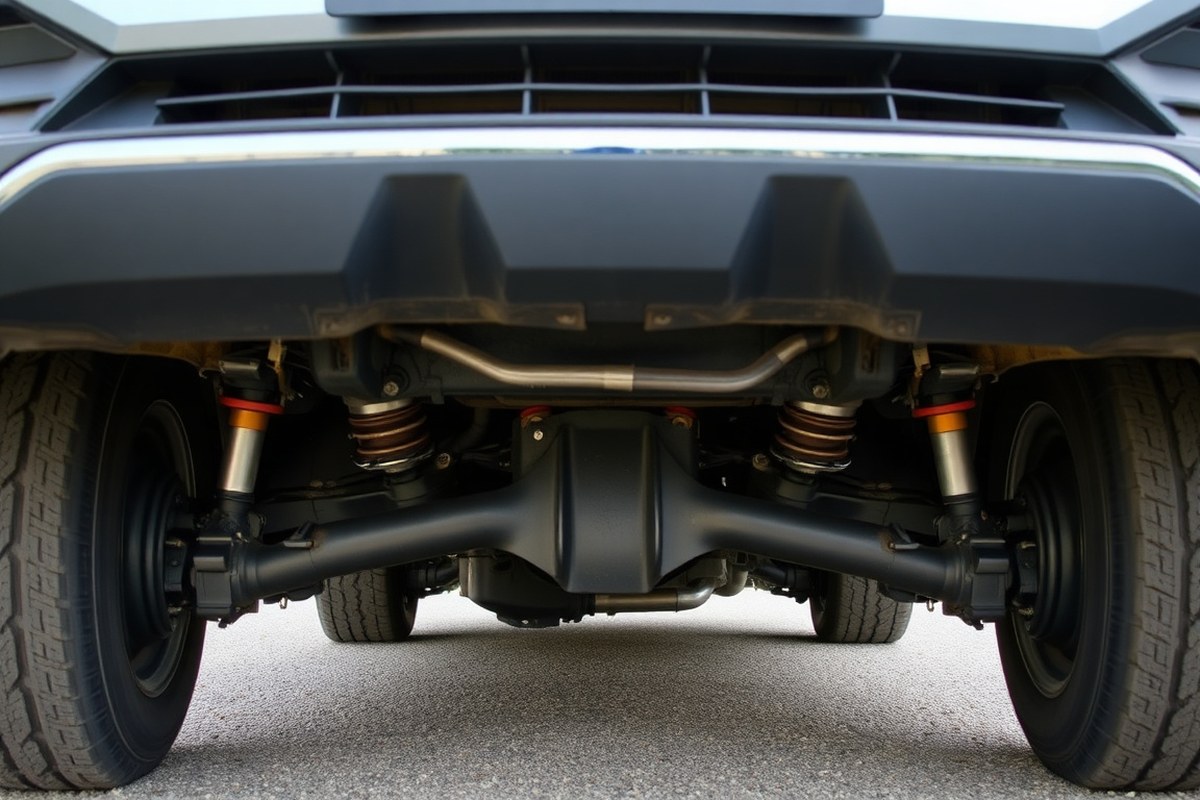
Most cars feature two axles, one in front, one in back. These axles link the wheels to the drivetrain and carry the car’s weight. Nearly all passenger vehicles use this basic axle arrangement.
Four-wheel drive vehicles also usually have two axles. But both can deliver power to the wheels.
Drive axles on 4WD trucks are bigger and stronger to handle off-road conditions. Knowing your car’s axle count helps you understand its drivetrain and maintenance needs better.
Axles are made of tough steel. So they last a long time but wear out parts like CV joints sooner.
Clicking noises or vibrations often signal that your axles require inspection. Catching axle trouble early prevents bigger, costly repairs down the line.
Key Takeaways
- Standard cars almost always have two axles: front and rear.
- Front-wheel drive cars usually power only the front axle.
- 4WD and AWD vehicles have two axles but can power all four wheels.
- Axles are heavy, steel parts that connect wheels to the drivetrain.
- CV joints on axles wear after 80,000 to 150,000 miles and need inspection.
- Listen for clicking or vibrations as signs of axle problems.
How Many Axles Does a Standard Car Have?
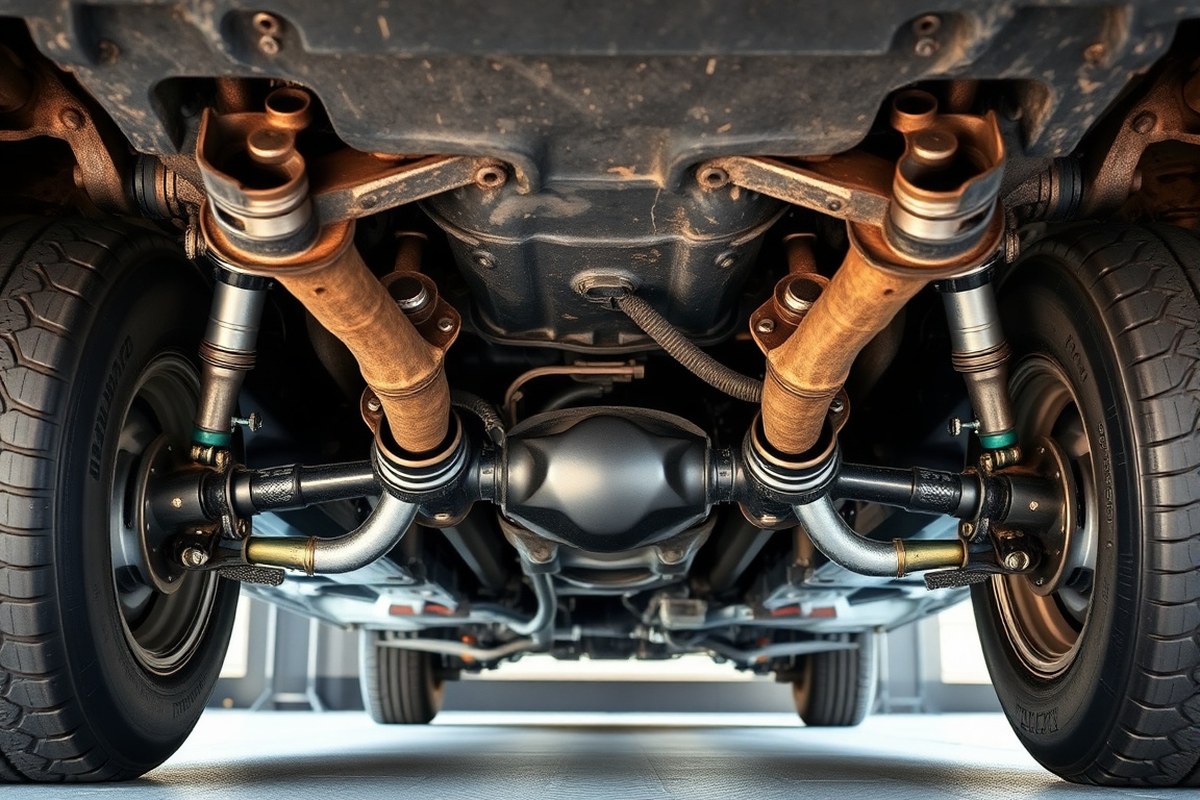
Most cars have two axles, with one at the front and one rear. Each axle supports two wheels, adding up to four wheels total. This design fits most passenger vehicles.
Not all cars have exactly two axles, though. Some heavier or specialized vehicles, like trucks or buses, often have three or more axles. These extra axles help support the heavier weight and improve stability.
A car’s design mainly decides how many axles it has. Its purpose also affects that number. More axles often mean more capacity or power.
Standard cars use two axles because it balances ride quality and cost. Larger or commercial vehicles add axles to carry extra loads safely on the road.
What Is an Axle and How Does It Work in Cars?
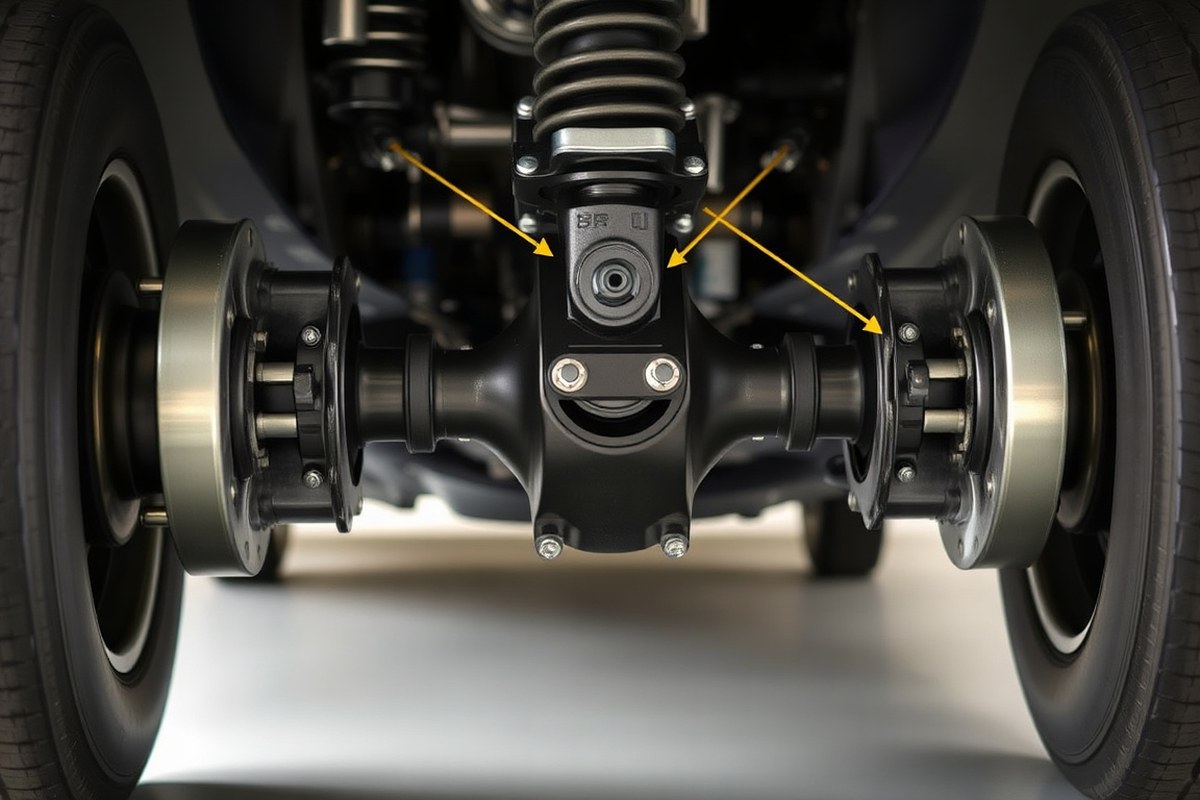
An axle is a shaft or rod that connects a car’s wheels. It supports the vehicle’s weight.
It also transfers power to the wheels. This lets the car move forward or backward while carrying the heavy load of the vehicle.
Axles help keep the wheels stable and properly positioned under the vehicle. In many cars, the front axle might steer and drive the front wheels.
The rear axle supports weight or provides power to the rear wheels. These axles work with other parts like suspension and differentials to provide smooth driving and control.
Many cars use half shafts to transfer power. These are in front-wheel or all-wheel drive. These axles have joints and rubber boots.
They let wheels turn and move with suspension. This design keeps the power flowing while the wheels adapt to bumps and turns.
Check your car’s axle boots often for cracks. Cracks or leaks can cause costly repairs.
How Many Axles Do Cars Have by Drivetrain Type?
Cars usually have two axles regardless of their drivetrain type. Front-wheel drive, rear-wheel drive, all-wheel drive, and four-wheel drive vehicles use two main axles. These structural axles carry the vehicle’s weight and power.
They form the main base of the drivetrain system. AWD and 4WD vehicles have extra half shafts for driving wheels. But these don’t increase the structural axle count.
Front-Wheel Drive (FWD) Axle Layout
FWD cars have two structural axles: a front axle and a rear axle. The front axle both supports and drives the front wheels. The rear axle in most FWD cars is a dead axle and doesn’t deliver power.
Typically, two CV (constant velocity) drive shafts connect the transmission to each front wheel. That’s why the front axle handles both steering and propulsion. Rear wheels just roll freely on the dead axle.
Rear-Wheel Drive (RWD) Axle Layout
RWD cars also have two axles: the front axle for steering and the rear for driving. The rear axle drives the wheels.
The front axle supports the wheels without driving them. This rear axle is a live axle that transmits torque from the engine.
Two drive shafts typically connect the gearbox or differential to the rear wheels. The front axle usually has no drive shafts and just handles steering and suspension duties.
All-Wheel Drive (AWD) and Four-Wheel Drive (4WD) Variations
AWD and 4WD vehicles keep two main axles, front and rear, to support wheels and suspension. Both axles drive power to wheels, improving traction in various conditions. Some vehicles have up to four CV shafts but only two structural axles.
The CV shafts transfer power but don’t hold weight. The number of structural axles stays at two.
Each wheel can have its own half shaft attached. These half shafts carry power from the differential to the wheel hubs. They help turn the wheels but don’t hold weight.
Half shafts don’t count as structural axles because they lack support duties. They don’t carry the vehicle’s weight or hold suspension parts.
Their job is only power transfer. The axles themselves are the large beams or shafts holding the wheels and suspension in place.
Electric cars usually have the same two axle positions as gasoline cars. Some electric cars place motors directly on axles or wheels. But structural axle count stays the same.
The drivetrain layout changes. But the vehicle still relies on two main axles to hold the wheels.
Here’s a table summarizing axles and drive shafts by drivetrain type:
| Drivetrain | Axles on the Road | Axles That Drive | Driving Shafts (Typical) |
|---|---|---|---|
| FWD | 2 | Front | 2, at the front |
| RWD | 2 | Rear | 2, at the rear |
| AWD or 4WD | 2 | Front and rear | Up to 4, one per wheel |
That table shows two structural axles are standard across drivetrains. The number of drive shafts varies based on how many wheels the setup powers. This distinction prevents confusion about how many axles a vehicle has.
Types of Car Axles and Their Functions
Most cars have two main axles: one in front and one at the back. These axles include structural types and Constant Velocity (CV) axles that serve different roles. Front and rear axles can be solid or part of an independent suspension, affecting the ride and handling.
Structural Axle Assemblies Explained
Structural axles form the core framework that supports the car’s weight. Typically, a car has two structural axles: a front axle and a rear axle. These axles hold the suspension components and carry the vehicle load while connecting to the wheels.
Each structural axle works differently depending on the vehicle’s suspension setup. For instance, solid axles link both wheels rigidly.
Independent suspensions let wheels move separately. The structural axle provides points to mount suspension parts and handle road forces securely.
Constant Velocity (CV) Axles and Half Shafts
CV axles, also called half shafts, connect the car’s transmission or differential to individual wheels. They transmit torque while allowing the wheels to move up and down with the suspension. This keeps power flowing smoothly even on bumpy roads or during sharp turns.
Cars with independent suspension usually have two CV axles per structural axle. Each axle has one CV axle for every wheel. This setup helps the wheels turn smoothly.
CV joints flex easily to handle steering angles and suspension movements. Without CV axles, a car could not evenly distribute power through its independent suspension system.
- CV axles have flexible joints to handle wheel movement.
- They transmit torque from the differential to each wheel.
- Two CV axles usually exist per structural axle.
- Common in front-wheel drive and independent suspensions.
- CV axles improve ride smoothness and cornering ability.
These axles often cost between $100 and $300 each to replace, depending on the car. Bad CV joints cause clicking noises and vibration, signaling wear. Properly working CV axles keep driving smooth and safe.
Solid Axles vs Independent Suspension Axles
Solid axles are single, rigid beams that connect both wheels on one axle. They carry more load and are common in trucks or older cars but limit wheel movement. This design can cause rougher rides and less precise handling.
Independent suspension axles use separate shafts connected by CV joints. Each wheel can move independently, improving comfort and traction on uneven roads. Independent suspensions allow better steering control and smoother driving than solid axles.
- Solid axles provide strong, simple support but less wheel articulation.
- Independent axles improve ride and handling through separate wheel movement.
- Many modern cars use independent suspension front and rear.
- Solid axles are thicker and heavier, made for toughness.
- Independent axles usually have thinner, lightweight CV half-shafts around 1, 1.5 inches in diameter.
Rear-wheel-drive cars often use a solid live axle. This axle is inside a strong, fixed housing. It is called a “live axle” because it moves with the wheels.”
Models like the Ford 8.8” are examples. Independent rear suspensions use half-shafts and CV joints instead, common in vehicles like the Mazda CX-5.
How to Identify the Number of Axles on Your Vehicle
You can find out how many axles your car has by counting the main wheel-supporting shafts. Look under your vehicle to spot these large metal bars connecting the wheels.
In most cases, passenger cars have two axles. But all-wheel-drive systems and trucks can vary.
Locating Main Structural Axles
The primary axles run from side to side, connecting each set of wheels. Typically, vehicles feature a single axle on the front and another at the rear. These axles carry the vehicle’s weight and provide essential wheel support, also meeting legal requirements.
Check underneath your vehicle near the wheels for solid, thick metal rods or beams. They run side to side, joining the wheels on each end.
You can often spot them behind or near the brake rotors. These are the axles counted for legal and insurance purposes.
- Park your car on a flat surface for better inspection
- Use a flashlight to see the area beneath the vehicle clearly
- Look directly behind each wheel for a thick metal bar or beam
- Note the count of these bars across the vehicle’s width
- Confirm with your owner’s manual if unsure
Suspension parts like control arms hold wheels but don’t link both sides. Don’t mistake them for axles.
Counting CV Axles and Half Shafts
CV (constant velocity) axles, often called half shafts, connect the transmission to the wheels. Front-wheel-drive cars usually have two CV axles, one for each front wheel. These shafts transfer power but aren’t considered separate axles since they don’t link wheel pairs.
CV axles can confuse people because they look like axles too. They sit inside the main axle assembly. For example, front-wheel-drive cars have one main front axle.
But they use two CV axles to power each front wheel. It’s best to count only the structural axles for how many axles your car has.
Recognizing Special Cases (AWD, Trucks, Trailers)
AWD vehicles send power to all four wheels using drive shafts or CV shafts. Still, they mostly have only two main axles. This is because the axles are about wheel groups, not the count of spinning shafts.
Trucks, big SUVs, and trailers might have three or more axles. The number depends on the vehicle’s design and load needs.
Look at your vehicle’s specs or see if extra wheels and axles appear behind the rear axle. Commercial vehicles often add axles, sometimes up to four.
This helps spread weight, boost towing, and meet legal rules. Always verify if unsure, especially with trailers, which may have multiple axles but no engine-driven shafts.
Common Signs Your Car’s Axles Need Repair or Replacement
Axle problems show up in ways that affect your car’s safety and driving comfort. A loud clicking noise when turning often means the outer CV joint is worn out. This happens when the boot splits, grease leaks, and the joint wears down.
You might feel strong vibrations at highway speeds, especially between 45 and 65 mph. These vibrations can worsen when you accelerate.
A bent axle shaft from hitting potholes or damages to axle balance usually cause this symptom. If you notice grease leaking around your wheels, it’s a sign the axle boots are damaged and letting lubricant escape.
- Clicking noises during slow turns, worn CV joint, needs axle replacement.
- Vibrations increasing with speed, bent or unbalanced axle shaft.
- Visible grease leaking from axle boots, damaged boot requires repair.
- Clunk sound when shifting into gear, possible axle or differential problem.
- Car won’t move forward or backward, severe axle failure.
- ABS or traction control lights blinking, damaged ABS tone ring on axle.
Driving with a bad axle is risky, affecting your control and safety. Some issues let you drive a short time with care.
But others require immediate stops. For instance, vibration symptoms might get worse, damaging tires or suspension parts.
Replacing a CV axle usually costs a few hundred dollars. But full axle repairs on trucks can go above $1,200.
High-mileage cars, especially those over 200,000 miles, benefit from regular axle inspections. Catching axle problems early can save you higher repair bills and unsafe driving.
Axle Replacement Costs and Lifespan Expectations
Replacing axles costs vary mainly by vehicle type and axle kind. CV axle replacement usually runs between $450 and $800. Labor costs $150 to $300 because the job takes 1 to 3 hours.
The price depends on how long the mechanic works. The more time it takes, the higher the labor cost.
Axle wear depends on your driving habits and conditions. Inspect axles every 70,000 to 100,000 miles to catch damage early. Overloading and rough roads speed up axle wear and can cause issues sooner.
| Type of Axle | Typical Replacement Cost | Labor Time | Notes |
|---|---|---|---|
| CV Axle | $450 – $800 | 1 – 3 hours | Price depends on make and model |
| Stub Axle | Varies by vehicle | Usually included in front axle repair | Common in rear and front-wheel-drive cars |
| E-Axle Module | About $8,400 (list price) | Specialized replacement | For electric vehicles with integrated axles |
| Axle Shaft | Around $959 | Depends on access and vehicle type | Critical for drivetrain function |
Axle parts differ in price and repair complexity. Simple axle shaft swaps cost less than full e-axle replacements. OEM parts usually cost more but fit better than aftermarket parts.
Maintenance helps avoid expensive repairs like transfer case replacements, which can cost $1,800 or more. Keeping axles in good shape improves your vehicle’s lifespan and saves money.
How Axle Count Affects Vehicle Weight, Fuel Efficiency, and Performance
Adding more axles increases a vehicle’s weight, which usually lowers fuel efficiency. AWD systems add 200 to 300 pounds to the vehicle. This weight lowers fuel mileage by about 1 to 2 miles per gallon.
Lift axles on big trucks spread the vehicle’s weight. They can be lifted when less weight is carried. This helps save fuel.
Axles also impact how a car handles and grips the road. Rear axles bear most cargo weight and transmit engine torque, affecting acceleration and traction.
Vehicles with solid rear axles tend to have rougher rides but stronger off-road ability. Independent axles offer smoother handling and better performance on paved roads.
Choosing axle setups means balancing comfort, fuel economy, and capability. More axles improve load capacity and off-road traction. But added weight reduces efficiency and can change handling.
Cars designed for heavy towing or off-roading benefit from extra axles. But small cars gain little and lose fuel economy unnecessarily.
Make sure extra axles are maintained properly. Worn axles can cause loss of control, especially on turns and high speeds.
When to Call a Mechanic for Axle Issues and Safety Considerations
Ignoring axle problems can put your safety at serious risk. A damaged axle may cause loss of control or prevent your car from moving. For example, a broken axle can make steering unpredictable or cause vibrations that worsen quickly.
Driving with clear axle damage is unsafe. You need professional repairs right away if you hear clunking noises. Notice vibrations during acceleration or sudden steering shudders.
These signs require immediate attention. These signs often mean the axle joints or shafts are failing. Waiting can lead to complete axle breakage, leaving you stranded and risking accidents.
Small axle issues like worn CV joint boots might seem fixable with DIY methods. However, axle repairs generally require special tools and skills to avoid mistakes. A bad repair risks further damage or unsafe driving conditions.
Use this simple rule to decide: call a mechanic immediately. If your car shakes or makes loud clunks when turning or accelerating, get help fast.
Axle repairs usually cost between $480 and $740. The price varies if the front or rear axle needs work. Front axle repairs tend to be pricier due to their complexity and role in steering.
Choosing timely professional work saves money by avoiding more costly failures later. After a repair, you should feel smooth steering and no unusual noises or vibrations when driving.
Problems differ if you drive an SUV or truck. Heavier axles like semi or full-floating types may cause different issues. These axles handle more weight but still need prompt attention when damaged.
Regular checks can catch issues early. When in doubt, talk to a licensed mechanic for safety. They help make sure your axle works correctly on any vehicle.
Step-by-Step Action Plan for Checking and Caring for Your Car’s Axles
Keep your car’s axles in good shape by following these simple steps. Each step helps you spot issues early and keep your ride safe.
- Before driving: Look under your car to count the axles. Verify if it matches your car’s drivetrain type. Knowing your axle count helps diagnose problems later.
- Weekly: Listen for any clicking or clunking sounds while turning. These noises often mean axle joints are wearing out. Hearing those noises means you should schedule a mechanic visit soon.
- Monthly: Check your CV boots near the wheels for cracks or grease leaks. Damaged boots let dirt in and cause axle failure. Replace boots or axles if damaged.
- Every 6 months: Inspect your tires for uneven wear. Weird tire patterns can point to bad axles or alignment issues. Fix problems before they get worse.
- Once a year: Have a mechanic examine your axles during your regular service. They can spot hidden cracks or worn parts early. Early repairs save you money and hassle.
- After noticeable vibration: If you feel shaking or jittery steering, stop driving briefly. Check the axle and joints or get a mechanic to look. Driving with bad axles is risky.
- Before a long trip: Confirm your axles are solid and free of wear signs. This check prevents breakdowns far from home and keeps your trip safe.
Frequently Asked Questions
How Many Axles Do Standard Passenger Cars Usually Have?
Most standard passenger cars have two axles: one front and one rear. This setup supports the four wheels and balances the vehicle’s weight.
Do Electric Cars Have Axles Like Traditional Vehicles?
Electric cars include axles, but these are usually designed simply. The simpler design cuts weight and suits the electric drivetrain setup.
Why Do Some SUVs Use Semi-Floating Axles Instead of Full-Floating Axles?
Semi-floating axles are common in SUVs because they balance strength and cost effectively. They handle the vehicle’s weight while keeping complexity lower.
Can a Car Have More Than Two Axles, and Why?
Yes, larger vehicles or specialty cars can have more than two axles. Extra axles help distribute heavier loads and improve stability.
How Does Axle Type Affect a Car’s Drivetrain and Performance?
The axle type, like semi-floating or full-floating, affects weight capacity and durability. It influences how power transfers to the wheels and handles stress.
Wrapping Up
A typical car uses two axles: one in front and one in back. Understanding your vehicle’s axles helps you spot issues early. Check how many axles your car has to manage maintenance better.