Is Titanium Stronger Than Steel? Complete Strength Comparison and Buying Guide
Titanium isn’t always stronger than steel, it depends on the alloy. Pure titanium usually has less strength than many steels.
Titanium alloys, however, can match or exceed steel’s strength while being much lighter. This balance of strength and weight makes titanium valuable in certain industries.
Titanium weighs about 45% less than steel, which helps in applications like aerospace and high-performance sports equipment. With the right alloy, titanium can meet or surpass steel’s tensile strength. The choice depends on your needs for strength, weight, corrosion resistance, and how the metals are treated during fabrication.
Titanium has lower thermal conductivity, which affects heat flow during welding and machining. Steel often retains strength at high temperatures better than titanium, making it suitable for heavy-duty uses. These factors, along with titanium’s higher cost, play significant roles when selecting between the two metals.
Key Takeaways
- Commercially pure titanium has strength similar to common low-grade steels.
- Titanium alloys like Ti-6Al-4V offer higher strength with less weight than steel.
- Steel usually performs better under high temperatures than titanium.
- Titanium’s lower thermal conductivity affects welding and heat treatment options.
- Choose titanium for applications needing strength-to-weight ratio and corrosion resistance.
- Alloy steel’s strength depends heavily on its specific alloying elements.
Is Titanium Stronger Than Steel in Practical Terms?
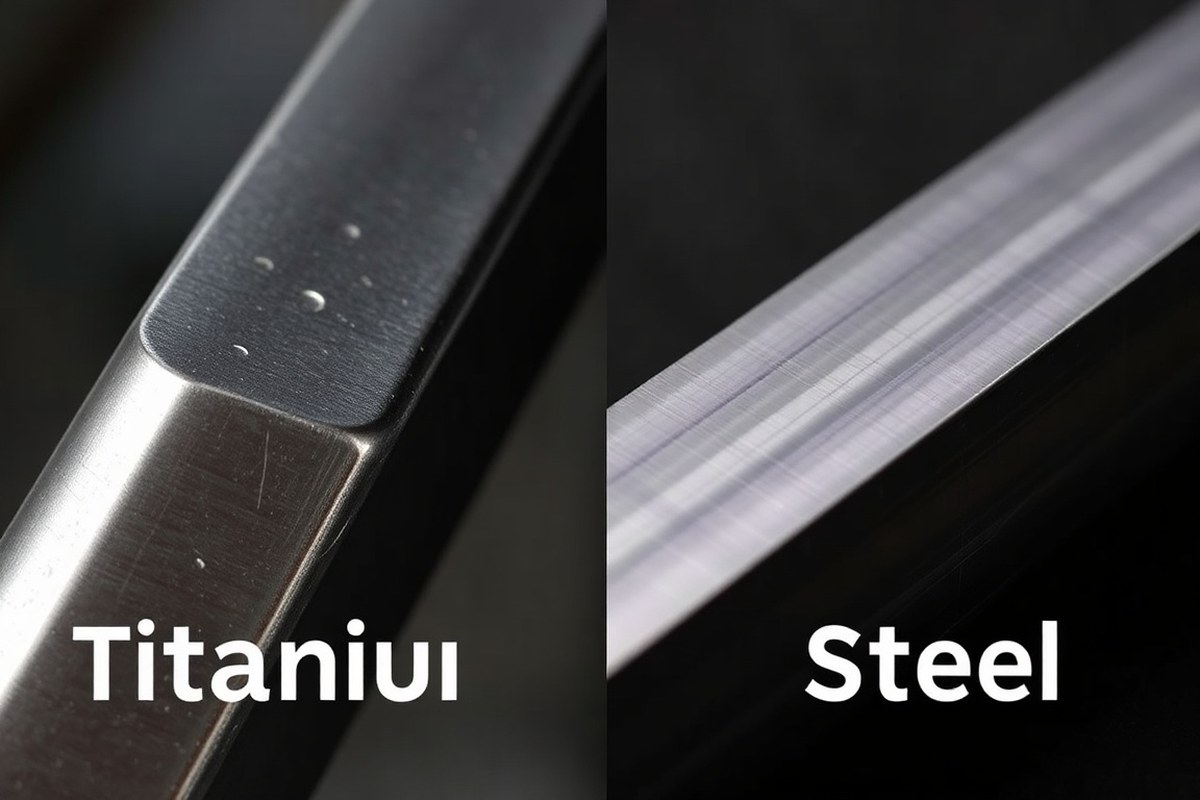
Comparing titanium and steel strength depends on grades. Strength means more than tensile numbers. You must consider other factors, too.
Commercially pure titanium (Grades 1-4) has tensile strength near 434 MPa (63,000 psi). This matches low-grade steel.
Titanium alloys like Grade 5 (Ti-6Al-4V) can reach tensile strengths around 900 MPa (130,000 psi). They often beat many steels in strength.
Density plays a big role in how strong these metals feel in use. Titanium’s density is about 4.5 g/cm³, nearly half that of typical steel, which is around 7.8 g/cm³. Titanium has a higher strength-to-weight ratio than steel.
It is better for weight-sensitive parts. Examples include aerospace and racing components.
A titanium rod can be nearly as strong as steel. It weighs about 40% less.
Grade 5 titanium alloy shows tensile strength about 900 MPa at 4. This is clear in a numeric comparison.5 g/cm³ density. Common medium carbon steel has tensile strength around 600 MPa at 7.8 g/cm³ density.
Steel can get stronger with heat treatment or alloying. Some hardened steels exceed 1,200 MPa in tensile strength.
But it also gets heavier. So, stronger steel grades exist, but they come with extra weight.
Yield strength matters too, especially under everyday loads. Grade 5 titanium’s yield strength is about 830 MPa. This is higher than mild steel’s 250 MPa but close to some alloy steels near 700 MPa.
Remember that yield strength is the point metals start to deform permanently. So it’s key to consider it alongside tensile strength.
Strength goes beyond just numbers on paper. Titanium often resists fatigue and corrosion better than steel. This makes it last longer in everyday use.
Steel may bend or rust before failing, affecting its effective strength and lifetime. Titanium does not conduct heat or electricity well. This affects its performance compared to steel in certain environments.
When picking metals, knowing what type of steel and titanium to compare helps. Grade 4 titanium, the strongest pure type, matches low alloy steel strength. It weighs less, which can be an advantage.
High strength titanium alloys like Ti-6Al-7Nb (with added niobium) are stronger than many stainless steels. Use strength-to-weight ratio and fatigue data to decide which fits your design best.
Titanium’s cost and difficulty in welding or bonding can also limit its use despite strength advantages. Steel often wins for applications needing hardness or ease of fabrication. Steel alloys also handle very high temperatures better than titanium, which loses strength above 430°C (806°F).
So, titanium might be “stronger” by some measures. But steel shines with its own benefits depending on your needs.
Key Mechanical and Physical Properties of Titanium and Steel Alloys
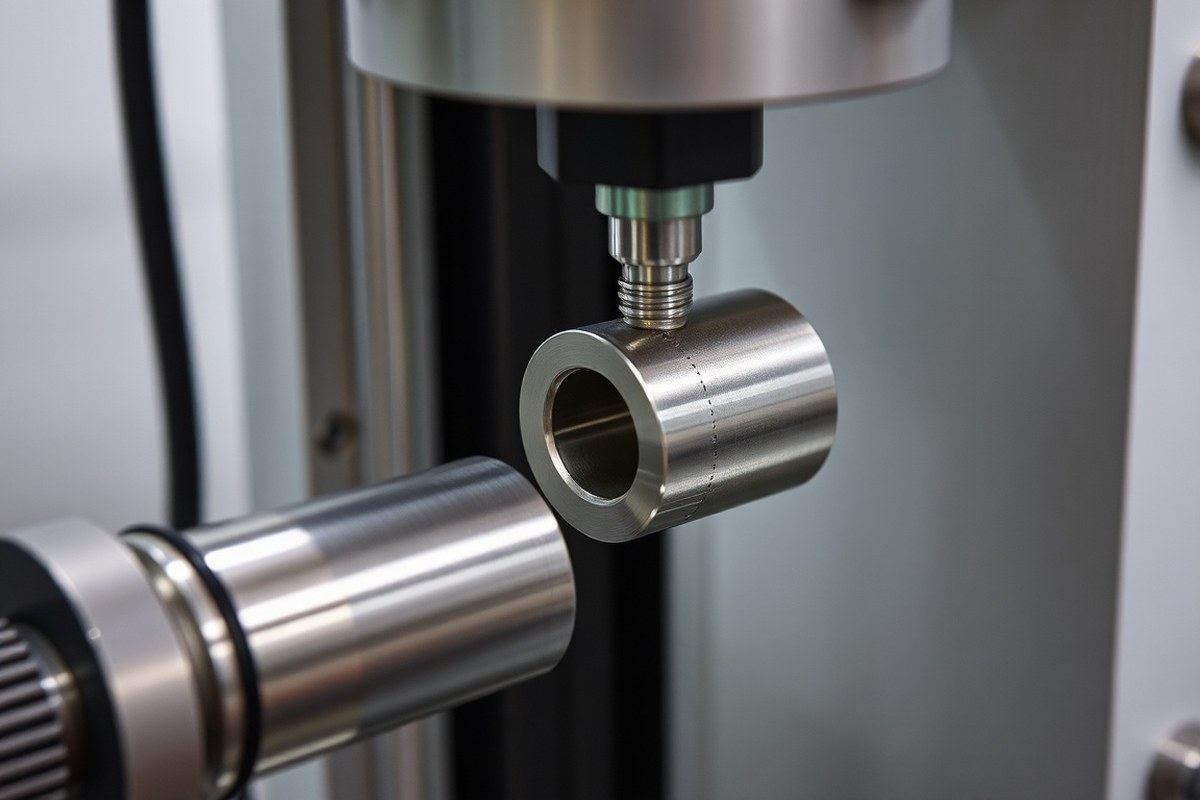
Strength is measured by a few key properties: tensile strength, yield strength, hardness, and fatigue resistance. Tensile strength tells you the maximum pull a material can handle before breaking. Yield strength is the stress level when permanent deformation starts.
Hardness shows how well the metal resists surface damage. Fatigue resistance explains how long a metal lasts under repeated stress.
Titanium alloys often excel in strength-to-weight ratio and corrosion resistance. Titanium beta C alloy can reach tensile strengths over 1,400 MPa (200,000 psi). The popular aerospace alloy Ti-6Al-4V contains about 6% aluminium.
It also has 4% vanadium. This mix gives good strength and is lighter than most steels. Steel strength changes a lot depending on alloy and heat treatment.
It ranges from mild steels to very strong, wear-resistant types. These have tough microstructures.
Density affects how heavy a structure will be. Titanium alloys generally have densities around 4.4 g/cm³. Common steels are about twice as dense, near 7.8 g/cm³.
This large difference influences design choices when weight savings matter. Fatigue resistance of titanium is good, with some alloys matching steel’s longevity under stress. Steels gain fatigue strength from microstructure engineering and alloying elements.
| Property | Titanium Alloy (Ti-6Al-4V) | Titanium Beta C Alloy | Steel (General Alloy) |
|---|---|---|---|
| Tensile Strength (MPa) | 900 – 1,200 | 1,400+ | 400 – 1,100 |
| Yield Strength (MPa) | 830 – 1,100 | 1,300+ | 250 – 900 |
| Density (g/cm³) | 4.43 | 4.4 | 7.8 |
| Hardness (HV) | 330 – 360 | 380+ | 150 – 600 (varies) |
| Fatigue Resistance | High, with good longevity | High strength, fatigue resistant | Varies widely by alloy |
Choosing an alloy depends on your exact need for weight, strength, or corrosion resistance. Titanium’s low density lets you build lighter parts with good strength and fatigue life.
Steel offers a wider range of strength and hardness options. Heat treatments and alloying change steel’s toughness and wear resistance, making it flexible but heavier.
Fatigue resistance depends heavily on the metal’s microstructure and surface finish. So don’t overlook fabrication quality.
Common Titanium and Steel Alloy Types and Their Strength Differences
Titanium alloys fall mainly into three categories: alpha, beta, and alpha-beta. Each has distinct compositions that shape strength and suitability for uses. Steel comes in many grades like carbon, stainless, and alloy.
Each grade offers different properties. They suit a range of needs.
Titanium Alpha, Beta, and Alpha-Beta Alloys
Alpha titanium alloys contain elements like aluminum and oxygen. They offer good weldability, creep resistance, and are stable at high temperatures. However, alpha alloys don’t respond much to heat treatment for strength changes.
Beta titanium alloys include beta stabilizers such as vanadium, molybdenum, or iron. These alloys can be heat treated for very high strength. Beta types usually have higher toughness.
They can become brittle at very low temperatures. This is due to omega-phase formation.
Alpha-beta alloys combine alpha and beta stabilizers. They are the most widely used titanium alloys, like Ti-6Al-4V. These alloys are heat treatable and balance strength, toughness, and corrosion resistance.
Steel Types: Carbon, Stainless, Alloy Grades
Carbon steels vary by carbon content, from low (~0.1%) to high (~2%). Low-carbon steels are ductile and easy to weld but weaker.
High-carbon steels offer better strength but less toughness. Common grades for structural uses include A36 and 1045.
Stainless steels contain chromium (usually 10-20%) providing corrosion resistance. Austenitic types, like 304 and 316, are popular for combining strength and rust resistance. Ferritic and martensitic stainless steels serve different strength and hardness needs.
Alloy steels contain elements like nickel, chromium, and molybdenum. These improve strength, toughness, or heat resistance.
Each element is tailored for certain benefits. Grades like 4140 and 4340 steel are commonly used for parts needing high fatigue strength.
How Alloy Elements Influence Strength
Aluminum in titanium alloys improves strength and oxidation resistance, stabilizing the alpha phase. Vanadium, a beta stabilizer, boosts formability and allows heat treatment for harder alloys. Iron and oxygen affect ductility and toughness but can increase brittleness if uncontrolled.
In steel, carbon content strongly affects hardness and strength. Chromium boosts corrosion resistance and hardenability. Nickel improve toughness, while molybdenum improves strength at high temperatures and resistance to wear.
Small changes in alloy levels can shift microstructures, altering mechanical performance. For example, alpha-beta titanium alloys let you tailor strength by adjusting heat treatment. Steels benefit from precise balancing of elements for desired toughness, strength, or corrosion resistance.
- Alpha titanium: stable, weldable, good high-temp use
- Beta titanium: heat treatable for high strength, risk brittle omega phase
- Alpha-beta titanium (Ti-6Al-4V): common, balanced properties, heat treatable
- Carbon steel: strength rises with carbon content, weldability varies
- Stainless steel: chromium provides corrosion resistance, various microstructures
- Alloy steel: tailored for high strength, toughness, or heat resistance
- Alloying elements control phase types, affecting strength and ductility
Relationship Between Strength, Weight, and Corrosion Resistance
Titanium’s corrosion resistance helps it keep strength over time better than many steels. Its light weight adds performance value, especially where cutting weight matters. Steel often handles corrosion well enough in less harsh environments.
How Corrosion Affects Strength Retention
Corrosion wears metals down by forming rust or other oxides. These surface changes reduce steel’s strength by causing pitting or cracking. Titanium’s natural oxide layer resists corrosion in many environments, keeping its strength stable longer.
For example, steel exposed to seawater can pit and weaken within months without protection. Titanium resists seawater corrosion much better, lasting years with minimal damage. That’s why titanium fits marine parts like propeller shafts and rigging well.
Environments Where Titanium Excels
Titanium resists corrosion in seawater, oxidizing acids, and many chemical processes. It stands up well to tough conditions that damage most steels. It resists exposure to chemical tanks.
It also tolerates heat exchangers. The metal still corrodes in dilute hydrofluoric acid and hot hydrochloric or sulfuric acids.
In aviation, titanium’s corrosion resistance avoids surface pitting and fatigue in humid, salty, or polluted air. Its durability makes it ideal for structural parts where corrosion could cause failure. Steel requires coatings or alloying to survive similar conditions.
Benefits of Titanium’s Light Weight
Its density is about 4.5 grams per cubic centimeter, much less than steel’s 7.8 grams per cubic centimeter. This means titanium parts weigh 40% to 50% less, saving fuel and improving performance. That’s why farriers choose titanium horseshoes, they reduce the horse’s load noticeably.
Aircraft use titanium parts to cut weight, boosting fuel efficiency and range. In automotive or sports gear, lighter titanium pieces improve speed and handling. Choosing titanium can save pounds without losing strength, unlike heavier steel parts.
When Steel’s Corrosion Resistance Is Enough
Many steel alloys resist corrosion well with protective coatings or alloying elements. Stainless steel prevents rust in everyday settings like kitchens or construction. It suits most structural parts without extreme chemicals or seawater exposure.
Maintaining protective coatings keeps steel usable for years. Steel pipe inside buildings or mild outdoor environments often needs only routine cleaning. It costs less than titanium and works well if corrosion risk stays low.
Care Tips Based on Corrosion Vulnerabilities
Steel parts need regular inspection for rust, especially near joints or scratches. Applying rust inhibitors or paint can extend service life. Avoid letting steel sit wet or in salty air too long without protection.
Titanium parts generally need less maintenance due to self-healing oxide layers. Cleaning off contaminants and avoiding harsh acids helps maintain corrosion resistance. In chemical processing, using grades with added palladium or ruthenium improves resistance further for longer durability.
How Fabrication and Welding Affect Titanium and Steel Strength
Titanium welding needs special care to avoid contamination and weaken the metal. You must weld in an inert gas atmosphere. Argon is usually the gas used.
This stops oxygen and nitrogen from entering the weld pool. Before welding, clean titanium thoroughly to remove oils or dirt.
Even small amounts cause embrittlement. Use a trailing shield behind the weld to keep the metal protected until it cools.
Heat treatment for titanium and steel differs because of their crystal structures and alloy behaviors. Steel often uses quenching and tempering heat treatments. These treatments range from 400°F to 1,200°F (204°C to 649°C).
They adjust hardness and toughness. Titanium alloys, especially alpha and near-alpha types, need special heat treating. They require solution treatment and aging at 1,000°F to 1,400°F (538°C to 760°C).
This makes them stronger but keeps ductility. Beta titanium alloys respond more to heat treatment but can lose corrosion resistance if overheated.
| Material | Heat Treatment Type | Typical Temperature | Goal |
|---|---|---|---|
| Steel | Quenching & Tempering | 400-1200°F (204-649°C) | Balance hardness and toughness |
| Titanium (alpha, near-alpha) | Solution Treatment & Aging | 1000-1400°F (538-760°C) | Increase strength without brittleness |
| Titanium (beta) | Heat Treatment | Varies; avoid overheat | Improve ductility and strength |
Forging titanium requires slow, controlled heating to prevent cracking. Heat titanium slowly to 1,550°F (843°C) and hold to ensure even temperature.
Overheating causes grain growth that weakens the final product. Steel forging can tolerate quicker heating and wider temperature ranges, depending on the alloy.
To keep strength during fabrication, avoid fast cooling after welding titanium. Use post-weld heat treatment around 1,200°F (649°C) for 1 to 2 hours to relieve residual stresses.
In steel, stress relief annealing differs by alloy but often happens below 1,100°F (593°C). Using proper clamps helps reduce distortion in both metals during welding.
Welding titanium without shielding gas risks brittle welds and early failure under stress.
Temperature and Environmental Limitations of Titanium Versus Steel
Titanium keeps most of its strength up to about 600 °C (1,112 °F). Above this, its strength starts to drop sharply. For example, the Ti-3Al-2.5V alloy stays strong and stable at up to 480 °C (896 °F).
It works well in jet engines. But loses toughness near 600 °C.
Steel can handle higher temperatures before losing strength. Carbon steels start softening above 700 °C (1,292 °F), depending on the alloy and heat treatment.
Some stainless steels retain strength near 900 °C (1,652 °F). But prolonged exposure causes scaling and oxidation.
Both metals face corrosion and embrittlement in specific environments. Titanium reacts violently with chlorine and bromine above 550 °C (1,022 °F), forming hazardous compounds. It also corrodes when exposed to pure oxygen under high pressures above room temperature.
Steel tends to corrode in salty, acidic, and alkaline environments. It also faces hydrogen embrittlement in the presence of moisture and stress.
Chromium alloys improve steel’s corrosion resistance. But these alloys cost more and require careful maintenance.
Titanium keeps over 90% strength to 450 °C. Strength drops to 60% near 600 °C. It melts at 1,668 °C (3,034 °F). Steel holds about 90% strength up to 600 °C. Strength slowly drops above 700 °C. Its melting point ranges from 1,370 to 1,530 °C.
Choosing between titanium and steel means balancing environment and temperature demands. Use titanium for resistance in marine or oxidizing conditions below 550 °C. Use steel for high-temperature parts that face wear.
Avoid harsh halogens or very high oxygen pressure. Steel handles heat but has limits.
Protective coatings and alloy selection also matter. Titanium dioxide paint shields titanium well in marine environments. Stainless steels resist extreme heat in industry.
They need chromium or nickel to keep their toughness. Alloy choice matters for strength.
Avoid halogens over 550 °C for titanium to prevent corrosion. Also, minimize moisture stress on steel to stop embrittlement. Testing under expected conditions can prevent costly failures and extend service life for both metals.
Applications Where Titanium Outperforms Steel and Vice Versa
Titanium is preferred where corrosion resistance and weight savings matter most. Aerospace companies use titanium alloys because they resist corrosion. They stay strong at high altitudes.
They also perform well in high temperatures. The medical field uses titanium for implants because it is biocompatible.
It does not react with body tissues. This makes it safe for long-term use.
Steel remains the dominant choice when high strength and low cost are the priority. Construction firms use steel for heavy loads because it is strong. Steel costs less than titanium.
This makes it ideal for many building projects. Automotive manufacturers use steel in many parts to meet strength requirements at a lower price point.
Industry demands shape these material choices based on long-term benefits. Titanium costs more at first but needs less upkeep over time. It lasts longer in corrosive or high-stress environments.
This reduces overall expenses in tough conditions. Steel’s upfront savings win where heavier weight and corrosion aren’t critical concerns.
- Aerospace frames and engine parts
- Marine equipment exposed to saltwater
- Medical implants like bone plates and screws
- Automotive body panels and exhaust systems
- Structural steel in bridges and buildings
- Heavy machinery needing very high strength
- Pipeline infrastructure using carbon steel
For aerospace, titanium lasts decades without corrosion damage, cutting life cycle costs. Steel structures offer easier fabrication and welding, lowering construction time and expense.
You should pick titanium only after comparing the full life cycle and environmental exposure. Steel is usually the smarter choice for budget-limited projects.
Cost Factors and Decision-Making Criteria for Choosing Titanium or Steel
Titanium raw material costs much more than steel. Steel prices often range between $0.25 and $0.75 per pound wholesale. Titanium scrap and sponge commonly cost several times that, between $4 and $6 per pound.
Titanium costs more because its extraction needs complex methods like Kroll. These methods use high heat. They also require specialized handling to work properly.
Fabrication adds more cost to titanium projects. Welding titanium requires inert gas shielding to avoid contamination, increasing labor and equipment expenses. Machining is slower due to titanium’s strength and heat retention, wearing tools faster.
Steel making has improved through many years of industry experience. Tooling costs are lower for steel. This makes steel cheaper for complex shapes.
To decide between titanium and steel, weigh your performance needs against the total budget. Calculate your cost per useful strength unit or strength-to-weight ratio. Stronger titanium alloys save weight and resist corrosion better.
This can justify paying more upfront. You often see this in aerospace and medical parts.
Start by listing your project’s key requirements: strength, weight, corrosion resistance, and environmental conditions. Calculate raw material and fabrication costs for both metals. Base this on the size and complexity of your part.
Use this info to compare. Add costs for surface treatments or extra machining if needed. Compare your total expense with the performance gains titanium offers.
A simple decision rule: choose titanium if weight savings or corrosion resistance reduce other system costs. Pick steel if the upfront costs are a big concern. Steel works well for moderate strength and corrosion resistance needs.
Titanium can reduce fuel use in car frames by cutting weight. This may balance its higher price over time. It’s useful when weight really matters.
Plan to spend 20-30% more on titanium projects for surprises. Fabrication problems and slow machining often cause these costs.
Cost benefits depend on volume. Titanium suits small, high-value parts better than large simple ones. Keep this in mind when choosing.
Recycling scrap titanium can help offset costs but requires advanced processes not widely available. Finally, track input prices regularly, since titanium and steel commodity markets fluctuate, impacting your budget forecast.
Common Misconceptions and Myths About Titanium’s Strength Versus Steel
Titanium is not always stronger than steel, nor is it a perfect material. Many ideas about titanium’s strength and durability come from simplified comparisons or marketing claims. Understanding the facts helps you pick the right metal for your project.
Myth: Titanium Beats All Steel in Strength
Titanium is strong for its weight, but it doesn’t always outperform steel. Some high-strength steel alloys have higher tensile strength than common titanium alloys.
For example, 4340 steel can reach strength levels around 1080 MPa. Typical titanium alloys like Ti-6Al-4V have tensile strengths near 900 MPa. That means steel can handle more stress before breaking in many cases.
Titanium’s real advantage is its high strength-to-weight ratio, not raw strength. Look at specs for particular grades before claiming titanium stronger than steel.
Myth: Titanium Doesn’t Rust or Corrode
Titanium resists corrosion better than steel because it forms a protective oxide film on its surface. But it can still corrode in some cases, especially in acidic or chloride-rich environments.
Steel, especially stainless steel, can also be corrosion resistant depending on its alloy and treatment. Picking the right metal means matching the environment and alloy properties carefully.
Ignoring possible corrosion risks leads to failures. Evaluate corrosion data rather than assuming titanium never fails.
Myth: Titanium Alloys Are Always Lightweight Replacements
Titanium alloys have lower density, about 4.5 g/cm³, roughly 60% that of steel. They are often chosen to reduce weight.
Not every titanium use reduces weight, though. Some parts use titanium for corrosion resistance or biocompatibility rather than mass savings.
Weight reduction comes at a cost. Titanium is generally more expensive and harder to machine or weld compared to steel. It’s not always the best choice for every design.
Here are good tips to figure out if titanium claims are realistic:
- Check the specific alloy grades and their published strength limits.
- Look for data on corrosion behavior under real conditions.
- Compare strength-to-weight ratios, not just strength.
- Consider manufacturing and repair challenges with titanium.
- Account for cost differences in material and processing.
This approach helps you skip common mistakes about titanium’s performance. It guides you to use it well in engineering projects.
Step-by-Step Action Plan for Choosing Titanium or Steel
Follow these steps to choose the right metal for your project. Think about strength, weight, and cost. These factors will guide your decision.
- Before you start: Define your priority, whether you need lower weight, higher strength, or corrosion resistance. Knowing this helps narrow your choices.
- Day 1: Research specific alloy grades like Ti-6Al-4V for titanium or AISI 4140 for steel. Check their strength and corrosion data online or in reference guides.
- Day 3: Calculate weight limits for your design using each metal’s density. Choose titanium if low weight is critical, steel if weight isn’t a big issue.
- Week 1: Think about how you will make the part. Make sure your shop can weld or machine the metal. Check that these methods will keep the metal strong.
- Week 2: Evaluate environmental factors such as temperature exposure and corrosion risk. Select titanium if your part faces salty water or high heat.
- Week 3: Get pricing quotes and compare costs versus benefits. Factor in lifecycle costs with corrosion or maintenance.
- Week 4: Run prototypes or simulations to check how your metal choice performs under real conditions. Adjust material choices based on those results.
- After 1 month: Finalize your metal selection and update your design files. Communicate clearly with suppliers and fabricators about your alloy choice.
Frequently Asked Questions
Is Titanium Stronger Than Steel in Aerospace Applications?
Titanium alloys offer a better strength-to-weight ratio, improving fuel efficiency. They’re used in critical aerospace parts where weight savings matter most.
Can Titanium Replace Steel in Automotive Chassis Design?
Titanium can replace steel to reduce vehicle weight significantly. However, cost and fabrication challenges limit its widespread use in chassis.
What Are the Fatigue Properties of Titanium Versus Steel?
Titanium generally has better fatigue resistance than steel. This property benefits components subject to repeated stress cycles.
Does Titanium’s Corrosion Resistance Affect Its Strength in Marine Environments?
Titanium’s corrosion resistance helps maintain its strength longer in salty seawater. Steel often needs protective coatings to avoid rust and weakening.
How Does Thermal Expansion Compare Between Titanium and Steel?
Titanium expands less than steel with heat. This makes titanium useful in parts needing tight tolerance across temperature changes.
The Bottom Line
Titanium offers good strength with less weight and better corrosion resistance than many steels. Steel shines when cost and ease of fabrication are your top concerns. Start by picking the alloy that fits your parts’ environment and demands best.