Are All Z71 Four Wheel Drive Trucks? Facts and Model Differences Explained
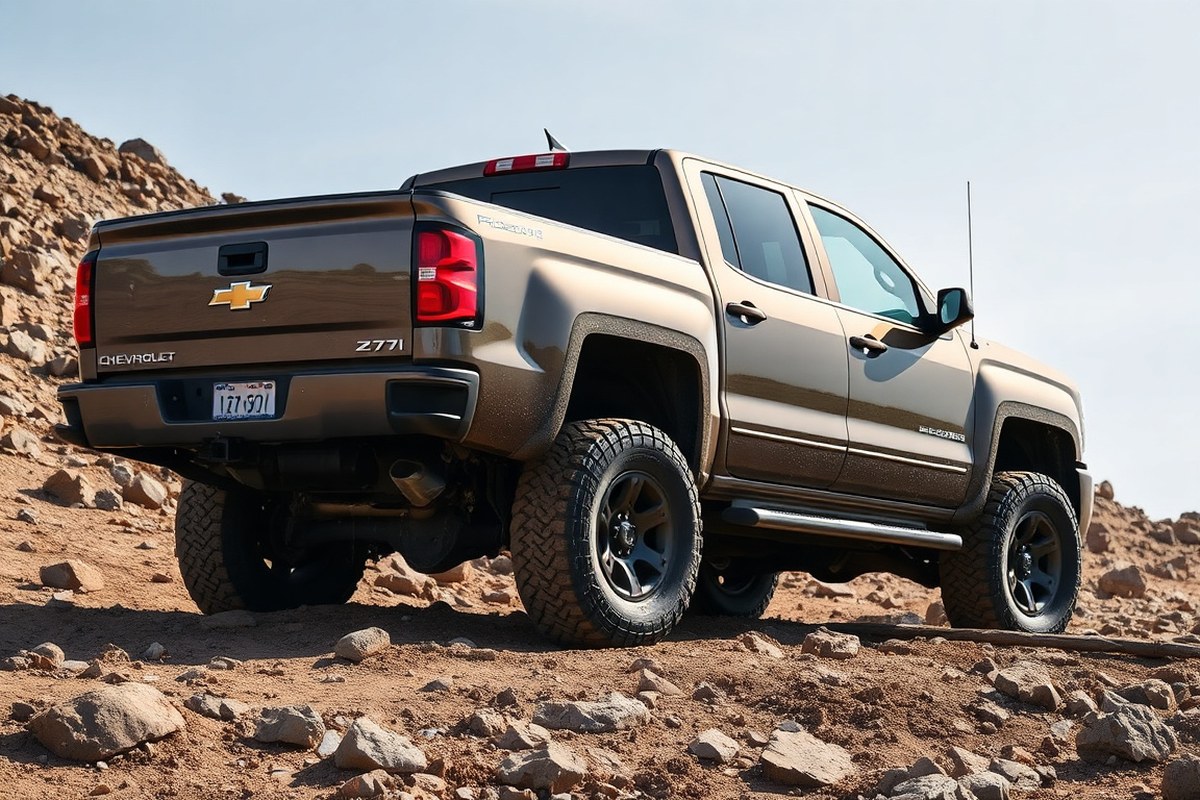
Are all Z71 four wheel drive trucks? The short answer is no. The Z71 badge shows an off-road package, but it doesn’t guarantee four-wheel drive.
Many Z71 trucks do come with four-wheel drive. However, some Z71 models offer two-wheel drive options as well. Check the specific model’s drivetrain before assuming it’s 4WD.
The Z71 package adds features beyond drivetrain upgrades. It includes off-road suspension, skid plates, and often a locking rear differential. These help even on 2WD trucks, but full off-road power usually needs 4WD.
Start by looking for the 4WD switch or lever inside the truck. That tells you if your Z71 truck has four-wheel drive or not. Don’t rely on the badge alone to know the drivetrain.
Key Takeaways
- Not all Z71 trucks come with four-wheel drive; some have two-wheel drive.
- The Z71 package focuses on off-road gear, not just the drivetrain.
- Check inside the truck for 4WD controls to confirm its drivetrain type.
- Z71 trucks with 4WD offer better traction on rough or slippery terrain.
- The Eaton G80 locking differential often comes with the Z71 package.
- Choosing a 4WD Z71 is best for heavy off-road use or tough weather.
Are All Z71 Trucks Equipped with Four-Wheel Drive?
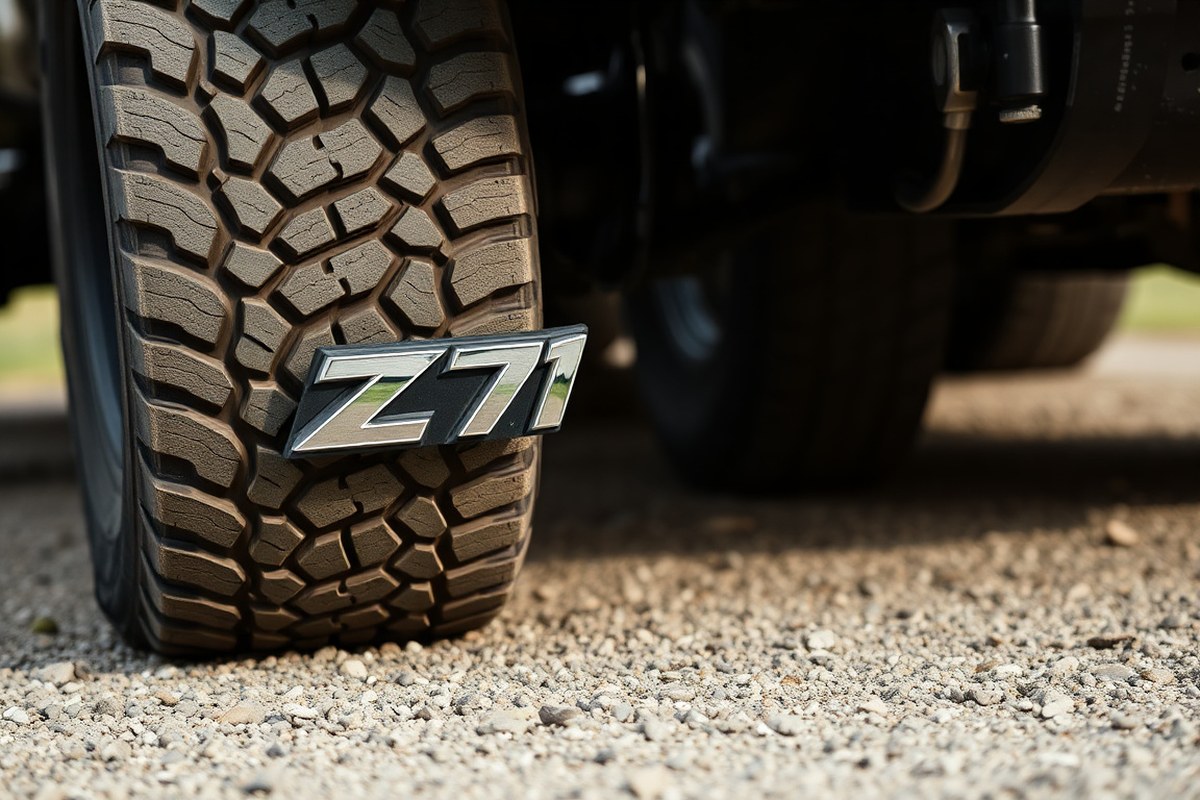
No, not all Z71 trucks come with four-wheel drive. Some models, especially newer ones, offer the Z71 package on two-wheel drive trucks. This adds off-road features like special shocks and a locking differential without the 4WD system.
The Z71 package usually includes improved suspension and added underbody protection. It focuses on off-road readiness, but 4WD is only standard on specific models.
For example, many Chevrolet Silverado Z71 trucks come standard with 4WD. But others let you pick a 2WD option.
This causes confusion because the Z71 badge means off-road capability, not automatic four-wheel drive. When buying, check if the truck actually has four-wheel drive or just the Z71 upgrades. The difference matters for rough terrain, as 4WD gives better traction in tough conditions.
Which Z71 Models Come with 4WD and Which Offer 2WD Options?
| Z71 Application Type | Example Models | 4WD Required? | Key Takeaway |
|---|---|---|---|
| Standalone Trim | Colorado, Canyon, Tahoe, Suburban | No (Except Tahoe/Suburban) | Drivetrain selection appears separately on the vehicle’s order sheet. |
| Add-On Package | Silverado 1500 | No | The Z71 package fits on trucks with 2WD or 4WD options. Check your build sheet to confirm. |
| Configuration Badge | Silverado 2500/3500 HD | Yes (implied) | Denotes an off-road suspension pack on HD trucks with 4WD. |
Not every Z71 truck comes only with four-wheel drive. The Chevrolet Colorado and GMC Canyon both offer the Z71 package.
You can choose it on 2WD or 4WD models. This lets you choose 2WD if you want better fuel economy or 4WD for serious off-roading.
The Silverado 1500 handles the Z71 differently. The Z71 acts as an add-on package.
It works with trims like LT, RST, and LTZ on both drivetrains. Check your dealer’s build sheet to confirm the drivetrain alongside the Z71 badge.
Most heavy-duty Silverados like the 2500 and 3500 HD come with 4WD. Here, the Z71 badge usually means off-road suspension, not drivetrain.
Tahoe and Suburban SUVs mostly pair Z71 with 4WD. But you should confirm as exceptions exist.
A small “4WD” sticker appears on the frame behind the front tire. It shows which drivetrain your Z71 truck has.
Picking a Z71 with 2WD cuts costs and boosts fuel efficiency. You still get better suspension and an optional locking diff for rough terrain.
Meanwhile, 4WD versions add hill descent control and traction benefits on slippery or steep terrain. Decide based on your driving needs.
What Features Does the Z71 Package Include Beyond Four-Wheel Drive?
The Z71 package adds a lot more than four-wheel drive for off-road help. It includes an off-road-tuned suspension with Rancho shocks, which absorb bumps better than standard models. This setup raises ground clearance, so the truck clears rocks and rough spots easier.
Underneath, there are skid plates to protect the oil pan, transfer case, and fuel tank. These metal plates guard against damage from rocks or debris on rough trails. Z71 trucks also often come with an electronic locking rear differential.
This feature helps both rear wheels turn together. It gives better traction on slippery surfaces. You get more control when driving in tough spots.
- Rancho off-road-tuned shocks for smoother rides on uneven ground
- Increased ground clearance to clear obstacles
- Heavy-duty skid plates under the engine and other components
- Electronic locking rear differential for better traction
- Hill descent control to keep steady speed on downhills
- All-terrain tires for grip in mud, sand, and rocks
- Tow hooks for easy recovery on tough trails
Hill descent control helps maintain a slow and steady pace when going downhill. This is handy in tricky off-road spots.
Tow hooks are another useful touch for pulling out stuck vehicles. The all-terrain tires that come with Z71 improve grip compared to normal road tires.
The Z71 suspension system feels firmer but controlled. This firmness stops the truck from bottoming out on sharp bumps. It also gives better handling off-road by reducing sway.
These parts weigh more than standard. So you might notice a small fuel economy drop.
You won’t find Z71 features on every GM truck trim. 2WD versions keep the suspension and protection upgrades without four-wheel drive. This package helps your truck handle rough roads better.
It protects your vehicle from damage on gravel and trails. It also improves control for safer driving.
How to Identify If a Z71 Truck Has Four-Wheel Drive or Two-Wheel Drive?
You can check badges to see if a Z71 truck has four-wheel drive. Look under the vehicle for the drivetrain components. You can also verify this in the truck’s documentation.
Not all Z71 trucks have 4WD. These steps will help confirm the drivetrain with confidence.
Checking the Drivetrain Badges
Look for badges or stickers on the truck’s exterior that say “4×4” or “4WD.” These appear on the tailgate, doors, or near the front fenders.
You only see a Z71 badge with no 4WD label. It might be a two-wheel drive truck.
Some trucks have extra badges for the Eaton G80 locking differential. These badges usually sit on the rear or side wall of the vehicle.
This locker improves traction in both 2WD and 4WD trucks with the Z71 package. The absence of 4×4 badges means you should do a closer check.
Looking Under the Vehicle for Drivetrain Components
Check under the truck behind the front wheels for a front differential housing. A 4WD truck will have a solid axle and differential at both the front and rear. Two-wheel drive trucks only have a solid axle or differential at the rear.
Look for a transfer case mounted near the transmission. This transfers power to the front axle in 4WD trucks. You don’t see the Eaton G80 locking differential.
This likely means the truck is 2WD. Also, a front driveshaft runs from the transfer case to the front axle in 4WD trucks.
Using Documentation and VIN Decoding
Check the window sticker or build sheet for drivetrain information. Dealers often list “4×4” clearly in the vehicle description.
You have the owner’s manual or build data. These will confirm the drivetrain for sure.
Use the Vehicle Identification Number (VIN) to decode key features online or through your dealer. The VIN can reveal if the truck came with 4WD from the factory. This step helps avoid relying solely on badges or physical inspections.
- Start by examining all external badges for “4×4” or “4WD” marks.
- Look under the front axle area for a differential and front driveshaft.
- Locate the transfer case close to the transmission on the truck’s underside.
- Inspect the rear axle for an Eaton G80 locking differential with the Z71 package.
- Gather the vehicle’s build sheet or window sticker to check drivetrain specs.
- Use an online VIN decoder or dealer service to confirm the drivetrain.
- Compare your findings to known Z71 2WD and 4WD model details.
- Ask the seller or dealer directly if uncertainty remains after these checks.
Understanding the Difference Between Z71 Package and Four-Wheel Drive System
The Z71 package and four-wheel drive (4WD) are not the same. Z71 is a trim or an optional off-road package. 4WD refers to the drivetrain system that powers all four wheels.
You can get a Z71 truck with either 2WD or 4WD. It depends on the model. Options also affect the drivetrain choice.
Z71 adds features that improve off-road capability. This includes upgraded shocks, skid plates, and a locking rear differential. These help your truck handle rough terrain and protect critical parts under the truck.
Meanwhile, 4WD is about how power gets delivered to the wheels. With 4WD, power goes to both front and rear axles. This helps traction.
It works great on slippery or rough surfaces. This system includes extra components like transfer cases and differentials, which cost more and need maintenance.
GM uses the Z71 badge in three ways. It can be a trim, a package, or a heavy-duty badge. Each means something different.
Not all carry the same drivetrain. Sometimes a Z71 truck comes with 2WD only.
Other times it has 4WD. The choice depends on the setup you want.
This difference matters because 4WD impacts maintenance and driving style. The 4WD system in Z71 trucks can wear tires faster. This happens if you don’t service it well.
Regular care helps prevent this. That’s why the 4WD system is separate from the Z71 package.
The package mostly adds off-road parts. It does not always include 4WD.
Look closely at your truck’s badge. Ask the dealer if it has 4WD or only the Z71 package. Do this before you buy.
How the Eaton G80 Locking Differential Complements Z71 Trucks
The Eaton G80 locker is an automatic locking rear differential found in Z71 trucks. It engages when one rear wheel starts slipping, sending equal power to both wheels. This helps improve traction on uneven or slippery terrain.
Not all Z71 trims include the Eaton G80. But most models come with it as a key part of the off-road gear.
Even some 2WD Z71 trucks have the G80, which boosts traction without needing full 4WD. Both 4WD and 2WD trucks benefit from it when one wheel loses grip.
The G80 works by automatically locking the rear differential when needed. It monitors wheel speed and locks to prevent slipping. This differs from an open differential.
It sends power only to the wheel with less grip. That means less traction on rough surfaces. The G80’s locking engages without driver input, unlike manual lockers.
Thanks to the Eaton G80, your Z71 truck gets better grip. It works well in mud, snow, and rocky terrain. This helps you keep moving where others might stall.
This makes climbing steep or slippery trails easier. It works when one rear wheel lifts off the ground.
It keeps power going to the wheel with traction. This helps your truck stay stable and moving forward.
Installing or upgrading to a G80 locker usually involves swapping the rear differential. This costs from $1,000 to $1,500 with parts and labor, depending on the truck model.
The factory G80 is a reliable component built for rugged use. But aftermarket lockers can offer different locking styles.
Without a G80, trucks can lose power at the rear wheel that spins freely. That means you might get stuck even if one wheel still has grip.
Poor traction hurts off-road ability and can stress the driveline. The Eaton locker prevents that by locking at the right moment.
Is It Beneficial to Choose a Z71 Truck with Four-Wheel Drive?
Choosing a Z71 with four-wheel drive (4WD) gives you better traction. It works well on rough terrain, snow, and mud. This helps you keep control in tough conditions.
It helps keep your truck stable and confident when bumps and uneven surfaces come up. You get more control, especially if you often drive off-road or in bad weather.
On the other hand, a two-wheel drive (2WD) Z71 can still work well. It fits if you mostly drive on paved roads or dry highways. This trims costs and complexity.
The 2WD trucks usually cost less upfront and have slightly better fuel economy. They are simpler and easier to maintain.
They lack extra parts needed for a 4WD system. Fewer parts usually mean fewer repairs.
Four-wheel drive does not really change your Z71’s towing capacity much. But it can improve safety while towing by providing better grip on slippery or loose surfaces. Just remember, 4WD adds weight and more moving parts, which can raise maintenance costs over time.
- 4WD offers traction on mud, snow, ice, and uneven ground
- Great for off-roading and tough terrain adventures
- Provides safer handling when towing on slippery roads
- 2WD saves money with less upfront cost and better fuel mileage
- 2WD trucks have fewer parts to wear out or break
- Converting a 2WD truck to 4WD costs thousands and is complex
- 4WD adds weight, slightly lowering fuel efficiency
You spend a lot of time on gravel, dirt trails, or snow. The 4WD Z71 suits those conditions better. It keeps you safer and more confident.
For daily city or suburban driving, a 2WD Z71 works fine. Occasional light rain won’t cause much trouble. This choice saves money on fuel and maintenance.
Think about your driving habits carefully. Get the right setup without paying for unused features. This saves money and avoids extra hassle.
Understanding the Three Ways GM Applies the Z71 Badge on Trucks
The Z71 badge appears three ways on GM trucks. It shows up as a trim, a package, or a badge. Each use means something different.
Each form changes what drivetrain options come standard or are available for the truck. Know how your model uses the Z71 badge.
This helps you pick the right truck. It also explains the drivetrain setup.
Standalone Z71 Trim Examples
On midsize trucks like the Colorado and Canyon, Z71 is usually a trim. It includes specific features for off-road use. Usually, you get a clear set of options.
This trim includes off-road upgrades and usually assumes a 4×4 drivetrain as standard. For example, recent Colorado Z71 trims come with 4WD and specialized suspension right from the factory.
Full-size trucks like Silverado and Sierra offer Z71 as a trim level too. It often comes in mid-tier packages. These trucks have more options than midsize models.
Here, the 4WD system usually comes standard, too, bundled with skid plates and off-road tuned shocks. This trim saves you from selecting a few individual options since it bundles those features.
Add-On Z71 Packages on Light Duty Trucks
On some light-duty Chevy and GMC trucks, Z71 is just an add-on package. It is not a full trim level. You can add it to other trims.
You can add it when ordering trims like the Silverado LT or Sierra SLE. With these add-on packages, you often pick 2WD or 4WD.
The Z71 package doesn’t force a single drivetrain type. You get more choice this way.
The package offers features like off-road suspension, hill descent control, and skid plates. It improve the truck’s off-road ability without forcing you to commit to a 4×4 system. The Z71 package usually costs between $1,000 and $2,000.
Price depends on the truck’s model and year. It adds some useful off-road gear.
Configuration Badges on Heavy-Duty Models
On heavy-duty trucks like Silverado 2500HD and 3500HD, Z71 is mostly a configuration or appearance package. It doesn’t mean a specific drivetrain. This keeps options open.
It does not define a specific trim but signals added styling and suspension tweaks. Heavy-duty Z71 trucks can come with 2WD or 4WD drive.
The badge does not limit drivetrain choices. That gives buyers flexibility on tough trucks.
These trucks typically require you to select drivetrain options separately. Many buyers choose 4×4 for off-road or towing needs.
But 2WD heavy-duty Z71 trucks are common for better fuel economy. The configuration badge mainly highlights performance and rugged styling rather than drivetrain makeup.
Always check your truck’s year and model for the Z71 details. This tells you how the badge applies. You also learn what drivetrain comes with it.
Deciding Between 2WD and 4WD Z71 Trucks Based on Usage and Terrain
Choosing between a 2WD or 4WD Z71 truck depends on how and where you drive. Your daily routes, weather, and budget influence the best drivetrain for you. Think about terrain challenges and costs before deciding.
Assessing Your Driving Needs
Consider how often you need extra traction. You mostly drive on paved roads and highways, so 2WD works fine. It handles well and gives better fuel economy in city or highway driving.
Look at your typical driving surfaces and activities. Regular trips on rough trails, dirt roads, or slippery surfaces push you toward 4WD. It helps in mud, sand, snow, and steep or uneven terrain where traction matters.
Decide if you need 4WD full-time or just occasionally. Some Z71 trucks offer part-time 4WD to save fuel but still help off-road.
Comparing Cost and Maintenance
2WD Z71 trucks generally cost less upfront than their 4WD counterparts. You’ll spend less on fuel since 2WD is lighter and more efficient on paved roads. Insurance and taxes may also be lower for 2WD models.
4WD systems add complexity and weight, raising purchase and repair costs. Maintenance like transfer case fluid changes and extra drivetrain parts need regular checks. You use 4WD a lot, so expect more wear and some repairs.
Weigh how often you’ll pay more for 4WD against the benefit in tough conditions. Sometimes extra cost isn’t worth it if you rarely face bad roads or weather.
Evaluating Off-Road and Climate Conditions
Severe off-road terrain almost requires 4WD to avoid getting stuck or losing control. The Z71 package helps but can’t beat the traction 4WD provides in deep mud or rocks. Snow and ice also favor 4WD for safer handling.
Assess your local climate and road quality. Areas with frequent heavy rain, snow, or gravel roads call for 4WD. Dry, flat, and urban areas make 2WD a practical choice.
- Use 2WD if mostly on smooth, dry pavement
- Prefer 4WD for regular off-road or rough terrain
- Choose 4WD in snowy or rainy climates
- Consider part-time 4WD for mixed use
- Expect higher fuel costs with 4WD
- Check maintenance needs for 4WD components
- Factor in initial price difference between 2WD and 4WD
Match your drivetrain to the environment you face most. 4WD makes tough routes easier but comes at a cost. 2WD suits daily driving without demanding terrain.
Quick-Start Action Plan for Choosing the Right Z71 Truck
Follow these steps to decide if a Z71 truck with four-wheel drive fits your needs. Use each check to confirm your choice as you go.
- Day 1: Check the truck’s badge and window sticker. Confirm if it says 4WD or 2WD to know your drivetrain.
- Day 2: List your typical driving terrains. Rough trails or snow? Favor 4WD for better control.
- Week 1: Inspect features beyond drivetrain, like the Eaton G80 locking differential. It boosts traction off-road.
- Week 2: Compare Z71 packages among models you like. Note which offer 2WD and which come only in 4WD.
- After 2 weeks: Test drive trucks if possible. See how 2WD and 4WD versions handle your roads.
- Before buying: Ask the dealer what Z71 means for that model year and trim. Confirm if it includes off-road upgrades you want.
- Right before purchase: Decide if the extra price for 4WD matches your off-road use. Skip it if you mainly drive on paved roads.
Frequently Asked Questions
Are All Z71 Trucks Built for Off-Road Use?
Yes. The Z71 package adds off-road suspension and protection. It improves handling on rough terrain.
Can a Z71 Truck Switch Between 2WD and 4WD?
Some Z71 trucks have a 2WD option, others 4WD only. Check the specific model and trim for your Z71.
Does the Z71 Package Improve Snow and Ice Traction?
Yes, 4WD Z71 trucks offer better traction on snow and ice. But drive cautiously on slippery roads regardless.
Is the Z71 Package Available on All GM Pickup Models?
No. The Z71 package is available only on select Chevy and GMC trucks. Confirm this with the dealer.
How Does the Eaton G80 Locking Differential Help in a Z71?
The Eaton G80 improves traction by locking rear wheels when needed. It helps stay stable on slippery or uneven surfaces.
Key Points to Remember
Not all Z71 trucks have four-wheel drive. The Z71 badge focuses on off-road features, and some models come in two-wheel drive. Check your truck’s exact setup and choose the drivetrain that suits your driving needs best.