How Much Does an Aluminum Can Weight? A Complete Guide with Weight Tables & Value Tips
An empty standard aluminum can weighs about 0.09 pounds. This low weight makes cans easy to handle and recycle. It also helps save space when transporting large amounts.
The weight varies with size and shape. Most cans are close to the average weight, but 16-ounce cans weigh more. Knowing this helps estimate total weight for recycling or resale.
You can use the average weight to calculate how many cans make a pound or kilogram. This helps with sorting scrap and deciding payments for selling metal. Accurate estimates save time and prevent mix-ups.
Remove any leftover liquid or debris before weighing cans. Larger cans and different designs also change the weight. These details improve accuracy when planning your scrap collection.
Key Takeaways
- An empty aluminum can typically weighs around 0.09 pounds (40 grams).
- Aluminum can weights vary based on size and manufacturing design.
- Clean and dry cans before weighing for more accurate results.
- Standard 12-ounce cans are the most common weight reference.
- Heavier or larger cans require adjusting your weight and value calculations.
- Estimating can weights helps you plan collection or recycling efforts.
What Is the Typical Weight of an Aluminum Can?
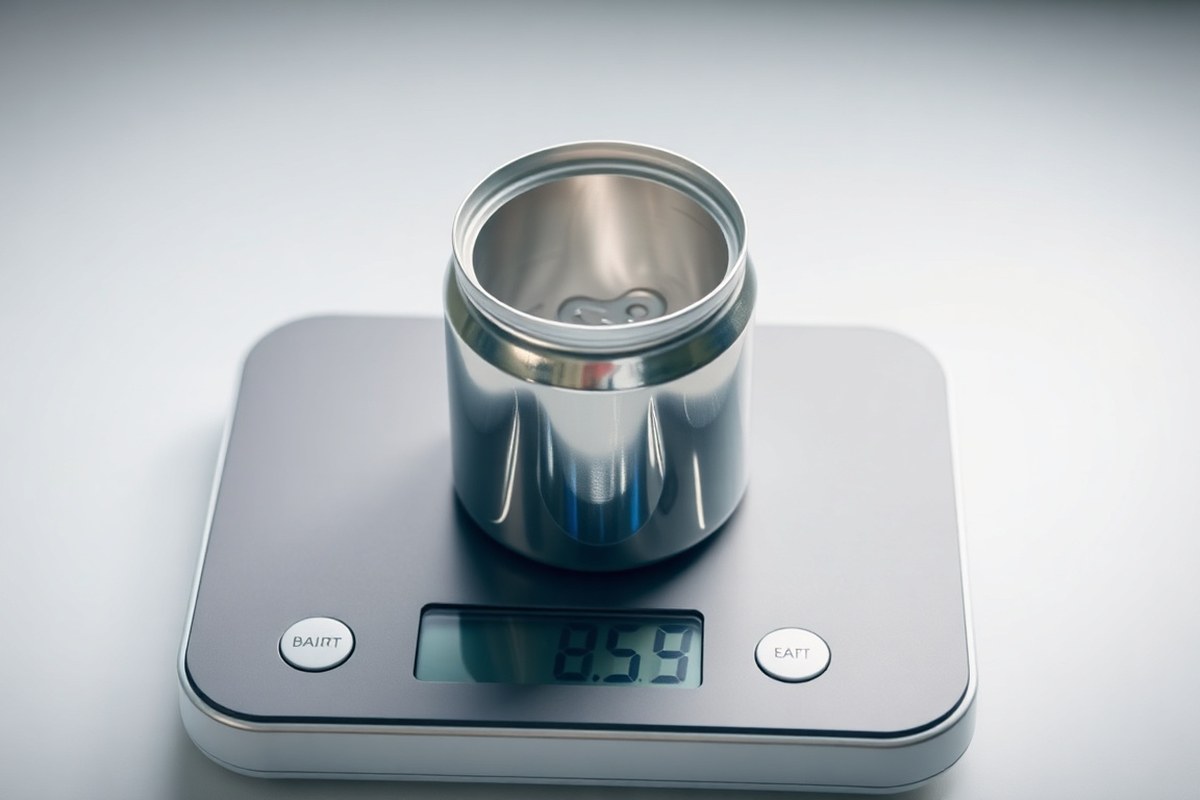
Empty aluminum cans usually weigh between 10 and 30 grams, depending on their size. The common 12-ounce can weighs about 14 to 15 grams, which is roughly 0.5 ounces.
Smaller cans, like energy drink containers holding 8.4 ounces, weigh around 10 to 12 grams. Larger 24-ounce cans can weigh 25 to 30 grams.
A filled can’s weight depends on its liquid content. For example, a 12-ounce can filled with soda weighs about 370 grams or 13 ounces total.
The liquid inside adds most of the weight. So recycling calculations focus on the empty can weight to estimate aluminum content more precisely.
| Can Type | Typical Volume | Approximate Empty Weight |
|---|---|---|
| Small Energy Drink Can | 8.4 fl oz (250 ml) | 10, 12 grams (0.35, 0.42 oz) |
| Standard Soda Can | 12 fl oz (355 ml) | 13, 15 grams (0.46, 0.53 oz) |
| Tall Beer or Energy Can | 16 fl oz (473 ml) | 18, 21 grams (0.63, 0.74 oz) |
| Half-Liter Can | 500 ml | 18, 22 grams (0.63, 0.78 oz) |
| Large Single-Serve Can | 24 fl oz (710 ml) | 25, 30 grams (0.88, 1.06 oz) |
Knowing the exact empty weight of cans helps recyclers estimate the total aluminum weight more accurately. For rough calculations, assume 30 to 32 empty 12-ounce cans make one pound. Weigh your cans using a precise scale for better accuracy.
This works well for mixed sizes or specialty cans. It helps you get accurate weights every time.
What Factors Cause Variation in Aluminum Can Weight?
Aluminum cans don’t all weigh the same because of differences in size, design, and materials. Factors like wall thickness, alloy type, and manufacturing processes change how much aluminum is used. Even the shape and purpose of the can affect its weight.
Wall Thickness and Aluminum Alloy
The thickness of the can’s walls plays a big role in weight. Thicker walls use more aluminum, making the cans heavier. Most aluminum beverage cans have walls between 0.094 and 0.112 millimeters thick, depending on region and manufacturer.
Alloy type also matters. Different aluminum alloys have slightly different densities.
For example, common alloys like AA3104 and AA3105 weigh slightly differently. These alloys vary from about 0.094 to 0.112 mm wall thickness, affecting the final weight by fractions of grams.
Can Size and Shape Variations
Size differences make bigger cans heavier and smaller cans lighter. A standard 12-fluid-ounce can usually weighs about 14 to 15 grams. Taller or wider cans, like 16-ounce or slim designs, need more material and thus weigh more.
Shape impacts material use too. Some cans have extra curves or thicker bottoms for strength. These design choices add weight.
Unusual can shapes, like those for energy drinks, weigh slightly more. They usually weigh more than standard soda cans.
Beverage Type and Print Coatings
The type of beverage inside the can does not directly affect weight when empty. But some cans are designed specially for carbonated drinks to handle pressure. This can increase the can’s wall thickness.
Printed labels and coatings on cans add tiny amounts of weight. These usually do not change the aluminum weight but affect total can weight slightly. It’s worth knowing this only changes the weight by less than a gram.
Manufacturing Methods and Regional Differences
Different factories and regions use varied manufacturing techniques. Some use advanced methods to reduce material waste and make lighter cans. Others use thicker materials for durability in shipping or local climate conditions.
Regional differences show up in average weights. North American cans weigh around 13.2 grams on average.
Southeast Asian cans are closer to 13.9 grams. These small differences reflect alloy choice and wall thickness ranges.
Key Factors Affecting Aluminum Can Weight
Here’s a quick list of what you should check to understand can weight differences:
- Wall thickness, usually 0.094 to 0.112 mm varies by design
- Aluminum alloy type, e.g., AA3104 or AA3105
- Can size, such as 12-ounce vs. 16-ounce
- Can shape and structural design, including reinforced bottoms
- Manufacturing process and material efficiency
- Regional production standards and typical alloy blends
- Coatings and printed labels adding minor weight
Knowing these helps if you weigh cans precisely, especially for recycling or resale. Weight calculators use these factors to give you exact weights based on size and alloy.
Always weigh cans when empty and clean for accurate aluminum weight measurements.
How Aluminum Can Sizes Impact Their Weight
The size of an aluminum can has a direct impact on its weight. Larger cans hold more beverage volume, so they use more aluminum, making them heavier. This means a 12-ounce can usually weighs less than a 32-ounce can.
The relationship between volume and weight isn’t perfectly linear. Larger cans sometimes weigh more per ounce because they need extra strength. This requires thicker aluminum or reinforced designs, which adds weight beyond just the bigger volume.
| Can Type | Volume | Diameter | Height | Common Use | Approximate Weight |
|---|---|---|---|---|---|
| Standard | 12 oz / 355 mL | 2.6 in / 66 mm | 4.83 in / 122 mm | Soda, Beer, Iced Tea | 13, 15 grams |
| Sleek | 12 oz / 355 mL | 2.26 in / 57.4 mm | 6.13 in / 156 mm | Hard Seltzers, RTD Cocktails | Similar to Standard |
| Stubby | 250 mL / 8.45 oz | 2.62 in / 66.6 mm | 3.6 in / 91.5 mm | RTD Coffee, Specialty Drinks | Less than Standard |
| Slim | 250 mL / 8.45 oz | 2.1 in / 53.4 mm | 5.28 in / 134 mm | Energy Drinks, Carbonated Water | Less than Standard |
| Large | 32 oz / 946 mL | Varies | Varies | Big-volume Beverages | ~26 grams |
This table shows common weights for various aluminum can sizes used in beverages. For example, a 12-ounce standard can typically weighs 13 to 15 grams.
A larger 32-ounce can weighs roughly 26 grams. That means you get fewer large cans per pound compared to smaller cans.
Larger cans can be heavier than their size alone suggests. This is due to thicker material. You notice this when you lift them.
Thicker walls help the can hold in carbonation or protect the contents better. This improves durability but increases weight beyond just size alone.
Knowing how size affects weight helps you estimate recycling amounts or calculate total aluminum weight. Counting cans by size and using their typical weights helps get a better total weight. Keep in mind that small design changes or material thickness can shift these numbers slightly.
How to Accurately Weigh Aluminum Cans for Recycling
To weigh aluminum cans accurately, use a precise digital scale. You can weigh cans one by one or weigh them in batches for better speed. Recording the weight carefully helps you calculate the total aluminum content.
Weighing Individual Aluminum Cans
Use a small digital kitchen scale for single cans. This method shows the weight of each can, which is useful if sizes vary. Zero the scale first to avoid errors from tare weight.
Follow these steps to weigh a single can accurately:
- Place the scale on a flat surface and turn it on.
- Press the tare or zero button to reset the scale.
- Place an empty aluminum can on the scale’s platform.
- Record the weight displayed in grams or ounces.
- Remove the can and repeat for other samples if needed.
- Calculate the average if testing multiple cans.
Each empty can generally weighs around 12 grams. But it depends on brand and size. Weighing individually gives exact data but takes time.
Weighing Multiple Cans as a Batch
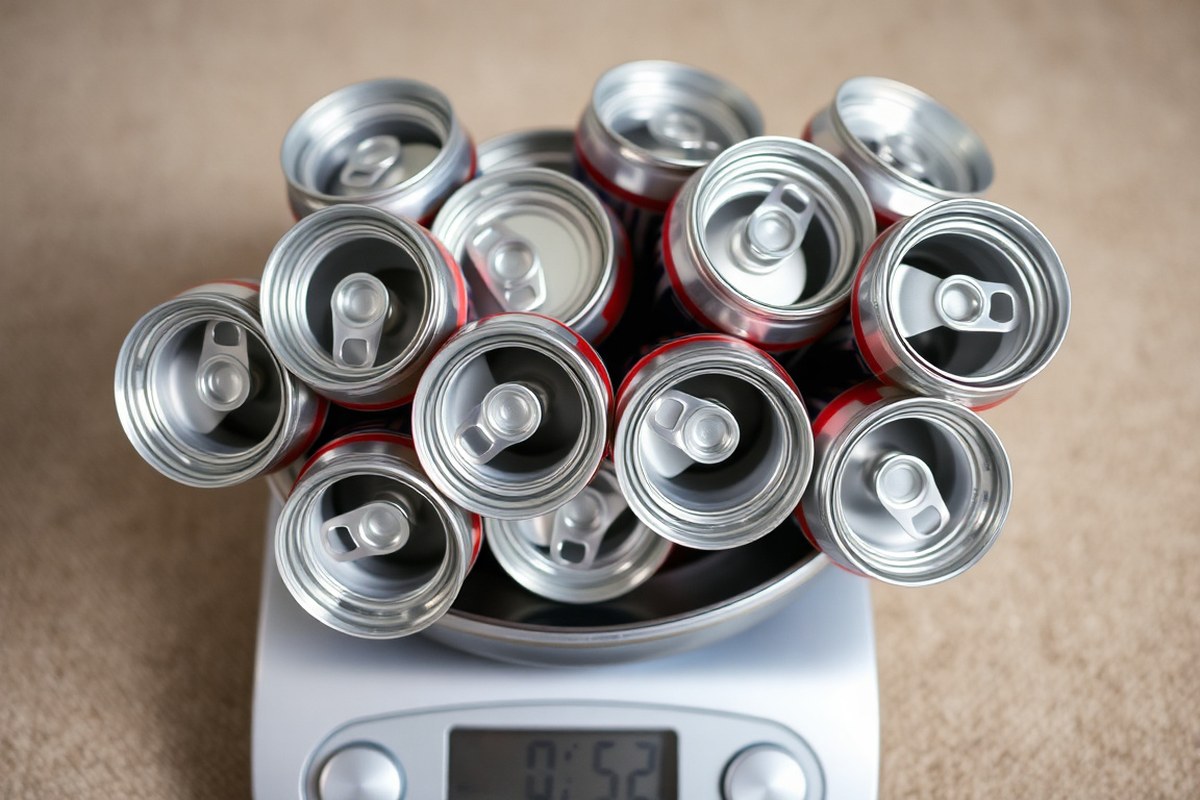
Batch weighing is faster and works well for large collections. Use a larger digital scale with enough capacity for your cans. Weigh all cans in one pile and divide by the number to find the average weight.
Steps to weigh batches:
- Make sure the scale is clean, flat, and zeroed.
- Place a container or bag on the scale, then press tare.
- Put your batch of aluminum cans inside the container.
- Record the total weight shown by the scale.
- Count the number of cans in the batch.
- Divide the total weight by the can count for average weight.
This method improves accuracy by accounting for slight differences in cans. It saves time when dealing with hundreds or thousands of cans.
Estimating Weight for Mixed-Size Collections
Mixed-size cans can change the average weight per piece. Sort cans by size or brand before weighing for better estimates. Use weighted averages if sorting is not possible.
Try this when handling mixed cans:
- Separate cans into groups by size or type.
- Weigh each group as a batch using the earlier steps.
- Record the total weight and count for each group.
- Calculate average weight per can for each category.
- Multiply average weights by counts per group.
- Add the totals for an overall aluminum weight estimate.
Sorting first lets you handle differences precisely. If you don’t sort, the overall weight still gives a close estimate. Note that smaller cans weigh closer to 10 grams, larger ones can reach over 15 grams.
How to Calculate Total Aluminum Weight from Can Counts
Estimating Aluminum Weight in Pounds from Can Counts
You need to know how many cans equal one pound. This helps convert the number of cans into weight. About 34 empty standard 12-ounce cans weigh one pound.
This conversion lets you quickly estimate aluminum’s total weight. First, know how many cans you have.
For instance, 1,000 cans divided by 34 gives pounds. That means 1,000 ÷ 34 ≈ 29 pounds.4 pounds. That estimate shows how much aluminum you’re collecting for recycling or scrap sales.
Converting Weight to Kilograms or Vice Versa
Each pound is about 0.45 kilograms. You can multiply pounds by 0.45 to get kilograms, or you can use 70 cans per kilogram as a quick reference. That means roughly 70 cans equal 1 kilogram of aluminum.
Using 1,000 cans again, divide by 70 to get kilograms: 1,000 ÷ 70 ≈ 14.3 kilograms. This conversion is useful for metric measurements or when comparing international recycling data.
Simple Formula for Total Aluminum Weight
The core calculation is: Total Weight = Number of Cans ÷ Cans Per Unit Weight. Use either pounds or kilograms based on your preference. For pounds, use 34 cans per pound; for kilograms, use 70 cans per kilogram.
Example formula in pounds: Weight (lbs) = Can Count ÷ 34.
Find the scrap price per pound next. Then multiply total pounds by that price for value. For instance, at $0.55 per pound, 29.4 pounds of aluminum would be worth roughly $16.
Practical Steps to Estimate Aluminum Weight
Follow these steps every time you collect cans and need to calculate the weight:
- Count the total number of aluminum cans you have.
- Choose your unit: pounds or kilograms.
- Divide the can count by 34 if using pounds.
- Divide the can count by 70 if using kilograms.
- Record the total weight estimate for your records or scrap yard.
- Multiply the weight by the scrap price if needed for income estimation.
Remember that crushed or baled cans affect volume but not total weight. Weight estimates stay reliable.
When to Adjust Estimates for Can Types or Sizes
Differences in can size or design affect weight slightly. Taller or thicker cans weigh more than slim ones. You should adjust the count per pound if you sort cans differently.
Use the standard 34 cans per pound only for regular 12-ounce soda or beer cans. Other sizes or alloys may require weighing a sample batch for accuracy. This step helps avoid over- or underestimating your aluminum total.
What Is the Scrap Value of Aluminum Cans and How to Estimate Earnings
Aluminum cans usually sell for about $0.50 per pound at scrap yards. This price can rise to $0.70 per pound when demand is high. The price changes over time, so check local scrap prices before selling your cans.
Each 12-ounce aluminum can weighs about 0.029 pounds. That means roughly 34 cans make one pound of scrap aluminum. At $0.50 per pound, one can is worth nearly $0.015 as scrap.
To earn $100, divide your goal by price per pound. Then multiply by cans per pound.
For example, $100 ÷ $0.50 = 200 pounds needed. Multiply 200 pounds by 34 cans per pound and you get about 6,800 cans.
| Scrap Price per Pound | Cans per Pound | Cans Needed for $50 | Cans Needed for $100 |
|---|---|---|---|
| $0.50 | 34 | 3,400 | 6,800 |
| $0.60 | 34 | 2,833 | 5,667 |
| $0.70 | 34 | 2,429 | 4,857 |
The number of cans needed goes down as prices rise. Flat cans compacted more densely can fetch higher prices by volume.
But pounds matter most for earnings. Keep your cans clean and uncrushed unless a yard prefers bales or flat cans.
Weigh your cans first to check earnings. Multiply that weight by scrap price per pound. For example, 50 pounds of cans at $0.50 per pound equals $25.
Clean cans typically fetch better prices, so avoid mixing in other metals or trash. Some yards pay slightly more for baled cans or large quantities.
What Are Aluminum Alloys and Their Impact on Can Weight?
Aluminum cans aren’t made from pure aluminum. The body uses alloys like 3004 or 3104 that contain about 1% manganese and 1% magnesium. These alloys improve strength, letting manufacturers make the can walls thin, around 0.097 mm, while keeping durability.
The can ends are usually made from alloy 5182. This alloy has more magnesium. It makes the ends stronger and harder to crush.
It also resists pressure better. The ends must hold carbonation and seal pressure well.
They need a different alloy with stronger properties. This might make them a bit heavier.
The alloy choice directly affects the can weight. Using 3004 or 3104 alloys allows manufacturers to keep cans light yet strong. Strength and thin walls work together here.
This cuts the aluminum amount needed. It saves material and lowers costs. The 5182 alloy in the ends provides pressure resistance without making the can too heavy.
- 3004 and 3104 alloys contain about 1% manganese and 1% magnesium.
- These alloys enable walls as thin as 0.097 mm for the can body.
- Alloy 5182, with higher magnesium, makes the can ends stronger.
- Stronger alloys let manufacturers use less metal, lowering weight.
- Different alloys balance strength needs for body versus ends.
- Alloy type changes the can’s aluminum density and recycling behavior.
- Mixing alloys requires sorting in recycling to keep metal quality.
Recycling aluminum cans depends on these alloys. The mix of 3004, 3104, and 5182 can affect the metal’s melting point and reprocessing. Sorting cans well helps recycling facilities keep metal quality high.
Mixing alloys too much hurts recycled aluminum’s strength and purity. This can increase processing costs. It might also limit how the metal gets reused.
Knowing which alloys make up a can helps recyclers estimate weights accurately. It also allows sorting machines to detect and separate can parts, maintaining efficient recycling. The alloy differences matter for improving recycling yield and for sustainability efforts focused on material reuse.
How Aluminum Can Weight Has Changed over Time
Forty years ago, aluminum cans weighed about 43 grams each. Today’s 12-ounce cans weigh just under 13 grams, making them nearly 70% lighter. This change didn’t happen overnight but gradually through engineering improvements.
Can makers used techniques like wall thinning and narrower neck designs to cut weight. They also made the ends lighter without losing strength. These advances allowed cans to keep their shape while using less metal.
The lighter weight leads to big benefits. Using less aluminum cuts raw material costs and reduces the energy needed to produce each can. Transporting lighter cans saves fuel, lowering carbon emissions.
Energy savings are notable. Producing lighter cans uses significantly less energy compared to older, heavier versions. This helps companies meet environmental goals and reduce expenses at the same time.
Researchers continue to explore new materials and manufacturing methods. Some aim to reduce weight further without risking can durability. These future improvements could offer even more energy savings and cost reductions.
When weighing recycled aluminum cans, remember recent cans weigh less. So tally more cans per pound for accurate estimates.
How Recycling Aluminum Cans Saves Energy and Reduces Waste
Recycling aluminum cans saves about 95% of the energy needed to make new aluminum. This huge energy cut helps cut greenhouse gas emissions and reduces air pollution. The cans you toss can come back as new cans soon.
This can happen in only 60 days. Recycling makes this quick turnaround possible.
After collection, recycled cans get cleaned and melted down in a furnace at about 1,200°F. The molten aluminum is poured into molds or rolled into sheets to make new cans. This cycle can repeat forever without losing metal quality, unlike glass or plastic.
Aluminum recycling beats many other materials because it does not degrade during recycling. Its value stays high, making it easier to collect and recycle repeatedly. Steel recycling uses around 75% less energy but can suffer some quality loss over time.
- Uses about 95% less energy than making new aluminum
- Saves about 10 million tons of CO2 emissions yearly in the US
- Recycled aluminum cans return as new cans within 2 months
- Infinite recycling without quality loss
- Reduces landfill waste and stripping mining sites
- Supports local recycling job creation and revenue
- Consistent demand keeps the recycling loop strong
Recycling reduces the need for mining bauxite ore, which harms land and water. It also lowers landfill volume, preventing toxic leachate and methane. Collecting cans separately avoids contamination and maximizes metal recovery.
Small business owners or hobbyists can improve recycling results by rinsing cans and storing them dry. Avoid crushing cans to get a more accurate weight and higher scrap value. The right weigh scales and collection bins also make handling easier and cleaner.
Step-by-Step Action Plan for Weighing and Selling Aluminum Cans
This plan helps you get started with weighing your aluminum cans and estimating their value. Follow these steps to make your efforts count.
- Before You Start: Gather a digital scale that measures in grams or ounces. Confirm it’s accurate by weighing a known item.
- Day 1: Count a sample of cans (about 10) and weigh them all together. Divide the weight by the number of cans to find average can weight.
- Week 1: Use your average weight to estimate total weight. Count all cans you want to recycle. Multiply to get the total weight. Weigh the full pile to check if the estimate fits.
- After 2 Weeks: Weigh cans often from new sources. Note size and alloy differences. These affect the can weight.
- Month 1: Contact local scrap yards to check current aluminum scrap prices. Use your total weight to estimate how much money you’ll make.
- Ongoing: Sort cans by size or type if you can. This improves weight estimates. It also helps value estimates.
- Every 3 Months: Review changes in can weights over time. Adjust your average weight and price calculations accordingly.
Frequently Asked Questions
How Much Does a Standard Aluminum Can Weigh?
A standard aluminum can weighs about 13 to 15 grams. The exact weight depends on its size and shape.
Does the Aluminum Can Weight Affect Recycling Value?
Yes, heavier cans generally have more recycling value. You earn more if your cans weigh closer to 20 grams each.
What Is the Weight of a Large 24-ounce Aluminum Can?
Large 24-ounce cans typically weigh between 25 and 30 grams. Their weight makes them more valuable for scrap recycling.
How Many Aluminum Cans Make One Pound?
About 30 standard 12-ounce aluminum cans weigh one pound. This helps estimate recycling earnings by can count.
Can the Weight of Aluminum Cans Change over Time?
Yes, can weight has generally decreased over the years. This is due to manufacturers reducing aluminum use to save costs.
Final Thoughts
Knowing exact weight of your aluminum cans helps you get better scrap prices. It also supports recycling efforts.
Keep your scale handy and weigh samples often. Start today by weighing a dozen cans and multiply up from there.